

Engineer Shreeram Enters Parliament with Ambitious Development Plans
News Summary
- Engineer Shreeram Neupane from the National Independent Party won the Tanahun-2 seat in the House of Representatives with a significant margin, securing 32,687 votes.
- Neupane has proposed development projects in Tanahun including an iron processing industry, green hydrogen energy plant, and safe highway infrastructure.
- As an expert in energy, water resources, and infrastructure, he advocates for 24-hour construction work shifts to fully utilize development budgets between 90 to 100 percent.
Chaitra 3, Kathmandu — Engineer Shreeram Neupane from the National Independent Party (Rastriya Swatantra Party – RSP) has been elected as a member of the House of Representatives representing Tanahun Constituency-2 by a wide margin. He secured 32,687 votes, defeating Nepali Congress’s Shankar Bhandari by more than double the votes.
According to Neupane, this victory clearly indicates the growing influence of the RSP in Tanahun as well as the public’s attraction towards new generation leadership. Similar to how Balendra Shah and the RSP’s central wave garnered nationwide votes, Neupane’s personal image also firmly ensured his victory in Tanahun.
Neupane joined the RSP on Falgun 14, 2079 (late 2022) alongside Dr. Swarnim Wagle. Prior to this, he was not affiliated with any political party. After joining RSP, he served as the coordinator of the election management committee during the recent by-election in Tanahun-1, supporting Swarnim to play a key role in the district.
This time, as Swarnim continued in Tanahun-1, Neupane ran for office from Tanahun-2. Before deciding to run, he conducted local surveys to assess his acceptance among the constituency.
He has proposed a safe highway concept for the Prithvi Highway involving overhead crossings, lane expansions, and lighting to reduce accidents.
About one and a half months prior to the election, Neupane visited 43 wards in Tanahun-2 to meet with locals. Even before receiving the party ticket, he was actively engaged in social work. He facilitated visits to the Sikles hydropower project, installed smart boards in remote government schools, and organized live classes connecting these schools with those in Kathmandu.
Neupane credits these efforts as significant contributors to strengthening his personal image. With an engineering background, he sees numerous national-level development opportunities for Tanahun. Observing more than 10,000 hectares of flat dry land in the Rishing-Ghiring area, he envisions developing it into an industrial hub connected by the Kali Gandaki Corridor, a 432 kV transmission line, ample water resources, and the Dhaulabadi iron mine.
His primary concept involves an iron processing industry that would use raw materials from the Dhaulabadi iron mine to produce steel. He claims the raw materials there will be available for the next 100 years.
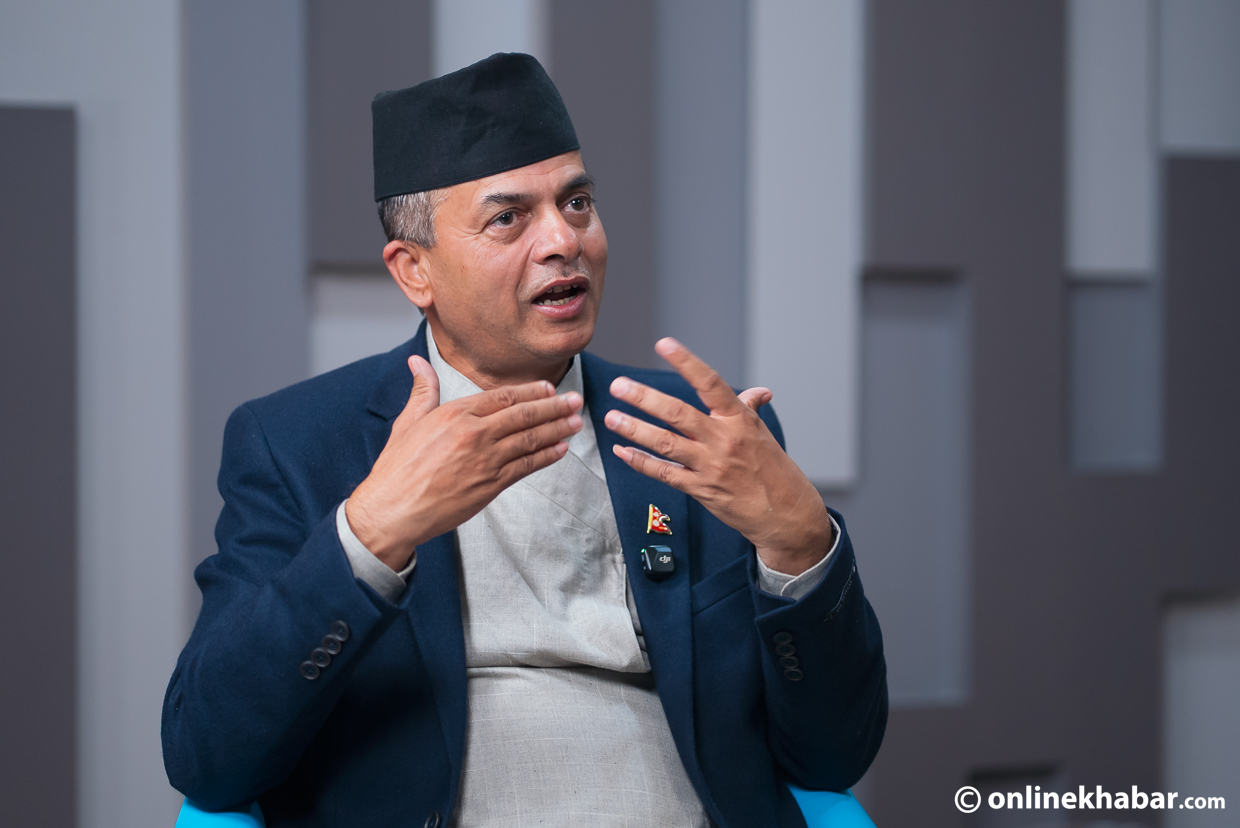
Additionally, Neupane has proposed establishing a green hydrogen energy plant using Kali Gandaki’s water, producing chemical fertilizers, explosives, and ammonia. He suggests that large cement and chemical fertilizer factories could be powered by solar, wind, and water energy sources. Plans also include expanding the 21-kilometer reservoir of Tanahun Hydro, the largest in Nepal, alongside developing tourism destinations, homestays, and extracting gravel and sand for multi-purpose use.
He has reiterated the safe highway concept for the Prithvi Highway, emphasizing overhead crossings, lane expansions, and street lighting to enhance safety.
All these proposals were prepared prior to his candidacy and presented to then Energy Minister Kulman Ghising and secretaries from six ministries. While receiving positive feedback from the ministries, he noted that progress stalled.
Now, Neupane is confident these ambitious dreams will be realized with RSP’s stable government, consistent policies, honest leadership, and investor-friendly environment.
As an expert in energy, water resources, and infrastructure, he advocates for utilizing development budgets at 90 to 100 percent efficiency by operating 24-hour construction work in three shifts to generate employment and ensure good governance.
This strategy is supported by his extensive experience in engineering and the energy sector. Born in Tanahun, he completed his School Leaving Certificate at Amarjyoti Janata Secondary School in Gorkha, earned a Diploma in Civil Engineering from WR College in Pokhara, and obtained a Master’s degree in Civil and Water Resources Engineering from Pulchowk Campus.
During his student years, he was active in the Free Student Union and Nepal Student Union but left student politics early as he felt it did not match his nature, returning instead to professional life. At age 25, he left a government job to establish a premier engineering college and at 29 founded the Advanced College of Engineering and Management, serving as its principal.
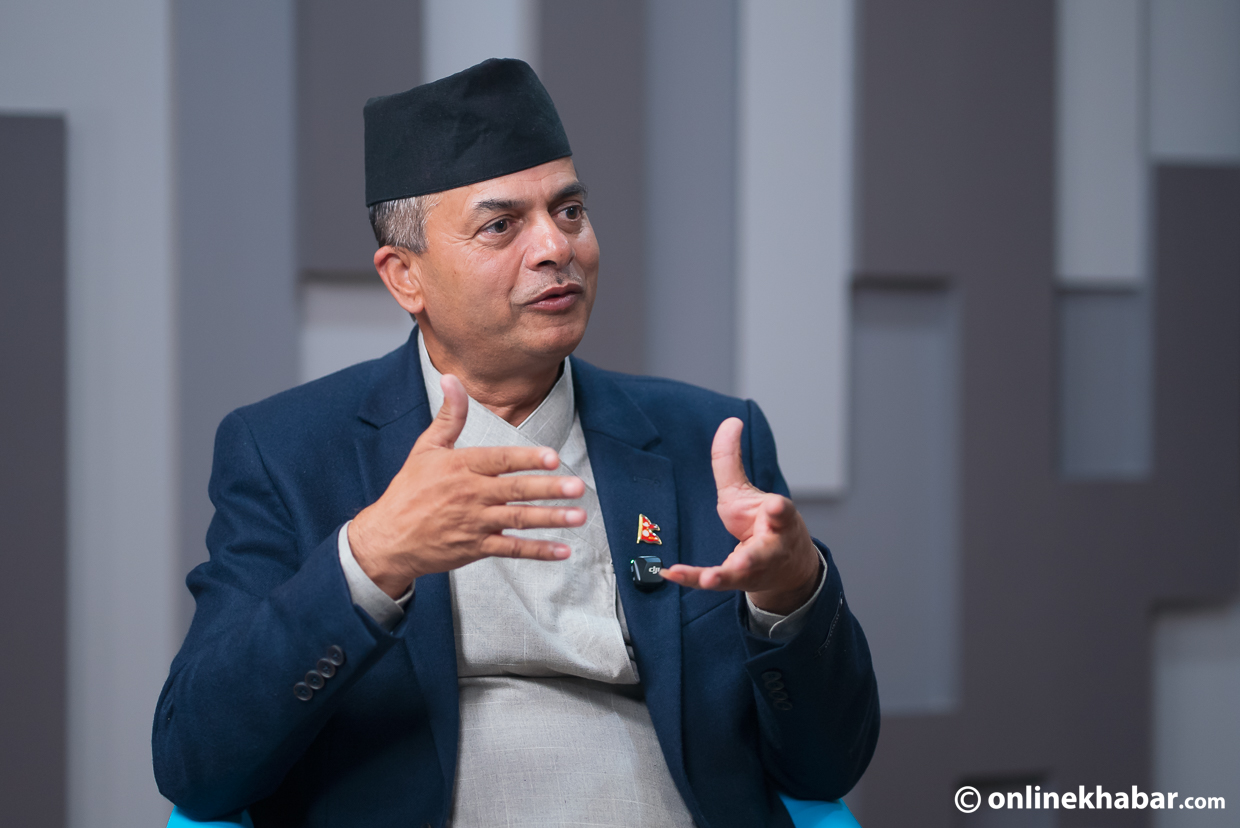 He has managed major projects such as the Melamchi Drinking Water Tunnel and the Nagdhunga Tunnel and was honored by the Nepal government with the Prabal Janasewa Shree award. However, he states he entered politics due to a lack of good governance, rampant corruption, and bureaucratic delays.
Following the 2006/07 movement, over 600 Constituent Assembly members received free internet and email training, but inadequate participation revealed a disconnect between technology and leadership. Observing the current Generation Z’s activism connected to technology, Neupane believes leadership has yet to fully embrace technological tools.
With expertise in energy, water resources, and infrastructure, Neupane remains committed to maximizing development budget utilization through continuous, multi-shift construction work that fosters employment and governance improvements.