

Ramesh Malla Preserves the Communist Stronghold in Salyan
News Summary
- Ramesh Malla secured 23,189 votes to be elected to parliament for the first time from Salyan, successfully preserving the communist stronghold.
- Malla credited his victory to the legacy of the Maoist movement in Salyan, a united leadership team, youth sentiments, and extensive grassroots engagement.
- He emphasized the need to reunify the leftist movement, citing voter dissatisfaction due to unmet basic needs as the reason for shifting votes.
4 Chaitra, Kathmandu — The overall election results were not favorable for the Nepal Communist Party (NCP), yet Ramesh Malla secured his win in Salyan, effectively protecting the communist bastion. Despite a rising wave for the Rastriya Swatantra Party (RSP), Malla was elected with 23,189 votes.
His competitors included Lalit Kumar Chand of RSP, who gained 20,904 votes; Congress’s Keshav Bahadur Bista with 17,558 votes; and UML’s Gulav Jung Shah who received 15,373 votes.
Amidst tough competition, Malla’s victory was thrilling. “I was confident that Salyan would be won when I went for the election. But as the results came in, the triumph felt even more exhilarating,” Malla shared his experience.
During vote counting, announcements of RSP’s lead across the country unsettled him. “I didn’t expect such a large wave. We were tense during the counting, but from the beginning, I trusted Salyan would win. That proved to be true,” he said.
Malla identified four key reasons for his win in Salyan:
First, Salyan is the base of the Maoist movement. “There was a great sacrifice; more than 250 martyrs and many missing persons. That legacy formed a strong popular base,” he explained.
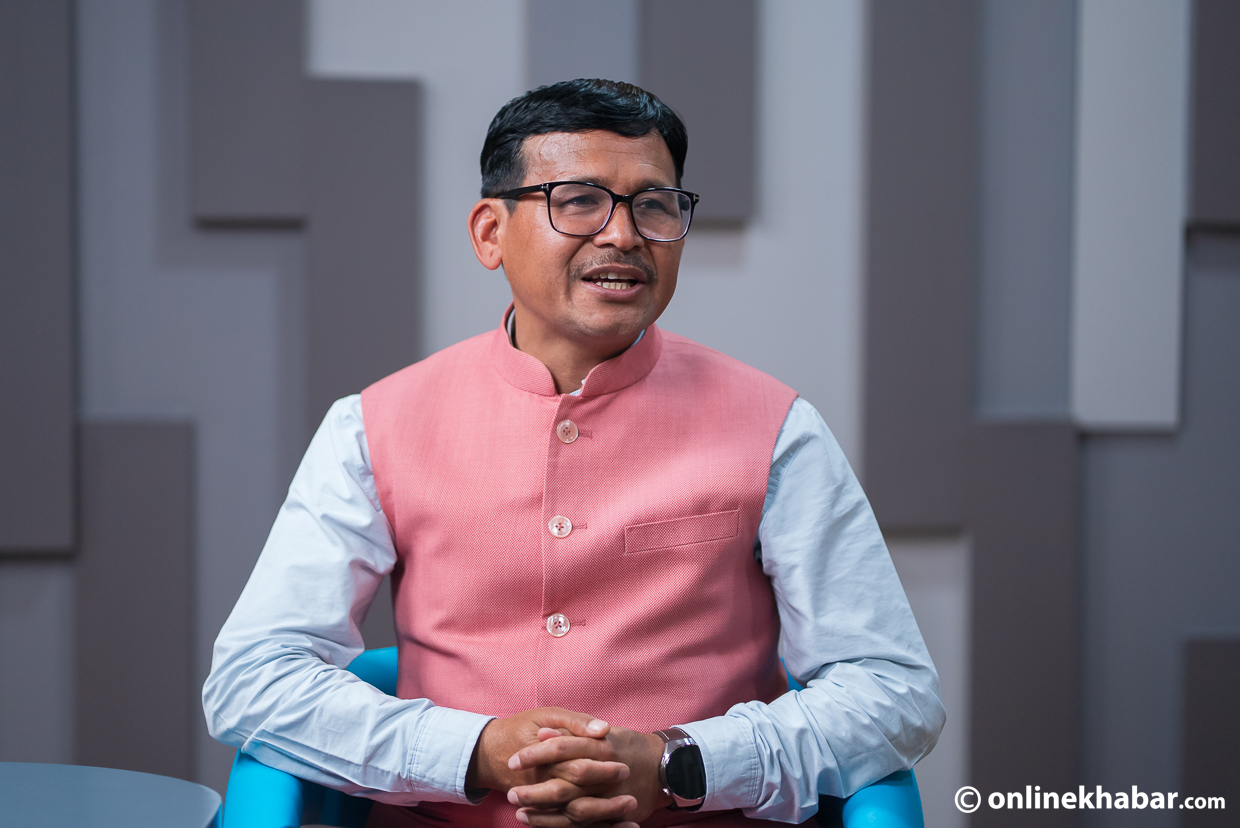
Second, the party had an established leadership team. “The team worked in unity, performing a guardian role,” he asserted.
Third, his candidacy resonated with youths, which contributed to victory. “My candidacy sent a message that the generation Z has taken ownership, which attracted the youth,” Malla said.
Fourth, reaching out to people village by village ensured his victory. “We connected with farmers, laborers, and intellectuals alike. This affection and trust led to this win,” he noted.
This was Malla’s first time contesting parliamentary politics, and he succeeded on his first attempt. However, he acknowledged that the party’s overall results were weak due to not meeting expectations.
Malla believes voters switched allegiance because their basic needs remain unfulfilled.
“The party must seriously review this. The youth are searching for their role,” he said. “People want transparency, accountability, and delivery, which we failed to provide as expected.”
He argued that although the party made efforts while in government, these were insufficient. “We contributed to political change but failed to service it properly—this is a weakness. We hesitated to give space to the younger generation, who consequently sought alternatives outside,” he explained.
Since the Maoists became a major force in 2007 (2064 BS), internal party splits have hindered their effective use of the public mandate. This, according to Malla, allowed the emergence of new political forces. “Strengthening democracy is more important than winning or losing elections. Elections will come again but the system needs to be solidified,” he said.
Malla described the vote shift as “frustration voting” due to the lack of basic infrastructure such as electricity, clean water, roads, and telecom, coupled with weak health and education services and unemployment causing youth to migrate abroad.
Yet, he acknowledged some progress: “Electrification increased from 5% to 80%, roads, telecom towers, and agricultural production have improved in Salyan. But expectations remain high, and achievements are insufficient,” Malla stated.
He stressed the need to reunify the leftist movement. “The older generation must accept mistakes, and the new generation should have the courage to lead,” he said. Although the party’s seat count in the upcoming parliament will be fewer, he plans to amplify the people’s voice.
“My first priority is to address fundamental needs like electricity, water, roads, health, and education,” he declared.
The peace process is still incomplete. With RSP emerging as a major force, Malla believes that the responsibility for the peace process and constitution implementation now rests on their shoulders. “Leading the peace process and implementing the constitution is now RSP’s responsibility,” he noted.
Malla is a leader who transitioned from a decade-long tough underground life during the Maoist insurgency to mainstream politics. Being a well-known face from student politics in Salyan also helped him secure victory.
He began his political journey in 1993 (2050 BS) by joining the underground revolutionary student wing of the Maoists. By 1996 (2053 BS), he was an executive committee member of Sheetal High School’s unit, and subsequently became district chairman of the Revolutionary Student Organization in 1999 (2056 BS).
The peace process remains unfinished, and with RSP becoming a significant power, Malla notes the responsibility has shifted accordingly.
He served two terms as chairman of the Revolutionary Student Organization in Salyan, became a central member in 2002 (2058 BS) during the national convention of the united revolutionary student movement held in Biratnagar.
From 2003 to 2006 (2059-2062 BS), Malla was coordinator of the Seti-Mahakali regional coordination committee, later becoming secretariat member, central committee treasurer, vice-chair, and then central coordinator in 2014 (2071 BS). In 2015 (2072 BS), he was elected central chairperson of the All Revolutionary Student Union.
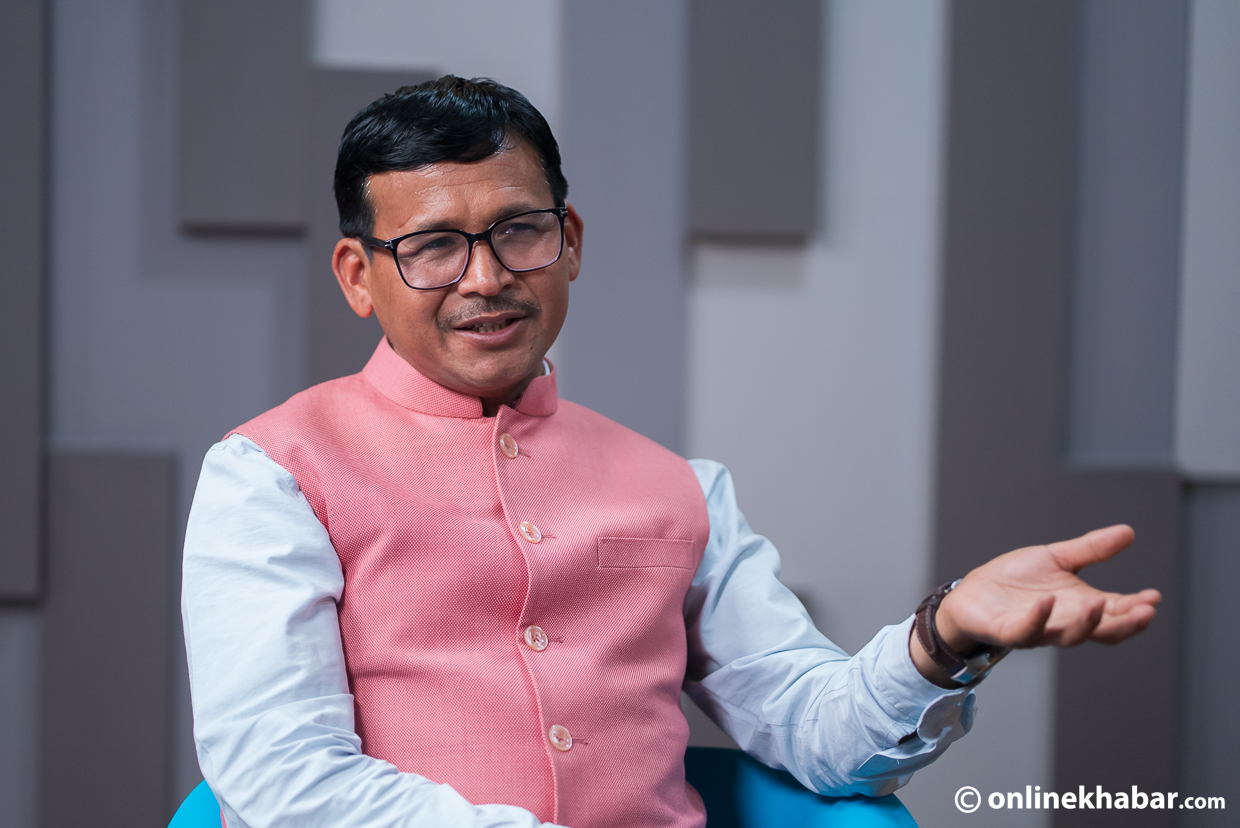
Starting as a full-time cadre in 1997 (2054 BS) to participate in the armed struggle led by the then CPN-Maoist, Malla became a structured party member that year. He was a district committee member by 2001 (2057 BS) and appointed member of the Seti-Mahakali regional bureau in 2003 (2060 BS). In 2004 (2061 BS), he worked as a school department member under Western Central Command.
He was a central member of the Unified Communist Party of Nepal (Maoist) in 2008 (2065 BS), became a central committee and politburo member of the CPN (Maoist Centre) in 2016 (2073 BS), and again politburo member in 2021 (2078 BS), also overseeing the Kathmandu Valley Special Province. Currently, he is a central member of the NCP.
From mid-January 2023 (Poush 2079 BS) to mid-June 2024 (Asar 2081 BS), Malla served as the personal secretary to Prime Minister Pushpa Kamal Dahal (Prachanda) for his second tenure.
He holds a master’s degree in political science from Tribhuvan University. His early education began at Araniko Primary School in his village and secondary education at Sheetal Higher Secondary School in Rukum, Chaurjahari. It was this trusted profile that earned the people’s approval to elect him to parliament for the first time.
Photos/Videos: Kamal Prasain