
Why Are Manpower Business Operators Protesting? Causes and Demands Explained
News Summary
- Foreign employment business operators have declared they will halt all worker deployment processes from September 17, demanding 15 specific points.
- The government’s action against manpower operators for sending workers via Indian airports and disputes over service fees remain central issues.
- Labor experts warn that shutting down manpower agencies risks increased fraud and human trafficking, urging government initiatives to address the situation.
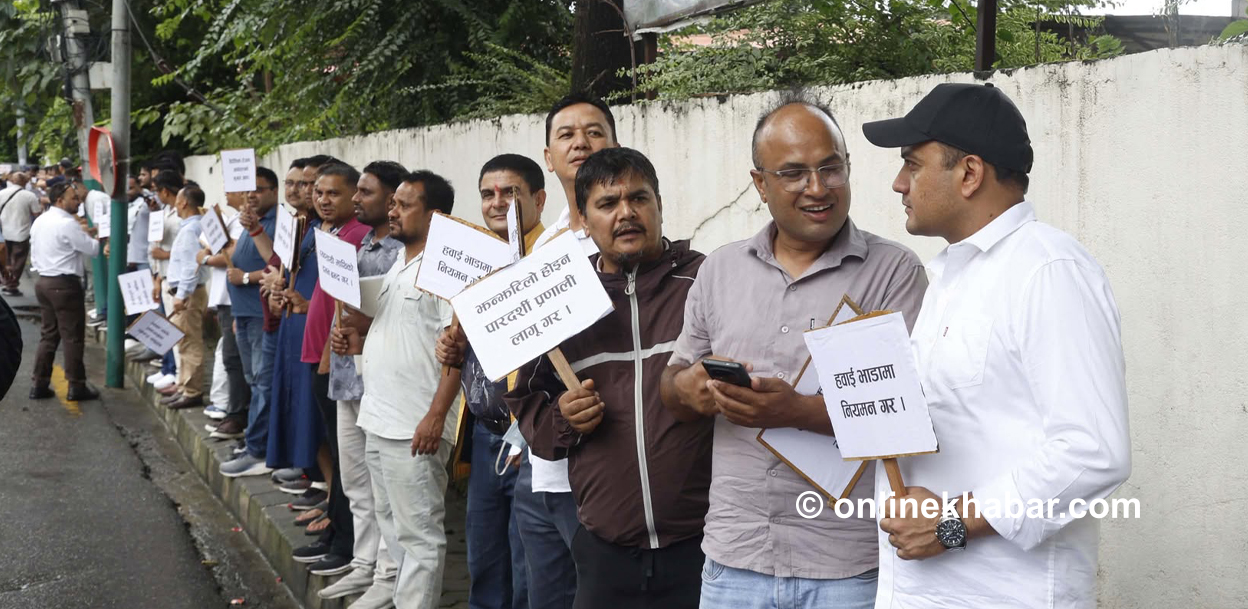
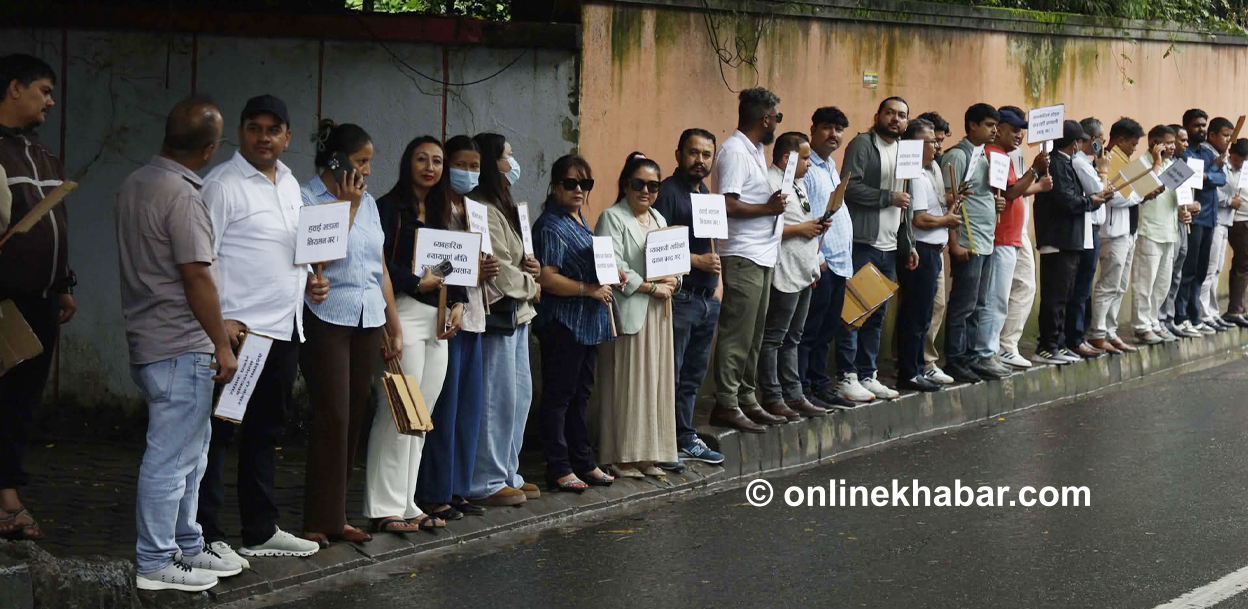
August 11, Kathmandu – Following intensified government sanctions against manpower business operators, these operators have decided to stop sending workers abroad starting September 1. They are protesting with a list of 15 demands.
The dispute centers primarily on two issues: the use of foreign airports, especially Indian airports, for dispatching workers, and disagreements regarding the service fees charged to workers.
Long-standing policy deficiencies, weak state regulation, expensive airfares, fragile labor diplomacy, and the heavy financial burden on workers have underpinned these challenges.
Government Crackdown on Sending Workers via Indian Airports Is a Key Issue
The Nepalese government has legally prohibited sending workers through Indian airports without notifying relevant authorities. The labor department has sanctioned operators for violating this regulation. Labor expert Rameshwar Nepal stated that while rule violations have occurred, the state had overlooked these infractions for an extended period before starting enforcement action lately.
Questions have arisen over why the state has failed to monitor the widespread use of Indian airports by operators effectively.
Rameshwar Nepal commented, ‘While enforcement is necessary after violations, it is pertinent to question why regulatory agencies neglected their monitoring roles for so long.’
He emphasized that since these issues surfaced during the current government’s tenure, blaming previous administrations is unjustified.
However, the government’s enforcement cannot be dismissed merely based on operators’ claims. The labor department had issued directives restricting the use of Indian airports and imposed fines on some non-compliant institutions. This reflects the tension between operators’ assertions that the actions lack basis and the government’s responsibility to uphold law and order.
Costly Airfares Drive Operators to Use Indian Airports, They Argue
According to Dik Bahadur Khatri, president of the Nepal Foreign Employment Association, soaring airfares have heavily burdened Nepalese workers. Operators perceive airfare hikes as artificially induced, with prices increasing more than threefold, escalating workers’ financial pressure. Consequently, they have resorted to using Indian airports.
However, labor specialist Dr. Meena Paudel states that sending workers via India is legally inconsistent. Nepalese law explicitly requires dispatching workers only through domestic airports.
Risks Faced by Workers Traveling Through India
Section 22 of the Foreign Employment Act, 2064 (2007) mandates workers be sent through Nepali airports. If foreign airports are used, departmental approval is required.
The primary purpose of using domestic airports is to guarantee worker legal protection, rescue services, insurance, and welfare fund benefits.
If workers suffer unlawful treatment abroad, the government has investigative and rescue mechanisms. However, when departing through India, Nepal’s emigration records do not capture workers, complicating verification and assistance.
Using unauthorized routes fosters risks of human traffickers deceiving workers with visas of other countries, charging exorbitant fees, and placing workers in unrelated jobs, the department warns.
Operators Call for an Environment That Enables Legal Compliance
Khatri explained the ongoing protest stems not only from enforcement actions but also from long-standing demands to organize and dignify the foreign employment sector. He identified implementation challenges arising when old policies and practices clash with new laws.
He emphasized that policies require revision first to ensure enforceability before strict application.
Service Fees: Business Costs or Worker Burdens?
A major demand from operators is to scientifically determine service fees. Currently, the official fee is around NPR 10,000, though informal higher fees are common, with efforts to legitimize them underway.
Labor expert Rameshwar Nepal suggests fees should be adjusted periodically but should not burden workers excessively.
He notes that service fee disputes should involve not only operators but also employers, destination countries, and the government.
State Accountability, Yet Operators Should Not Be Neglected
Labor expert Dr. Meena Paudel agrees that manpower operators, as private entities, must face penalties for legal violations but stresses the critical role of the state as regulator.
She said, ‘Inadequate monitoring followed by sudden strict enforcement is insufficient. Dialogue is essential to achieve reform.’
‘When Manpower Agencies Close, Workers Follow Middlemen’
Dr. Paudel’s chief concern is the protest’s impact on workers. With thousands departing daily for foreign employment, the September 1 closure will directly affect workers.
Ceasing manpower agency operations risks pushing youth towards illegal routes, increasing threats of human trafficking and fraud.
According to department data, over 792,000 foreign employment permits were issued in fiscal year 2082/83, with approximately 268,000 workers deploying through manpower companies.
Given that about 700 to 800 workers depart daily via manpower channels, prolonged strikes could negatively affect youth, Nepal warns.
Controversy Over Blocking Individual Labor Permits
The operators’ association has also demanded reforms in individual labor permit systems, but labor experts oppose banning them. They argue that if an individual obtains employer and destination country approval, they should be allowed to go legally. This is viewed as a ‘freedom of mobility.’
‘Not All Demands Are Wrong, But Not All Are Acceptable’
The 15-point demand list contains both justified and contentious issues. Scientific service fee setting, affordable airfare, effective labor agreements, improved grievance management, and stronger labor diplomacy are deemed reasonable by labor experts.
However, demands to permit worker deployment through India and to increase service fees do not align with workers’ interests, experts say.
The State’s Protective Role?
Khatri stresses policy reform. He urges the government to establish a foundation allowing the business to operate lawfully. Only then can penalties be imposed for violations.
He cited the current NPR 10,000 service fee as an example, claiming the system is practically ineffective.
Khatri advocates for aligning service fees scientifically with workers’ salaries.
Negotiation Status
The operators’ association submitted their 15-point demand to the government on July 23 and discussed them. Operators report government assurances for swift resolution.
They issued a 15-day ultimatum and declared they will stop sending laborers from September 1.
However, a ministry spokesperson, Pitambar Ghimire, stated no formal negotiation has been initiated yet but discussions can proceed if required.
Association President Khatri mentioned that an initial memorandum has been submitted, but no substantive talks have been held. He appeals for immediate governmental policy reforms.