
Last Year it Was Prachanda, This Year Balen Shah at Annapurna Eco Village Resort
News Summary
Produced by AI. Editorial review completed.
- Following his appointment as Prime Minister, Balen Shah has embarked on his first personal visit to the Annapurna Eco Village Resort located in Astam, Kaski.
- The Prime Minister’s Office confirmed this as a personal trip and announced that Balen Shah will be traveling to Mustang tomorrow.
- The Annapurna Eco Village Resort was developed through the efforts of three generations of the Shivraj Adhikari family and was also visited last year by Prachanda.
September 21, Pokhara — Prime Minister Balen Shah has embarked on his first personal trip since taking office and is currently at Astam village, approximately 18 kilometers northwest of Pokhara in Kaski district.
Known for maintaining discretion in his personal activities, PM Shah had hoped this visit would remain low-profile; however, due to security protocols associated with high-profile persons, his privacy could not be fully ensured. The Prime Minister’s Office has officially stated that the trip is entirely personal.
Sources close to the Prime Minister indicate that he will be traveling to Mustang tomorrow, although further itinerary details have not been disclosed.
The resort where he is staying is the Annapurna Eco Village Resort, situated on a hillside in Astam approximately 1,500 meters above sea level. This resort drew considerable attention recently.
Exactly one year ago, former Prime Minister Prachanda also stayed at this resort during his visit to Kaski, his birthplace, amid his efforts to lead a Congress-UML coalition government and build his party’s base.
Prachanda stayed at Annapurna Eco Village on September 21 last year and held several political meetings there. Born in Lewade, Kaski, Prachanda toured Astam village and met Netra Adhikari, a victim of the insurgency.
Currently, Balen Shah is at the resort but has not met with any locals or officials during his family visit. Security agencies also report having limited awareness of this private trip.
Astam Village in the 1960s
Since Prime Minister Balen Shah’s visit is a rare event, many are eager to learn more about the location. Until the 1960s, locals were astonished when tourists came to this remote village.
The village comprised houses made of straw and stone. Visitors were eager to capture the Himalayan range on camera. To the north were tall mountains, to the south the Changasur cliff, and below flowed the Mardi river. The iconic views included Machapuchare, Annapurna, Dhaulagiri, and Manaslu peaks, enchanting foreign tourists.
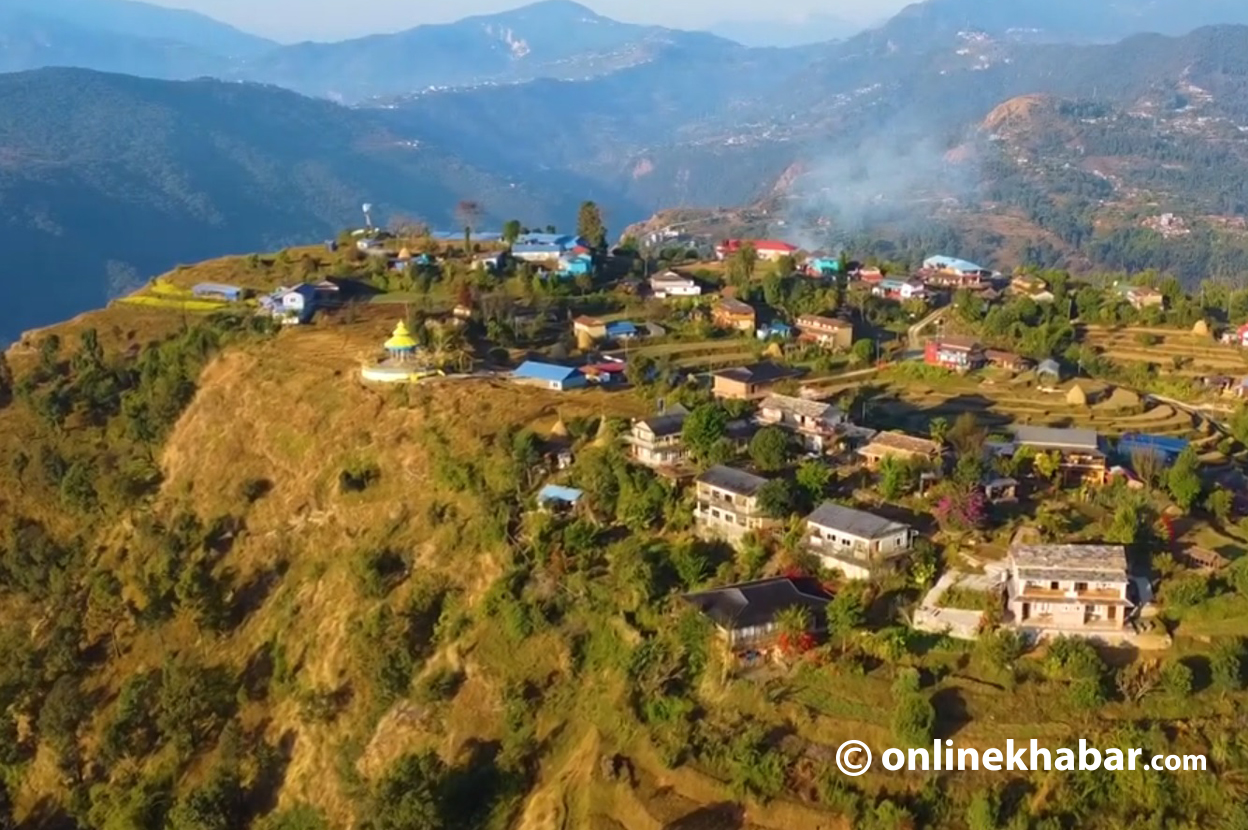
Sometimes tourists camped at the same spot for 2-3 days, enjoying the mountain vistas. The houses were small and often locals looked towards Pokhara town. Tourists appreciated the villagers working in the fields.
Teknath Baral, Ward Chairperson of Machhapuchhre Rural Municipality-6, recalls, “Foreign visitors were amazed to see us, and even the villagers were surprised. However, at that time, Astam lacked a road, electricity, and faced potable water shortages, leading to a life of deprivation.”
Even as the country faced violent insurgency, tourists still trekked through Dhampus to Ghansruk.
Three Generations Nurturing Annapurna Eco Village
The current beautiful and renowned tourist destination did not emerge overnight; it is the result of the perseverance and labour of three generations of the Shivraj and Bishwaraj Adhikari family.
Since 2004/5 BS (circa 1947 AD), Shivraj Adhikari began shifting his animal shelters to the hill in Astam from a nearby village. To ease transporting manure, he built shelters near the fields. Then he had the idea of attracting trekkers passing through Astam by constructing two rooms with facilities for food and lodging.
Shivraj used traditional stone and earth to build these rooms, intending to offer guests farm-grown food. This humble hospitality soon became popular among thousands of tourists.
His son Bishwaraj Adhikari, along with his three brothers and their children, expanded the resort significantly.
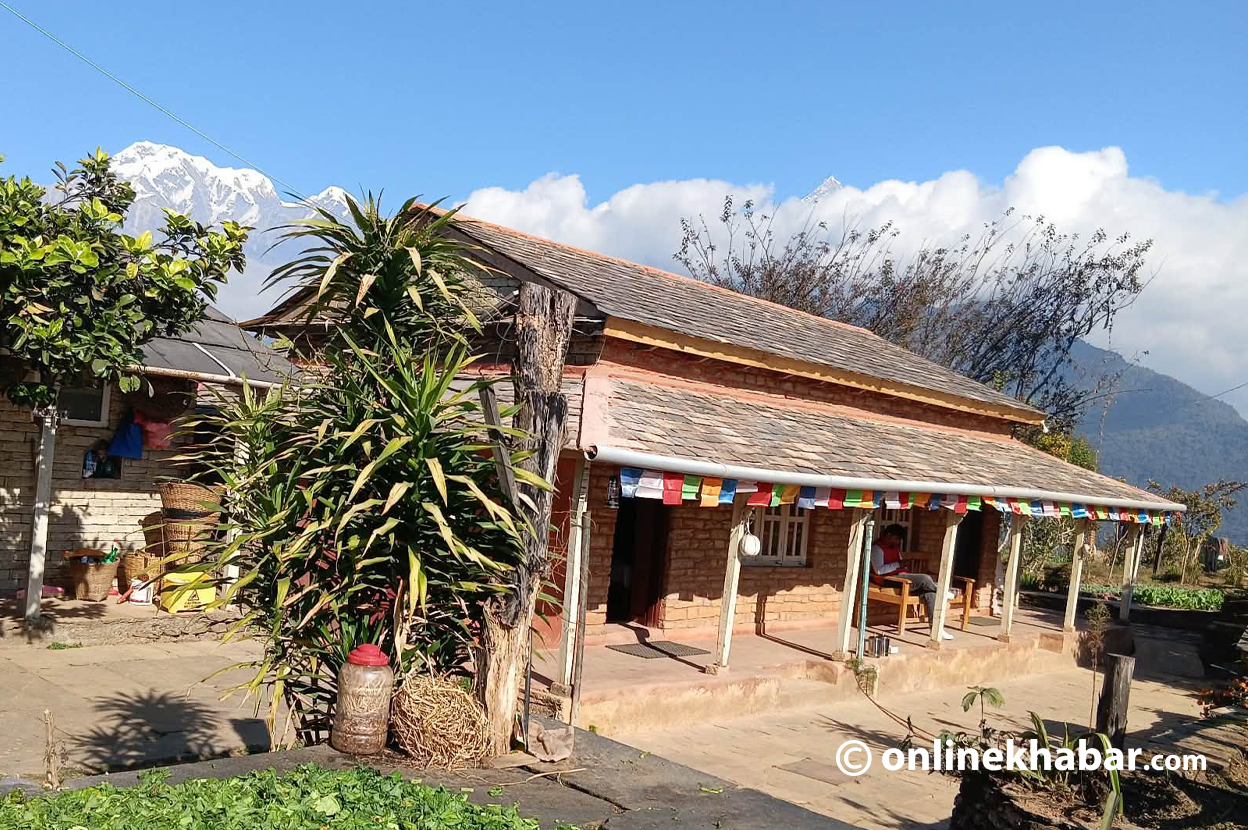
The resort is a favourite destination among Nepalese tourists. It currently features 23 rooms and occupies 15 ropani (approximately 0.75 hectares) of land. The site includes spaces for yoga and meditation, bird watching, child play areas, and farming activities.
Annapurna Eco Village has set a precedent in eco-tourism development replicated in other regions as well.
Ultimately, the identity of Astam village transformed due to tourism; most households now host guests. New hotels and homestays, such as Hangjakot Homestay, have opened, and star-rated hotels are under construction. The area is now equipped with paved roads and electricity.
This region attracts hundreds of visitors daily, preserving local flavors and traditions.
Annapurna Eco Village was established on the Adhikari family’s traditional fallow land. Bishwaraj Adhikari recalls, “Since it was 300-400 meters from our house, we had to carry manure ourselves to plant millet, wheat, and maize.”
Bishwaraj entered the tourism sector around 1989/90 AD, initially guiding visitors. Back then, the popular 6-7 day “Pokhara Pherro” trek—from Pokhara-Harichowk through Tibetan Camp, Melbot, Astam, Dhampus, to Australian Camp—was favored by tourists. Local families began hosting international trekkers during these journeys.
However, with the construction of the Pokhara-Baglung highway, traditional trekking routes declined, and this sector faced a downturn. Yet, the Adhikari family envisioned potential in tourism and committed themselves to it.
Bishwaraj, his father Shivraj (a teacher), and his brothers engaged fully in tourism business, opening trekking shops, travel agencies, and guesthouses in Pokhara by 2000. Despite many challenges and initial setbacks in the city, they found success returning to their land.
Eco Village Concept: Learning While Doing
“Eco Village” is not merely a brand name for the resort. They drew inspiration from eco villages in Europe and India and Kathmandu’s environment-friendly projects, adopting a “learning by doing” approach.
They built traditional houses using only local stone, wood, and earth, preserving indigenous architectural styles.
Tourists are served ‘eco tea,’ made from farm-fresh milk, yogurt, ghee, cheese, and locally sourced herbs, a popular offering here.
During the COVID-19 pandemic, when city businesses closed, the brothers returned to their village to manage the resort directly.
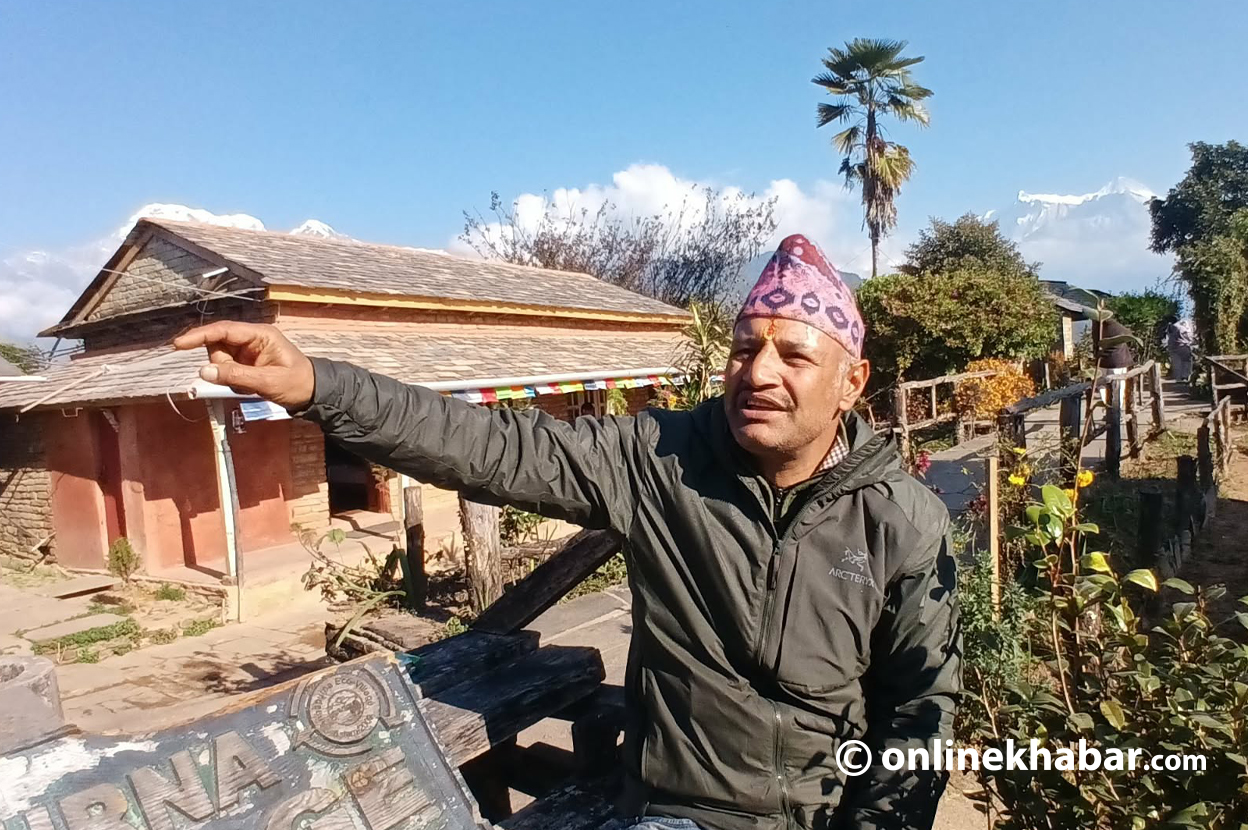
Chief operator Bishwaraj Adhikari oversees management and marketing. His younger brother, educated in hotel management in Singapore, has enhanced hospitality and service quality.
Another brother, Bednidhi Adhikari, is a trekking guide and yoga and wellness expert. Bishwaraj’s sons also conduct yoga and meditation classes, positioning the resort as a center for wellness and yoga, not just lodging and dining.
Currently, the resort offers 250-hour international yoga teacher training programs, with plans to extend it to 300 hours.
Bishwaraj criticizes the government for lacking a comprehensive eco-tourism policy. He highlights that the focus on five-star hotels and concrete structures sidelines local and nature-based tourism.
He emphasizes that true eco-tourism involves the use of organic fertilizers, animal husbandry (cattle and goats), promoting local products, and providing tourists with an authentic rural environment.