
FIFA Withdraws Controversial Plan but Distrust in Leadership Persists
The controversy began when FIFA proposed selling 20 percent of the commercial shares of its World Cup tournaments to private investors.
News Summary
- FIFA President Gianni Infantino has formally withdrawn his controversial plan to share FIFA tournament ownership with private investors.
- After this proposal sparked intense division in the international football community, serious distrust and questions about Infantino’s leadership have surfaced.
- Powerful bodies including the European Football Association have strongly opposed this move, accusing it of attempting to sell the soul of football.
July 31, Kathmandu: Gianni Infantino, president of FIFA, the world’s supreme football body, has officially withdrawn the contentious plan that aimed to share FIFA competitions with private investors. He acknowledged that the plan caused sharp divisions and polarization within international football.
Seeing that the controversial proposal would not achieve its main goals, FIFA decided not to proceed further. However, the political fallout and distrust towards FIFA’s leadership remain unresolved despite the withdrawal.
This episode has put Infantino’s presidency at risk.
The controversy began when FIFA unveiled an initiative to sell 20 percent of the commercial shares of its World Cup tournaments to private investors. The proposal aimed to raise $2 billion by transferring its commercial rights to the private sector.
According to the plan, a new commercial subsidiary named ‘FIFA Forward Enterprises’ (FFE) would be established to manage broadcasting rights, sponsorships, ticket sales, and licensing for men’s and women’s World Cups and the Club World Cup. Twenty percent of the shares in this company were to be sold to private investors.
The financial framework of this deal was developed in partnership with the US multinational bank J.P. Morgan. The scheme was supported by an American venture capital firm called ‘Thrive Eternal’ (Thrive Capital), founded by Joshua (Josh) Kushner, the elder brother of Jared Kushner, who is the son-in-law of former US President Donald Trump. The connection to the Trump family intensified the political controversy and mistrust surrounding the plan.
Infantino had maintained close ties with Trump in recent years. He was accused of unjust interference in overturning a red card given to US player Folarin Balogun at the 2026 World Cup following a telephone conversation with Trump, raising serious doubts about FIFA’s fairness. Against this backdrop, selling World Cup shares to a company linked to the Trump family became highly controversial.
Financial Incentives and Vote-Securing Strategy
Infantino secretly appealed to 211 FIFA member nations by letter, urging them to approve the plan before September 19. Upon approval, each member nation would receive an immediate lump sum payment of $20 million, and between 2027 and 2038, additional earnings totaling approximately $660 million were promised.
Currently, FIFA member countries receive $800,000 annually, and without this plan, the total payout was projected to be just $270 million.
Infantino intended to push for the proposal’s approval at the upcoming FIFA Congress in March.
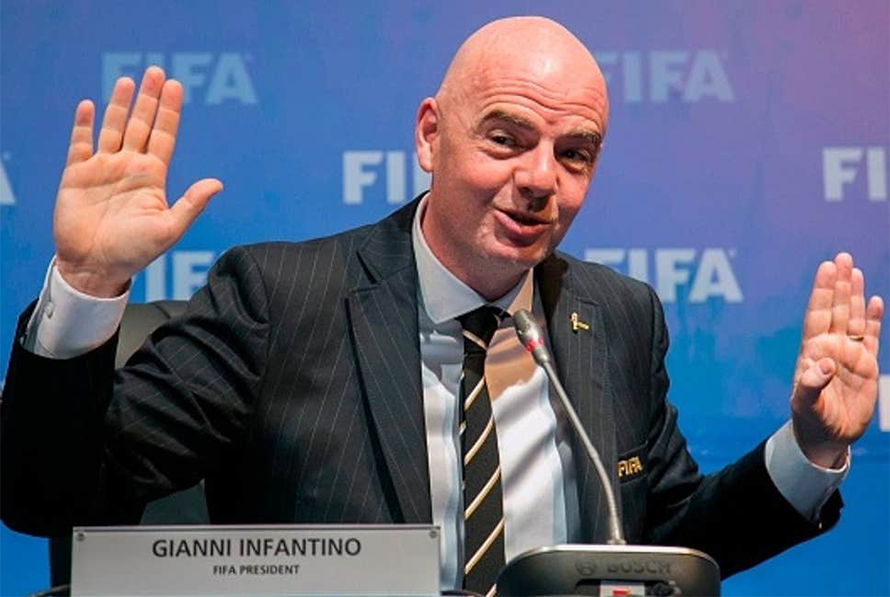
Infantino, preparing to seek a fourth term as president in 2027, employed a strategy to secure votes by offering $20 million in immediate cash incentives to smaller nations.
Since all member associations have equal voting rights, even though the 55 European nations opposed the plan, Infantino hoped to secure a majority through support from smaller countries in Asia, Africa, Oceania, and CONCACAF.
In 2018, Infantino had also attempted to sell shares of the Club World Cup and Global Nations League to Japan’s SoftBank in a $25 billion deal, which ultimately failed due to opposition from European associations.
Infantino’s Defense and Analysts’ Concerns
Infantino framed the plan as an investment opportunity for smaller, underdeveloped football nations. He stated, “We are eager to invest in places where football has lagged behind, and we want to give each member nation the freedom to shape their future.”
He claimed that FIFA had already earned about $15 billion from the 2026 World Cup and planned to reinvest these funds in global football development through this new company.
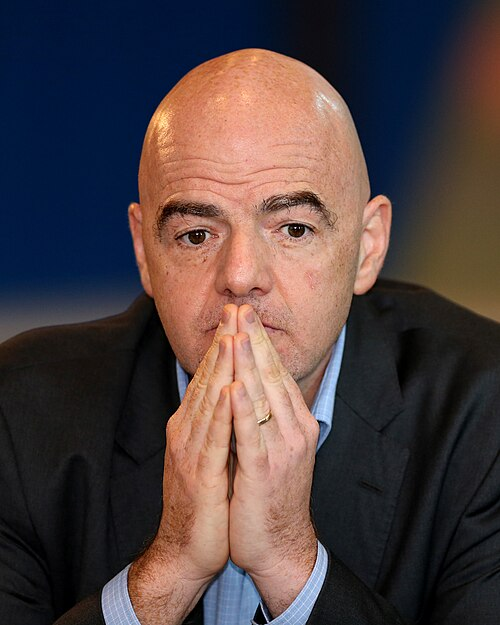
He assured that FIFA would retain primary control over the sport’s rules, scheduling, and overall administration, and that profits generated would be reinvested in football growth.
Nevertheless, analysts and critics warned that allowing private investors into the sport could undermine football’s fundamental nature. Since private investors seek profits, there was concern over potential interference in broadcast rights, ticket pricing, and competition formats.
Such interventions could jeopardize the authenticity of the sport and potentially increase commercial breaks and “hydration breaks” in broadcasts to generate more revenue.
As a non-profit organization, FIFA enjoys significant tax benefits and maintains a secure emergency fund of $3 billion. Introducing profit-seeking investors could destabilize this system.
Global Outcry, Boycott Threats, and Pressure from All Sides
The plan’s public revelation sparked widespread backlash from the European Football Association (UEFA), leading football clubs worldwide, political figures, and fans who condemned it as a destructive privatization of public assets.
UEFA issued a stern statement condemning the scheme, stating it crossed the limits of football’s regulatory bodies and emphasizing that football is “not anyone’s private property.”
UEFA threatened legal action and convened an emergency meeting of its 55 member associations, which may lead to a boycott of the 2030 World Cup.
La Liga president Javier Tebas criticized Infantino, declaring, “This is not reform; it’s a strategy to sell out football’s future and win elections. Infantino is the problem, not the solution.”
Political figures also opposed the plan. UK Prime Minister Andy Burnham expressed strong rejection, calling it an attempt to remove fans from football and hand control to investors.
The European Sports Commissioner denounced football’s excessive commercialization as destructive, urging outsiders to “keep their hands off our game.” Other confederations began distancing themselves from Infantino. CONCACAF demanded a review, and Asian Football Confederation countries withheld support.
Two close Infantino aides, senior advisor Carlos Cordeiro and chief operations officer Kevin Lamore, resigned from their posts. Altogether, 136 countries officially rejected the investment plan.
What Now: Will Infantino Be Removed?
Following mounting pressure and boycott threats, Infantino announced the plan’s withdrawal on Saturday morning. However, the controversy is far from over. UEFA issued another firm statement expressing full distrust of his leadership.
Football politics is long-standing. Until Tuesday morning, Infantino appeared strong, but now his position is precarious. UEFA seems to have an opportunity to remove him.
Resignation remains the swiftest way for Infantino to leave office, similar to Sepp Blatter’s exit amid corruption allegations in 2015. Yet, he still retains some supporters and might try to remain in position until the March re-election.
Two legal avenues exist for his removal: first, an emergency FIFA Council meeting. If 19 out of 37 council members request it, a meeting must be held within two weeks. The council includes representatives from multiple continents and can exert pressure if sufficient votes are secured.
Second, a special general assembly can be convened and a vote of no confidence presented if one-quarter of the 211 member associations request it. With UEFA holding 55 countries, they could call such a meeting at any time. However, 106 votes are needed to remove Infantino.
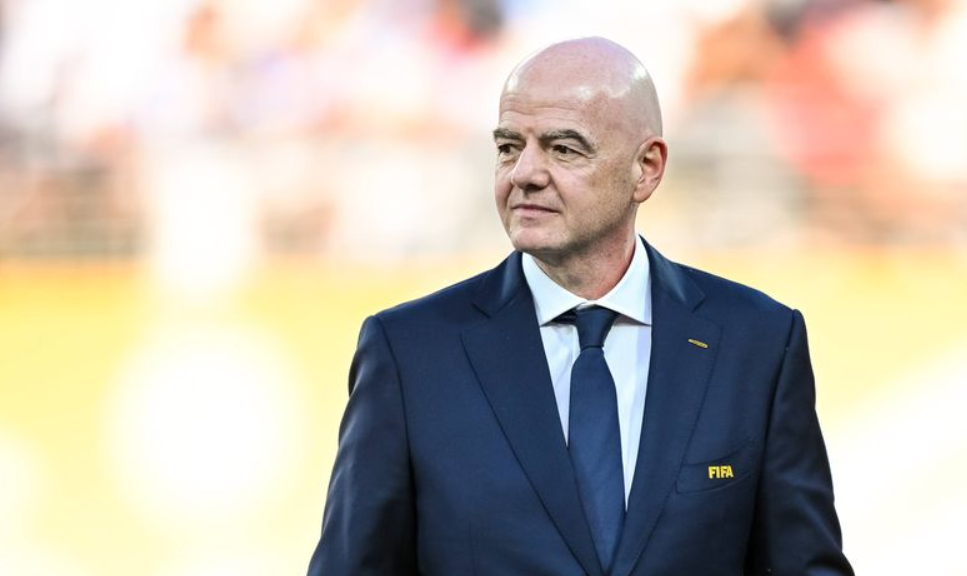
Securing 106 votes will not be easy because opposition to the plan does not necessarily translate into votes to remove the president. Qatar, Morocco, and other nations have publicly supported Infantino, and Egypt has also praised him.
If UEFA and other critics decide to challenge or remove him in elections, new leadership candidates will need to emerge. Since a European candidate might struggle to gain worldwide support, consensus leaders are being sought from other continents.
Potential candidates include CONCACAF President and former Canada Soccer head Victor Montagliani, Asian Football Confederation President Sheikh Salman bin Ibrahim Al Khalifa, and European Club Association chief Nasser Al-Khelaifi.
In his Saturday statement, Infantino expressed the goal of “bringing all stakeholders together again in the coming days and weeks.” He is reportedly attempting reparations, engaging in dialogue, and winning over former allies.
Conversely, if primary sponsors such as Sony and Emirates begin distancing themselves from FIFA as they did in 2015, Infantino’s leadership will almost certainly end. Thus far, sponsors remain engaged, but football’s political and financial tensions are expected to persist for some time.
(With agency contributions)