
Bhat-Bhateni Supermarket Relaunches After Extensive Damage
News Summary
Reviewed.
- During the Janajati protests, 12 of Bhat-Bhateni’s stores were completely destroyed by fire, causing losses of nearly 1.1 billion Nepali Rupees, according to the company.
- Bhat-Bhateni states that reconstruction costs increased by 20 to 30 percent, bringing the total to approximately 1.4 billion Rupees.
- COO Panu Paudel reports that out of 27 Bhat-Bhateni stores, 23 are operational, with the remaining two expected to reopen between mid-September and December.
September 8, Kathmandu – The journey of entrepreneur Min Bahadur Gurung clearly illustrates how much dedication, passion, investment, persistence, and patience are required to establish a successful business.
Nearly four decades ago, in 1984 (2041 BS), Gurung began his venture by renting a small shed in Naxal, Kathmandu, carrying a dream that eventually became a distinguished example in Nepal’s business sector.
His establishment, ‘Bhat-Bhateni Departmental Store,’ helped foster a vision in Nepal that investment, employment, and national capability can thrive domestically. This is evidenced by over two dozen Bhat-Bhateni stores across the country.
From a small rented shed to a nationwide chain of superstores offering thousands of jobs, Gurung’s hard work over forty years has been monumental.
He had planned to expand to all 77 districts by 2030, but last year on September 8, a devastating event occurred. That day marked the beginning of the Janajati protests, which severely disrupted Gurung’s dream that employed thousands of youth.
The protests turned violent with destruction of government and private properties, looting, and arson, with Bhat-Bhateni superstores becoming a primary target.
However, Gurung did not give up. Working tirelessly with thousands of colleagues and supported by millions of consumers, Bhat-Bhateni rose again after one year.
COO Panu Paudel stated, “Due to the love, trust, and support of tens of thousands of employees and millions of customers, we revived Bhat-Bhateni. We take pride in this achievement.”
Among the more than two dozen stores established with billions of Rupee investments, most were damaged by vandalism and fire, raising concerns whether recovery was feasible, Paudel recalled.
Nevertheless, the courage of Executive Chairman Gurung, along with the loyalty of employees’ families and consumers, became the cornerstone of reconstruction.
According to COO Paudel, Bhat-Bhateni sustained losses estimated at around 1.1 billion Rupees during the Janajati protests. Subsequent reconstruction required an additional 20 to 30 percent in expenditure, reaching a total of about 1.4 billion Rupees.
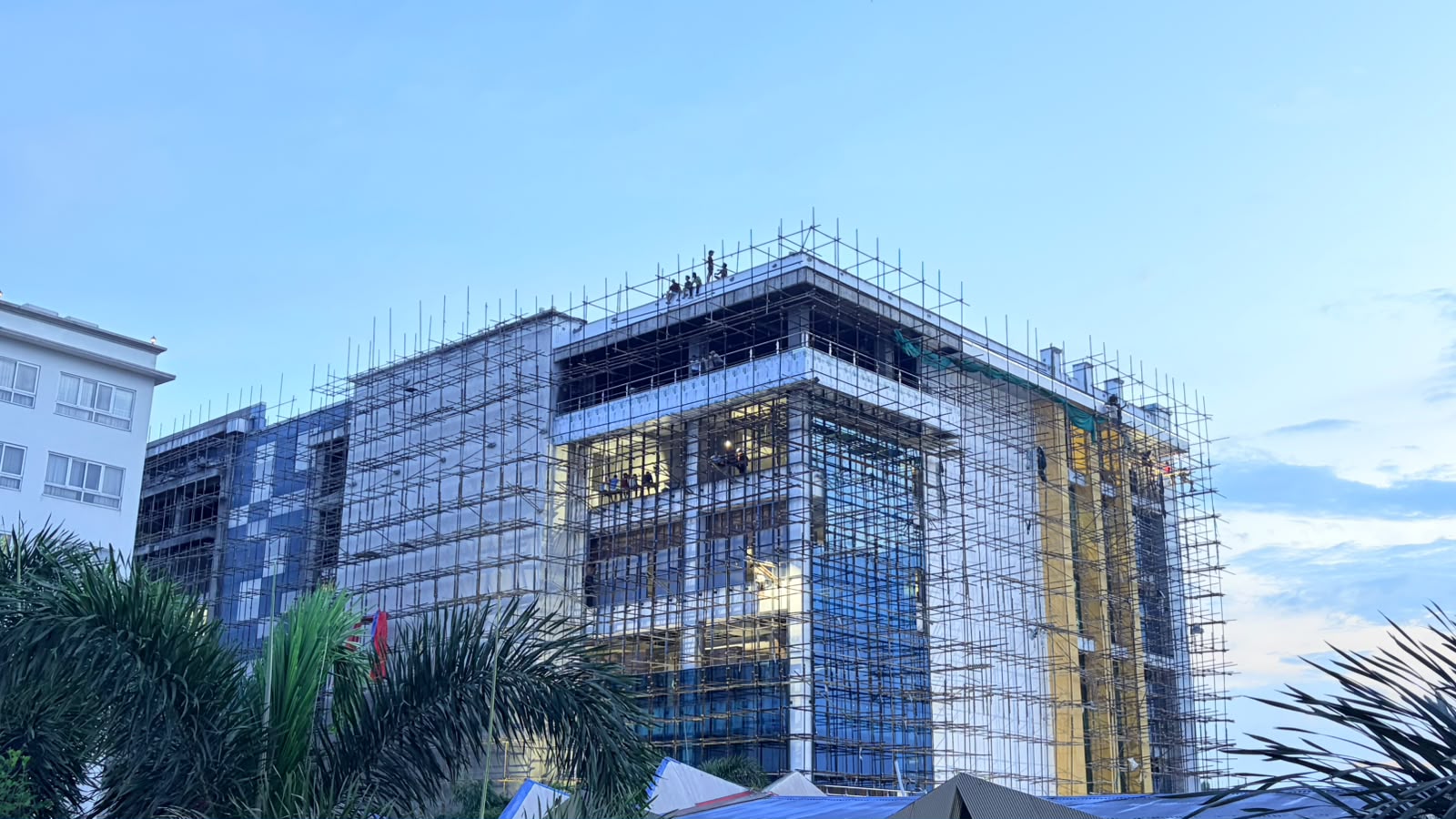
“Third, the newly constructed buildings are of higher quality than before, with special expenses allocated for materials and aesthetics,” Paudel noted.
He added that out of 27 stores, 23 are currently operational. The Bhat-Bhateni store in Dharan reopened on September 9, while the Kathmandu Tangal store is scheduled to open on September 21. Subsequently, all 25 stores will be functional. The stores in Damak and Hetauda will resume operation after the Dashain festival.
“Despite the damage, no employees were laid off. All previous staff have been reinstated, with no salary cuts and bonuses given. Our employees are like family, and supporting them through hardships is the chairman’s priority,” COO Paudel emphasized.
He prefers not to dwell on last year’s events. “We chose to move forward and forget the incident. Holding onto past stress would have made rebuilding difficult. We are now successfully standing tall again,” he said.
Current Operations and Upcoming Store Openings
Twenty-three Bhat-Bhateni stores are expected to be operational by mid-September. The remaining two stores are anticipated to open by December. Additionally, construction of four new stores is nearing completion.
Stores in Chitwan Tandi and Pokhara Lekhnath are set to open within this fiscal year. Meanwhile, stores in Lalitpur Satdobato and Bhaisipati are slated to begin operations next fiscal year.
Impact of the Janajati Protests on Bhat-Bhateni
Among over two and a half dozen stores nationwide, 12 key outlets were completely devastated by fire.
In Kathmandu, the Naxal store (headquarters), Maharajgunj, Bauddha, Koteshwor, and the warehouse in Baluwatar suffered violent attacks including vandalism, looting, and arson, resulting in their complete destruction.
Superstores in Pokhara, Chitwan, Hetauda, Birtamod, Damak, Biratnagar, and Dharan were also entirely destroyed.
Stores in the Kathmandu valley areas of Kalanki, Balaju, Thimi, as well as outlets outside the valley in Janakpur, Butwal, Birgunj, Dhangadhi, Itahari, and Bhairahawa faced looting and vandalism though were not burned.
Fortunately, stores in Tokha, Satdobato, Anamnagar, Sanagaun, Tripureshwor, and Patan within Kathmandu valley, as well as Nepalgunj outside the valley, remained unscathed.
COO Paudel mentioned that the exact cash loss from registers in stores affected by looting and arson is not fully known, but protesters seized cash in addition to goods, causing significant financial damage.
Bhat-Bhateni’s stores collectively generate business worth approximately 1.068 billion Rupees daily, totaling almost 3.9 billion annually.
Before the protests started, all Bhat-Bhateni outlets across the country were operating smoothly. The unrest began after the first day of the protests, which saw police firing that resulted in 19 deaths, triggering widespread looting and vandalism. Despite curfews announced by the government, disturbances continued into the second day.
Each Bhat-Bhateni store employs at least 500 people, with a high proportion of women employees. Including warehouse and store workers, total direct employment exceeds 20,000 individuals.