
Proposal Presented to Dissolve, Transfer, and Merge Public Bodies
News Summary
Editorial review completed.
- The Good Governance Roadmap Suggestion Committee has recommended dissolving 11 public bodies and merging 7 bodies to the government.
- The committee suggested dissolving public entities such as the Buddhist Philosophy Promotion Committee, Journalist Minimum Wage Determination Committee, and the Railway Board, along with transferring their functions.
- The committee recommended transferring various bodies to local levels, provinces, or relevant departments to reduce government expenses.
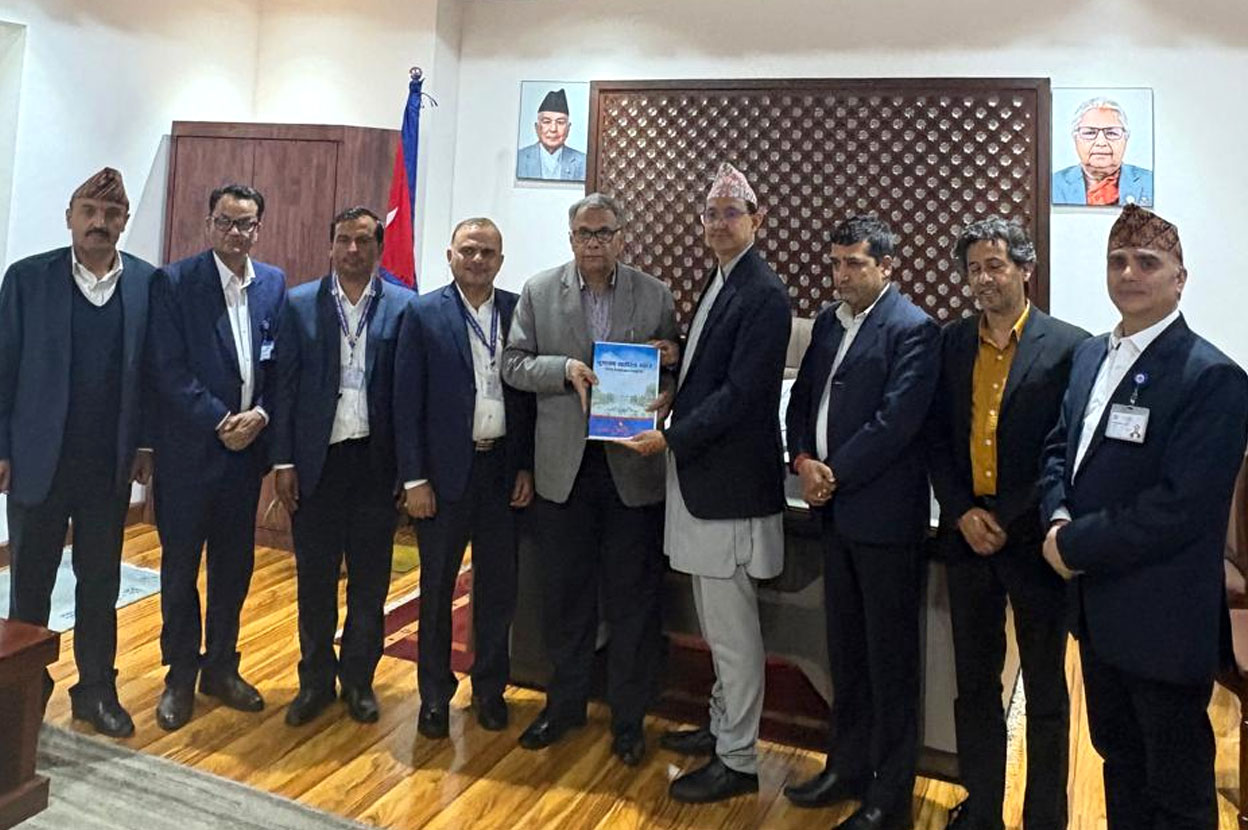
March 29, Kathmandu – The Good Governance Roadmap Suggestion Committee has proposed dissolving 11 public bodies. The 15-member committee, formed under the coordination of Cabinet Secretary Govinda Bahadur Karki, identified public institutions that can be dissolved, merged, or have their functions transferred, and presented recommendations to the government.
The committee was formed as per the Prime Minister’s decision dated January 28, 2022, to prepare a Good Governance Roadmap. Its mandate was to identify areas prone to corruption in the performance of functions by the three tiers of government and deliver a report with necessary policy, institutional, and procedural reform suggestions in the fields of governance, development management, and public service delivery.
After further analysis based on previous studies and reports, the Karki-led committee recommended to the government to dissolve public bodies that were created in the past but have either not functioned effectively or contributed to unnecessary expenses. The committee suggested merging entities with similar mandates to avoid duplication of work and to reduce government expenditure through coordination. According to the committee, there is no need for additional bodies to perform functions that provinces and local governments can manage. As stated in the Governance Procedure, “Institutions created for a specific purpose that have become irrelevant due to changing circumstances should be dissolved to reduce the government’s financial and administrative burden.”
According to the report submitted by the committee, 11 public bodies are recommended for dissolution. Among these, the recently published Good Governance Roadmap by the new government stated that the functions of three bodies can be performed by existing institutions. The committee recommended dissolving the Buddhist Philosophy Promotion and Monastery Development Committee, as its functions can be handled by Lumbini University and the Department of Archaeology.
The Journalist Minimum Wage Determination Committee and the Nepal Railway Board are also recommended for dissolution; the railway department can carry out the railway board’s functions. The Urban Public Transport Authority, which has not been active for three years, was deemed unnecessary. The Land Development Revolving Fund is also proposed for dissolution.
The committee did not consider the Municipal Development Committee necessary, as its functions can be managed by local governments. After the completion of infrastructure projects of Bardibas, Surkhet, and Butwal Medical Colleges, these entities are recommended to be dissolved as well.
The National Dairy Development Board should be dissolved since the Department of Animal Services can undertake its roles. District Election Offices could be dissolved and their responsibilities transferred to respective District Administration Offices. The roadmap also mentions the possibility of establishing election offices at the provincial level following the dissolution of district-level offices.
Following the recommendation to dissolve the labor approval system, the Ministry of Labor implemented new provisions starting Sunday. The committee also recommended canceling the ‘No Objection Certificate’ (NOC) required for foreign studies.
The committee noted that if another body performs similar functions, an additional body is unnecessary. It further suggested transferring functions from one institution to another where applicable. The National Chure Conservation Committee is proposed to be restructured and incorporated into the government structure.
The Botanical Research Centers located in Ilam, Dhanusha, Makwanpur, Banke, Salyan, Jumla, and Kailali are recommended to be transferred to their respective provinces. The Animal Disease Investigation Projects in Biratnagar, Janakpur, Pokhara, Surkhet, and Dhangadhi are also advised to be transferred to provincial authority. Various irrigation projects should be handed over to federal or provincial irrigation offices, and riverbank protection programs should be transferred to the provinces.
Multiple tourism conservation and development committees are recommended to be transferred to local governments or provincial authorities.
The government has also been advised to merge seven public bodies. The Nepal Mountain Academy and Nepal Tourism and Hotel Management Academy, which perform similar functions, are recommended to be combined. The Printing Department, Law Book Management Committee, and Security Printing Development Committee could be merged into the Security Printing Center.
The Nepal Intermodal Transport Development Committee could be merged with Nepal Transport and Warehousing Management Company Limited to become more efficient. The committee also suggested the possibility of transforming these combined bodies into an authority. The Judicial Service Training Center is proposed to be merged with the Judicial Academy. The Central Law Library Development Committee should be integrated with the National Library.
The committee recommended integrating similar youth and small entrepreneur self-employment funds, women empowerment funds, and startup enterprise loan funds under a single entity named the ‘National Entrepreneurship and Self-employment Fund.’ However, for the Terai Madhesh Prosperity Program, it is deemed more appropriate to transfer responsibilities to the relevant province rather than establishing a separate federal office.
To reduce government expenses, the Public Expenditure Review Commission was formed under Dr. Dilliraj Khanal’s coordination. A committee led by former Secretary Shankar Prasad Koirala submitted a report in 2021 advising the government on merging, dissolving, or transferring various overlapping structures.
Another recommendation commission was formed in 2021 under former Finance Minister and Finance Secretary Rameshwar Prasad Khanal, which suggested enhancing government function effectiveness and reducing expenses through the merger, dissolution, and transfer of offices and public bodies.
To implement immediate proposals from all three reports, another task force was established under Chudamani Paudel, Secretary of the Prime Minister and Council of Ministers’ Office. The Good Governance Roadmap presented by the current government is based on these past studies.