
Internal Conflict in Nepali Congress Escalates Further
News Summary
Reviewed.
- The Non-establishment faction of Nepali Congress has started a meeting of the Central Committee elected from the 14th General Convention at Dhumbarahi.
- Allegations of rule violations during the proportional representation MP selection have surfaced in the meeting.
- General Secretary Pradeep Paudel called for party unity, emphasizing that strength lies in unity.
March 31, Kathmandu – The internal conflict within Nepali Congress, which has been ongoing for six months, has intensified following the recent elections. After the Election Commission recognized the Central Committee elected in the special general convention, dissatisfied groups within the party have escalated parallel activities.
The Non-establishment faction started a meeting of the Central Working Committee elected at the 14th General Convention from Tuesday. Before the special convention, Acting Chairperson Purna Bahadur Khadka, citing the existence of the old committee, convened this meeting.
While Chairperson Gagan Thapa’s establishment faction warned of disciplinary action for breaching party statutes, Vice Chairperson Khadka held the meeting.
In his capacity as Acting Chairperson, Khadka convened the meeting at Hotel Smart in Dhumbarahi, which is scheduled to run until Wednesday. On the first day, 82 office bearers and central members elected at the 14th General Convention, along with two provincial chairpersons, participated.
Khadka conducted the meeting seating former Minister Dr. Shashank Koirala and outgoing central member Shekhar Koirala on either side. Shekhar Koirala arrived at the venue at the last moment.
Upon his arrival, Khadka requested all leaders to take their seats and proceeded with the meeting. Notably, there was no Nepali Congress banner displayed during the meeting and no minutes were prepared.
Former Deputy General Secretary Badri Pandey described the two-day meeting as an informal gathering.
“This is not a formal meeting but an informal gathering,” he said, “Such gatherings help unify the party rather than polarize it.”
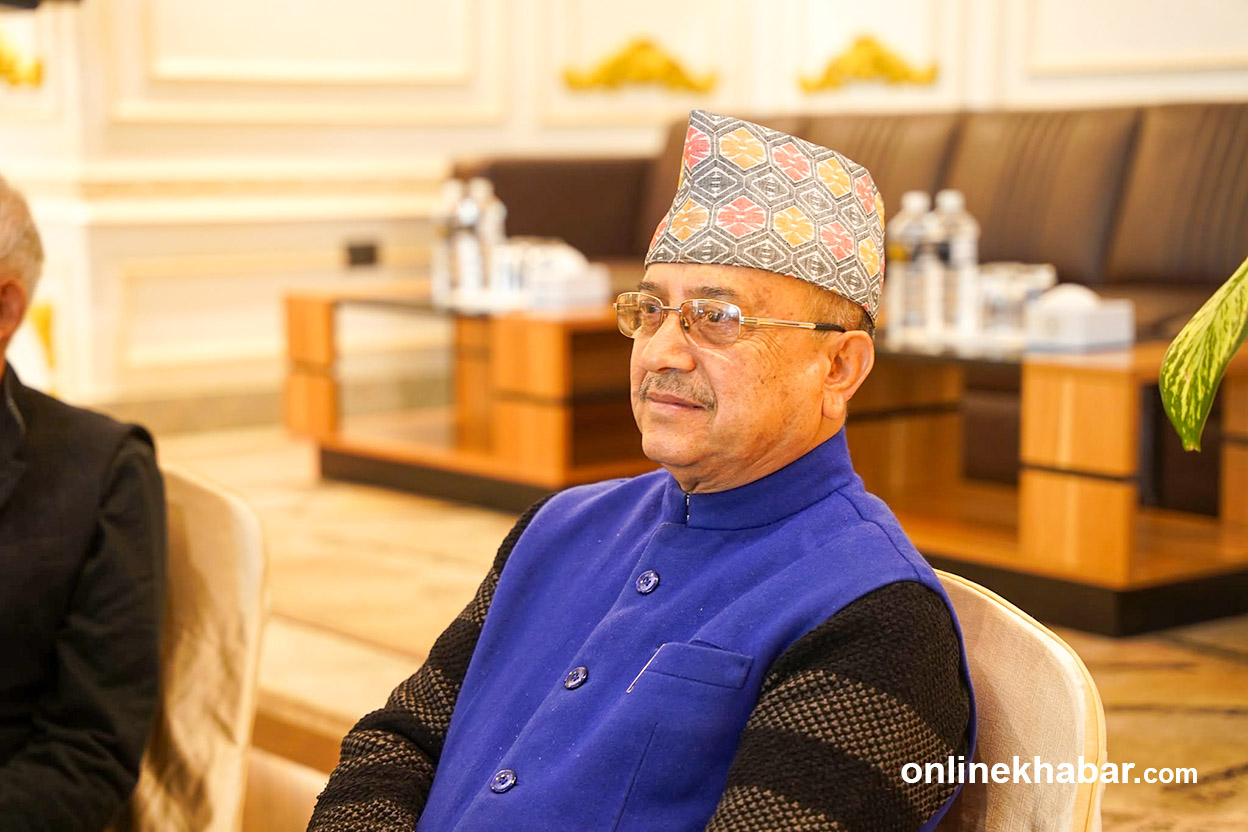
However, outside the meeting, leader Umesh Jung Rayamajhi offered a different interpretation. When asked by journalists if it was a central committee meeting or a gathering, he said, “It is both a gathering and a meeting. Discussions continue regularly in democratic processes, but they must serve the interests of the nation, party, and people.”
More than 15 leaders expressed their views during the meeting, according to participants, but no formal announcement has been made. Top leaders elected from Sher Bahadur Deuba and Shekhar Koirala’s panels reportedly withheld comments.
Former Chief Minister of Karnali Province, Jeevan Bahadur Shahi, emphasized the need for unity and mentioned the option of forming a new party if dialogue fails.
“Instead of pursuing parallel activities, we should come together and move forward through dialogue,” he said. “If you don’t want dialogue, then open a new party; parallel activities are not the way.”
Leader Shankar Bhandari expressed concern over increased foreign intervention and said Congress should work to establish a constitutional monarchy and a Hindu state.
“The country is in crisis. Congress must move forward to establish both a constitutional monarchy and a Hindu state,” he emphasized.
Outgoing Central Member Saraswati Tiwari voiced objections regarding nominations in the election held on February 21. She questioned why candidates who support the regular convention sought tickets, specifically criticizing those who left Gagan Thapa’s faction.
“Why did you take a ticket from Gagan Thapa’s hand and contest?” she asked angrily. Another leader added, “They could have chosen not to run or declined tickets.”
Leader Man Bahadur Nepali complained of unfairness in the allocation of proportional representation seats.
“There has been a great injustice within the party. Wrong individuals have advanced, I have said this,” he stated. “The party must be reformed, but I also said your hands won’t succeed.”
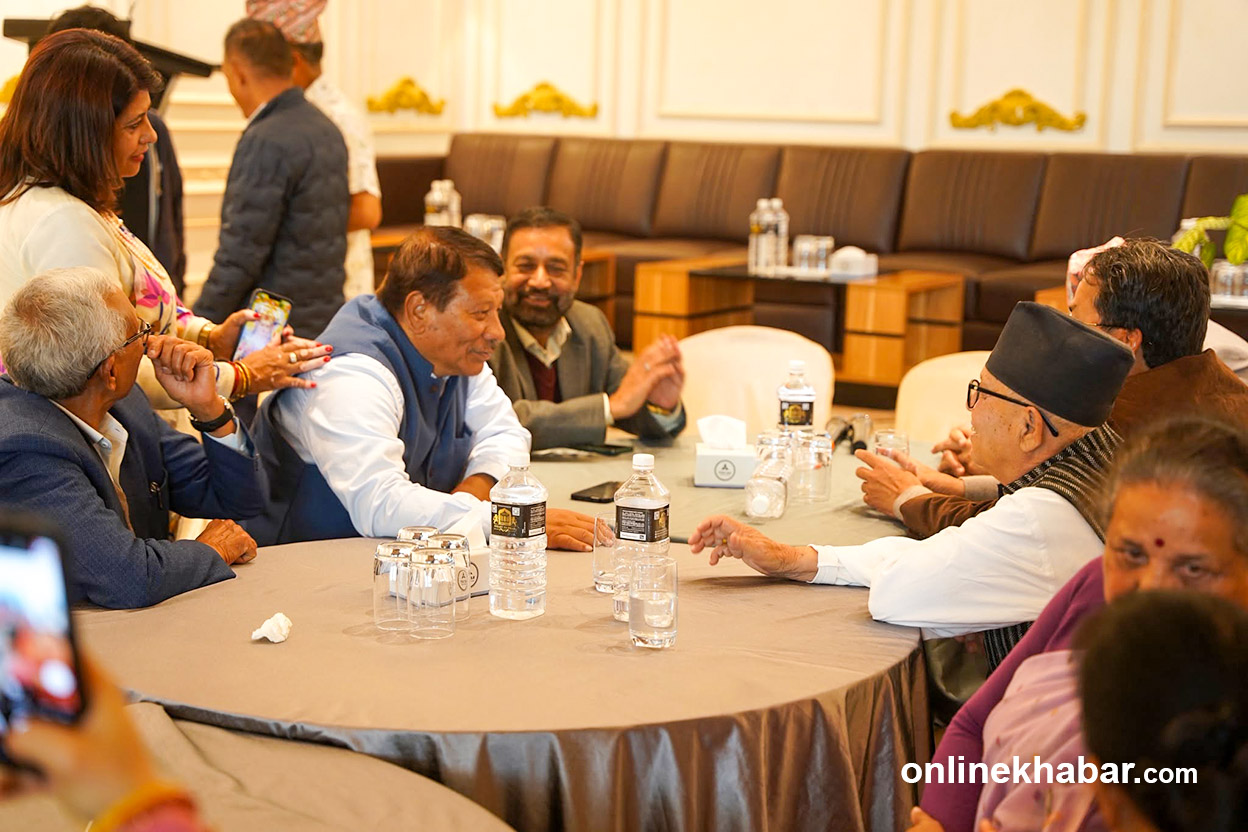
Outgoing Central Member Ishwari Nyaupane protested the removal of Man Bahadur Nepali’s name from first position in the Dalit quota and Bidya Timilsina’s from the first position in a marginalized area.
“Removing Man Bahadur Nepali from the Dalit quota and Bidya Timilsina from the marginalized region is wrong,” she said. “This is against party rules and the Election Commission is also at fault.”
Nyaupane held both the Election Commission and party leadership responsible for violating candidate selection procedures.
Khadka revealed that the establishment faction violated rules during the proportional MP selection.
“The special general convention acted against regular rules. They removed Bidya Timilsina’s name from the marginalized region and replaced it with someone unknown to the party,” he said. “Our candidates were not chosen impartially.”
Leader Man Bahadur Bishwakarma expressed concern that the country and party are heading toward disaster.
“We are heading for a catastrophe. I have been warning for a long time,” he said at the meeting.
Leader Mohan Basnet described Nepali Congress’s geopolitical situation as difficult, citing that its alliance with the Communist Party disrupted geopolitical balance.
“We are caught in geopolitical issues. Leaders saw only their own schemes and didn’t listen to us,” he stated.
Sudurpashchim Province Speaker Birbahadur Balayar urged not to misinterpret the Dhumbarahi meeting and appealed to the establishment side. He said it was improper to respond with anger when the party’s well-being is at stake.
When asked by journalists if there were plans to take disciplinary action against those conducting parallel activities, he replied, “There is nothing like that. This is an old situation happening across the board. Don’t make it bigger than it is.”
According to Balayar, efforts toward party unity and understanding are ongoing. He appealed to all factions to adopt a middle ground without arrogance.
After the meeting, leader Umesh Jung Rayamajhi claimed that Gagan Thapa’s nomination in Sarlahi was executed following a “grand design.”
He cited the late former Prime Minister Girija Prasad Koirala’s “grand design” as currently applied in the country.
“This is the grand design Girija Prasad Koirala mentioned,” he said. “Who sent Gagan ji to Sarlahi? That is the design.”
Rayamajhi also asserted that the present election situation followed this design.
“Singha Durbar is on fire amid elections, the government is inside the military headquarters, and the army is surrounding everywhere, forming the first ring,” he said.
He stressed that all parties need to be ready to rescue the nation from its current state. “All friends in Congress must engage in dialogue and attend the general convention,” he urged.
He expressed confidence that Nepali Congress would be the party to lead the country.
While the Non-establishment faction’s meeting was underway, spokesperson Devraj Chalise stated on social media that he would not endorse the Dhumbarahi meeting.
“Differences of opinion and dissent are natural within a democratic party and serve to mature and strengthen it,” he wrote. “But when dissent escalates beyond respectful dialogue into parallel activity, it is detrimental to the party.”
He stressed the need to win party members’ hearts with clear plans as the convention approaches and reminded everyone to observe party discipline.
“The general convention is nearing. It is commendable for all to win members’ support with clear plans, solid arguments and positive energy,” he said. “The leadership path is open as per the party statute, and there will be no compromise on discipline.”
Earlier, after parallel activities escalated, General Secretary Pradeep Paudel appealed to leaders and workers to move forward in party unity.
Before the Dhumbarahi meeting began, he posted on Facebook, “Even in adversity, let us not be divided. I speak not just as general secretary but as an honest party worker – let us be united.”
Paudel expressed confidence that Congress’s unity has historically been its strength, enabling it to emerge stronger from all crises, and that this power of unity will shine again.
“I urge all Nepali Congress leaders and workers – there is strength in unity; thus, a bright future awaits us,” said General Secretary Paudel.