
Why the ‘One Municipality, One Cold Storage Center’ Initiative Remains Ineffective in Idle Fields
Summary
- Despite billions spent on building cold storage facilities to reduce agricultural production losses and ensure fair prices for farmers, many centers remain unused.
- Only 2 out of 10 cold storage centers in Bagmati Province are operational; the rest sit idle due to partners withholding funds despite completed structures.
- The Department of Agriculture plans to compile integrated data by collecting details of all small and large cold storages in every local government.
March 20, Kathmandu – Cold storage centers, established to reduce agricultural production losses and provide fair prices to farmers, have for years become little more than entities consuming state salaries without real impact.
Despite billions in government grants for building cold storage over the past decade, much of this investment has not been effectively utilized.
Policies requiring proportional grants from federal, provincial, and local governments have resulted in agencies with access to funds winning bids but then abandoning projects or engaging in corrupt practices, severely affecting agricultural infrastructure.
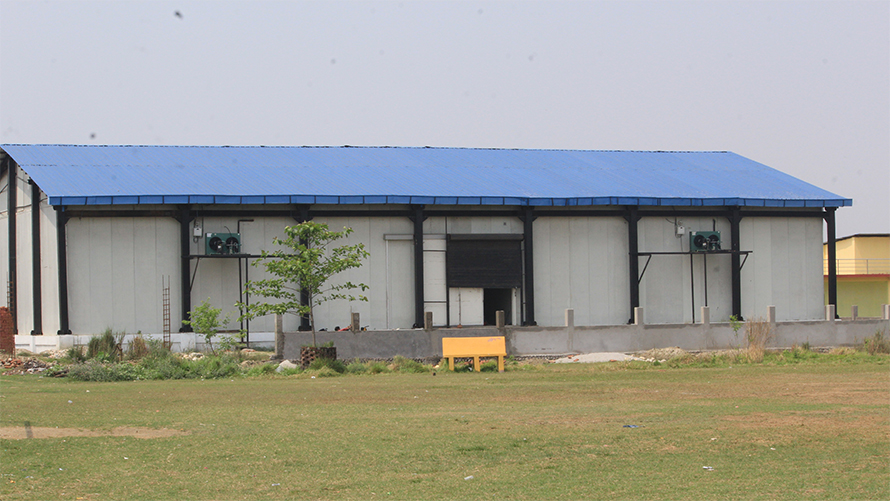
In some locations, only the building structure exists without operations, while in others, just land excavation was done and structures now lie abandoned in overgrown fields.
For example, the 500-ton cold storage jointly constructed by the provincial government and Manthali Municipality has been unused for three years despite the main structure being completed by July 2023, delayed further to avoid creating unnecessary infrastructure.
Out of 10 cold storage centers initiated by Bagmati Province with an investment close to 800 million NPR, only two are fully operational; the remaining centers remain stalled due to partners not remitting funds or management issues.
This issue is not confined to Bagmati Province alone; all seven provinces face similar challenges. Some facilities remain unused despite completion, while others are caught in construction limbo.
The cold storage topic has resurfaced recently because the government has decided to launch a ‘One Municipality, One Cold Storage Center’ program aimed at improving agricultural produce storage and market systems.
Senior leader Balendra Sah of the Rastriya Swatantra Party (Raswapa) publicized 100 government reform initiatives, including conducting feasibility studies within 10 days to establish cold storage centers in each district through public-private partnerships.
The prior government provided customs exemptions and up to 70% grants to keep agricultural products fresh and ensure competitive prices.
However, these benefits have failed to reach genuine farmer groups and communities, instead falling under the control of private entities and middlemen.
The Office of the Auditor General has also reported major negligence in grant distribution.
A lack of integrated records specifying which agencies have invested in which cold storage centers means many projects stalled due to budget distribution without comprehensive study and sustainable planning.
In several locations, lack of technical expertise has caused stored produce to rot and be wasted.
How Many Cold Storage Centers Exist Nationwide?
The Department of Agriculture has started collecting data on large and small cold storage centers across the country. Currently, data on 66 large cold storage centers exists, but details of smaller units in local governments are absent.
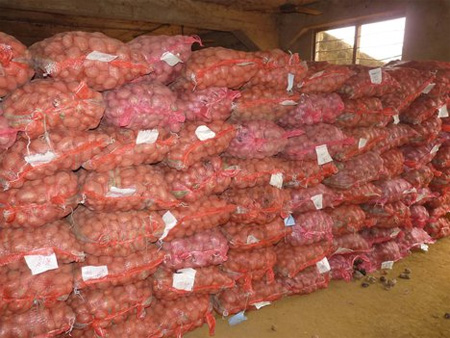
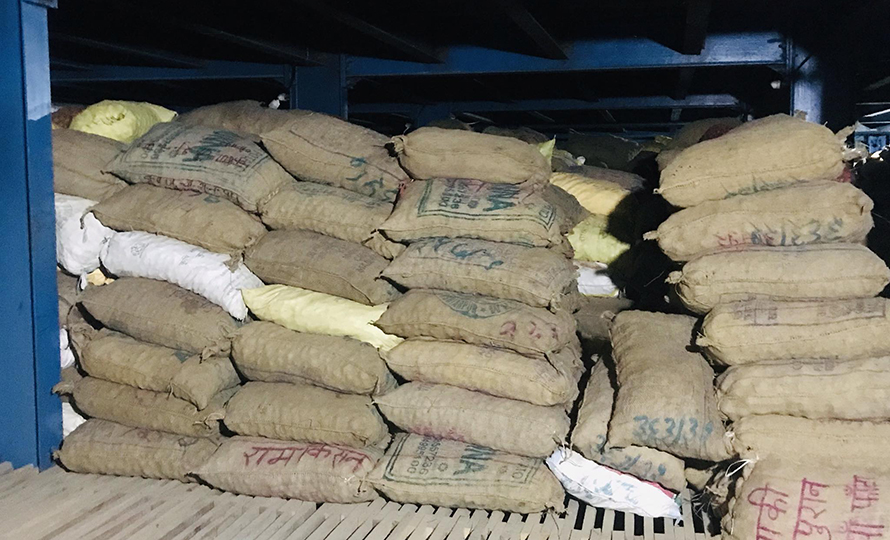
Out of these 66, only 60 are operational; these are mostly those receiving subsidies from the Electricity Authority and in contact with the department. Storage capacities range from 500 to 16,000 tons but many operate below half capacity due to reduced agricultural output.
Information on small cold rooms constructed by provincial and local governments is not yet compiled.
Director General Prakash Sanjel states that data collection is ongoing with coordination across seven provinces and local governments, aiming soon to prepare integrated statistics.
Lack of Technology and Uneven Distribution
Cold storage centers across the country are geographically unevenly distributed. Many are located far from production sites, limiting access to storage facilities.
Operational centers mostly use outdated technology, requiring all types of produce to be stored at the same temperature, which compromises the quality of items needing different conditions.
Though multi-chamber technology exists, it remains expensive and beyond the reach of small-scale farmers.
Power irregularities and high electricity costs increase operational expenses, resulting in costly storage fees that ultimately burden farmers.
Despite massive investments, the government has failed to develop an integrated cold chain system. The lack of refrigerated transport linking farms, storage facilities, and markets has degraded product quality.
Middlemen purchase produce cheaply from farmers for their own storage and sell it at higher prices during scarcity, undermining farmers’ profits.
‘One Municipality, One Cold Storage’ Policy: An Impractical Declaration Ignoring Production Challenges
Agricultural expert Krishna Prasad Paudel warns that prioritizing cold storage construction on barren land, despite youth migration, irrigation shortage, and fertilizer scarcity leading to unproductive fields, risks storing mostly imported vegetables and fruits rather than boosting local production.
He says this policy will fail and be a misuse of state resources because storage alone will not solve the fundamental issue of declining agricultural output.
“The government has failed to grasp the core problems of agriculture,” Paudel states. “Cold storage demand should arise from increased production; otherwise, focusing on storage is impractical.”
He criticizes the announcement of new projects without rehabilitating dysfunctional or underutilized existing storage, calling it wasteful public expenditure.
Paudel emphasizes that local governments are responsible for development implementation and cautions against centralizing all work at the national level.
“If local governments are not permitted to act, then who will?” he questions.
Who Will Benefit from New Cold Storage Facilities?
Paudel warns that new cold storage centers may primarily benefit imported foreign produce rather than local farmers.
“Since most vegetables are imported from India, this plan will not be objectionable if aimed at storing those imports,” he notes.
Flaws in the Minimum Support Price Concept
Paudel indicates that the government’s minimum support price (MSP) policy, set uniformly at the national level without considering regional cost differences, is flawed.
“Farming costs differ between Kathmandu and the Terai, so a single price isn’t scientifically justified,” he explains.
He suggests devolving the authority to set support prices to local governments to implement tailored approaches.
‘One Municipality, One Cold Storage’ Ineffective Without Production and Market Networks
Agricultural expert Uddhav Adhikari emphasizes that without solid production bases, market linkages, and farmer trust, this policy cannot succeed.
Given many existing cold stores are ineffective, adding new ones will not solve fundamental problems.
Adhikari calls for a serious review of why prior public cold storage centers failed and identification of locations best suited for new construction.
He notes most government cold storages are built far from roads and farmers, a factor contributing to their failure.
Private operators, by contrast, run facilities closer to markets, resulting in underutilization of public infrastructure.
He recommends adopting an integrated, practical model in coordination with local governments to enhance policy effectiveness.
Priority should be to repair and bring old, inactive cold storage centers back into operation first.
“Constructing storage where production doesn’t exist won’t work, so removing such facilities might also be necessary,” he adds.
Connecting cold storage centers to local markets is also essential, according to Adhikari.
Strong cooperation with local governments is crucial for the program’s success.
He also critiques a lack of thorough consultation with farmer organizations and stakeholders, which frequently causes promising initiatives to fail.
He warns that planning solely within ministry meetings without understanding farmers’ realities could doom such projects.
Prioritizing Non-operational Facilities
Director General Prakash Sanjel of the Department of Agriculture states that operationalizing unused cold storage centers will be prioritized before building new ones.
“Efforts are underway to repair and provide technical and management support to inactive centers to bring them back online,” Sanjel said.
Investigations will also be conducted where centers are not operating at full capacity to identify causes.
New Facilities to Be Based on Need and Production Flow
Sanjel clarified that cold storage centers will not be built indiscriminately in every municipality, but only where needed based on production levels and supply flow.
“Construction will proceed only where there is need and good production flow; building storage in non-productive areas serves no purpose,” he explained.
The department will prepare a ‘One Municipality, One Cold Storage Center’ modality after data collection and analysis to determine future plans, Sanjel added.