
Patan’s Unique Single Horse Parade Honors an Ordinary Citizen as ‘King’ for a Day (Photos)
Summary
Prepared after editorial review.
- Patan’s Single Horse Parade is conducted by the Murda Guthi in accordance with Malla-era traditions, where an ordinary citizen is honored as king for a day.
- Members of the Guthi undergo two to three weeks of training at the army camp before riding the horse, and the parade begins at Patan Durbar Square.
- Only after Patan’s parade concludes does the grand horse parade in Kathmandu’s Tundikhel, conducted by the Nepalese Army, traditionally commence.
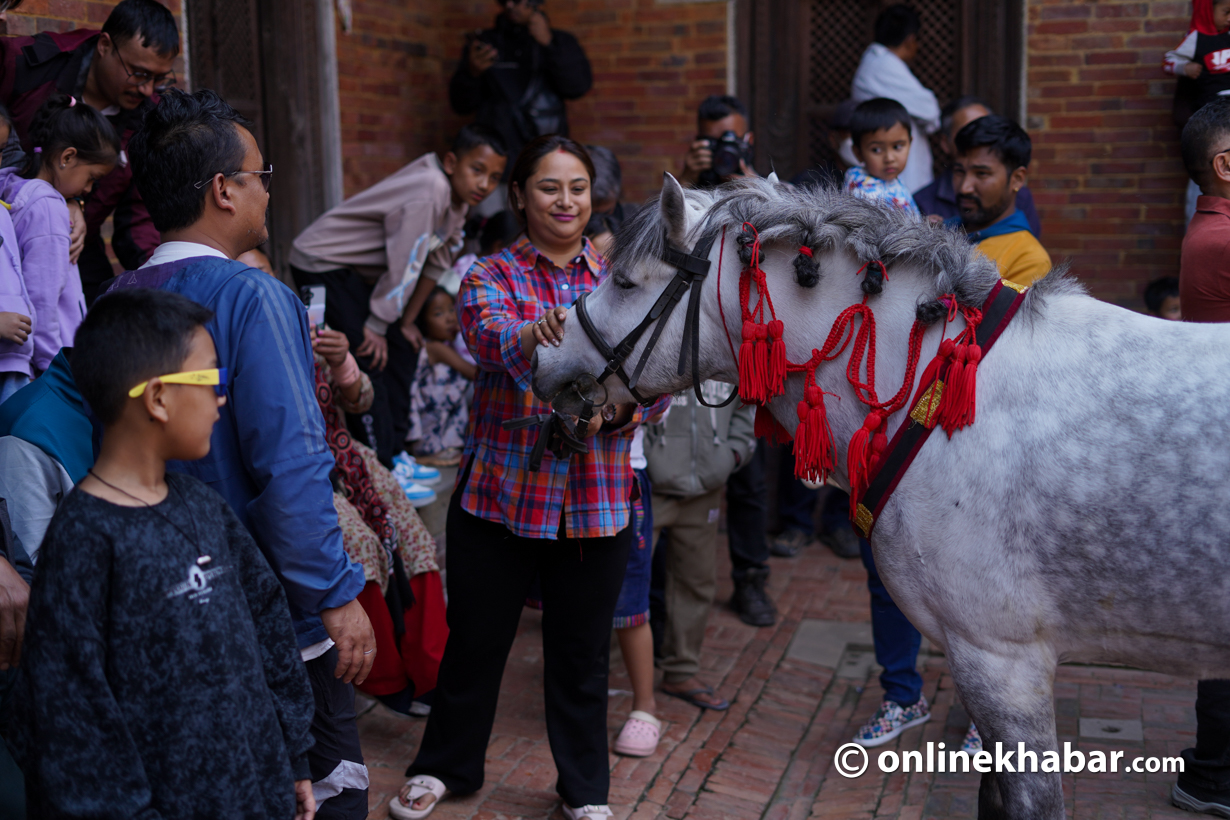
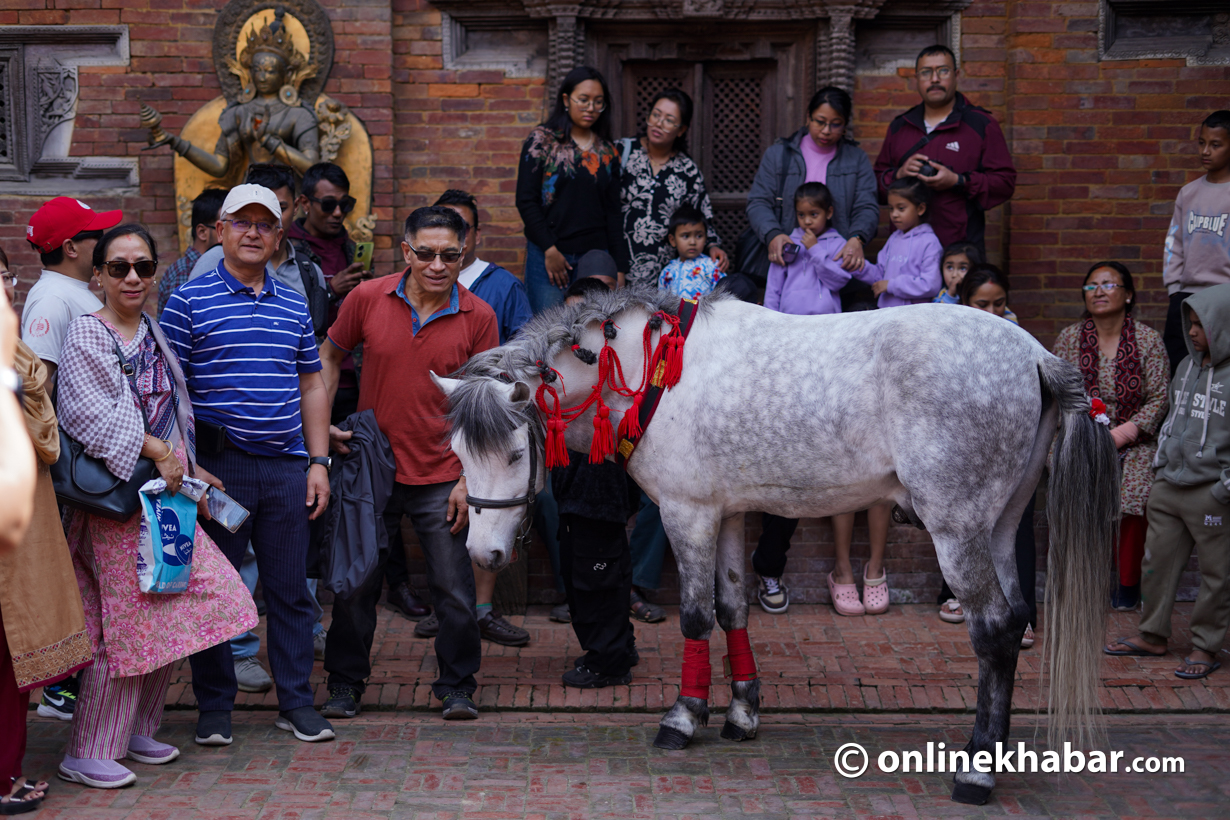
April 17, Kathmandu – While the festive horse parade thrives at Kathmandu’s Tundikhel, a unique and special tradition continues steadfastly in Lalitpur’s Patan – the ‘Single Horse Parade’.
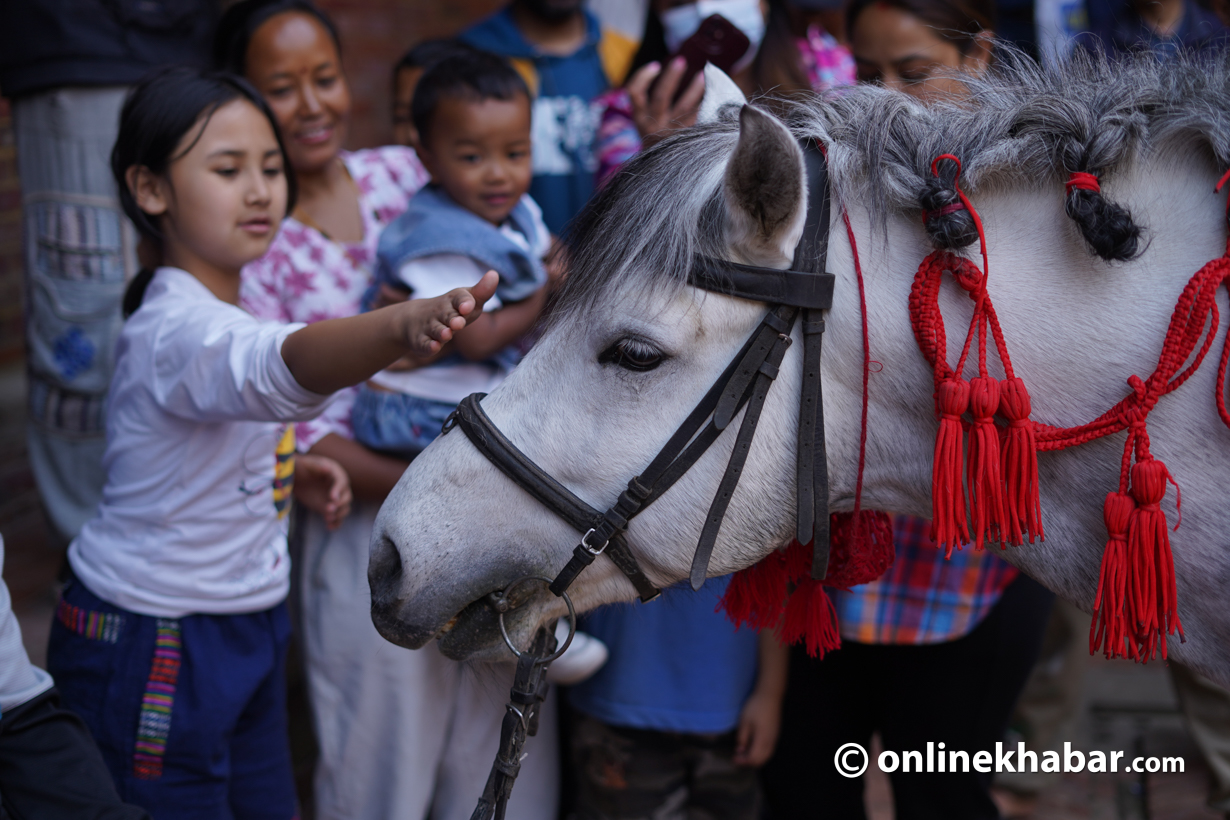
As the Nepalese Army celebrates a grand horse parade in Tundikhel, Patan’s narrow streets and squares honor this festival by racing just a single horse, a ritual that carries the legacy of the Malla era.
This distinct parade has traditionally been conducted by the Murda Guthi, also known as Bhimsen Guthi Chyo-Khal.
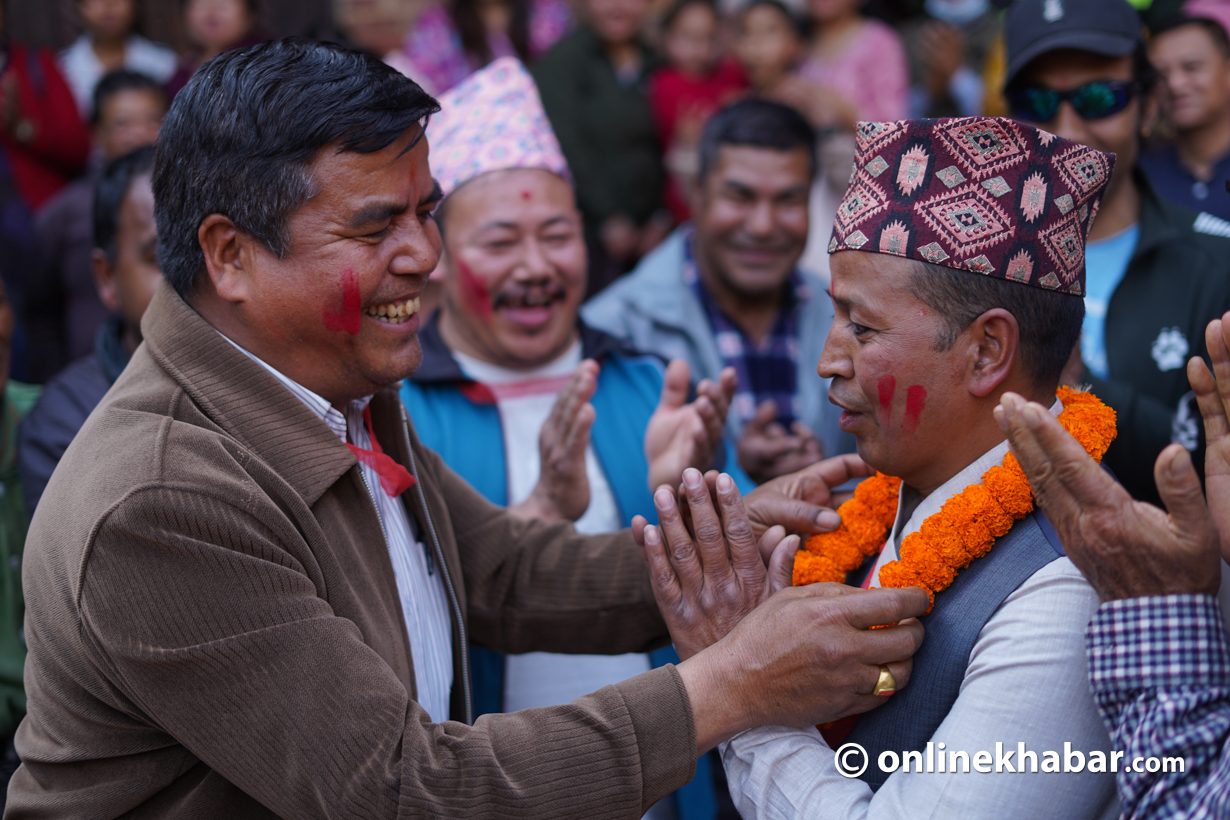
According to Santaman Maharjan, a member of the Guthi, this event is not merely a horse race but a rare cultural tradition that honors an ordinary citizen as ‘king’ for a day.
The Servant Sheltered by the Serpent Umbrella Who Became King
The origins of Patan’s single horse parade are linked to an intriguing legend. In Newari, ‘Chyo’ means servant or worker. During the Malla period, members of this Chyo-Khal Guthi were responsible for caring for the royal horses of Patan Durbar.
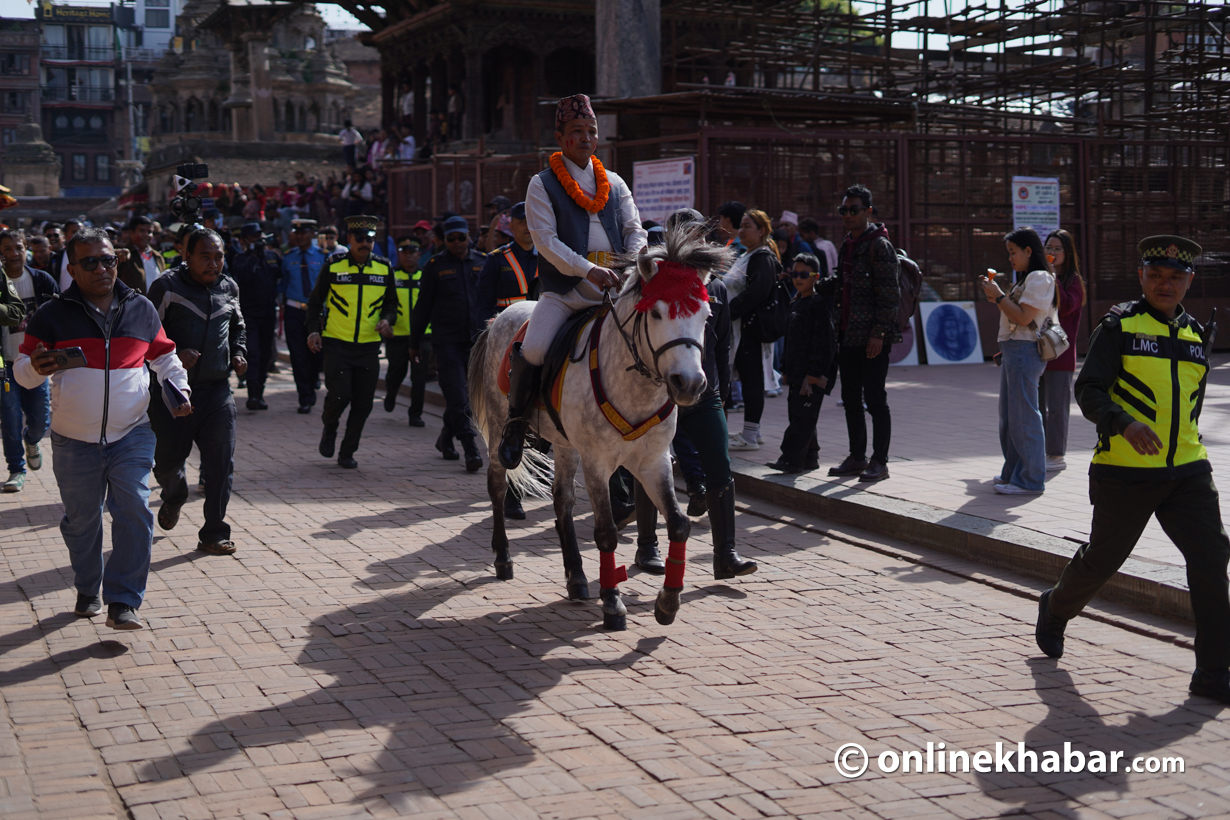 Santaman Maharjan recounts an old family tale: ‘One day, while a servant tasked with caring for the palace horses was resting because he was tired from work, the Malla king arrived unexpectedly and witnessed a remarkable scene. A five-headed serpent was seen sheltering the servant’s head with its umbrella.’
Seeing the serpent, a symbol that should have been above the king, above a humble servant’s head, the king perceived the servant to possess 32 auspicious signs. Consequently, the king declared that on the day of the full moon (the day of the horse parade), the royal horse would be ridden by that servant, honoring him with the status of a ‘king’ for the day. This Malla-era tradition continues today, as the person who rides the horse is regarded as the ‘king’ for the day during the parade.
Only Selected Members Can Ride the Horse
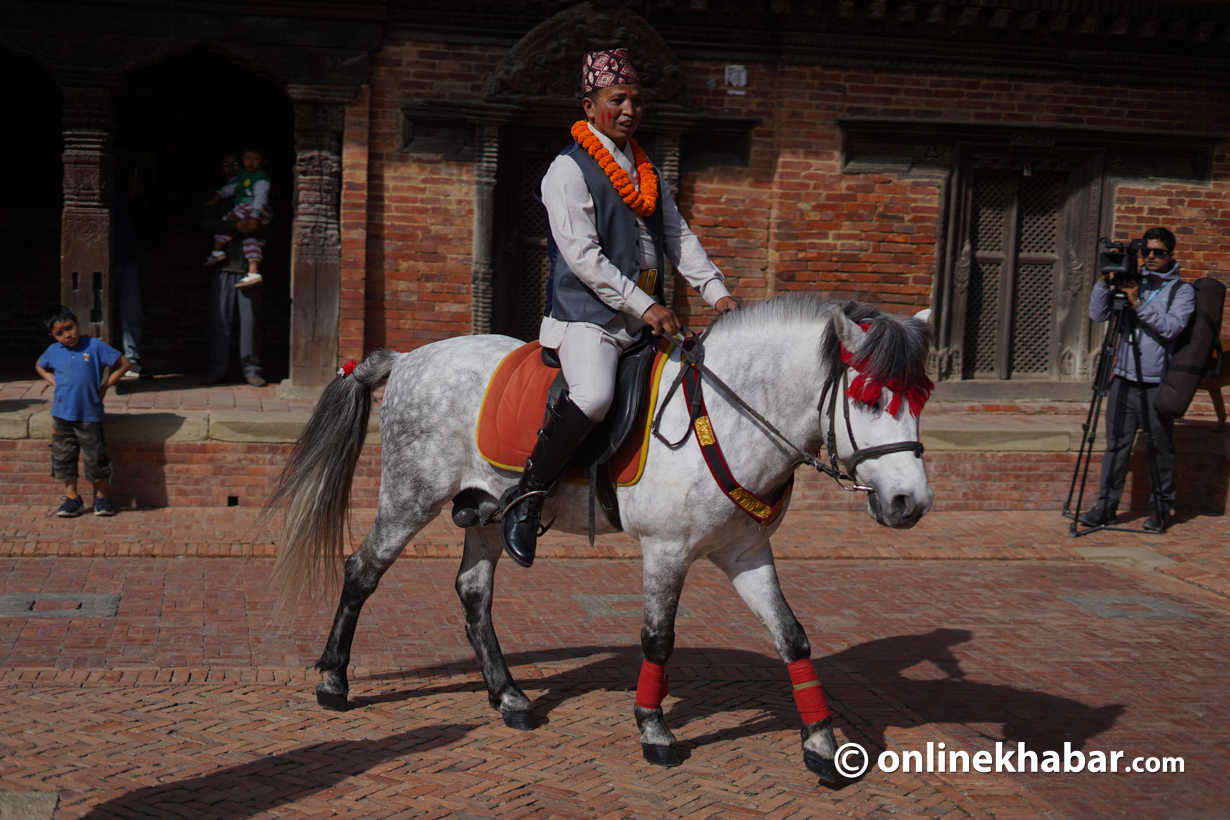
Not everyone gets the honor to ride Patan’s horse. It is mandatory to be a member of the Bhimsen Guthi Chyo-Khal to gain this privilege. Within the Guthi, a rider is chosen on a rotational basis. This year, Ramesh Maharjan from the Olkhu Chyo-Bacha (Chochhen Tole) has received the honor.
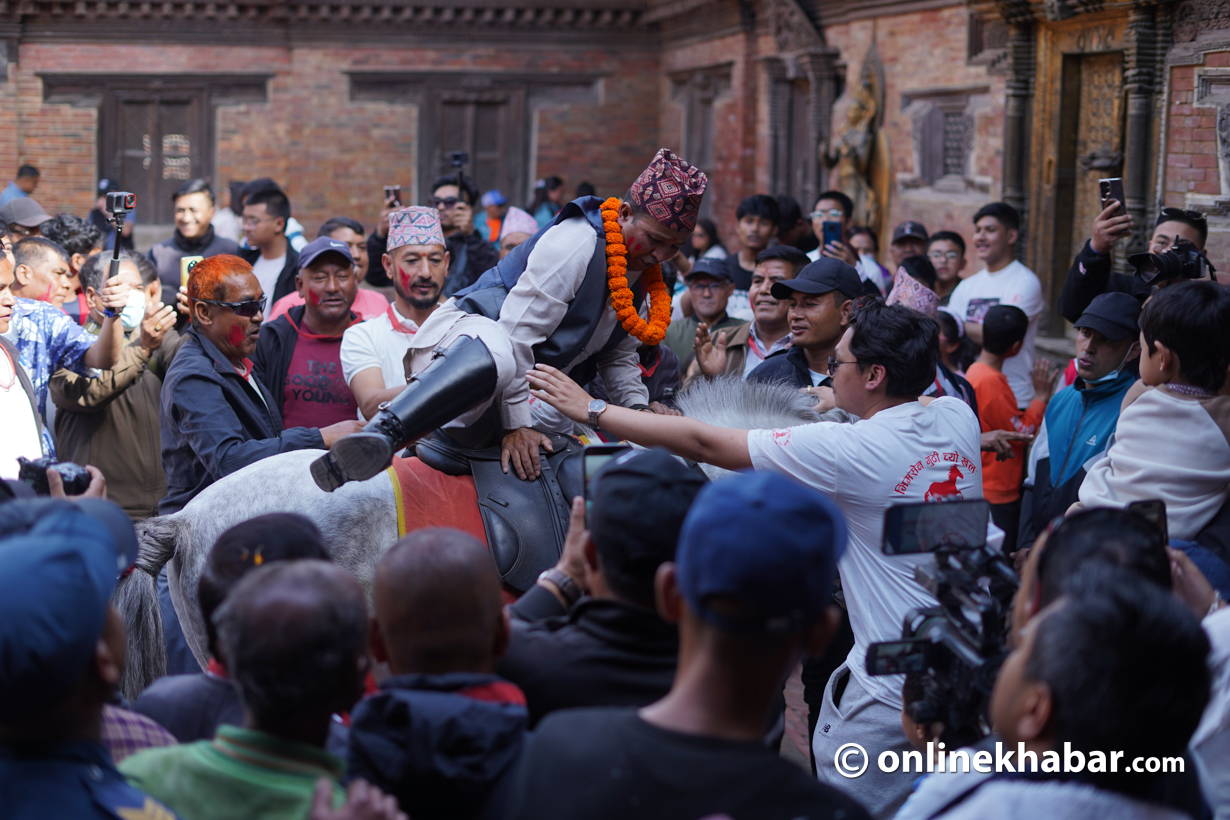
Simply applying does not suffice; rigorous training is essential.
‘Riding without training can cause accidents,’ Santaman states. ‘Therefore, before the parade, the rider must attend a two- to three-week special training at the army camp (Cavalry) located behind Patan Durbar. The Nepalese Army honors our tradition by providing excellent training and a grand welcome.’
Parade Process:
On the day of the horse parade, the horse is taken out from the main square of Patan Durbar. It is then given a short rest at the Bhimsen Temple in Mangal Bazar. Following this, the horse is taken to the Guthi’s Olkhu Chyo-Bacha neighborhood, where it is fed and watered, marking the commencement of the main parade.
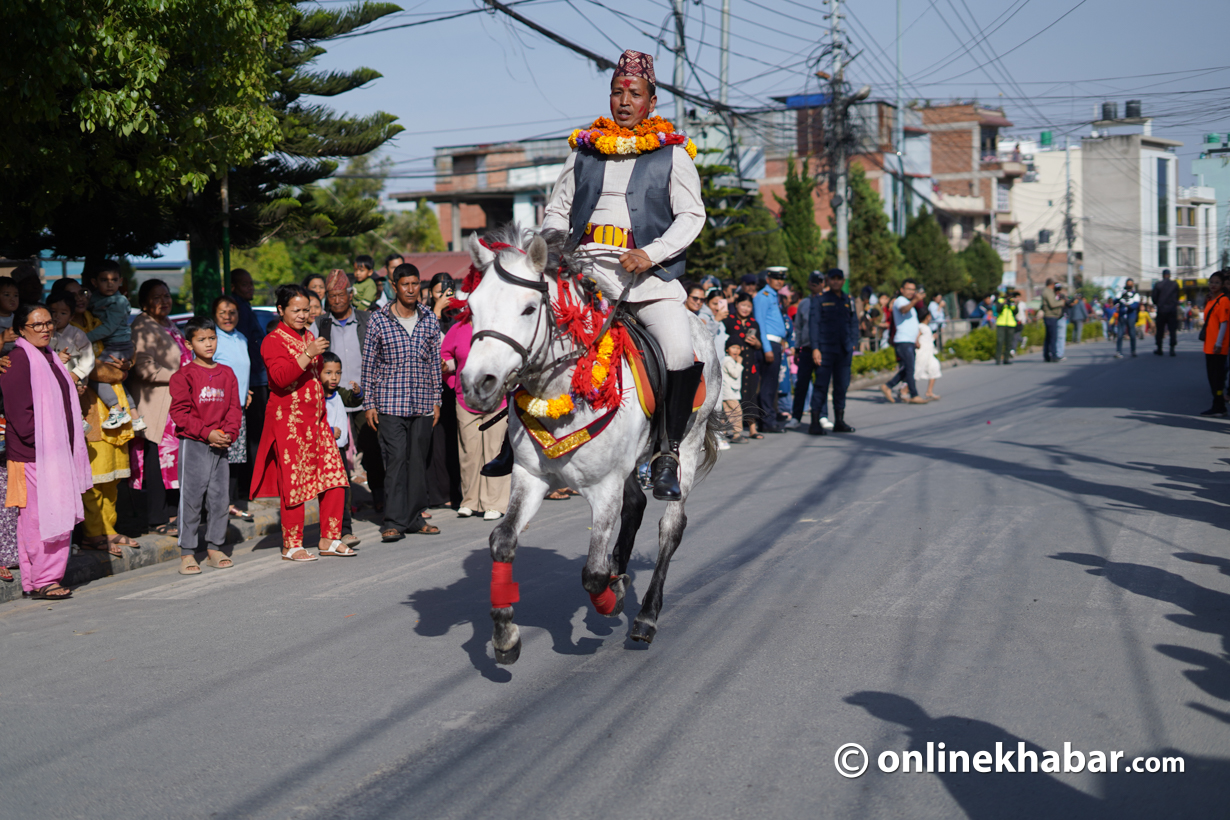
The route proceeds from Olkhu to Lwenhr and then to Ganeshthan. In honor of the Ganesh established by the Malla king, the horse makes an initial circumambulation there. From Ganeshthan, the procession moves to the Balkumari Temple.
After completing the ritual circuits at Balkumari, the horse returns to Ganeshthan. The horse is then led to bow at the lingam set up behind Balkumari. At the conclusion, the person who brought the horse is presented with betel leaves and areca nuts as a traditional send-off, marking the end of the parade.
Triumph Over Distortions with Support from Jyapu Community
In the past, certain distortions tarnished the historic parade, including mistreatment of the horse through hitting with sticks, poking from behind, and inflicting unnecessary pain, as well as disputes that threatened to halt the event. However, the Guthi members sought help from police and administrative authorities to preserve their cultural heritage.
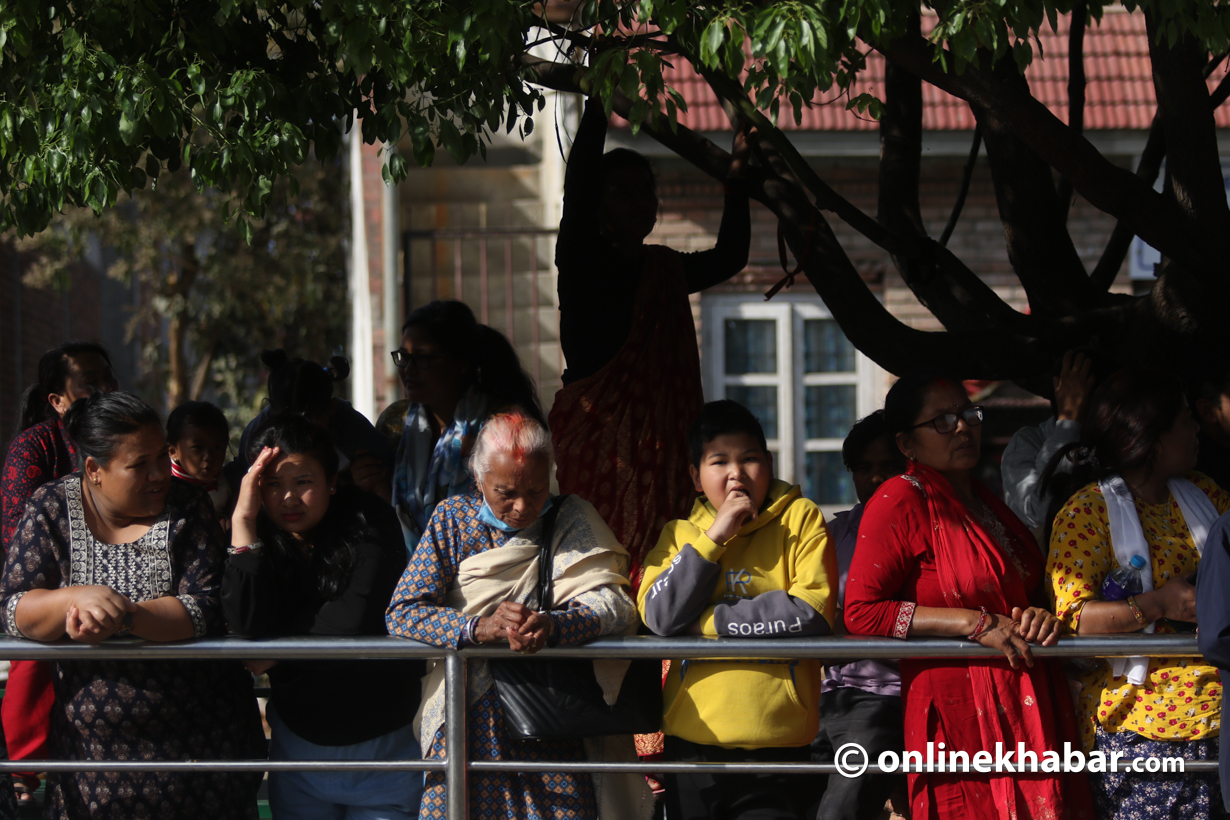
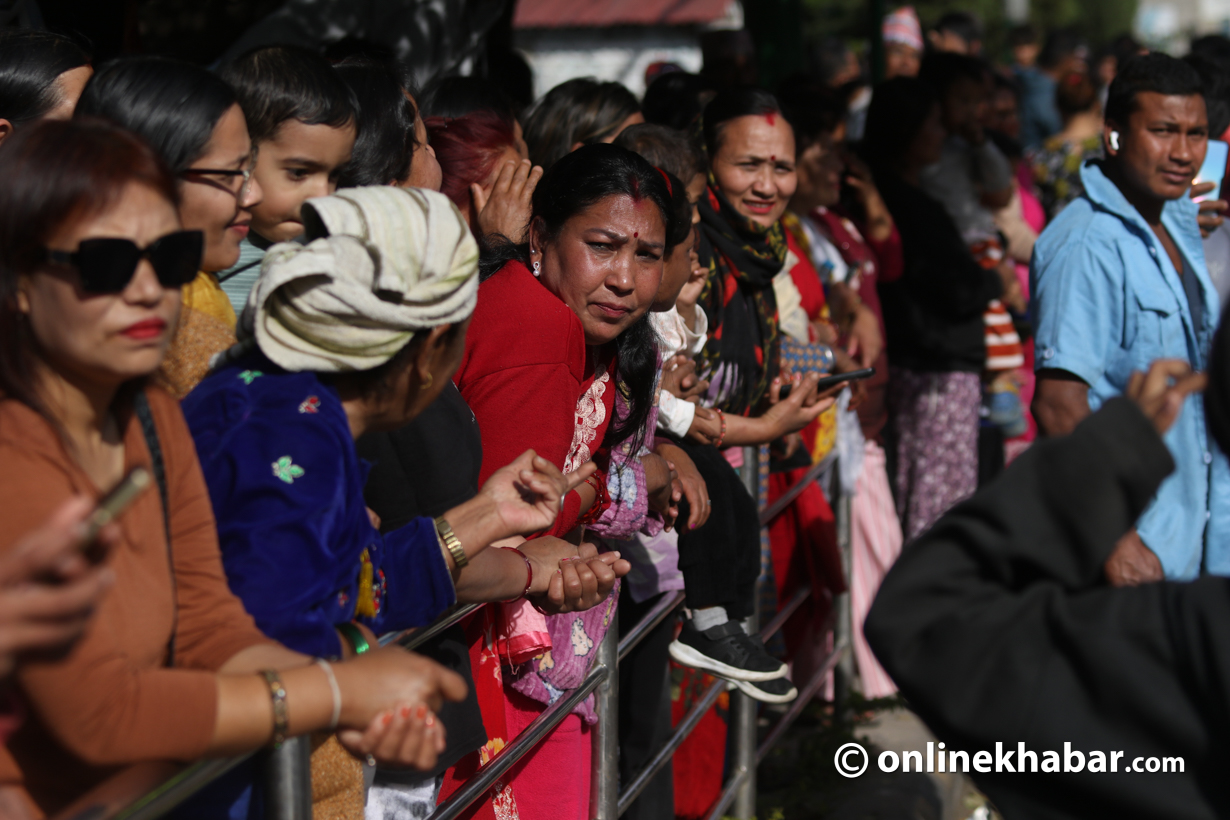
The establishment of the Jyapu Society on September 10, 1994, played a crucial role in supporting the parade. Today, youth committees from the Jyapu Society, dressed in their own traditional attire, volunteer to ensure the event proceeds peacefully and in an orderly manner.
The Parade Starts Only After Patan’s Festival Concludes
Another intriguing aspect of this parade is its connection to Kathmandu’s horse festival. Santaman Maharjan explains that the horse parade in Kathmandu does not begin until the single horse parade in Patan is completed.
‘The tradition in our culture is that only after Patan’s festival is declared concluded, word is sent to Kathmandu for their horse parade to commence,’ he says.
This Malla-era tradition, which grants the honor of king to an ordinary worker for just one day each year, reflects the generosity and historic richness of Nepali culture. The Murda Guthi and local community actively sustain this single horse parade with pride within Patan’s streets to this day.