Summary
- A powerful magnitude 7.5 earthquake struck Japan’s northeastern coastline on Monday.
- Following the earthquake, Japan’s Meteorological Agency issued a tsunami warning, urging coastal residents to evacuate to safer areas immediately.
- Tsunami waves have disrupted bullet train services between Tokyo and Aomori, and heightened alertness measures are in effect in the affected regions.
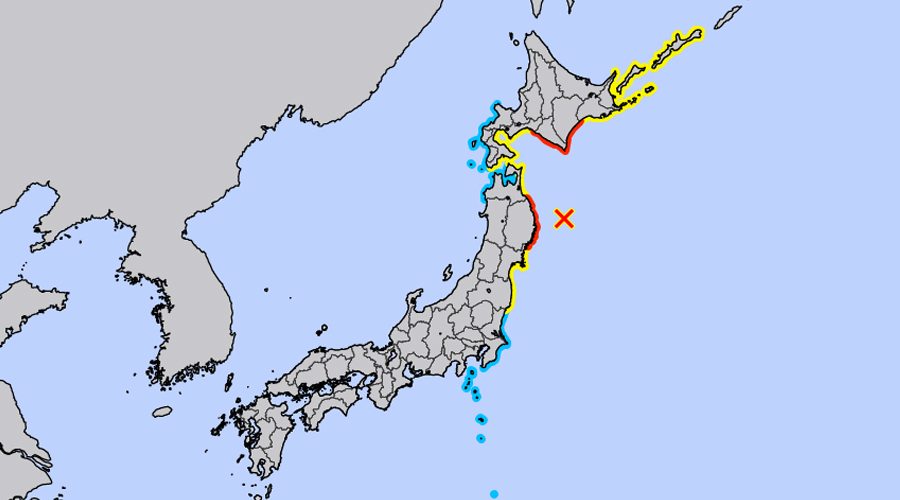
April 20, Kathmandu – A strong earthquake struck the northeastern sea coast of Japan on Monday. Immediately after, Japan’s Meteorological Agency issued a tsunami warning advising residents along the coastline to move promptly to safe locations.
Initial reports recorded the earthquake at a magnitude of 7.3, which was later revised by Japanese authorities to magnitude 7.5. The quake’s epicenter was located off the Sanriku coast, situated about 10 kilometers deep in the eastern part of the country. On Japan’s indigenous seismic intensity scale (ranging from 0 to 7), the quake was rated at ‘5+.’
Tsunami Threat and Red Alert
Along with the earthquake, a tsunami warning was issued for the northeastern coastal areas, constituting the second-highest alert level in Japan’s warning system.
The Meteorological Agency estimated that within less than 30 minutes, tsunami waves as high as 3 meters could strike the coastal regions.
According to NHK News, tsunami waves have already begun appearing along the coast. Officials are urging the affected population not to delay and to evacuate immediately to higher ground.
Areas predicted to be most affected by the tsunami include the central Pacific Hokkaido coast, Aomori Prefecture coast, and Iwate Prefecture coast.
The powerful earthquake also directly impacted public transportation. As reported by Kyodo News, bullet train services running between Tokyo and the northern city of Aomori have been completely suspended for the time being.
Officials are currently assessing the damage and maintaining a high level of vigilance in the affected areas.