63-Year-Old Puranaram Continues Crafting Traditional Water Mill Wheels by Carving Rocks
Summary
Prepared by AI. Editorial review conducted.
- Puranaram Reule from Sidh Kumakh Rural Municipality-3, Phalatak, Salyan, has been engaged in the traditional craft of making water mills for 47 years.
- Despite suffering from asthma, Reule has not abandoned the craft of producing water mills, grinding stones, and pestles to support his family of six.
- His 15-year-old grandson Sujan has expressed interest in learning and continuing this traditional craft.
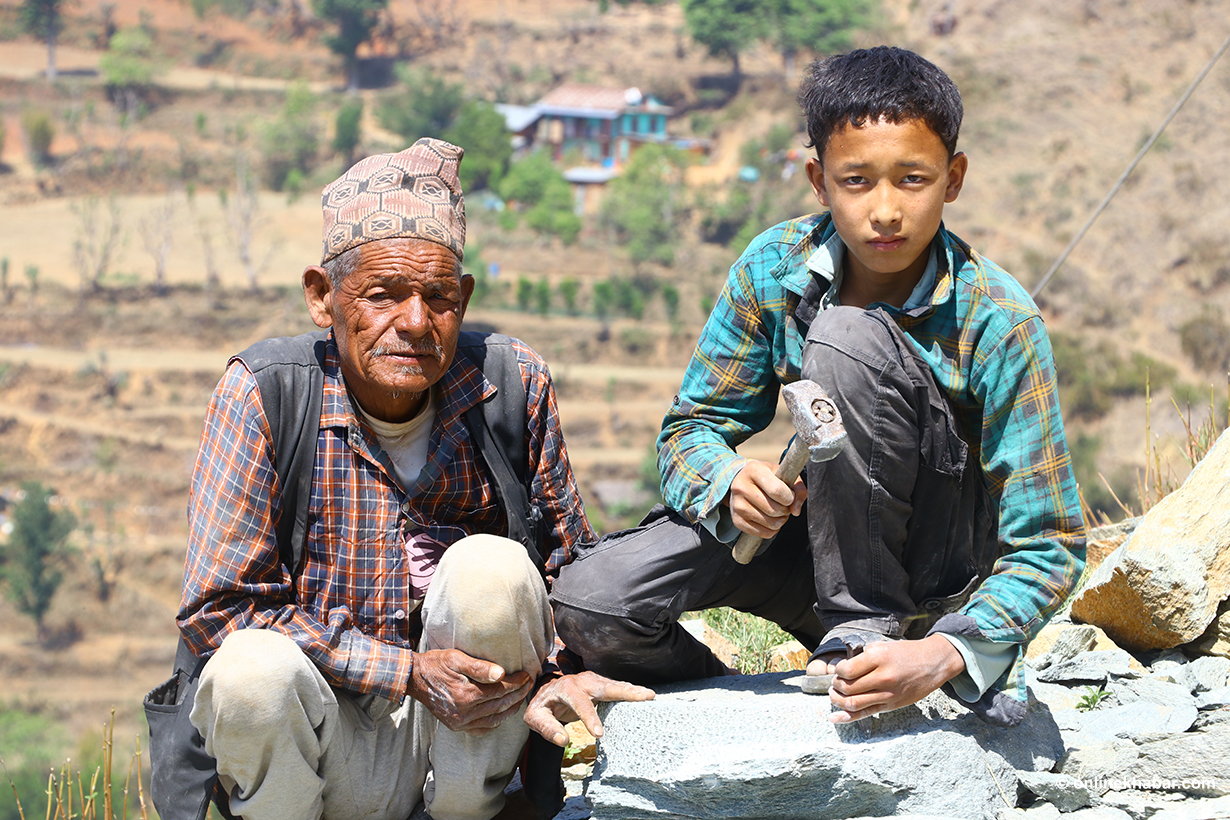
April 27, Salyan – 63-year-old Puranaram Reule of Phalatak in Sidh Kumakh Rural Municipality-3, Salyan, is known for his traditional water mill (pani-ghatt) manufacturing craft. He began this work 47 years ago and continues it to this day.
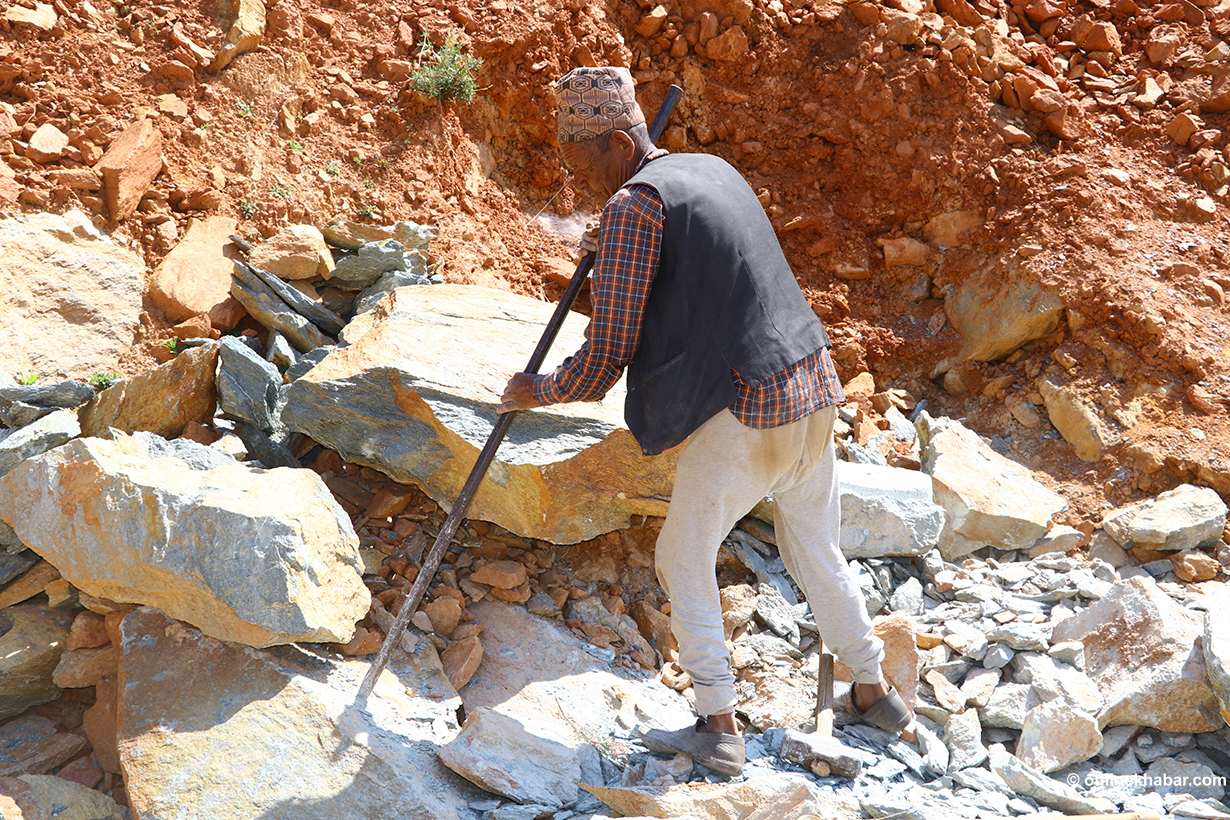
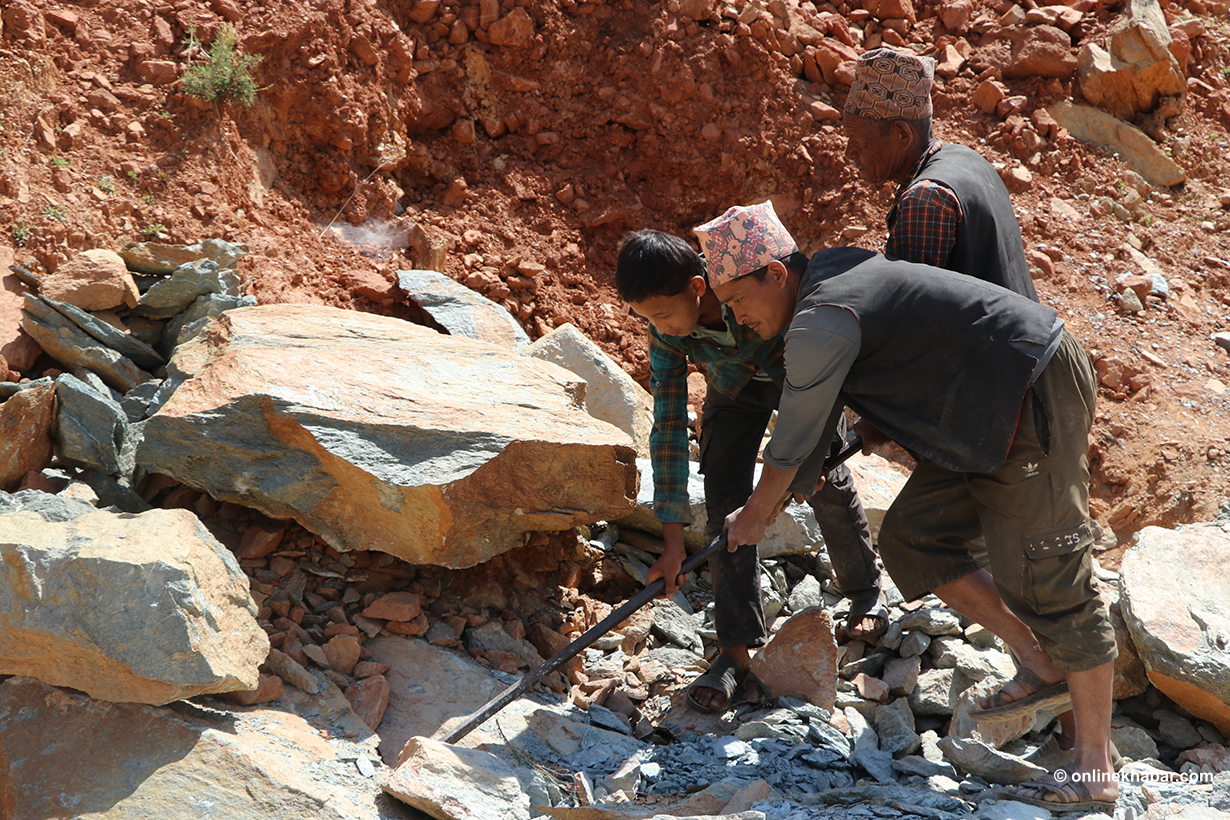
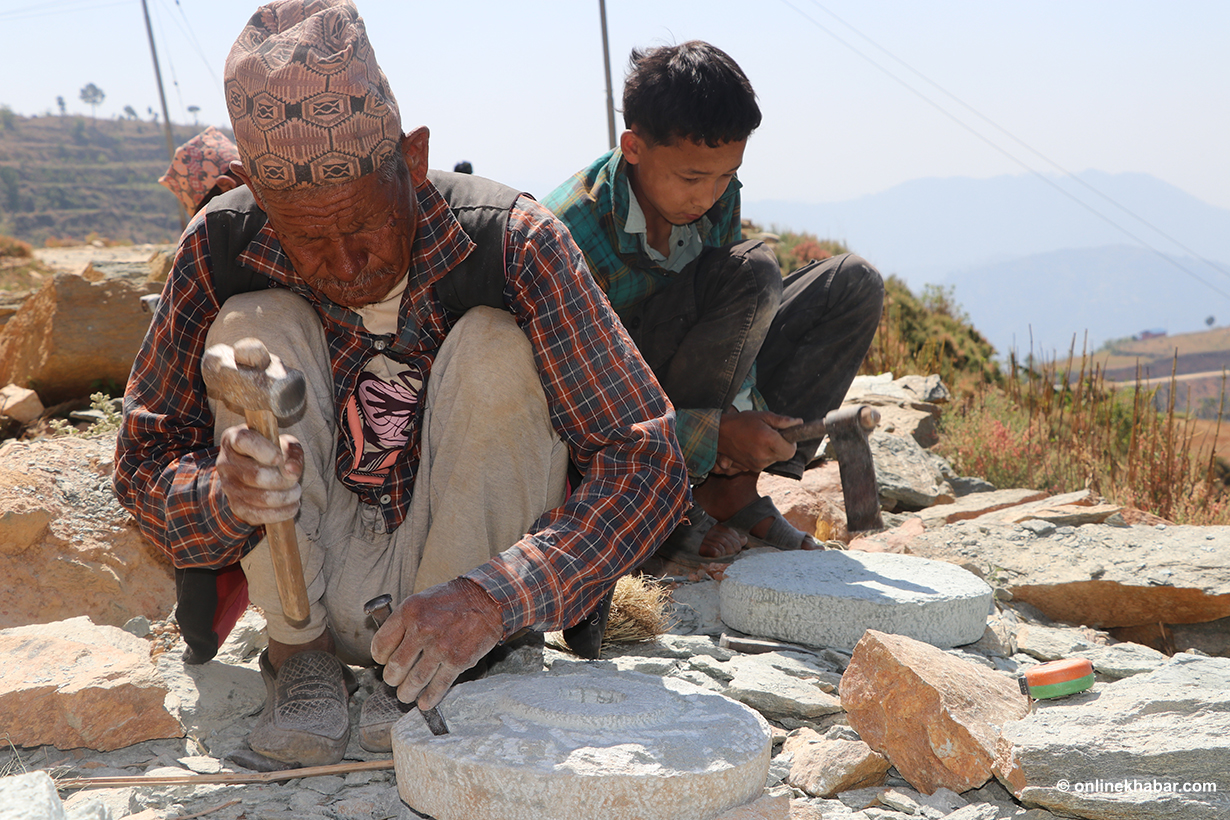
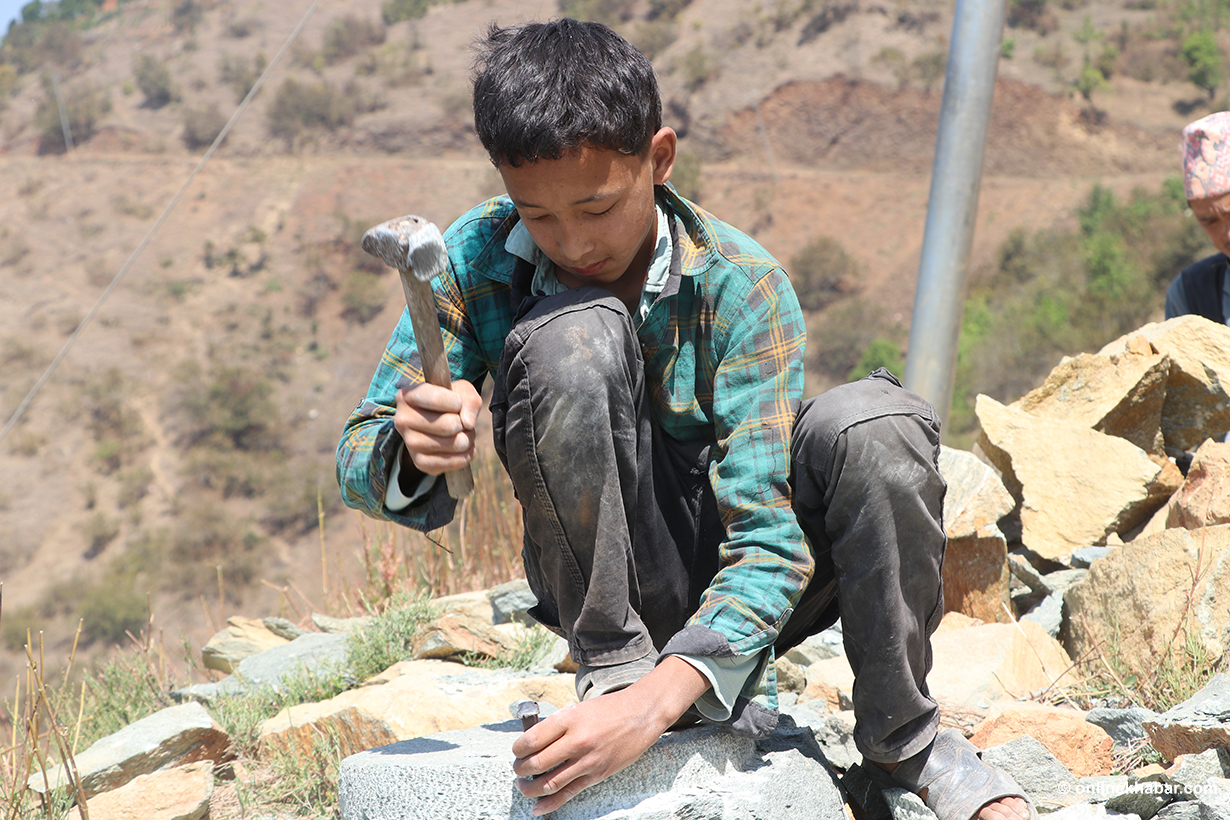
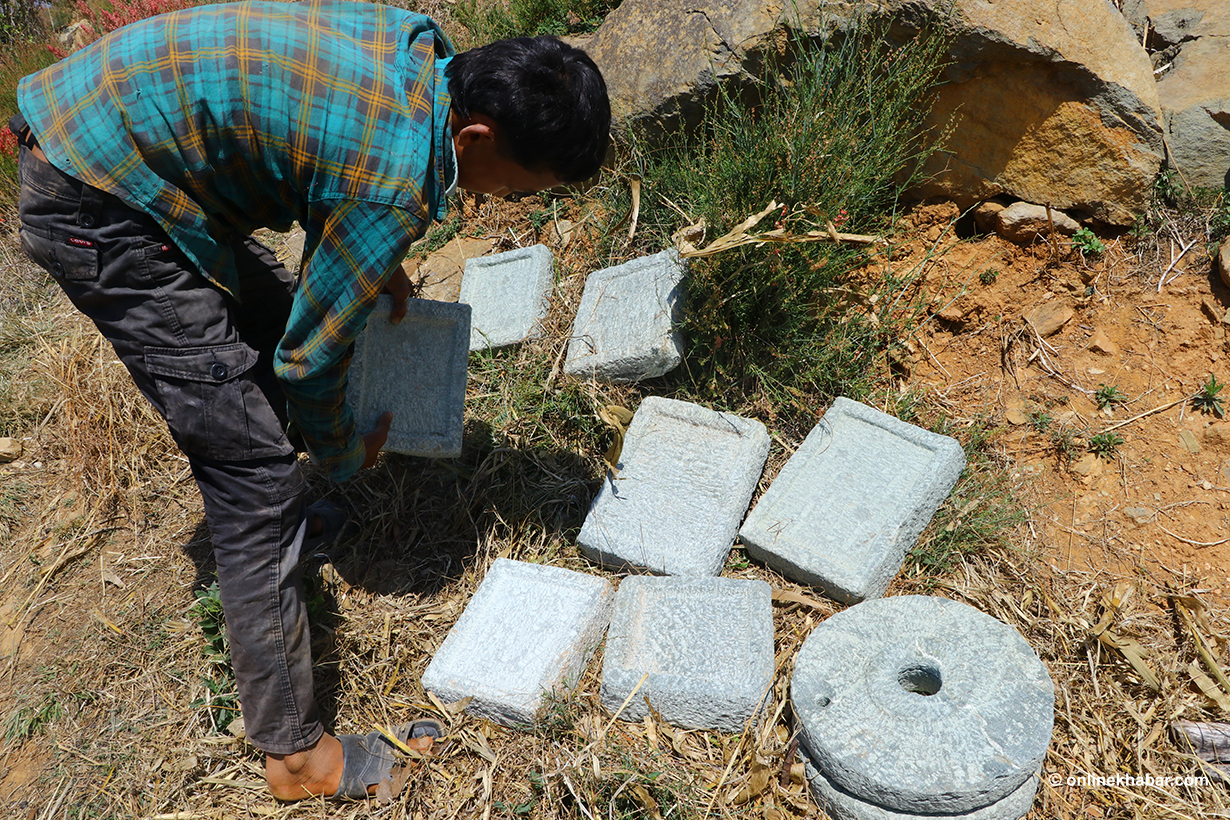
His daily routine involves breaking hard rocks using chisels and hammers to carve water mill wheels, grinding stone wheels (jato), and pestles (silauta). Despite health challenges, he has not given up this profession as it supports his household. Reule suffers from asthma.
“I have been in this craft since I was 16. I support a family of six including my son, grandson, and wife,” he said. “My hands and back ache, and I have asthma. I can’t travel far, so this work is how I keep my family going,” he added.
Reule shares that up until about a decade ago, it was difficult to meet the demand for water mill wheels. However, as river-operated water mills became less common, demand declined. In the past two years, the introduction of electrically powered equipment has revived some demand.
“Around 10 to 12 years ago, demand was so high we struggled to keep up, with annual sales reaching 12 to 16 million rupees. But gradually, as river water mills stopped operating, demand dropped. Over the last two years, with the arrival of electric-driven devices, demand has risen again to about 6 to 7 million rupees annually,” he explained.
Support from His Grandson
Reule expresses concern that younger generations are generally uninterested in continuing this traditional craft, risking its extinction. Despite his efforts to pass on the skills, many youth show little enthusiasm. However, his 15-year-old grandson Sujan is committed to learning and continuing the craft.
Sujan, a grade 10 student, uses his vacation time to learn how to make water mill wheels, grinding stones, and pestles. “I’m 15 and study in class 10. I’m learning from my grandfather during breaks so my time doesn’t go to waste,” he said. “So far, I’ve sold up to six pairs of grinding stones and pestles. I intend to continue this craft alongside my studies,” he added.
If younger generations like Sujan continue this trade, it promises to remain alive and be handed down through generations.
Market and Pricing
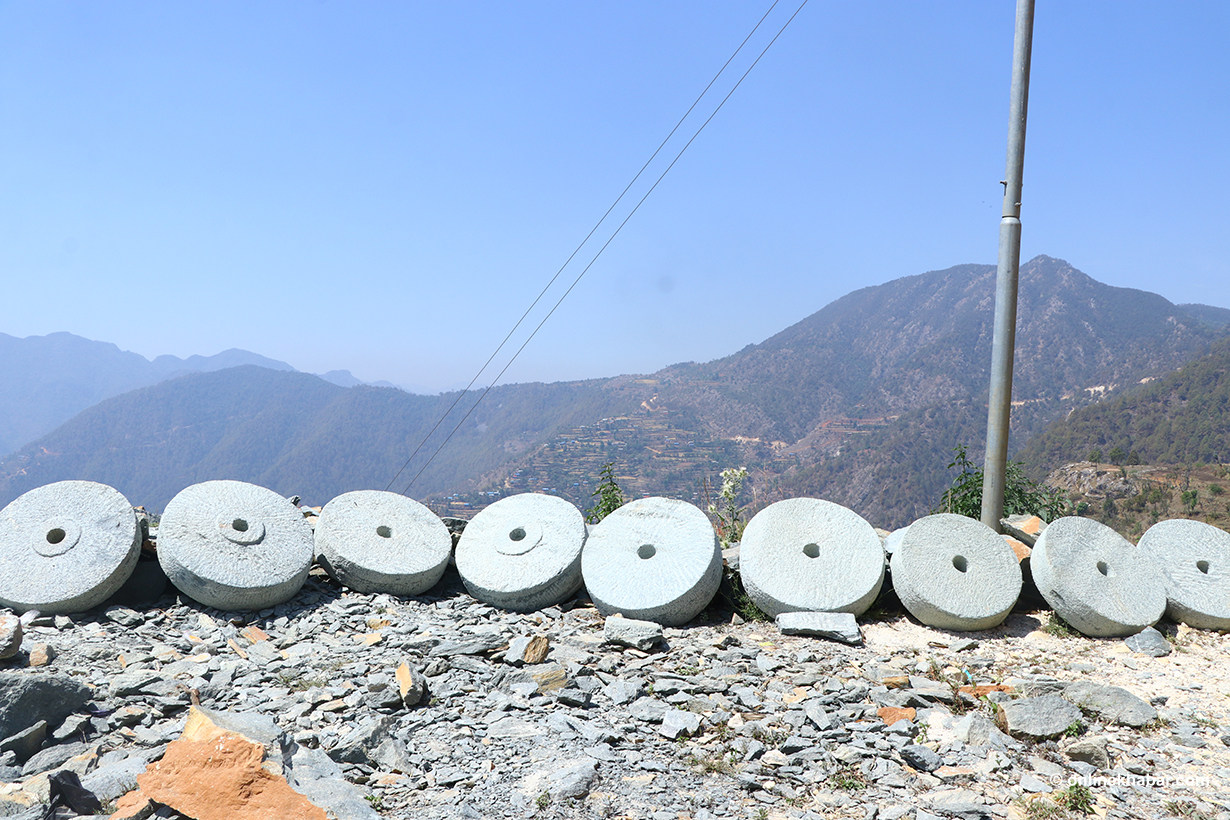
The price of a pair of water mill wheels varies by size, ranging from 30,000 to 100,000 Nepalese rupees. Similarly, grinding stones are sold between 2,500 to 5,000 rupees, and pestles range from 500 to 3,000 rupees.
Currently, demand for grinding stones and pestles has surpassed that of water mill wheels. Reule’s products have reached markets in Rukum, Rolpa, Surkhet, Dailekh, Jajarkot, and Dang districts.
Over a dozen households in Phalatak are involved in this traditional craft, which supports their daily expenses. They emphasize the need for government and local authorities to focus on protecting and promoting this labor-intensive, skill-based profession.