
Health Ministry Inquiry Contradicts Minister’s Fuel Misuse Allegation
News Summary
Created by AI, editorial review completed.
- The Health Ministry’s secretariat had circulated allegations of fuel misuse under the names of burnt vehicles, but an internal investigation committee found those claims to be false.
- The ministry has reaffirmed its commitment to transparency and accountability, while assistant secretary Mitraprasad Ghimire, accused on social media, has been declared innocent.
- Health Minister Nisha Mehta has faced criticism within her first month for administrative decisions and weaknesses in appointment processes.
April 22, Kathmandu – On the morning of April 15 around 10:30 am, Niraj Katuwal, a member of Health Minister Nisha Mehta’s secretariat, disseminated a notice via the secretariat’s WhatsApp group accusing misuse of fuel under the names of burnt vehicles. The notice implicated employees of the Ministry of Health itself.
Based on this allegation, the Ministry of Health and Population formed an investigation committee. After a week-long inquiry, the committee concluded that the information from the minister’s secretariat was incorrect.
The WhatsApp group of Minister Mehta’s secretariat had circulated the news with the headline: ‘Fuel Misuse Under the Name of Burnt Vehicles: Minister Mehta Directs Investigation and Action‘.
This message quickly spread through various media and social platforms, conveying a strong impression of serious irregularities among government staff within the ministry.
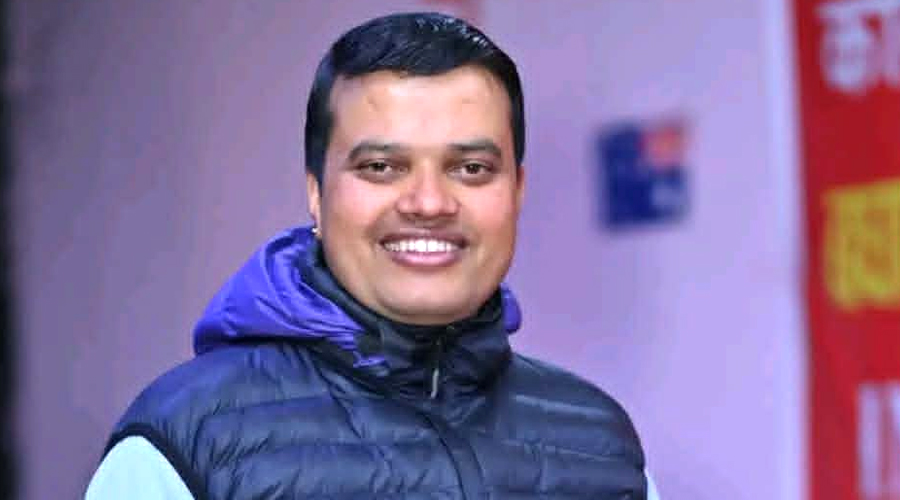
Following the dissemination of this secretariat notice, Assistant Secretary Mitraprasad Ghimire of the ministry’s administrative division became the focus of accusations. He was alleged to have misused fuel coupons under the names of burnt vehicles and faced intense criticism on social media.
Ghimire, known for preparing study materials for the Public Service Commission and serving as a trainer, was suddenly accused of corruption. These unverified allegations originating from the minister’s secretariat made him a subject of controversy and widespread commentary.
These allegations were connected to the protests on September 9 and 10. On the night of September 10, an unruly group set fire to the Ministry of Health and Population premises on Ramshah Path, Kathmandu. During this event, 18 ministry vehicles and 6 from subordinate agencies, totaling 24 vehicles, were destroyed by fire.
Government employees reportedly claimed fuel benefits using the records of these completely destroyed vehicles.
The arson severely damaged the main building of the key agency responsible for monitoring and coordinating health programs nationwide.
The ministry’s building, known internationally for its architectural significance, was reduced to a ruin. Numerous government vehicles parked within the compound were burned and destroyed. Since then, the ministry’s operations have moved to the new building of Nepal Health Research Council.
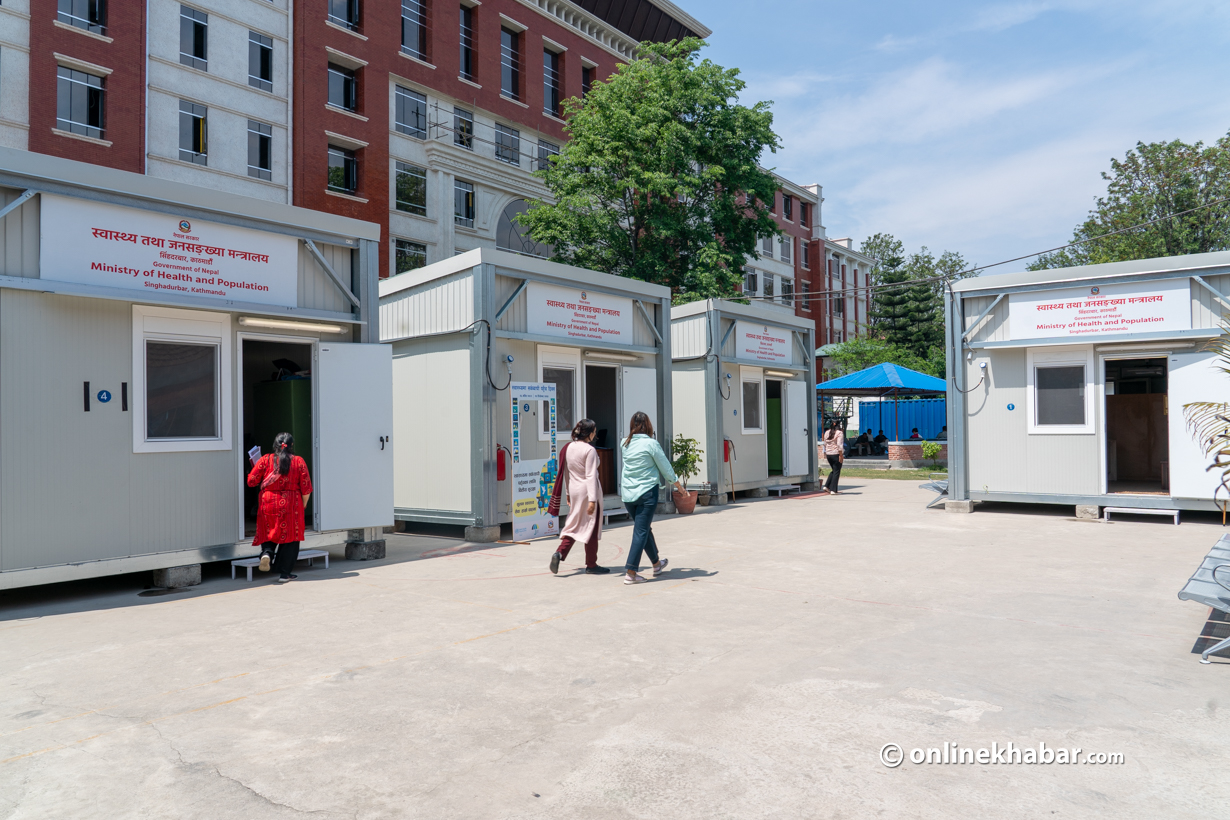
In December, the ministry found a vacant site and building in the southwest region of Singha Durbar, previously used by the Nepal Army’s Narsingh Dal Company. Subsequently, the Health Ministry relocated to Singha Durbar, currently operating out of a temporary tin-shed structure, with some functions still conducted from the council’s premises.
Inquiry Clears Allegations
According to Dr. Sameer Kumar Adhikari, ministry’s deputy spokesperson, an investigation committee was formed on April 15 under the leadership of a joint secretary-level official to uncover the truth.
The committee found the claims of fuel being issued under the names of burnt vehicles to be false.
Dr. Adhikari explained that after reviewing police reports, semi-annual fuel issuance records, payment documents, and other related paperwork, they reached this conclusion.
“The committee concluded there was no fuel misuse under the names of burnt vehicles,” Dr. Adhikari stated.
However, the ministry has remained silent regarding the public allegations that originated from the minister’s secretariat and appeared to have attempted to shift blame onto the media.
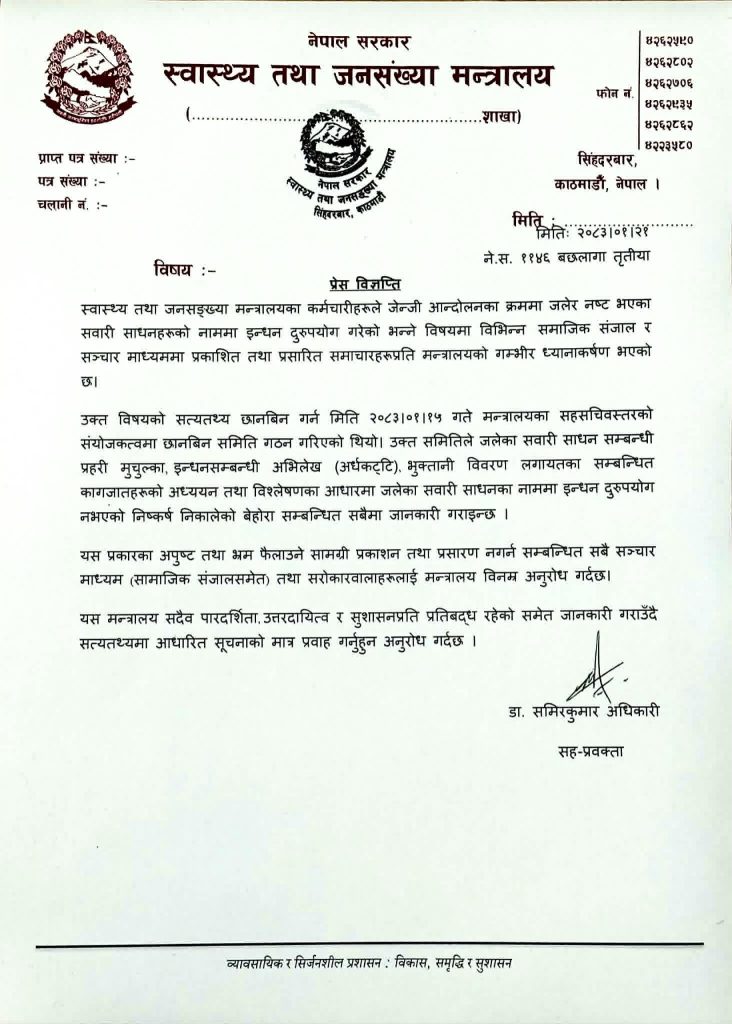
In his statement, Dr. Adhikari urged media outlets not to publish or broadcast unverified and misleading material, and requested all stakeholders to refrain from spreading such claims on social platforms and in the news.
The ministry reaffirmed its commitment to transparency, accountability, and good governance.
After facing accusations and criticism on social media for a full week, Ghimire issued a detailed response online.
He expressed that the allegations caused profound suffering for him and his family. “Sometimes life brings moments where despite being truthful, one must prove oneself,” he wrote. “Amidst despair, pain, and numerous questions, I never lost faith in the truth.”
Upon being cleared by the investigation, Ghimire said he feels relieved and is more determined to proceed with integrity, transparency, and dedicated service.
Questions Arise Over Minister Mehta’s Actions
Within her first month as health minister, Nisha Mehta has repeatedly been involved in controversies. She reappointed June Shrestha as a member of the Health Insurance Board, but when the reappointment became contentious, the appointment letter went missing. Labour, Employment and Social Security Minister Deepak Kumar Sah was dismissed within 14 days as a result.
Sah was accused of abusing his authority by unlawfully appointing his wife, June Shrestha, to the Health Insurance Board. The anti-corruption body (RASWAP) removed Sah from office and issued a warning to Minister Mehta regarding the serious issues in the affiliated agency.
Ministry officials note that since Mehta assumed leadership, she has focused more on minor administrative decisions than on long-term health system reforms.
Her first month’s activities reveal a pattern of making swift decisions, followed by subsequent reversals. From granting health staff two days off to reassignments and transfers, these reversals have brought criticism.
When the government declared two weekly public holidays, the health ministry initially decided to keep Sunday services operational. However, under pressure from doctors’ associations and other health worker groups, Minister Mehta reversed that decision and ordered OPD services closed on Sundays. This caused significant disarray in central hospitals including Bir and Teaching hospitals.
Questions have also been raised regarding decisions related to drug management. Narayan Dhakal, director general of the Department of Drug Administration, was accused of unnaturally increasing prices of 50 medicines, resulting in his transfer to the ministry. Despite the establishment of an investigation committee, procedural flaws hampered effective inquiry.
Due to consultants’ refusals to join the initially formed committee, a new committee was formed but it has yet to produce results.
While Dhakal served as director general, Bharat Bhattarai, an 11th-level officer, was the director of the National Medicine Laboratory. However, Minister Mehta, lacking understanding of departmental structures, appointed 10th-level officer Shivani Khadgi as acting director of the laboratory, treating it as an equivalent division.
This decision raised serious administrative and hierarchical concerns. Senior 11th-level employees were expected to follow directions from junior 10th-level officers, causing dissatisfaction among staff. Once the controversy intensified, the minister acknowledged the misstep and briskly reinstated Bhattarai to the ministry.