
Five Key Reasons Behind Mamata Banerjee’s Loss of Power in West Bengal
News Summary
Prepared after review.
- In West Bengal, the Bharatiya Janata Party (BJP) won 206 seats, achieving a two-thirds majority for the first time, while Mamata Banerjee lost her Bhabanipur seat.
- Mamata Banerjee has accused the BJP of vote theft and deemed the role of the Election Commission and central security forces unethical.
- Analysts suggest the revision of voter lists (SIR process) significantly harmed TMC, and polarization of Hindu votes played a key role in BJP’s victory.
April 22, Kathmandu – In a historic development, the Bharatiya Janata Party (BJP) has come to power in West Bengal for the first time, securing a two-thirds majority by winning 206 seats. The ruling Trinamool Congress (TMC) managed to secure only 80 seats.
Chief Minister Mamata Banerjee herself suffered a defeat in her stronghold, the Bhabanipur constituency, losing by over 15,000 votes to BJP leader Suvendu Adhikari. During the vote count, Banerjee accused the BJP of stealing votes.
She told reporters, ‘BJP has usurped over 100 seats. Their victory is unethical. The Election Commission conspired with the Prime Minister and Home Minister. What they did is entirely unethical.’
She also alleged coercive revision of voter lists (SIR process), stating, ‘They committed atrocities, detained our counting agents. We will return.’
This defeat marks the end of TMC’s 15-year unbroken rule, prompting widespread discussion about the factors behind this outcome.
Based on results and trends, five key reasons have been identified for this loss:
1. Issues of Women’s Safety
For a long time, a large portion of female voters in West Bengal supported Mamata Banerjee’s party, largely due to welfare schemes like ‘Laxmi Bhandar’, ‘Kanyashree’, and ‘Sabuj Sathi’, including initiatives such as distributing bicycles to schoolgirls, which strengthened the TMC’s popularity among women.
However, this support appeared to weaken this election, largely due to perceived failures regarding women’s security issues.
The R.G. Kar Medical College case from two years ago had a notable electoral impact. The area of Panihati, traditionally a TMC stronghold, saw the mother of a victim contesting on a BJP ticket and winning by a margin of 28,836 votes.
(R.G. Kar Medical College is a well-known government medical institution in Kolkata, West Bengal. In August 2024, an intern female doctor named Abhaya was brutally raped and murdered while on night duty. This incident sparked prolonged protests across Kolkata and India demanding women’s safety, with condemnation aimed at the Mamata government and police administration for negligence.)
Several women in West Bengal raised concerns over safety. During campaigning, one woman expressed, ‘Can we even feel safe now? There is this fear. Women’s dignity is at risk. They will break us. Has the state deteriorated this much?’
In Kolkata, a woman shared, ‘Since the R.G. Kar incident, I always carry some safety measures with me.’ Another young woman said, ‘Some areas feel unsafe, especially after 9 or 10 p.m.’
2. The SIR (Voter List Revision) Process
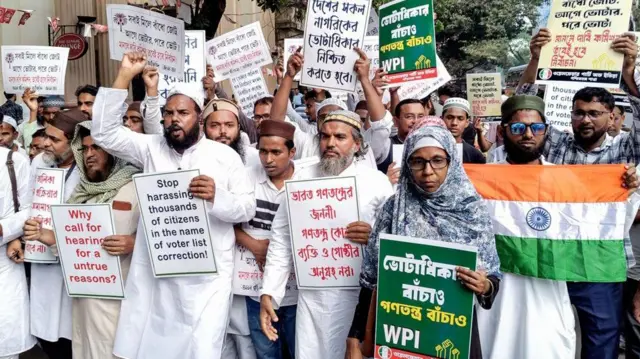
Over 9 million names were removed from the voter lists during the extensive revision process, with the biggest impact on the TMC.
While many legitimate voters were removed, numerous duplicate or deceased voter names were also deleted.
The BJP maintained that such irregularities had long benefited the TMC but would now be curtailed.
Political science lecturer Zaid Manhood from Presidency University in Kolkata stated, ‘TMC had normalized corruption and syndicate culture as part of daily life. BJP demonstrated that even excluding 30 percent of the population from the electoral process, victory was achievable.’
Political analyst Yogendra Yadav also cited the SIR process as a key factor behind the election outcome, adding, ‘Though BJP won more seats, the vote margin is only about 3 percent. If 4.3 percent more people had voted — many Muslim voters supporting TMC — the results would have been different.’
3. Administrative Weaknesses
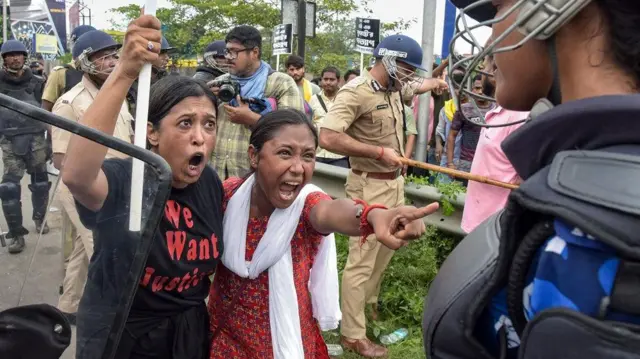
Corruption, misgovernance, rampant commission-based dealings, increasing syndicate culture, and administrative failures under TMC’s 15-year rule have been perceived as significant criticisms in West Bengal’s political history.
The party had faced criticism in 2016 and 2021 related to Bengali identity, women’s welfare schemes, and secularism.
This time, while Mamata Banerjee attempted to make the SIR-related hardships a political issue, allegations of corruption and administrative failures overshadowed those efforts.
4. Polarization of Hindu Votes
Political analysts note that Mamata Banerjee’s long electoral success hinged largely on near-unanimous Muslim support; Muslims constitute about 30 percent of West Bengal’s population, and 85 to 90 percent of their votes traditionally went to TMC.
However, this election witnessed a reversal with significant polarization of Hindu votes, benefiting the BJP. BJP also gained ground in Muslim-majority districts such as Malda and Murshidabad.
Accused of “Muslim appeasement,” Mamata Banerjee had overseen construction and renovation of many Hindu temples using government funds — an attempt to present a softer version of Hindutva.
Yet this strategy failed to resonate, pushing many Hindu voters towards the BJP’s aggressive political stance.
Senior Kolkata journalist and political analyst Sukanto Sarkar observed, ‘This time the polarization of Hindu votes was very evident.’
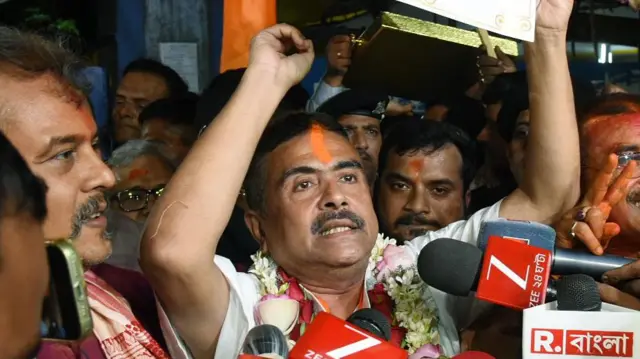
After defeating Mamata Banerjee, Suvendu Adhikari declared, ‘This is a victory for Hindutva. It’s a victory for Bengal. It’s a victory for Narendra Modi.’
He added, ‘CPM supporters voted for me. In Bhabanipur, there were 13,000 CPM votes — at least 10,000 of those transferred to me. All Bengali Hindus voted openly.’
5. Extensive Deployment of Central Security Forces
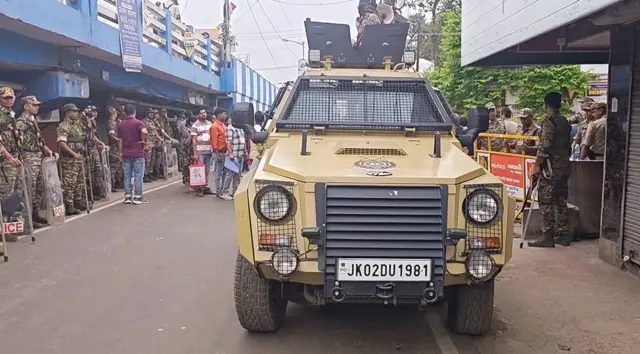
Samajwadi Party leader and former Uttar Pradesh Chief Minister Akhilesh Yadav accused misuse of central security forces during vote counting. Some analysts remarked that traditionally ruling parties in West Bengal have gained advantages during elections.
However, this time the TMC gained almost no such advantage. The Election Commission exercised stringent control over state administration, replacing numerous district officials and police superintendents.
Over 240,000 central security personnel were deployed in the state ahead of voting — an unprecedented figure.
Many analysts believe this massive security presence ensured a peaceful election, allowing voters to cast ballots without intimidation.
In recent months, the TMC had been questioning the role of the Election Commission and central forces. In retrospect, these complaints appear more clear.
The Election Commission and central forces’ role seemingly worked against the Trinamool Congress in this election.
On April 29, Mamata Banerjee alleged that central powers and government machinery were intent on defeating the TMC.
She also accused central security forces of attempting to search her car while en route to Kolkata airport.
TMC leader Abhishek Banerjee accused the central forces of spreading terror in the state.
(This article was edited by Shubjyoti Ghosh)