A Divine Journey from Sarayu to Ganga
News Summary
Generated and editorially reviewed.
- During the three-day journey, the group visited the ancient cities of Ayodhya, Prayagraj, and Varanasi for religious bathing and spiritual sightseeing.
The human mind is mysterious. Sometimes it is as calm and steady as still water, and at other times as chaotic as a storm. Amid the busy life of medical practice, white hospital walls, and patients’ sighs, there was a hidden spiritual thirst. This thirst, combined with limited time, gave birth to a plan.
For ordinary tourists, this might seem ‘impossible,’ but for devotees, it was like a ‘grand festival.’ The journey was set for three days, from Thursday to Sunday, but the destinations included three ancient sacred cities—Ayodhya, Prayagraj, and Varanasi—each rich with countless spiritual experiences. Many called it a ‘tiring trip,’ but for me, it felt like a ‘spiritual marathon.’
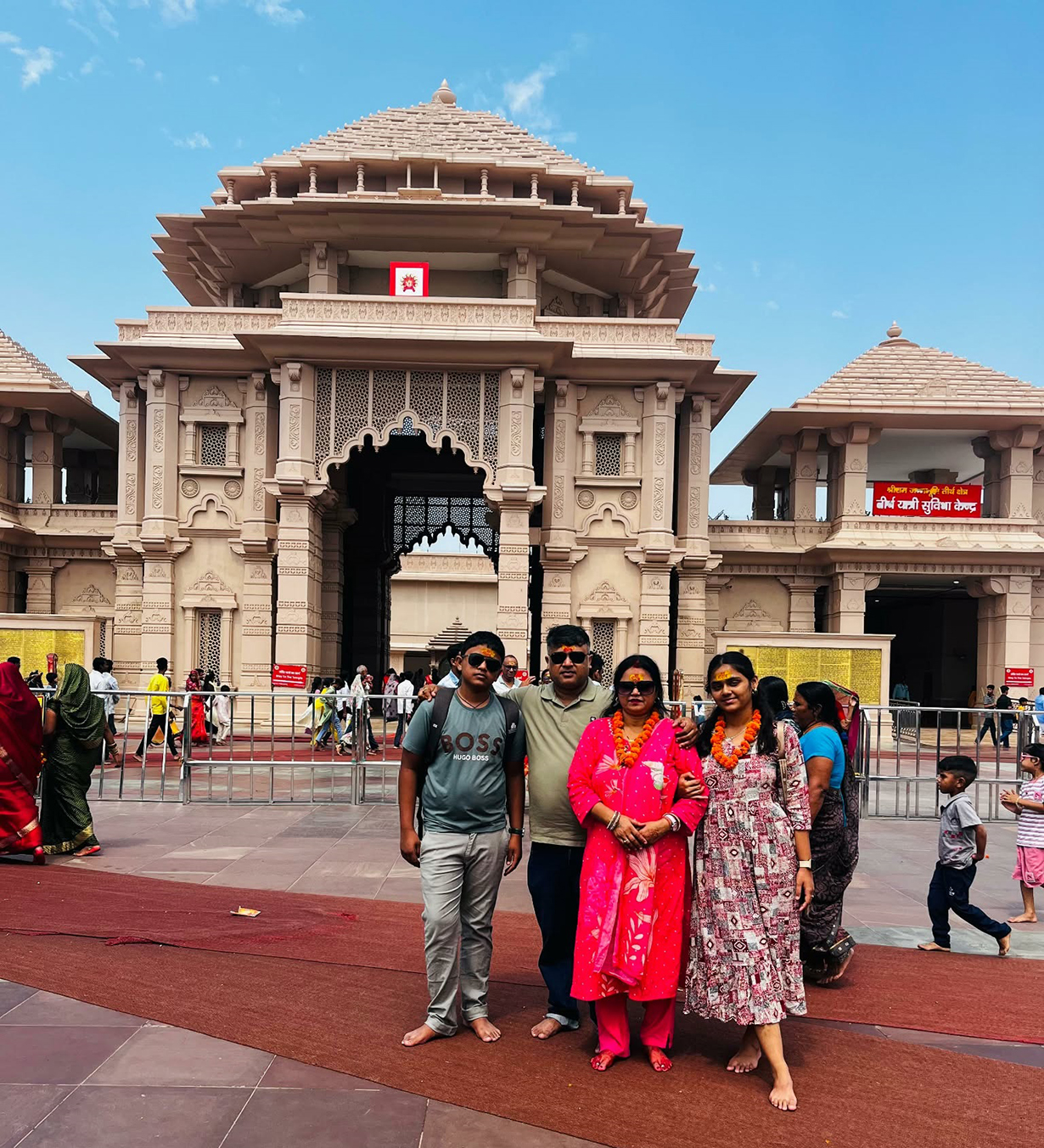
Early Thursday morning, after swiftly completing routine tasks, our team departed from Biratnagar. The group included myself, my wife Somani, son Biplav, daughter Bandana, sister-in-law Rambha, elder sister Ahilya, and the driver Kuldeep.
Kuldeep’s vehicle with Indian license plates was not just a mode of transportation; it was a moving ‘small home,’ fueled by trust and enthusiasm.
1. Ayodhya: The Cool Touch of the Sarayu
The long road journey from Biratnagar brought us to the sacred soil of Ayodhya at 2 a.m. Thursday night. The city was asleep, but our hearts awakened to a new consciousness. After a brief four-hour rest, at 6 a.m. on the full moon day of Vaishakh Shukla, we reached the bank of the Sarayu River.
We bathed at the ‘New Ghat’ of the Sarayu River, which is believed to have originated from the tears of Lord Vishnu. On the auspicious occasions of Buddha Jayanti and Vaishakh Shukla Purnima, the cool and pure waters of Sarayu washed away the fatigue of the long journey.
There is a special tranquility in this river’s water that teaches respect and dignity. After bathing, we visited Hanuman Garhi and had the opportunity to see the newly built magnificent Ram temple. The grand statue of Ram Lala gave a sense that the first leg of this marathon was successfully completed.
2. Prayagraj: The Depth of the Sangam
Carrying prasad from Ayodhya, our vehicle headed straight to Prayagraj (Allahabad). This was the second and very important part of the marathon. Not wanting to miss the full moon bath, despite daytime crowds and traffic jams, we reached the Triveni Sangam by 5 p.m.
Prayagraj is known as ‘Tirthraj’ or the king of pilgrimage sites. It is the confluence of the Ganga, Yamuna, and the invisible Saraswati rivers. We reached the central part of the confluence and witnessed the clear boundary between the blue Yamuna and the white Ganga waters.
Bathing together at the Sangam is more than cleansing the body; it symbolizes the dissolution of ego and impurities. According to ancient beliefs, bathing at Sangam during Vaishakh Purnima is equivalent to performing an Ashwamedha Yajna, bringing great merit. After the bath and paying respects to the famous sleeping Hanuman, our journey turned towards Varanasi.
3. Varanasi: The Confluence of Devotion and Flavor
The group arrived in Varanasi (Kashi) at midnight. Our vehicle moved through the streets in front of the ancient city. Although modernity has crept into this sacred city, cultural and religious traditions remain preserved. This city that never sleeps openly embraces the cyclical nature of life and death on a single ghats. After a brief rest, early Saturday at 6 a.m., we arrived at the sacred banks of the Ganga.
We took a dip at the oldest and still active Dashashwamedh Ghat in Varanasi. It is said that Brahma performed ten Ashwamedha Yajnas at this very spot. Bathing in the river’s waves was an extraordinary experience filled with energy. After bathing, we entered the Kashi Vishwanath temple through the grand ‘Corridor’ (Gate No. 2), ending a long wait. This fusion of modern engineering and ancient faith has transformed Kashi.
Following the darshan of Vishwanath, paying respects to the ‘Kotwal’ Kal Bhairav marked the completion of our journey. We lingered for a long time wandering the narrow alleys, which seemed endless and similar. Eventually, with the help of Google Maps, we found our way out.
Not savoring the streets and flavors of Varanasi would have left the trip incomplete. The thick, creamy lassi served in earthen pots, local sweets, and the famed Banarasi paan made the journey even more memorable.
We also encountered the viral ‘Litti Line’ of Varanasi on social media, and the actual taste of the litti chaat was truly remarkable. Wandering through the narrow pathways while hearing ‘Har Har Mahadev’ echoed brought joy to my heart.
At 6:40 p.m. Saturday, we returned to Dashashwamedh Ghat for the Ganga Aarti. As seven priests performed the grand puja together lifting the aarti lamps, conch sounds echoed, and thousands of floating lights adorned the river waves, it felt like witnessing divine power in its truest form.
The shimmering lights and reflections created a feeling of being in another world. This was the most beautiful and emotional moment of this ‘spiritual marathon.’
4. Final Phase: The Journey Home
At 9 p.m. Saturday, bidding farewell to Varanasi, we began the journey home. The challenge was to rest on Sunday and return to routine work on Monday. The vehicle moved all night, leaving behind the yellow road lights. Occasional sips of tea and small rests helped us sustain.
At noon Sunday, we reached our own courtyard in Biratnagar. Thus concluded the three-day ‘spiritual marathon.’ This journey was not merely a geographical tour, but a dialogue between a ‘doctor’ and his inner spirituality, along with family responsibilities.
Marathons are run for medals, but in this marathon, we ran for inner peace and family bonding. Carrying the dignity of Sarayu, the wisdom of Sangam, and the devotion of Kashi in our hearts and returning home was the greatest achievement of this journey.
This divine journey has given us lifelong energy, which will remain an invaluable treasure for me and my family.