
‘The Judiciary Will Not Progress; Justice Is Now Confined Within Narrow Boundaries’
News Summary
Produced by AI. Editorial review completed.
- The Constitutional Council has recommended Dr. Manoj Kumar Sharma, ranked fourth in seniority, as Chief Justice, bypassing the order of seniority.
- Former Prime Minister and Chief Justice Sushila Karki praised Sapana Pradhan Malla’s qualifications and contributions, calling this a setback against women.
- Sapana Pradhan Malla played a significant role in increasing the number of female judges and judicial reforms.
On Thursday, the Constitutional Council recommended the new Chief Justice of the Supreme Court by bypassing the seniority hierarchy, causing waves in the judicial community. Influenced by Prime Minister Balendra Shah, who also chairs the Constitutional Council, Judge Dr. Manoj Kumar Sharma, ranked fourth in seniority, was recommended, thereby preventing Sapana Pradhan Malla from becoming Chief Justice.
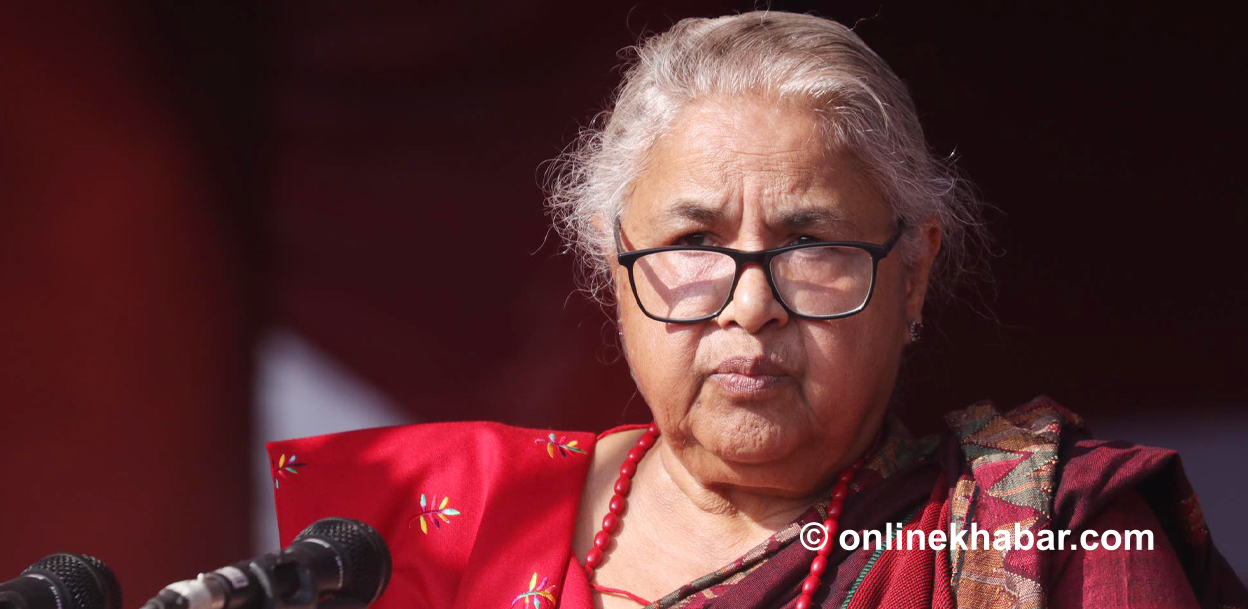
In this regard, we spoke with former Chief Justice and former Prime Minister Sushila Karki:
What is your view on the Constitutional Council’s recommendation for Chief Justice today?
It is difficult to respond. It feels as if a major mistake has been made. I never anticipated this outcome. Ultimately, this is a decision made by the government and the Prime Minister.
Sapana Pradhan Malla was an extremely competent and capable woman. What shortcomings did she have? The government will have to bear the consequences of this decision.
Was the Prime Minister influenced by her former political connections?
What political connections? She was constitutionally and in every respect capable. There are three branches of the state and all maintain their integrity. How are appointments made in the police? Through promotion. The same process applies to judges. Even appointment to the Supreme Court is based on merit. Sometimes lack of qualifications can cause delays, but it is not unjust.
Sapana Pradhan Malla has been building her qualifications progressively. Internationally, organizations like the ‘International Women Judges Society’ have recognized her as the world’s third female Chief Justice.
She is not an unqualified person. She has long practiced law, worked in both INGOs and NGOs, and contributed to legal reforms. The eleventh constitutional amendment came through her efforts. She was instrumental in enacting laws related to equality. In Nepal, women like Sapana and others have made significant contributions toward women’s development laws.
She also understands how to implement judicial reforms. While I was in office, I could not bring in a female judge, but she appointed 60 female judges in seven to eight years.
She also carried out reorganizations and improvements in court facilities. Sapana has not done less work than any man. Everyone acknowledges that. She is knowledgeable about how to advance the judiciary.
She is also highly experienced in international relations, a rare example in Nepal.
She studied at Harvard and has academic credentials from both India and Nepal. Her educational level surpasses that of most judges. Her qualifications were two to three times higher than mine.
Internationally, she is respected as a lawyer and judge. Under her leadership, courts could have progressed two or even three times faster.
Yet, she was not permitted to assume this position, which is worse than I had imagined.
Why do you think this happened?
This decision reflects flawed thinking and ideology. Compared to Sapana, no other judge, nor any competing male candidate, was qualified. Even international organizations have evaluated her positively. This decision is unacceptable. In the past, too, a woman was blocked from becoming the Inspector General of Police, which caused significant controversy.
Today, she could have advanced the judiciary by two to two and a half years.
Her goal was to prepare one to two hundred female judges, which would have succeeded. But now, the judiciary will not progress; justice will become restricted, and thinking and actions will be limited. This action will not enhance the government’s reputation. Exposing the judiciary is not beneficial.
Is there any possibility of correcting this recommendation?
I do not know if correction is possible. Manoj Kumar Sharma and Sapana Pradhan Malla are incomparable.
This decision is an attack on Nepal’s 25 million women. This opportunity came after great struggles by women, yet such an attack has occurred. This deeply saddens me. The current government’s decision on the judiciary is a grave injustice against women.
What is the possibility that the parliamentary committee will rectify this decision?
I have no information about that. Sapana is not willing to contest for this position again. People have dignity and respect. In one month, she is preparing to become Chief Justice in India. She is a person who has done great work.
She will not fight for this post again. This is a betrayal against women. How can women trust the government and political parties now? How can they believe development will proceed? There is now no trust; this is treachery.
Ordinary women are often rallied onto the streets for lessons. When I was Chief Justice, Onsari Gharti was the Speaker and Bidhya Devi Bhandari the President. I attended a conference in the US where the junior country was recognized for its work for women. Look at what the current popular government is doing today.