
The True Face of Good Governance Emerges from Ministry and Minister Selection
News Summary
- The National Independent Party is set to form a single-party majority government with nearly two-thirds of the mandate for the first time following the generation-zero uprising, according to Article 76, Clause 1 of the constitution.
- Balen Shah is preparing to implement the good governance agenda through ministerial appointments and ministry distribution, a move that will shape the direction of his tenure.
- The new government plans to limit the number of ministries to 18. Although past administrative reform commissions have recommended reducing ministries, these suggestions have not been implemented.
Following the Generation Zero uprising led by young activists against governmental insensitivity, the National Independent Party has received an unprecedented nearly two-thirds popular mandate. This overwhelming public trust is not merely for a change in leadership or political face, but to uproot long-standing misgovernance and usher in good governance.
Good governance must be evident not just in eloquent speeches but in results-driven actions. To truly initiate change, it is essential first to carefully understand the current state apparatus’s weaknesses and functioning. Shedding light on these institutional dysfunctions, this news series — Mandate to Good Governance — aims to chart a roadmap for genuine reform.
March 19, Kathmandu. Following the publication of the final election results, the composition and dynamics of the upcoming parliament have been determined. This parliamentary configuration is markedly different from previous ones.
For the first time since the promulgation of the new constitution in 2015 (2072 BS), a single party has secured an almost two-thirds majority. Accordingly, under Article 76 Clause 1 of the constitution, a single-party majority government is set to be formed. Balen Shah is confirmed as the future Prime Minister as per electoral commitments.
However, political and administrative circles are keenly observing: whom will Balen Shah appoint as ministers? Which individuals will lead which ministries?
The party, established more than three years ago, will enter the Singha Durbar with 182 lawmakers representing this significant popular mandate. The main reason behind this electoral triumph is the good governance agenda championed by the National Independent Party.
The cornerstone of implementing good governance begins with the choice of ministers and the distribution of ministries.
Although Shah has not yet disclosed how he will form the cabinet, if he wishes to advance the good governance agenda, the selection of ministers and allocation of ministries will serve as the fundamental basis. This will reveal the probable direction his administration will take.
Historically, every government formed in the democratic era has suffered distortions primarily due to repeated conflicts and divisions over ministerial appointments and ministry reshuffles. Experts suggest that if these patterns recur, the future will not differ from the past.
Former Secretary Govinda Kusum stated, ‘In the past, coalition governments were mandatory due to the absence of single-party majorities in parliament. The new Prime Minister faces no such compulsion; therefore, past mistakes must not be repeated.’
With the election results released via the National Independent Party, parliamentarians aspiring to become ministers have started expressing their ambitions openly and unhindered.

Understanding this mindset, Chairperson Ravi Lamichhane instructed parliamentarians during Wednesday’s training materials not to come forward requesting ministerial positions, urging lawmakers to focus primarily on their legislative responsibilities.
How many ministries are necessary?
The National Independent Party’s electoral manifesto states, under point 176, a plan to limit the number of federal ministries to 18 and establish a new standard for staffing led by expert ministers and specialized professionals.
It also proposes transforming the Prime Minister’s Office into not just an administrative body but a ‘results center’ responsible for inter-ministry coordination, climate change management, and direct supervision of large projects. The direction of its implementation remains a key issue.
The manifesto notes that these targets regarding ministry numbers are based on reports from various administrative reform commissions formed over different periods.
However, in the past, such recommendations have largely remained unimplemented promises.
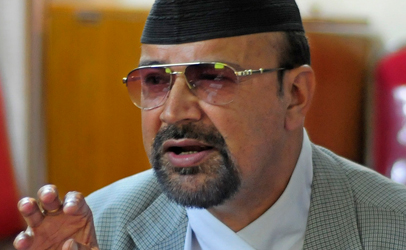
According to administrative expert Kashiraj Dahal, these recommendations can be implemented from the outset to initiate reforms.
‘Repeated studies have suggested reducing the number of ministries and departments to improve the quality of work,’ Dahal explained.
In 2022, a special committee formed by the National Assembly to study and monitor federalism implementation instructed the Prime Minister and Council of Ministers’ Office to limit federal ministries to 15 and provincial ministries to a maximum of 11.
The committee concluded fewer ministries at the central level would be beneficial following devolution of powers to provinces and local governments.
Led by Dr. Khimalal Devkota, the committee also recommended reducing the number of federal ministries and departments.
Nonetheless, political leadership has not shown readiness to adopt these recommendations.
Since 1950, nearly a dozen commissions and committees have been formed to reform public administration, each offering significant suggestions.
Despite political changes over about eight decades, substantial improvements in public administration remain elusive.
In 2009, the Administrative Restructuring Committee led by Mahesh Nilantha Buch from India recommended reducing ministries to 11.
In 2018, the Public Expenditure Review Commission chaired by Dr. Dilliraj Khanal also advised reducing the number of ministries and offices.
The primary rationale behind reducing ministries is to address functional duplication, which complicates decision-making processes.

Currently, having different ministries or departments handling similar functions increases management challenges.
Opening new ministries or offices usually results in more ministers, secretaries, advisors, security personnel, vehicles, residences, and other state-funded facilities, leading to higher expenses.
Multiple levels and agencies cause files to circulate between offices, causing delays in work.
Studies have concluded that fewer ministries and offices facilitate easier coordination and policy uniformity.
‘With a three-tier government system established by the constitution, significant powers have been delegated to local and provincial levels, necessitating a smaller, more agile, and policy-focused central government,’ Dahal explained.
However, in practice, the central government, including the Prime Minister’s Office, still comprises 22 ministries, with many functions continuing to be handled at the federal level.
During the election campaign, National Independent Party leader Balen Shah also pointed out the lack of power transferred to provinces, saying, ‘Now there is no need to seek authority in Kathmandu, one should come there only for religious visits.’

To implement this, the central government must become more agile while empowering lower levels of government.
A ministry is not only an administrative unit but also a permanent expenditure structure, including ministers, state ministers, secretariats, advisors, security, vehicles, accommodation, and other facilities provided by the state.
The bureaucracy, led by secretaries, consists of undersecretaries, assistant secretaries, section officers, account officers, administrative and technical staff.
A review of Nepal’s government budget and financial reports shows that a significant portion of administrative expenditures goes to ministries. The Ministry of Finance allocates sufficient budget for salaries, allowances, operating expenses, vehicles, fuel, and maintenance.
Financial reports from the Office of the Auditor General detail wide-ranging administrative operating costs.
Although a minister’s salary is relatively low, the total annual expense rises substantially when including all facilities, security, and leadership costs.
Salaries, allowances, pensions, training, and travel expenses of secretaries and senior staff amount to millions of rupees.
Office operating expenses include electricity, water, internet, cleaning, maintenance, stationery, and communication costs.
Some ministries rent departments and offices, incurring significant costs in rent and upkeep.
Thus, various commissions have repeatedly recommended reducing ministries to not only cut costs but also strengthen governance.
Ministries as centers of power
If ministries truly serve the people, all would be equally important. However, historically, ministries have been a major source of disputes during government formation due to allocation of power and resources.
Politicians have also used ministries as platforms for managing party workers. It was common practice to staff secretariats with numerous personnel and contract employees.
Former Secretary Kusum remarked, ‘Disputes over ministry selection emerged from attempts to gain parliamentary power or advantage; such conflicts must end. If anyone creates disputes over ministry allocation, that indicates a problem.’
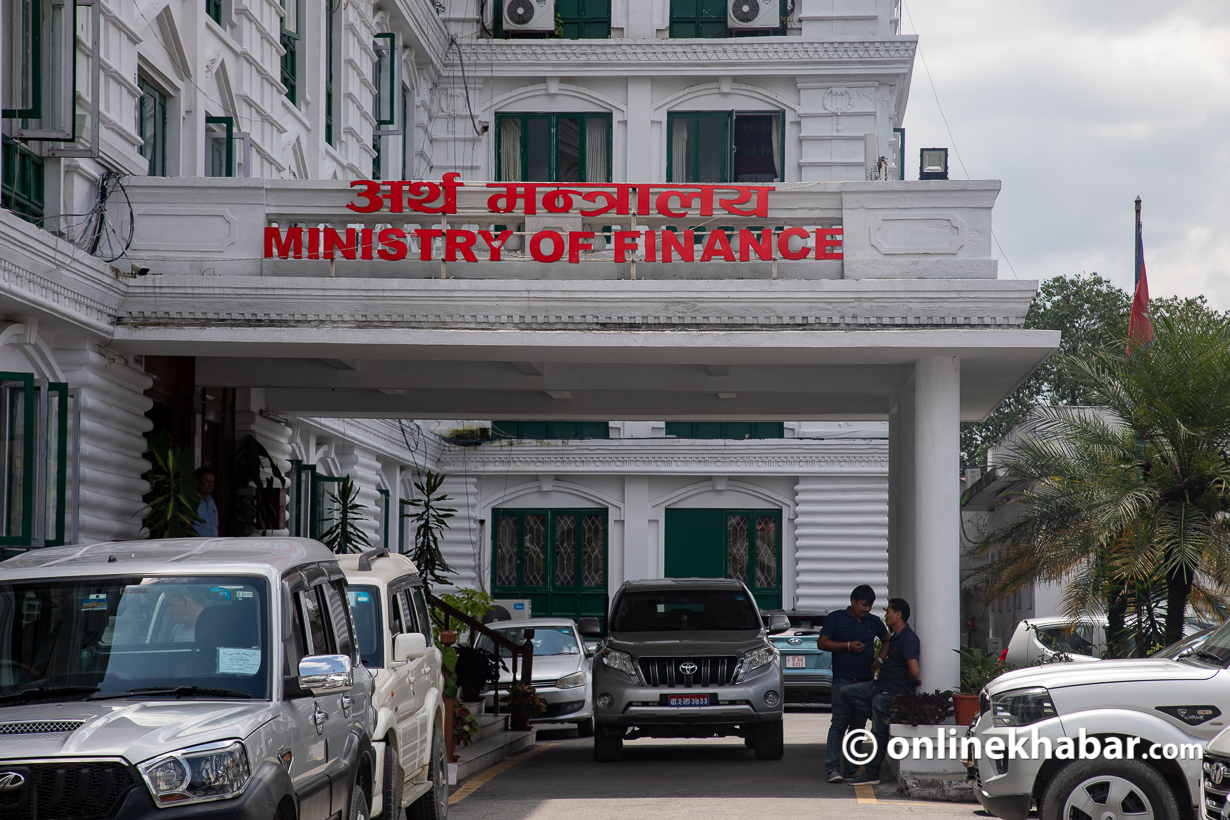
Ambitions to manage ministerial shares and become ministers led in the past to unqualified individuals being appointed, a distortion experts say must be halted now.
Key ministries such as Home, Finance, Physical Infrastructure, Urban Development, and Communications are traditionally the top choices for aspirants, intensifying competition.
Former Secretary Kusum stated, ‘The practice of grabbing ministries for political influence must change now.’
The National Independent Party plans to adopt a policy of selecting ministers based on merit and expertise, and how this is implemented will determine the government’s future direction.
Administrative expert Dahal said, ‘With this government emerging from the powerful mandate of the Generation Zero uprising, any manipulative interests must be halted. Politics has previously been a platform for managing the unemployed; ministries should no longer serve merely as party worker hubs.’
The responsibility to end these distortions lies with the Prime Minister, who should regard ministers as subordinates and collaborators.
Unlike past coalition governments, where controlling ministers was difficult, the single-party government eliminates such constraints.
‘Only by selecting qualified individuals will beneficial outcomes follow; undue pressure must be resisted,’ emphasized former Secretary Kusum.