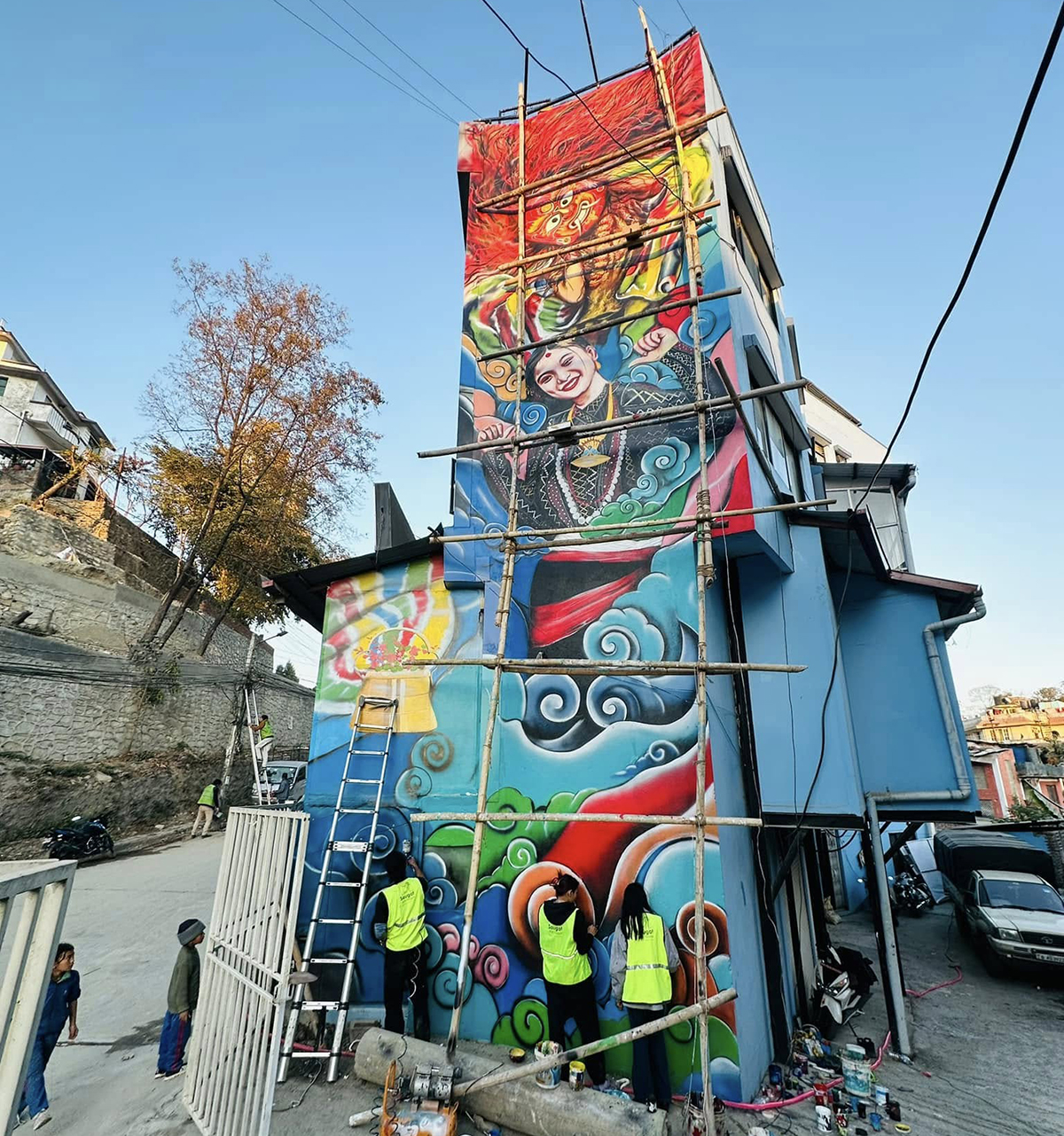
Saugat Tamang: Surrounded by Streets, Walls, and Colors
News Summary
Carefully edited and generated
- Saugat Tamang began his street art journey in Kathmandu around 2020 and has since created hundreds of murals over five to six years.
- He has developed a distinctive style using both hand brushes and airbrush techniques and currently leads a team of 10 artists.
- Saugat emphasizes that murals belong to the public and advocates for fostering respect for art within the community.
With tousled hair, a black t-shirt, and boots, 29-year-old Buddha, known as Saugat Tamang, stands nearly 6 feet tall—and these have become his signature looks. Yet, beyond his appearance, it is his work that defines him.
The work he chose for himself, sought out, and pursued despite various challenges.
The street. The walls. The colors.
Currently, he revolves around these three elements, and his daily life is deeply intertwined with them. He regards the street as an open gallery—his true exhibition space—and believes art displayed publicly is easily accessible for everyone to appreciate.
Today, he lives fully immersed in his dream world, but there was a time when he left art to explore other paths before being drawn back.
Thus, he views art as a labyrinth offering profound peace, a heavenly experience, and an opportunity for self-discovery.
000
Born into a modest family in Mahadevbesi, Dhading, Saugat had an early passion for unconventional pursuits. When he was in sixth or seventh grade, while others turned pages in books, he etched images in his mind.
He sculpted models of bikes and hung them on his home’s veranda, eager for village folks to notice and appreciate his craft.
Those early sculptures are still preserved and displayed in his Kalimati studio—a testament to his deep commitment to art.
After completing his School Leaving Certificate, he moved to Kathmandu with his elder brother, Pawan Tamang, to pursue education and skills. Pawan guided him to learn from an established craftsperson.
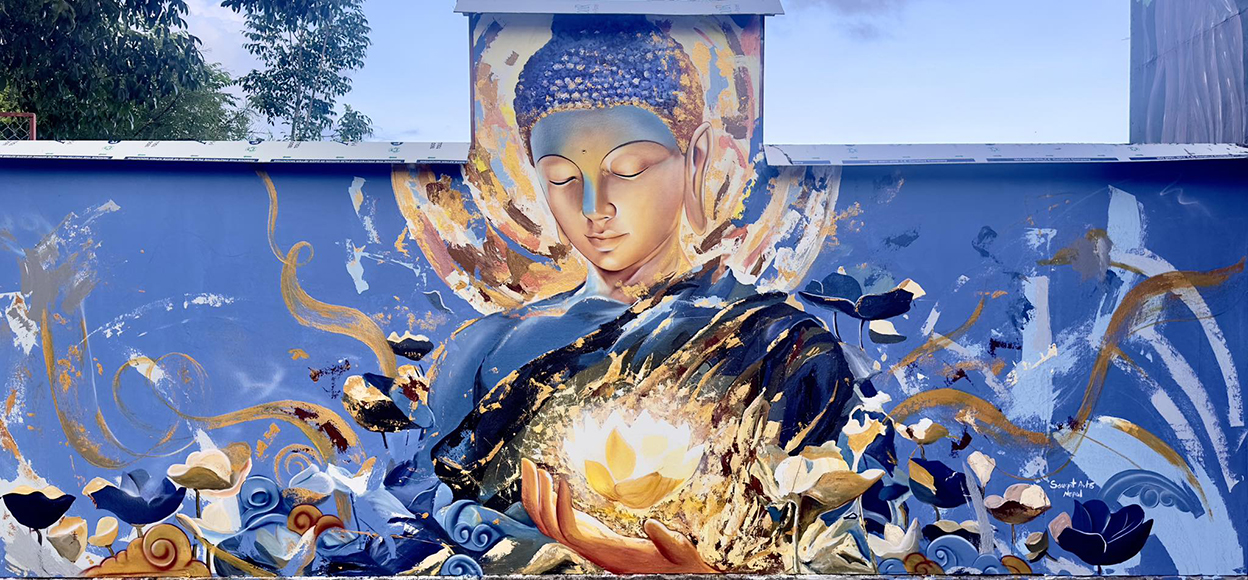
He trained in craftsmanship for 10 months and quickly became proficient—a feat that typically takes years. However, surviving and thriving in Kathmandu required more than just these skills.
He sold street food like pani puri, chaat, and momos and invested in two restaurants, but these ventures were unsuccessful. After losing his investments, he was compelled to seek foreign employment, leading him to Saudi Arabia.
In Saudi Arabia, he worked as a cook at a restaurant, maintaining his livelihood—but fate steered him back toward art, turning the COVID-19 pandemic into a golden opportunity.
During the lockdown, with work on hold, he began making sketches and learning new spray painting and airbrush techniques through YouTube tutorials, transforming his room into a personal art school.
New Dimensions, New Style
Upon returning to Nepal, Saugat stepped outside the canvas to establish his identity in street art. At that time, professional street art was still nascent, and he saw an opportunity to carve out a unique niche.
In 2020, he painted his first street art piece on the wall of Janak Gharti Magar’s house.
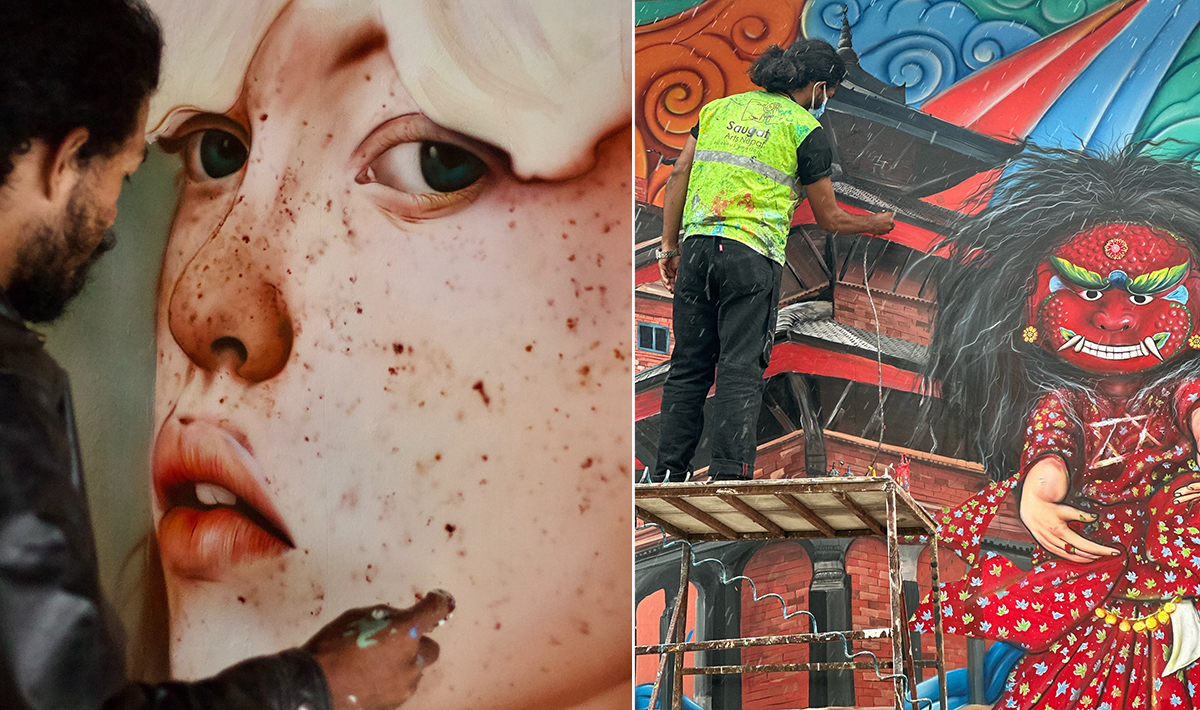
This marked the beginning of a remarkable five to six-year journey in street art, with numerous murals created across Kathmandu and beyond.
Notably, he collaborated with Kathmandu Metropolitan City to produce murals showcasing ethnic cultures in the Bagbazar area. His 50-foot tall mural ‘Lake Majha’ in Dhapasi earned him widespread recognition. Today, he leads a team of 10 self-taught artists.
Opportunities, Challenges, and Philosophy
For Saugat, painting walls is not enough; viewers must experience beauty through his work.
His artworks are bright, attractive, and colorful, inspiring awe and positive energy.
He has developed a distinctive signature style by combining hand brush and airbrush techniques that set him apart and add a captivating texture.
Nevertheless, working on tall buildings, enduring weather, and occasional vandalism of public artworks present significant challenges.
For example, portraits on the walls of Padmakanya Multiple Campus were recently damaged, which he subsequently restored himself.
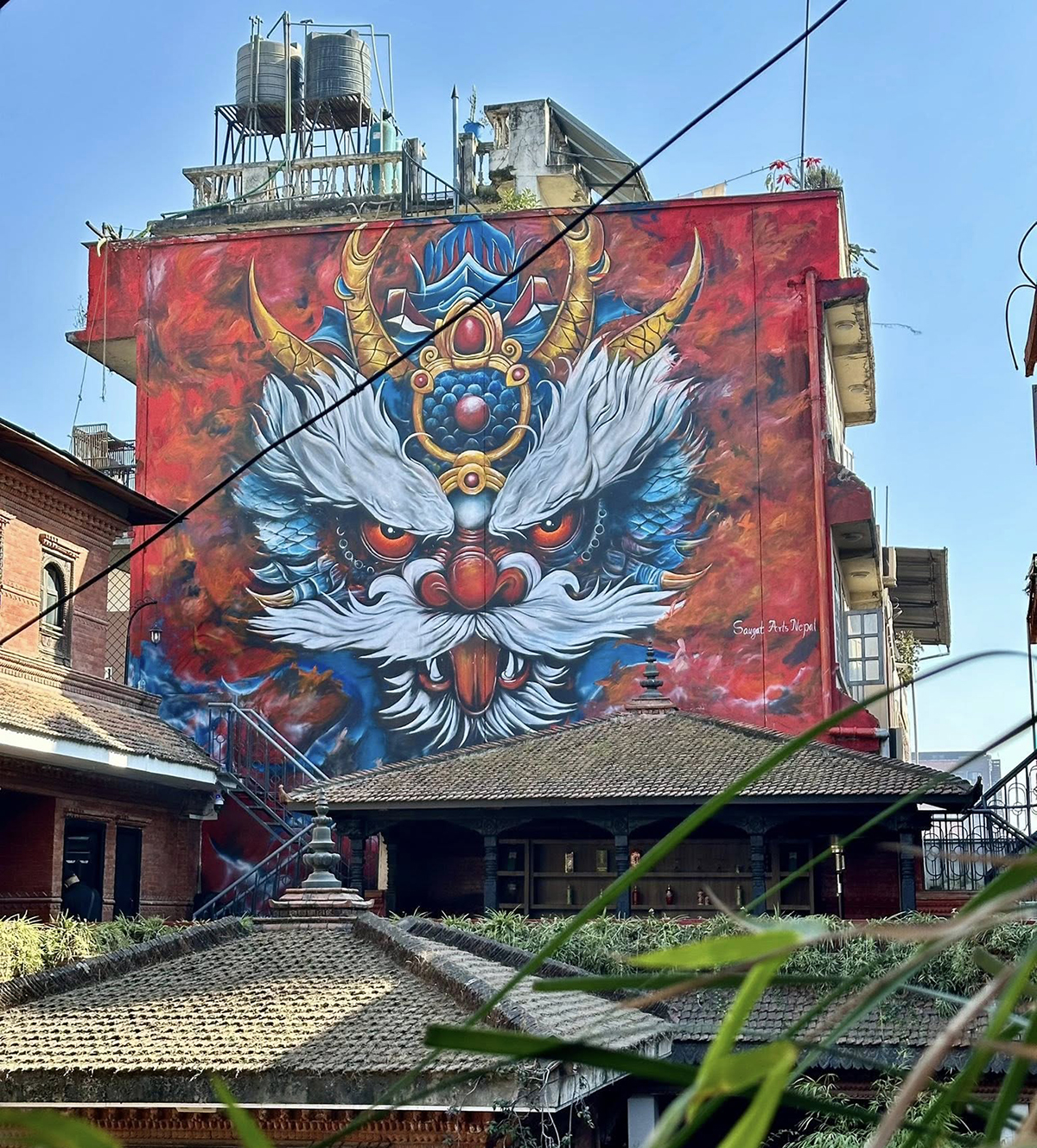
“There is still a lack of awareness in society about respecting art,” he explains.
He hopes that as awareness grows, such issues will decline. The street is public property, and murals are a part of that public space.
Saugat sees color as alive, and painting over a wall is like breathing new life into it. He believes that full immersion and emotional exchange are essential when creating art.
“Art is a form of free expression that must convey positive energy,” he shares as his life philosophy.
Street Art
Many artists like Saugat are entering the street art scene these days—some driven by genuine passion and others by commercial interests.
He believes artists in Nepal must be versatile to survive and flourish. This means working in styles ranging from graffiti to traditional, modern, and abstract, catering to diverse client needs.
While art cannot be measured purely by money, financial sustainability is essential. Street art offers a viable income source for artists, says Saugat.