
Youngest Congress MP Focuses on Brain Drain and Climate Change
News Summary
Editorially Reviewed.
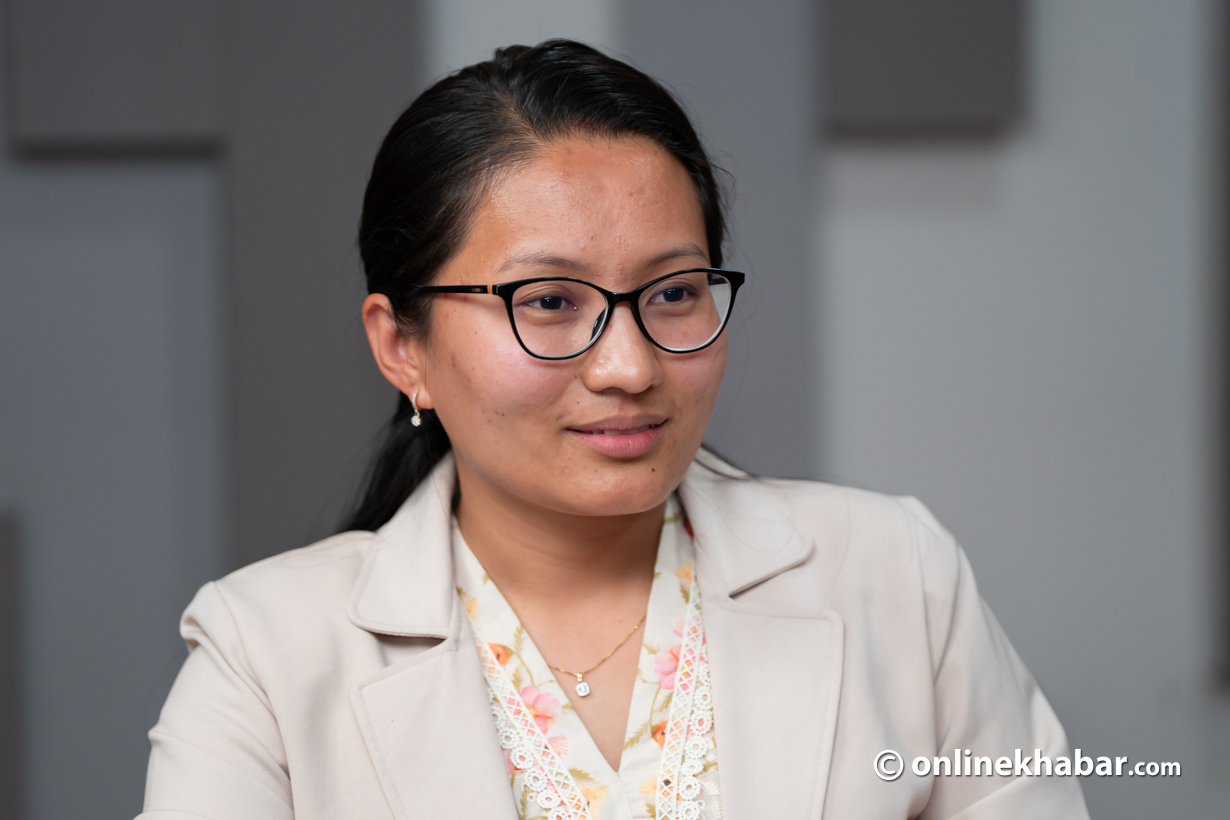
- Thirty-year-old Gita Gurung from Solukhumbu has become the youngest proportional representation member of Parliament representing Nepali Congress and aims to amplify youth voices in the legislature.
- Gita Gurung has committed to leading focused parliamentary debates on climate change, education policy, and addressing the challenges of brain drain while asserting a strong opposition role.
- She emphasized the need to reform Congress’s political training ground, uphold student politics, and conduct rigorous internal party reviews.
March 19, Kathmandu – Thirty-year-old Gita Gurung from Solukhumbu has become the youngest Member of Parliament representing Nepali Congress through proportional representation.
Gurung began her political journey as the unit president of the Nepal Student Union while studying in 8th or 9th grade at Thulung Dudhkoshi village in Solukhumbu. She asserts her mission is to amplify the voices of youth within Parliament.
Entering Parliament carrying the aspirations of a new generation, concerns about climate change risks, and the pain of brain drain, she said, “Aside from raising other issues, I will prioritize a special debate on the climate change problems faced by our Himalayan districts.”
Achieving the feat of becoming a Congress MP at just 30 years old, Gita comes from a politically active family background. Her political journey began at home. Her father, Indra Gurung, was a local social activist and a dedicated Congress worker. In their village, his presence was sought after at various events.
“When people sought and respected my father for his service, I also developed the aspiration to serve in such a manner,” she recalled.

Solukhumbu was deeply affected by the Maoist conflict, with a two-day journey required from headquarters to reach many villages. Despite the adverse conditions, her father carried the Congress flag forward. Congress leaders visited their home regularly. She heard stories of the peace process led by Girija Prasad Koirala and also learned about the nation’s democratic and multi-party history at home. These experiences cemented her belief that Congress was the right party. She began engaging in politics openly from 8th grade within the student union.
“I have two daughters. When society questioned about not having a son, my father would firmly defend us by saying daughters must be given the same education and opportunities as sons because they can also advance,” she said, reflecting on his words.
Gita asserted that student politics remains essential and its justification has not ended. Responding to views dismissing the relevance of student organizations recently, she declared, “They serve as a permanent opposition, safeguarding educational rights, pushing for administrative reforms, and warning the government. Rather than ending, these organizations need reform.”
Her family’s rebellious spirit provided a strong foundation for her political path. Being a ‘first student’ at school made leadership roles easier. She led village activities such as volleyball tournaments, debate contests, and attendance use among students, consistently mobilizing the youth of her community.
After passing her SLC in 2009 (2066 BS), she moved to Kathmandu to study Plus Two Science at Trinity International College, obtained a Bachelor of Science from Tri-Chandra College, and completed a master’s in international relations from Tribhuvan University.
She was active in the Nepal Student Union during college and contested for the Free Student Union chairperson position at Tri-Chandra. In 2016 (2073 BS), she became a central member of the Nepal Student Union and served in that capacity until becoming an MP. She has continued as a central committee member during Dumjyang Sherpa’s tenure as well.
“Student politics is still necessary; its justification is not over,” she reiterated.
She noted deficiencies in the Congress party’s political training ground. The party’s general convention was halted, reliance shifted solely to an ad hoc committee, and no membership distribution occurred. Consequently, a new generation could not activate the organization, leading to organizational inactivity.
Reflecting on Congress’s underwhelming recent outcomes, she added, “Our results have not been as expected. There needs to be a rigorous party-level review on this.”
Currently, there are two types of education policies creating gaps between students from remote areas and cities, a disparity that needs to be bridged.
She is committed to voicing strong opposition in Parliament on education, youth, and climate change issues. “We will praise the government when it does good work, and alert it when mistakes are made. Opposition must play a firm role,” she stated. “This is not the time to be intimidated or discouraged. It is essential to responsibly exercise the rights granted by the people.”
Currently, around 1.9 to 2 million Nepalese are in the Middle East. If conflict escalates, how will they be brought back? There is a need for policy reform to prevent youth migration from villages which are increasingly being depopulated. How can this balance be achieved? How can work be facilitated smoothly? Gita plans to raise these pressing issues vocally in Parliament.
“At present, the dual education policy must be eliminated to reduce disparities between students in remote areas and cities,” she emphasized.
According to Gita, Solukhumbu is highly vulnerable to climate change. Avalanches occur even during the day. Areas with high carbon emissions are among the most affected. Such concerns need to be raised not only at the parliamentary level but also internationally. Continuous programs like the Sagarmatha Dialogue must be sustained. She intends to play a meaningful role in Parliament to highlight and address these challenges.