
Crowded Hospitals Cause Distress for Patients, Many Collapse While Waiting in Ticket Lines
News Summary
- After four days of public holidays, patients arriving at Tribhuvan University Teaching Hospital in Maharajgunj on Monday endured hours of hardship to access OPD services.
- Due to the quota system and delays at the ticket counters, patients have had to wait in long lines for hours under the scorching heat of Tundalapur, lacking drinking water and seating areas.
- Hospital spokesperson Dr. Gopal Sedhai stated that the surge in patients reflects growing trust in the quality of services, and continuous efforts are underway to simplify the online ticketing system.
June 18, Kathmandu — 29-year-old Chhotu Mohammad rests his head on his wife’s lap on a hospital bench. His limbs are abnormally numb, his abdomen swollen, and his eyes have turned yellow. When he tries to speak, no sound comes out, and if it does, his voice trembles.
Upon arriving at Tribhuvan University Teaching Hospital (TUTH) in Maharajgunj around noon on Monday, a dense crowd surrounded the OPD ticket counter. Chhotu’s face displayed not only the pain of his illness but also helplessness from the lack of treatment.
Through tears, he said, “I can’t stand. Even in this critical condition, I have not been able to see a doctor yet.”
Chhotu and his wife, Nahima Khatun, had come to Kathmandu from Sarlahi hopeful for treatment at the capital’s largest hospital, a center of trust for many. But their first experience was filled with confusion and disappointment.
They had arrived at TUTH on Sunday evening. His condition had been deteriorating rapidly. Someone suggested they go to the emergency ward, where they sought assistance.
However, they did not receive the expected care there.
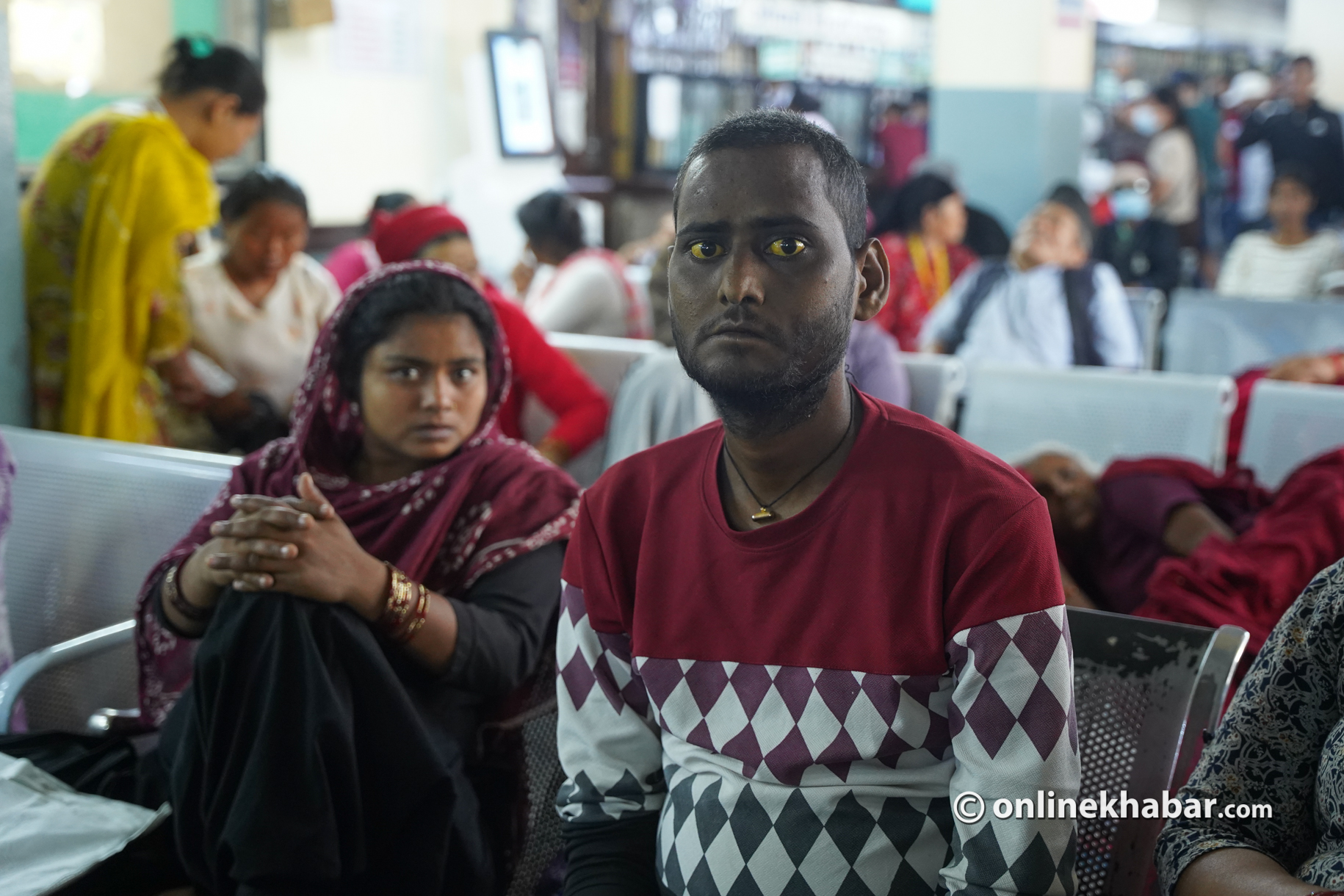
According to Chhotu, doctors told him not to come to OPD the following day and sent him home. They were strangers in the city, unsure where to go or what to do next.
“My whole body aches; my urine has turned yellow. I feel like I’m dying,” he said in pain. “To be admitted to emergency, an ambulance is necessary. We had come by foot, so I was not allowed to see a doctor.”
They subsequently spent the night at a nearby hotel.
Returning early Monday morning, they stood in the OPD line. Chhotu was too weak to stand for long, and his wife, who did not understand Nepali well, struggled to navigate. After much inquiry, they secured a ticket by 9 a.m., but then began another lengthy wait.
Time passed, but Chhotu’s turn never came. At 11 a.m., OPD services closed.
By noon, they had yet to eat.
Chhotu, resting his head in his wife’s lap, repeatedly lamented that it would have been better if they had seen a doctor earlier.
He kept gazing toward the crowd at the hospital and closing his eyes. The agony of waiting surpassed the pain of his illness.
A few months ago, Chhotu’s life was normal. He worked as a tailor in India to support his family.
But two months ago, health problems suddenly developed. His strength declined, and his eyes began yellowing. He became unable to work.
He returned to his village and received some treatment at a hospital in Birgunj, but his condition worsened.
Neighbors advised him to seek help in Kathmandu as a last hope.
With that hope, Chhotu left home early Sunday morning for Kathmandu, but smooth treatment procedures were not found upon arrival.
“I came hoping for good treatment,” he said emotionally. “But no one listens to the pain of people like us who are poor and suffering.”
000
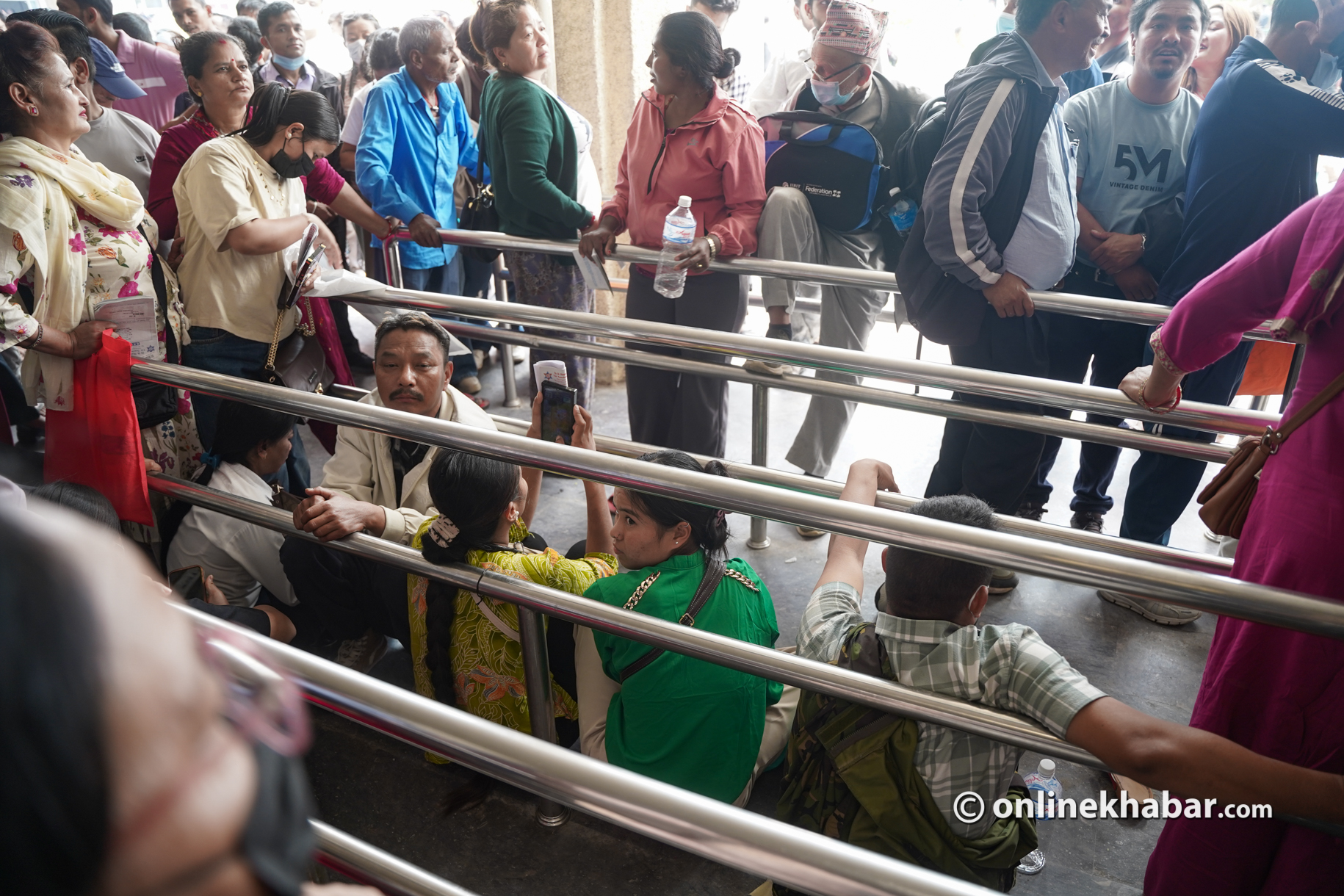
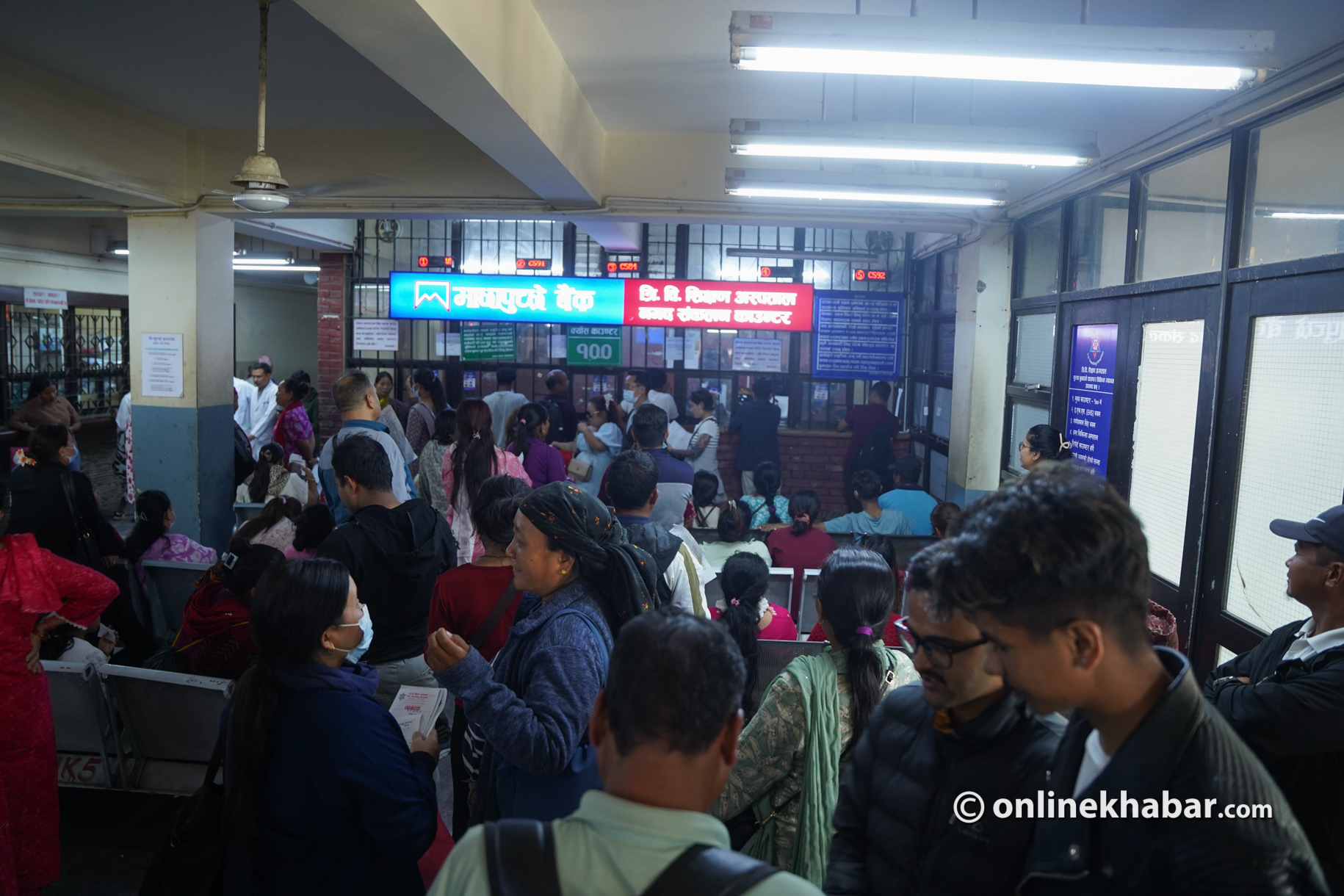
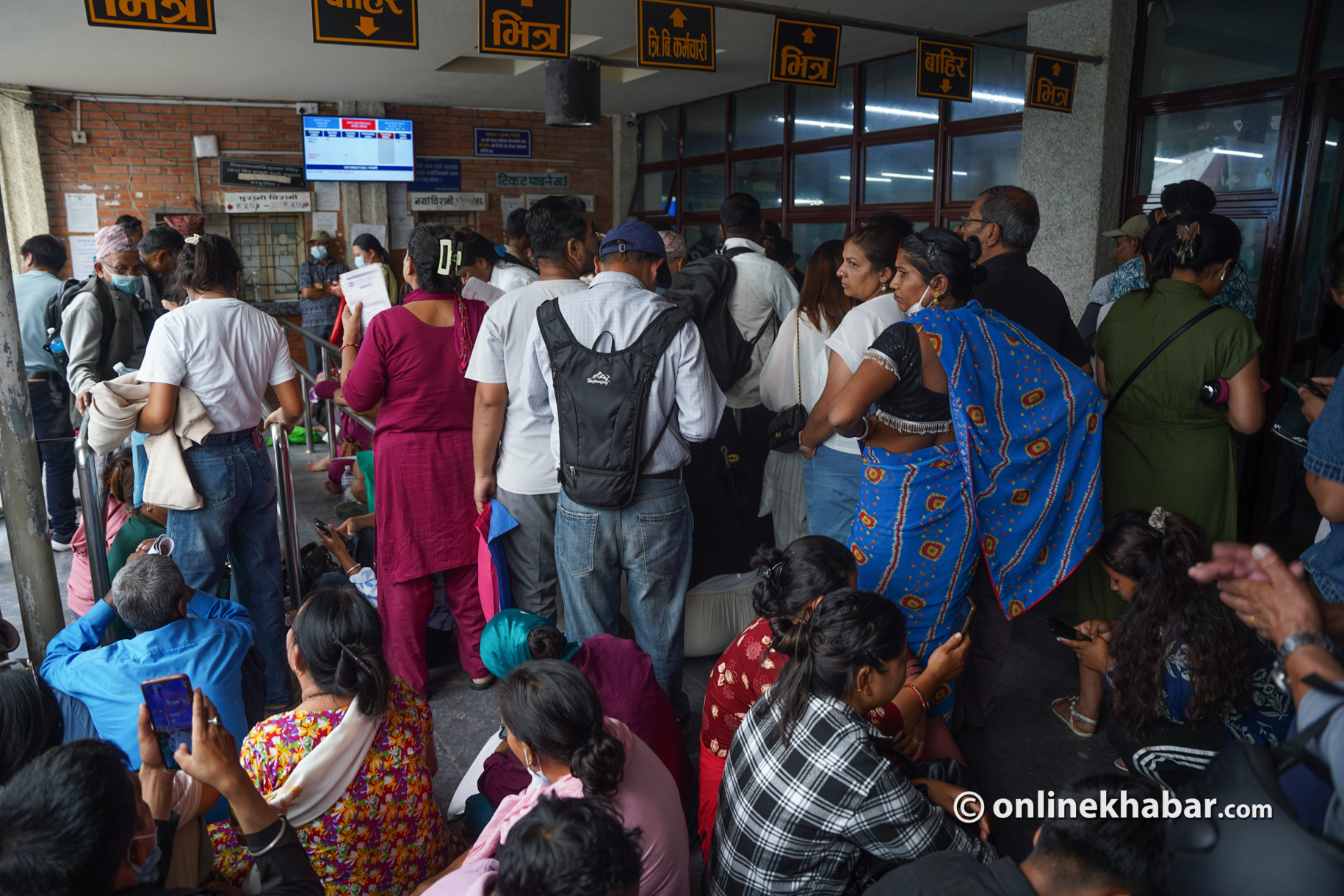
Monday morning around 11 a.m., long lines were visible around the OPD ticket counter. The line extended beyond the hospital’s main building. Many patients were holding old medical reports while waiting.
After standing for hours, exhausted patients rested on the cold floor or leaned against walls, waiting their turn.
Obtaining a ticket became another challenge for patients seeking treatment. The intense heat added to their suffering.
The majority of patients and attendants complained about the absence of a token system requiring them to stand in long queues.
Patients coming for OPD service faced hardships due to delays at the ticket counters, overcrowding, insufficient seating, and lack of cleanliness.
As patient volume increased, complaints about chaotic service management have mounted.
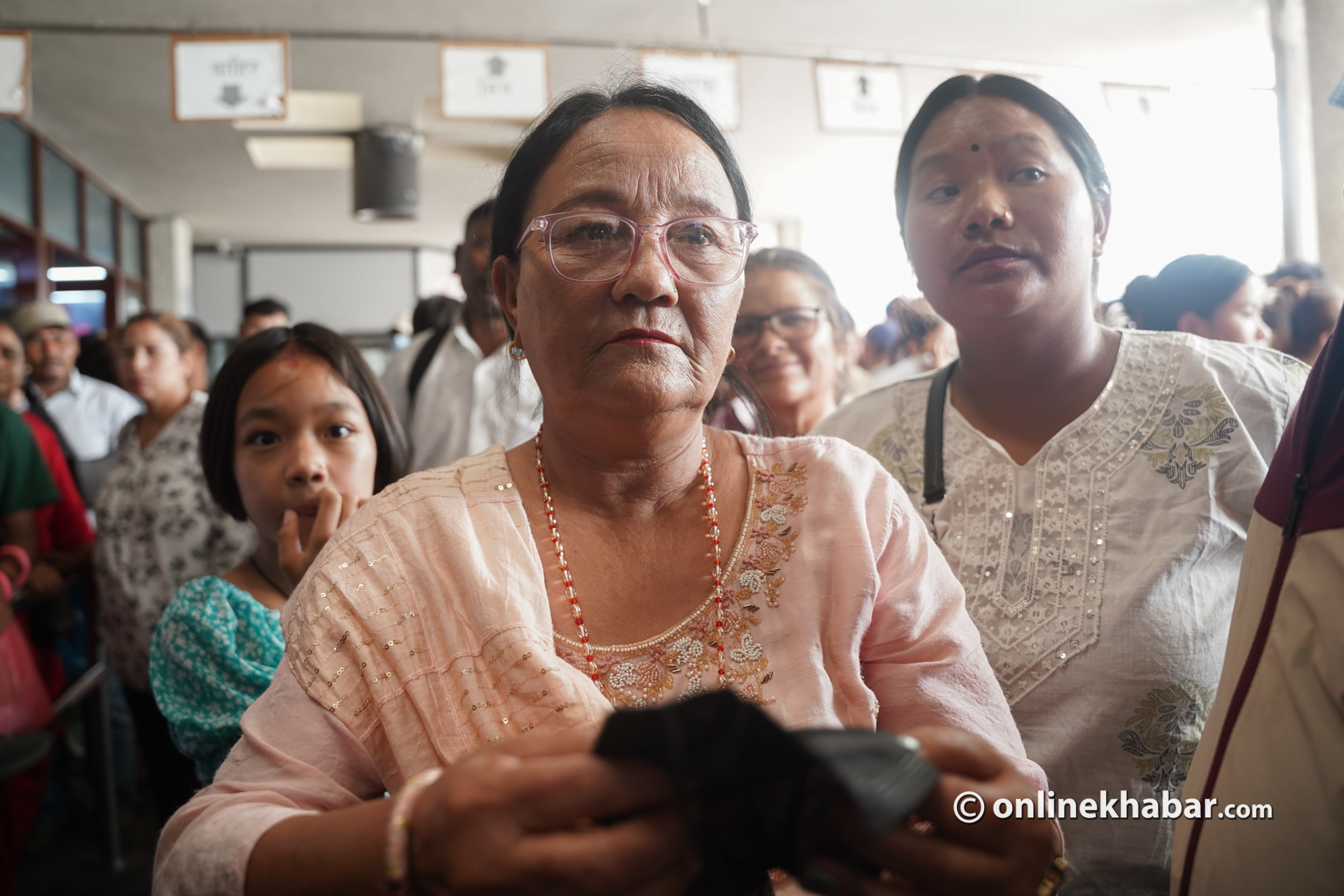
“Coming here sick, the line itself is exhausting before treatment,” expressed patient Radhika Dhakal furiously. “The hospital was closed for four days. We have been in line since morning but still haven’t received treatment.”
Due to public holidays from June 14 to 17, the OPD service was closed, causing a sudden surge on Monday.
Dhakal from Nuwakot had stood in line since 9 a.m. but was angered that by 1 p.m., no progress had been made. She suffers from body pain.
“Soon after the counter opened, they said the orthopedic quota was full,” she said. “We come to see the doctor calmly, but we are told no tickets are left.”
Unable to see a doctor in the morning session, she tried the afternoon shift but feared leaving the line due to no seating.
“I stood in line for more than two hours. I came for treatment but now have worse leg pain,” Dhakal complained.
Given the sensitivity of health services, she demanded that the government increase staff or provide incentives to keep services open.
“Due to the four-day closure, counters should have been added and more staff hired. The patient load could have been anticipated. But no preparation was made. There’s chaos everywhere,” she said.
The intense heat and crowd exhausted one patient to the point of near collapse. Seeing his sweating, another patient offered water and sprinkled water over his head and body.
Overwhelmed by the crowd and heat, the patient fainted outside the OPD. “I feel like fainting because of this crowd and heat. When will the government improve hospital services?” the patient lamented.
Among the crowd was Gangamaya Rai from Udayapur, who also criticized the disorganized service. “We came for a checkup without eating in the morning and have been in line since 11:30 a.m., but the counter hasn’t even opened,” she said.
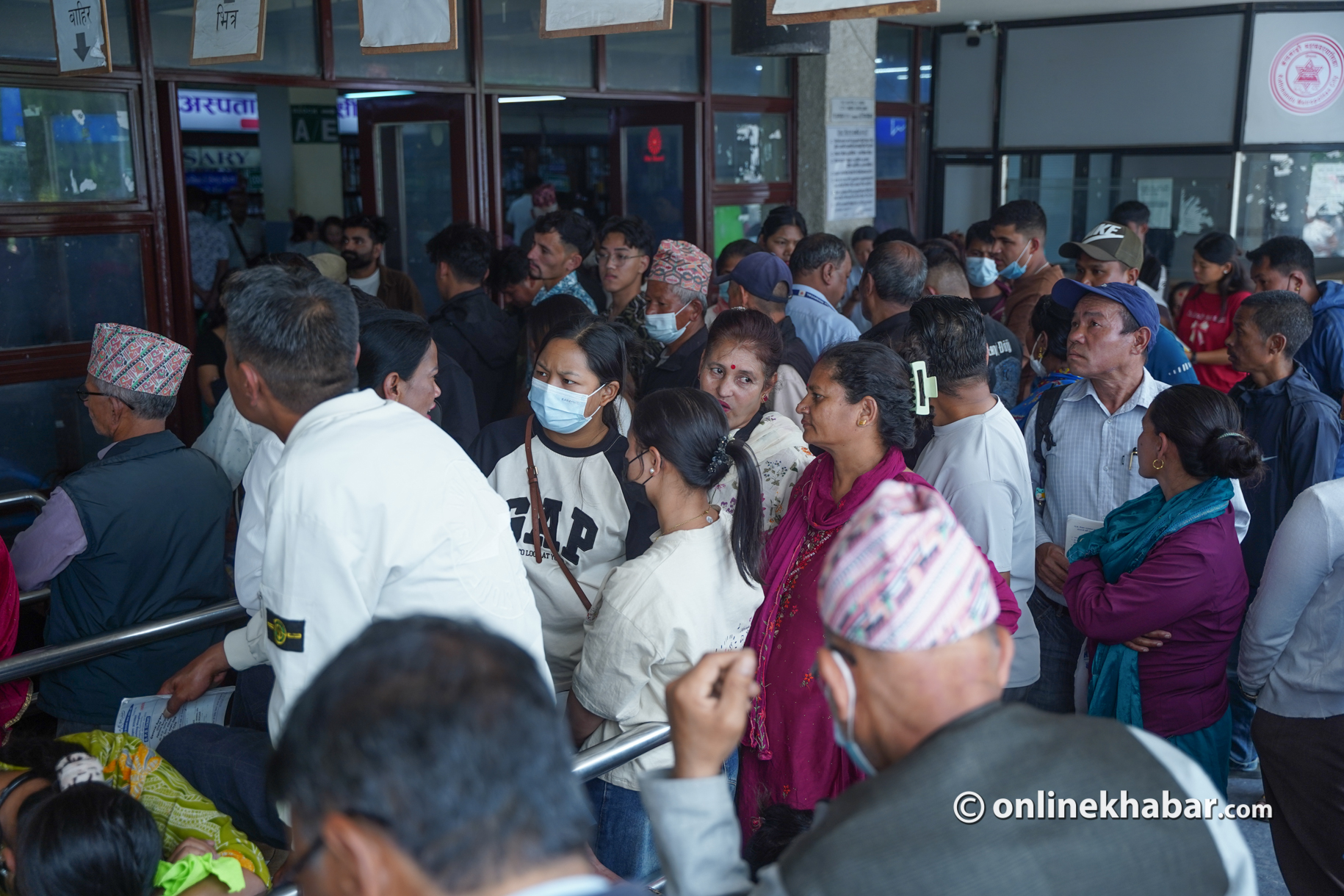
Patients must wait hours to get tickets, then stand in separate queues for doctors, X-rays, and blood tests.
“It’s nothing but queues everywhere. You might have to stay overnight just to see a doctor. When will reports come back?” Rai questioned. “We hoped the new government would improve health services, but hardships have increased.”
She demanded immediate implementation of a token system. “With tokens, patients wouldn’t have to wait long lines and would know when their turn will come,” she said.
Krisnaprasad Nepal, standing for two hours in the OPD ticket line, shared similar complaints. He came Monday morning for his wife’s treatment.
His wife suffers from headaches and neck pain but had to wait more than three hours before consultation.
“I’ve been standing for three hours. It’s as hot as ever; there’s no place to sit or drinking water,” he asked, “How long will the government keep making people suffer?”
He stressed the need to improve the ticket distribution system in light of patient demand.
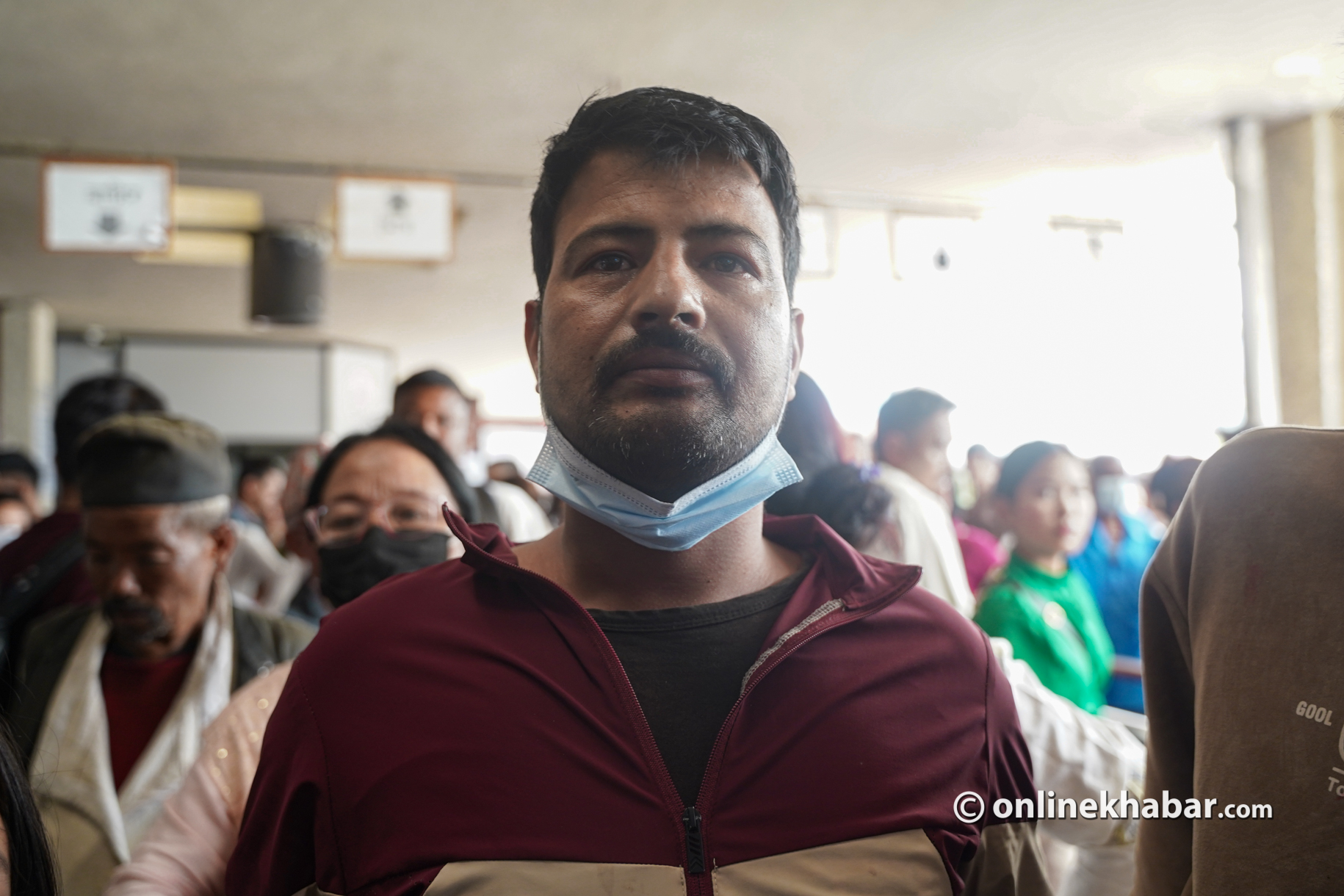
“We must increase manpower to deliver services. Patients stand hungry in lines for hours,” Nepal said. “Instead of causing more hardship, we must create an environment for easier service.”
TUTH serves over three thousand patients daily and stands as a beacon of hope for the impoverished and vulnerable.
Yet many from remote areas endure hardship due to inadequate service and lack of proper waiting spaces. Long hours in queues and the need to rush for reports further amplify the difficulties.
Disorganized crowds hinder swift and convenient service, leaving many patients dissatisfied.
Among them was Sangita Pokharel from Nawalpur, who came seeking treatment for knee pain.
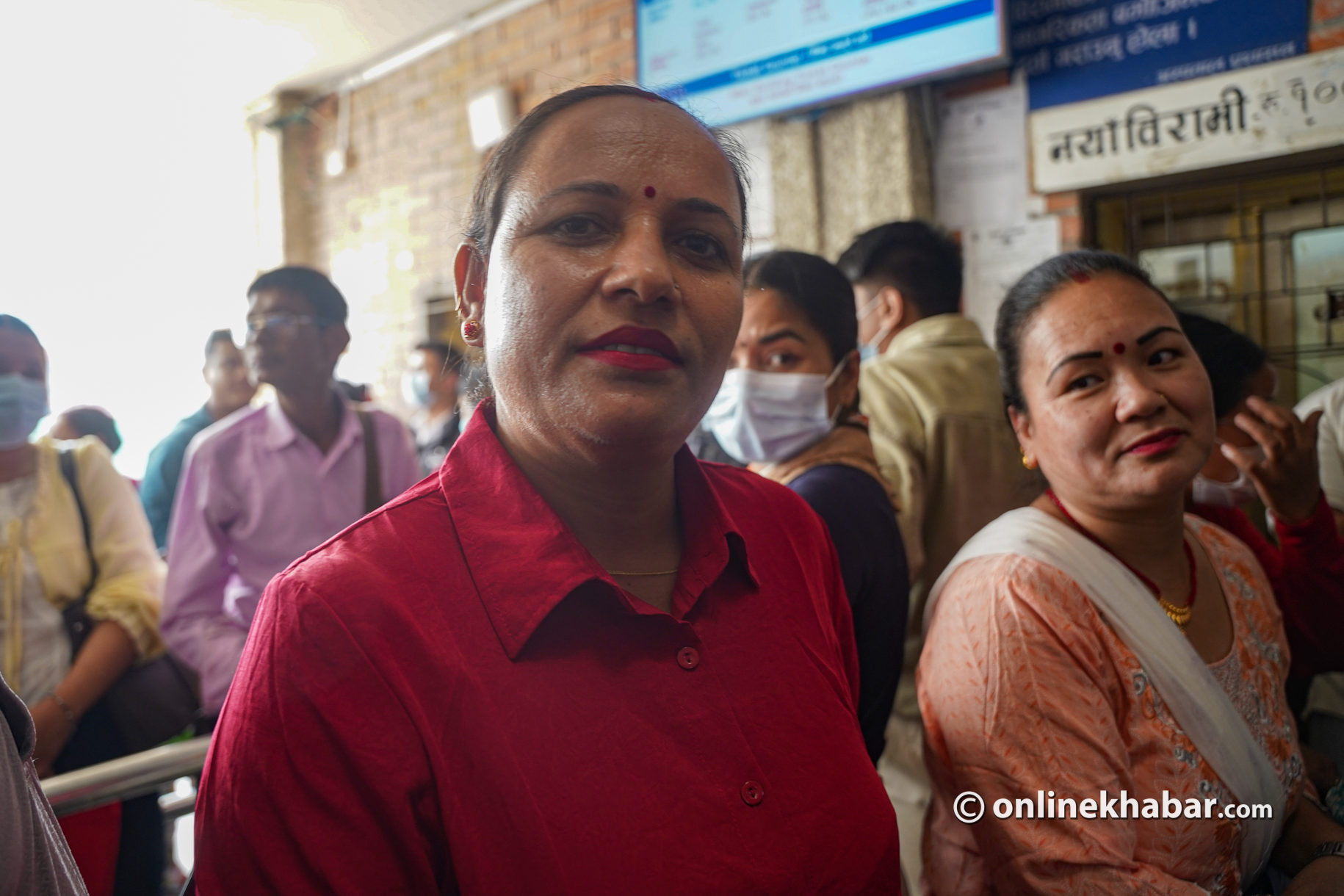
Pokharel criticized hospital disorder and delays, saying, “I don’t know if this is a rule or chaos. When waiting, I was told tickets were sold out. This is injustice to patients.”
She also complained about the state of hospital restrooms. “We can’t go to the toilet; doors have no locks, and it’s filthy. Hospitals should heal people, but this seems to worsen health problems.”
Though the two-day holiday relieved some health workers, patients’ hardships intensified during that period.
By Monday afternoon, the scene around the OPD showed how a brief shutdown of health services exacerbated patient suffering.
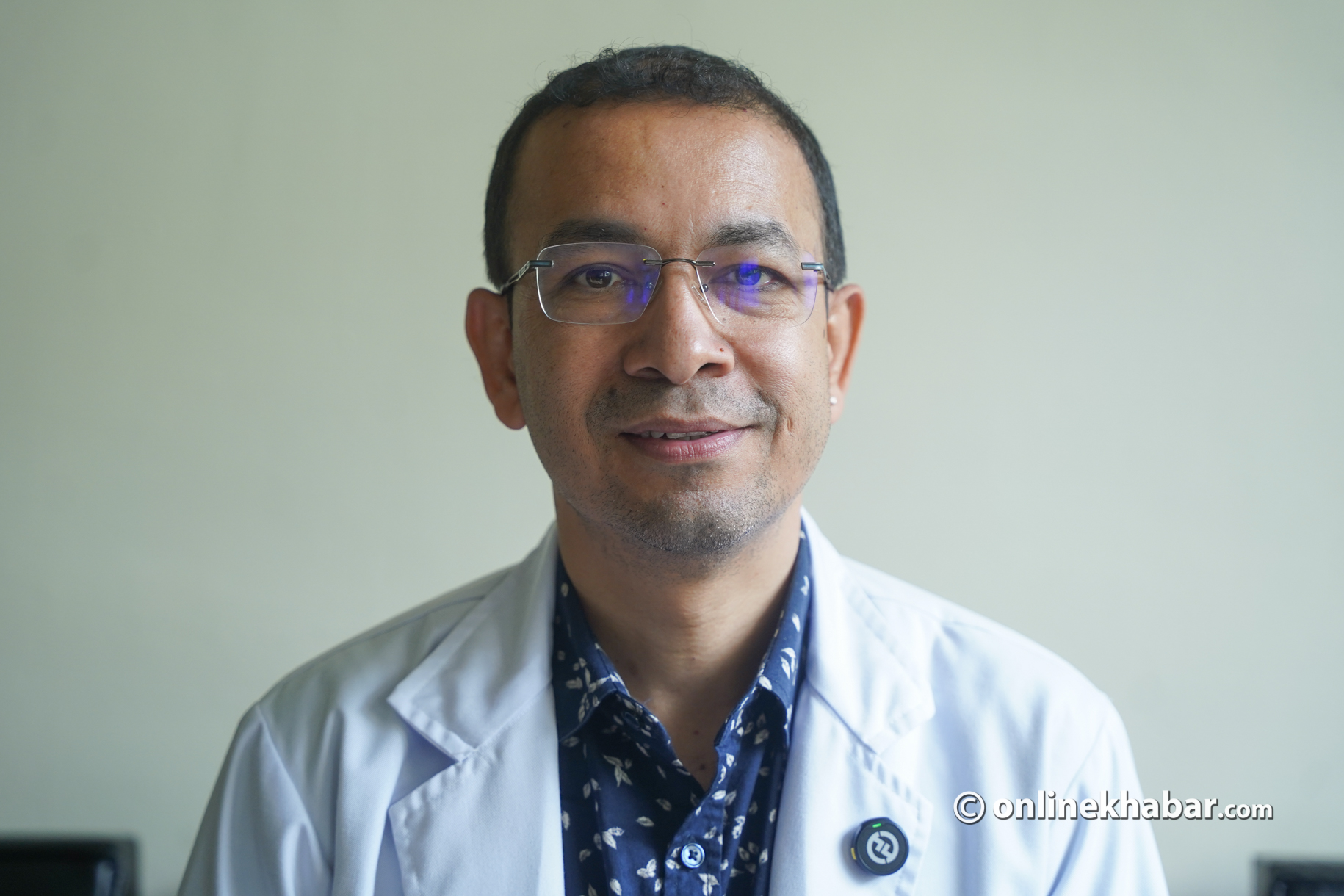
Hospital Administration’s Position: It’s Not Crowding, But Increased Trust in Quality Care
According to hospital spokesperson Dr. Gopal Sedhai, the crowd is not a problem but reflects growing patient confidence in the hospital’s quality services.
“Patient numbers have risen due to the hospital’s strong reputation and quality services. We view this as a management challenge,” he said.
TUTH receives over 3,000 patients daily. On normal days without public holidays, figures range from about 2,300 to 2,500 patients.
Crowds are particularly intense at the OPD ticket counters, pharmacy, and billing counters. OPD operates in two sessions: the morning session runs from 7 a.m. to 11 a.m., then resumes from 1 p.m. until 5 p.m.
The bulk of patients tends to arrive at once in the morning, causing congestion. Though an online ticketing system has been in place for two years to reduce crowding, it has not achieved expected results.
“We have not been able to increase revenue from online ticket sales. Transactions worth 20 million NPR occur through QR payments daily,” he explained. “However, we have not successfully educated patients about the online ticketing system.”
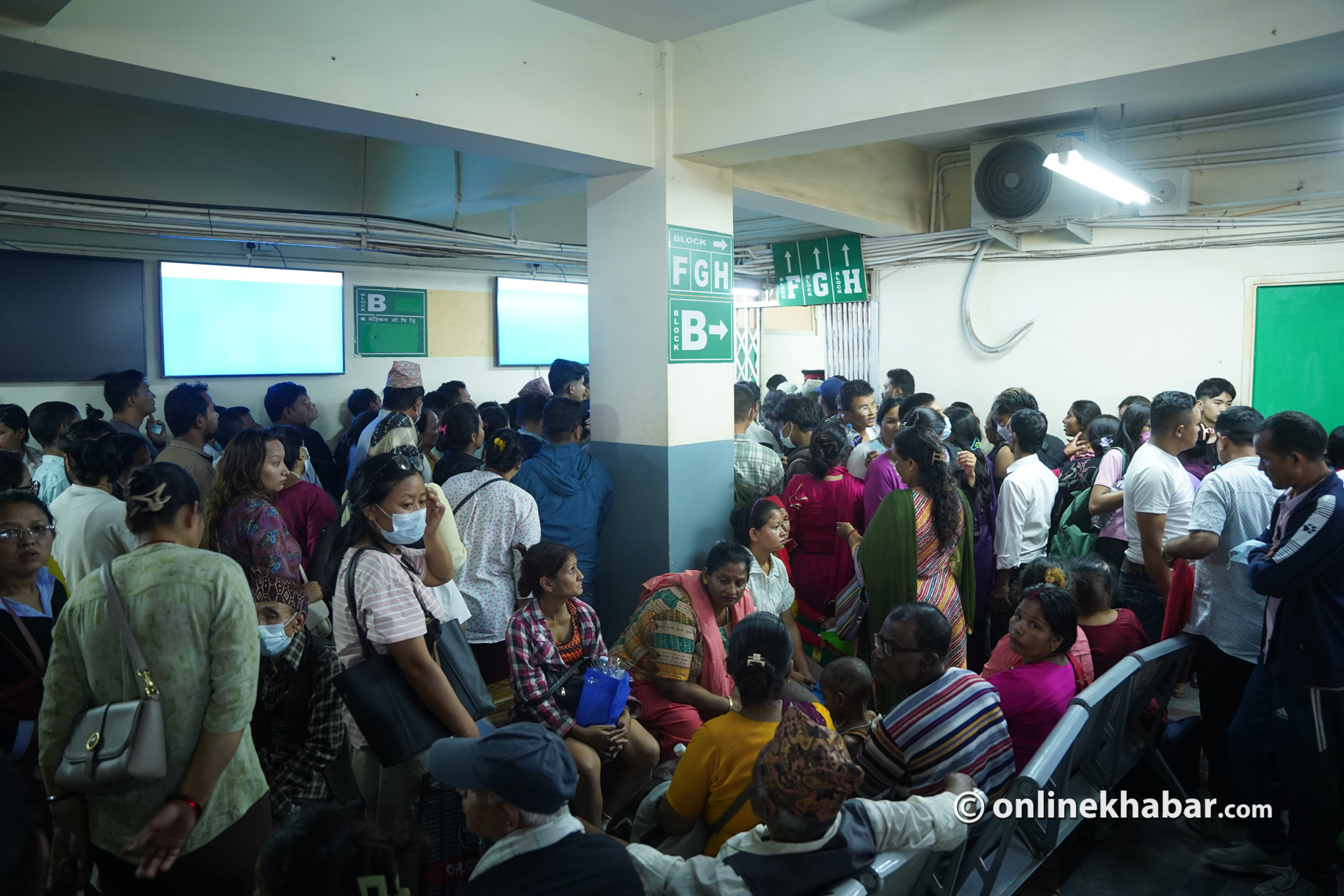 The hospital is collaborating with the IT team to make the online system simpler. Additionally, booths staffed by volunteers to encourage patients to buy online tickets will be established inside the OPD premises.
The hospital has implemented quota systems in some departments with a focus on quality, but unclear communication has caused patient dissatisfaction. Plans to display remaining quotas on screens are underway.
“Due to the higher demand, doctors cannot allocate time to all patients. We have introduced quotas in certain departments prioritizing quality care.”
The previous token system was discontinued due to ineffectiveness, but the line system was reinstated after patient numbers dwindled and quota management issues arose.
The hospital advises patients to use afternoon OPD sessions, where crowding is generally lower. The hospital claims crowd levels decrease after 3 p.m.
Photos and Video: Chandrabahadur Ale.