
Reflection of Mount Everest on the Sea Waves of Kuta Beach
News Summary
Editorially reviewed and prepared by AI.
- A team including Rama Adhikari from Nepal participated in a four-day digital technology training held in Bali, Indonesia from April 24 to 27.
- The close cultural ties between Bali and Kathmandu are deeply rooted in artistic sculptures and Hindu religious sentiments.
- Bali’s economy relies 80% on tourism, and its religious tolerance is exemplary.
I am someone who loves to relish my own geography, a person who finds the joy of the whole world within a small environment, always seeking to spend time with family where dedication and affection never end. I aspire to create that dream city….
There is a deeper meaning to sharing stories.
I received a sudden call from my office’s human resources department with a proposal to attend a training in Bali, Indonesia. Perhaps, with such news, I should have said ‘Yes’ in a single breath. But my nature did not allow it so easily!
I called my spouse and said, ‘There is an opportunity from the office to go to Indonesia. You and our daughter can come along if you want.’
‘If everything aligns, then let’s go,’ was the reply.
After the response, my heart felt hopeful.
I looked forward to wandering Bali’s streets with my daughter and her father, exploring temples and sculptures, and conversing with the sea waves. I also recalled a book I once read called “Women of Indonesia.”
The Genji movement for peace and humanity in Indonesia and the anti-corruption Genji movement in Nepal fused in my mind. Indonesia initiated the Genji movement to reform societal environments. Though Nepal’s Genji revolution had some unfortunate events, it holds a significant chapter in history.
**** ****
From April 24 to 27, I, along with sister Geeta and three other colleagues, was nominated by my office for a four-day training titled “Embarking on the Digital Path: Understanding the Immersive Environment.”
Dense presence of statues depicting Hindu epic characters from the Mahabharata and Ramayana reinforced a warm camaraderie between the sculptural heritage of Kathmandu and Bali.
Technology is the key to a facilitated life. I believe Nepal must proactively advance in technology, and this training proved relevant to that goal.
Due to family constraints, I had to travel without my spouse and daughter, which saddened me. Yet, I prepared myself positively to experience Bali’s beauty and deepen my understanding of the subject.
I have often been tagged as sensitive by loved ones. I accept this fragile heart of mine openly. I fear dogs, snakes, and thieves. I get scared to stay alone at night, and I have aerophobia—fear of flying. Ironically, I was heading close to Australia.
For a person who fears even a flight from Kathmandu to Pokhara, facing a long journey was challenging. Walking was not an option either. The world has become so small! Nevertheless, I reassured myself: ‘Time will pass, and this ordeal will too.’
On the night of April 22, I boarded an Air India flight from Tribhuvan International Airport with colleagues. My palpitation was so evident that a stranger nearby was troubled by my rapid heartbeat. I turned with a weary face towards sister Geeta and said, ‘Sister! You’re here, right?’
Having already confessed my weakness, sister Geeta was ready to comfort me. Before I could finish talking, she said, ‘Be assured, no one dares to cause trouble while I’m around.’
**** ****
Landing at Indira Gandhi International Airport in New Delhi, I exhaled deeply. Though my heart was heavy during the flight, touching the ground eased my anxiety.
After a three-hour transit wait, I boarded another plane. However, rough weather at Thailand’s Suvarnabhumi Airport caused turbulence, spreading panic among travelers through crew announcements.
Clinging to sister Geeta’s chest and closing my eyes, I recall that moment with lingering fear.
Once the plane wheels touched the ground and moved away, I felt buoyant. Our transit time was ample, and the airport interior depicted Thailand’s artistic prosperity. Unlike Nepal, where public institutions are considered burdensome, Thailand symbolized national strength and a bright future with white elephants.
Despite my fear of flying, boarding Thai Airways felt reassuring. I thought, ‘How enjoyable flying would be if only I did not have aerophobia.’
After a four-hour flight, our aircraft landed gracefully at Ngurah Rai International Airport (Denpasar). Relieved at no more flights ahead, stepping onto Bali’s enchanting land brought immense joy.
**** ****
Completing immigration, we reached the exit gate where local gentleman Purna Bahadur and his team awaited to welcome us with garlands.
I recalled Robert Frost’s poem “Stopping by Woods on a Snowy Evening.” We left behind the reflection of Mount Everest shimmering on Kuta Beach’s waves.
“Namaste! I am Purna Yan.” Hearing the tall, slender man who resembled a Nepali, I felt as if I was no longer in foreign land. He asked us to board the vehicle and handed us bottles of water with a warm smile. One of my friends remarked, ‘It seems Purna Bahadur genuinely cares for us.’
Laughter followed. Smiling, Purna Bahadur looked at us all. Recognition is not only by sight but also understanding hearts. We affectionately called him ‘Purna Bahadur,’ and he became our elder brother. Nepali people are naturally creative and deeply warm-hearted.
As the vehicle moved, I admired Bali’s beauty. Near the main road stood a large statue of I Gusti Ngurah Rai, a national hero who fought Dutch colonial forces in the 1947 Puputan Margarana battle. His black hat, mustache, and face resembled a brave Gurkha soldier.
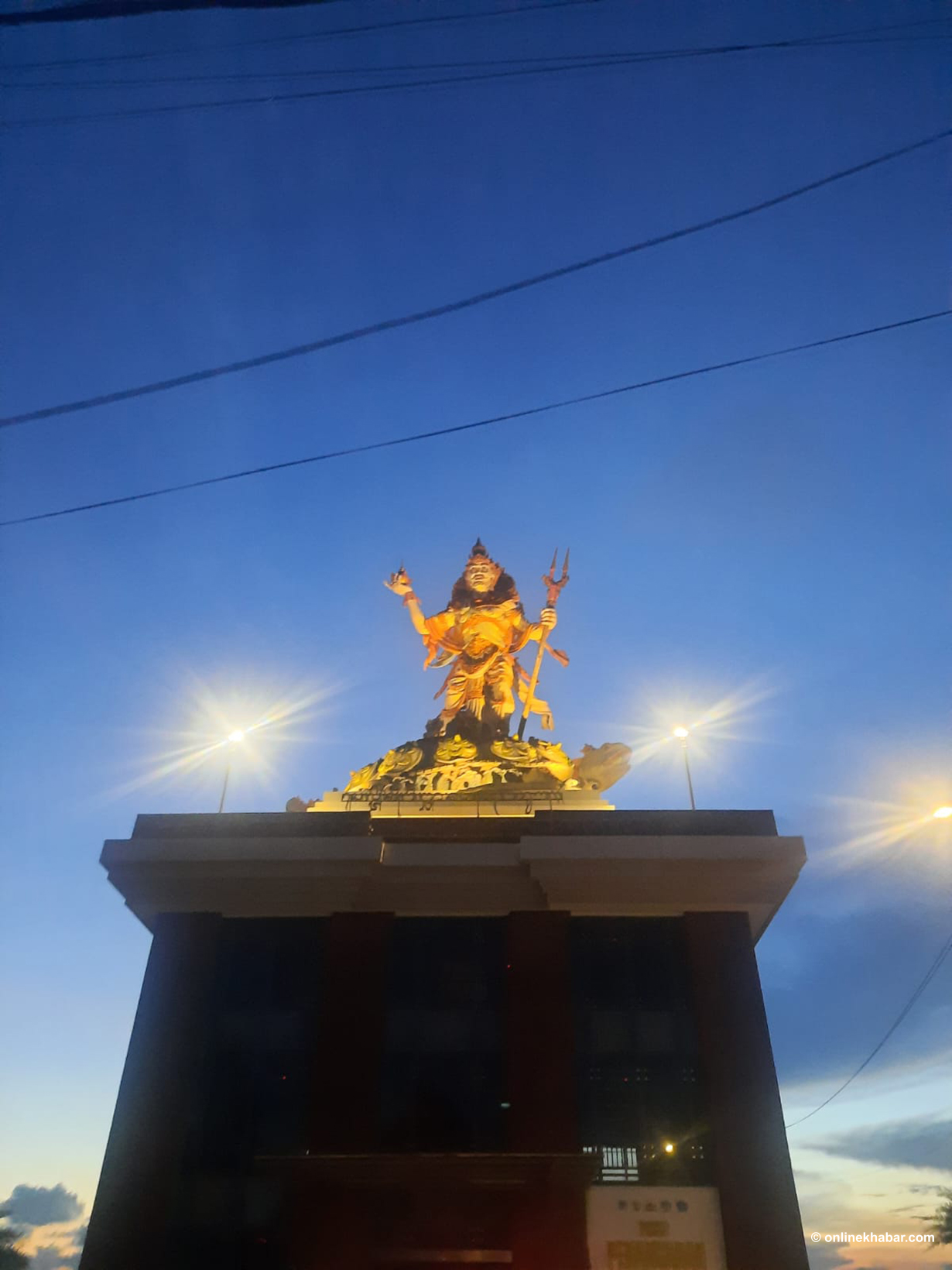 The compact roads and traffic jams reminded us of Kathmandu’s alleys. Viewing numerous statues depicting Hindu deities enhanced the sense of cultural intimacy between Kathmandu and Bali.
Every home and temple featured artistic intricately carved doors. Upon asking Purna Bahadur, I learned that according to Balinese Hindu teachings, these gateways balance day and night, as well as happiness and sorrow—a tradition we share in Nepal.
Earthquake-resistant neighborhoods with small houses and tiled roofs were widespread in Bali. Immersed in Bali’s charm, we arrived at Ramayana Resort in Kuta. When Purna Bahadur said ‘Home sweet home,’ I truly felt at home. We entered room 807 in the Ramayana Hotel.
It was time to step out for some food. Sister Geeta checked a WhatsApp message and said, ‘Yes, we must eat something, Bui Ni.’ I love being called ‘Bui Ni’ by her. Experiencing Bali by night was a must.
The Kuta Beach is just a 4-5 minute walk from Ramayana Hotel, home to a collection of historic buildings. The world became vibrant there. Having never seen the ocean before, I marveled at the waves dancing. The waves touched the sand but retreated slightly; the sand was firm and the waves could not erode it easily.
On the horizon, sky and sea merged, embracing each other like a rare embrace. The waves were passionate as if madly in love with the sand, and the sand quenched the thirst of those waves.
I looked up at the sky. The waves thirsted to quench their desire, wrapped in a pure white cloak and filled with sacred devotion. The reflection of my Mount Everest appeared on those waves as if I were sitting on a ridge in Gurasu Tankura, admiring Everest’s beauty rather than being on Kuta’s shore.
Night embraced the sky. We still had dinner to share. The next morning’s training awaited after breakfast at 8 am. My tired body requested rest. Remembering Robert Frost’s poem once more, I carried the image of Mount Everest shimmering on the waves in my heart as I left Kuta Beach.
**** ****
Obedient like a school student, I went to the training hall at 8 am the following day. J.T. Jayaraj Krishnan from India began teaching the essentials of the digital world. I participated with a positive thought that citizens of my country should have easy and open access to public services.
Our training schedule was fixed, and once completed, Purna Bahadur was always eager to take us sightseeing.
Bali’s economy depends 80% on tourism. Each year, about seven million tourists visit Bali—a number remarkably high compared to countries without diversified tourism like ours.
Indonesia is the largest Muslim-majority nation, with approximately 87% Muslim population. However, in Bali, 86% are Hindu. This island is a shining example of religious tolerance.
Nepalis, too, stand as a multi-religious, multi-ethnic, and multicultural people who respect each other, which is commendable.
Although Bali’s cultures differ, foreigners feel warmly at home. This gentle contradiction is remarkable.
Before shaking hands at the Cave of Waripatta and Tanah Lot Temple, I felt as if the sea waves were playfully striking me. Beauty alone was delightful; the unique combination of caves, temples, and sea was heart-touching.
Even after burning their bodies with fire, Indonesian dancers energetically performed traditional cultural presentations during a cruise dinner—a rare and delightful experience.
Birds flying over the sea and waves carving through the Genji movement’s legacy revealed artistic regions where we enjoyed the jungle of fruits.
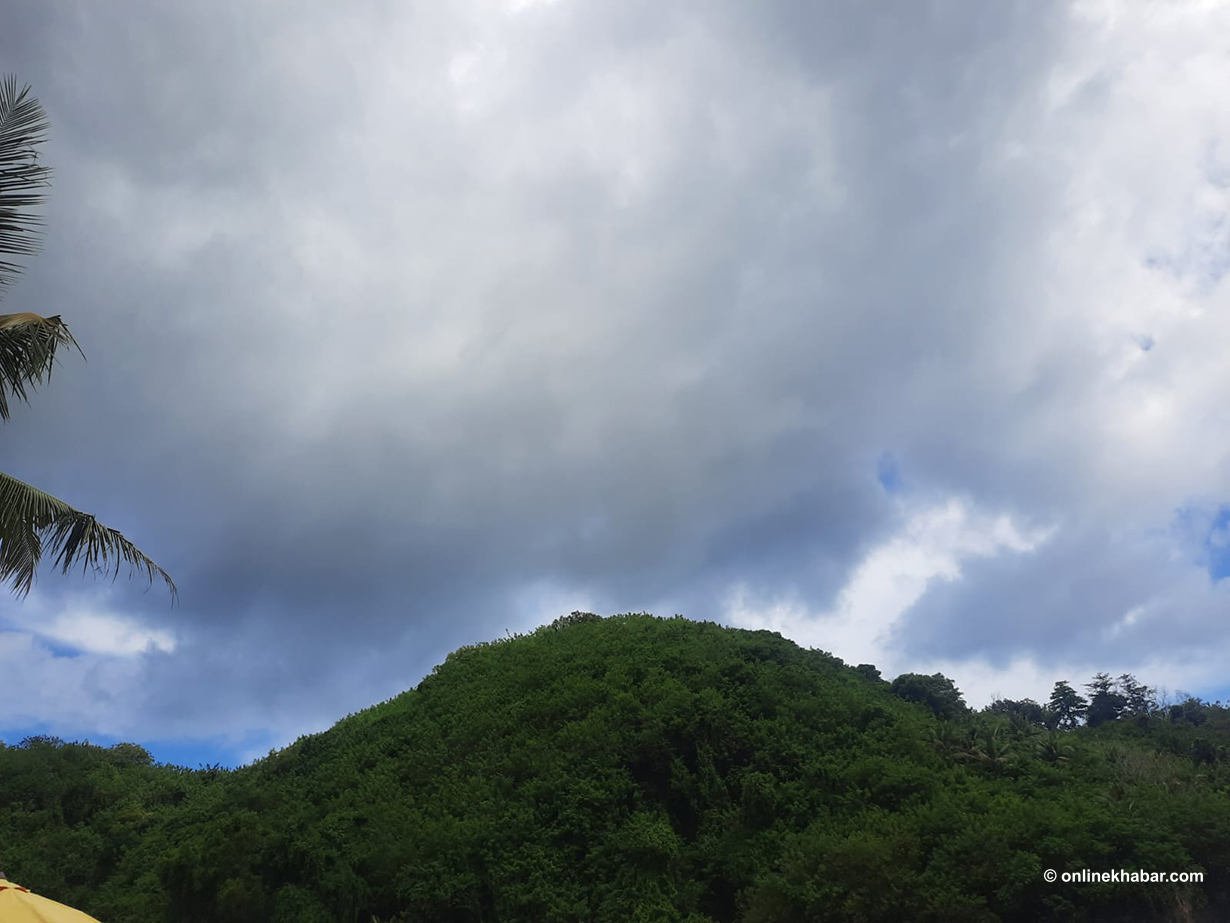
At Uluwatu Temple, mischievous monkeys terrorized visitors by snatching bags, glasses, and other belongings. One of our friends even had their glasses chewed and destroyed.
A poster in a western language on the temple wall read, ‘Menstruating women are forbidden to enter.’
Women’s restrictions due to political reasons persist in Indonesia to some extent.
The Horse Chariots and traditional procession seen from Ramayana Hotel reminded me of Bhaktapur’s Gai Jatra festival.
One unique aspect of Bali is that outsiders cannot enter temples for worship but can only observe from outside. Rituals are mainly performed by sala members who silently receive divine blessings.
Unlike humans, dissatisfaction cannot become a deity. Naming people after gods is often considered inauspicious, such as naming someone after Durga which is believed to cause irritability. Marriage practices are also complicated.
**** ****
Our uncle Purna’s team helped us off the bus, guided us to the airport entrance, and bid us farewell with best wishes for a safe journey. We expressed gratitude in his language, feeling the warmth of a homecoming on both sides.
The stay and explorations in Bali were meaningful and unforgettable. Loneliness and solitude never troubled me.