Central Government’s Neglect Deepens Crisis in Ilam Tea Industry
Summary
- More than 100 tea factories in Ilam have shut down after India imposed barriers citing quality testing issues.
- Approximately 1.5 million kilograms of processed tea have accumulated unsold in warehouses in Nepal and India due to halted exports.
- Over 500,000 farmers and laborers dependent on the tea industry have been adversely affected by the export restrictions.
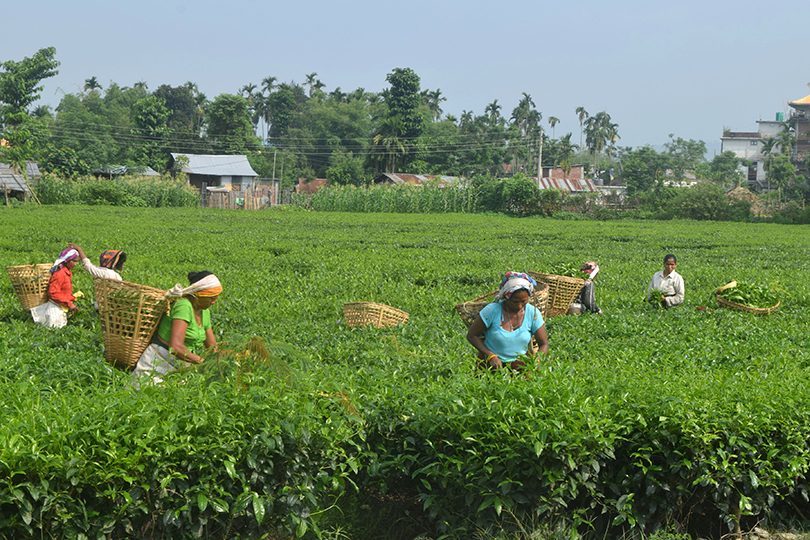
July 18, Biratnagar – The lush green tea gardens of Ilam no longer bring joy to farmers; they have turned into sources of distress and despair.
An unofficial blockade imposed by India, combined with the federal government’s neglect of the tea sector, has left Ilam’s tea plantations — often referred to as “green gold” — and nearby workers unemployed. Due to the lack of storage facilities, farmers are forced to pluck fresh tea buds and discard them.
Deviprasad Acharya, a farmer from Ward No. 14 of Suryauday Municipality in Ilam, stated, “It is heartbreaking to discard freshly picked green tea leaves. Our team of five has been harvesting tea buds as instructed by the factories. Last month, we harvested 20 to 30 quintals, but now we are compelled to throw them away.”
According to him, the quality of the tea depends heavily on the freshness of the buds; older buds reduce quality. Therefore, their only option has been to discard the tea leaves. The primary tea season of July and August cannot be properly harvested and processed since factories remain closed.
India’s export ban has cast serious uncertainty over Ilam’s economy, which is heavily reliant on the tea industry. Although Foreign Minister Shisir Khanal was on a visit to India, this has not provided any relief to tea growers.
Gopal Kattel, General Secretary of the Suryauday Tea Producer Association, said, “Ilam is known as the tea capital, and tea is the backbone of our economy. Currently, exports have been suspended, and processed tea is piling up in warehouses. The tea season is at its peak, but farmers are unable to harvest.”
He added that over 100 tea factories in Ilam have been closed for three days due to the export restrictions. Factory closures during peak season pose a grave threat to the existence of the tea capital.
“We have requested the government to facilitate export processes, but no concrete action has been taken. When operations come to a halt, factories are forced to shut down,” Kattel said.
He informed that approximately 1.5 million kilograms of processed tea remain stockpiled — of which around 1.2 million kilograms are in Ilam, while 300,000 kilograms are stored in warehouses in Siliguri and Kolkata, India.
Kattel emphasized, “If a timely solution is not found, the hard work and livelihoods of farmers will be at serious risk.”
While India has not imposed a direct ban, it has enforced strict quality testing measures on Nepalese tea, resulting in trucks being turned back and goods held in warehouses. Indian officials delay approval processes by 20 to 22 days based on these inspections.
These procedures discourage exporters from dispatching tea, causing significant harm to stakeholders in the industry.
Government Neglect Endangers Livelihoods
The export disruption and factory closures threaten the livelihoods of laborers and farmers. According to Aditya Parajuli, President of the Nepal Tea Producers Association, over 500,000 people are directly and indirectly affected.
With factories shut, there is no space to store freshly produced tea. Parajuli noted that approximately 100,000 workers and employees are directly impacted, while 30,000 families dependent on tea cultivation face severe income losses.
“Each factory involves many stakeholders — some cooperatives comprise more than 200 farmer owners,” he said. “Nearly 500,000 people are affected both directly and indirectly.”
He added that Nepal produces roughly 25 million kilograms of tea annually, of which over half is exported to India, generating around NPR 500 to 600 crore in foreign currency.
Parajuli warned, “If this crisis persists, Nepal risks losing substantial foreign earnings and may even become a tea-importing country.”
Despite economic slowdowns in Ilam and Jhapa, the government has been criticized for not taking concrete steps. Business leaders complain that the tea sector, the main economic resource and foreign exchange earner of Koshi Province, is being neglected by state authorities.
More than 45 days have passed since the export issues began on May 1, yet no decisive intervention has taken place.
“The government was aware of the problem from the beginning, but no solution has been forthcoming,” an industry representative said. “We are in a very serious situation; investments are exhausted, storage space is full, and immediate action is needed.”
Rajendra Raut, President of the Koshi Province Chamber of Commerce and Industry, urged the government not to delay in creating a supportive export environment for Nepali tea producers, farmers, and workers.
“The tea industry plays a vital role in earning foreign currency, promoting tourism, and strengthening the local economy,” Raut stated. “However, under the new regulations imposed by India, processed tea is stuck at the border, blocking cash flow and directly affecting thousands of farmers and laborers.”