Over 1,000 MW of Electricity Wasted Due to Nepal Electricity Authority’s Inefficiency
News Summary
Editorial review completed.
- Due to transmission infrastructure shortcomings and weak management at Nepal Electricity Authority, over 1,000 megawatts of electricity is wasted during the rainy season.
- Prakash Dulal, Vice President of the Independent Power Producers’ Association Nepal (IPPAN), accused the authority’s monopoly as the sole buyer of electric power of creating difficulties for private sector promoters.
- Calls have been made to restructure the Electricity Authority into separate autonomous companies responsible for generation, transmission, distribution, and trading to resolve energy sector issues.
June 12, Kathmandu – Due to inefficiency at Nepal Electricity Authority (NEA), more than 1,000 megawatts of electricity generated within the country has been wasted.
The authority has failed to purchase over 1,000 megawatts of produced electricity from various power plants due to insufficient transmission infrastructure and surplus generation beyond local demand.
While Nepal’s hydropower capacity continues to grow, inadequate management of the produced electricity has led to significant losses for private sector developers during the rainy season.
Currently, the authority gives priority only to the electricity produced by itself and its subsidiary companies, as the system is unable to connect to all available power generation units. Private sector producers are restricted to generating electricity based on demand.
The authority has directed private hydropower plants to reduce production, citing reasons such as lack of transmission lines, insufficient substation capacity, grid issues, and excess generation compared to demand.
Energy producers have reported that the authority instructs plants categorized as ‘contingency’ to reduce output as needed.
Projects that cannot operate at full capacity due to lack of transmission lines or substation capacity are placed under contingency by the authority.
Because of lower electricity consumption relative to production and insufficient transmission and substation capacity, the authority orders production cuts at power plants during the rainy season every year in emergency situations.
Prakash Dulal, Vice President of IPPAN, stated that in Nepal’s energy market, the Electricity Authority has a buyer’s monopoly, which has caused serious problems for the private sector.
IPPAN reports that over 30 hydropower plants are currently under contingency status. The authority issues production reduction orders based on transmission and substation capacities in various locations.
Due to the lack of the Marsyangdi Corridor transmission line, several plants including Dordi-1, Upper Dordi ‘A’, Chepe Khola, Dordi Khola, Super Dordi, and Nyadi Khola are placed under contingency, IPPAN noted.
Nepal’s maximum electricity consumption—including domestic use and exports to India and Bangladesh—stands around 3,200 megawatts, while the total grid-connected capacity is about 4,400 megawatts. However, Vice President Dulal indicated that currently, between 900 and 1,000 megawatts of electricity is wasted annually.
Dulal attributes the problem primarily to the Electricity Authority being the sole buyer of produced electricity.
“According to economic principles, when there are many producers but only a single buyer, the buyer gains complete control over the market, effectively a dictatorship,” Dulal explained. “Although there are many private sector producers in Nepal, with the authority as the only buyer, it can stop electricity flow from private producers at will, putting them in a difficult position.”
Rajan Dhakal, spokesperson for the Electricity Authority, clarified that electricity supply is based on consumption. “Reducing production is a continuous process to maintain system stability,” he said. “Production fluctuates, so the authority issues reduction directives but never asks for extremely low output.”
He added that adjusting electricity supply in response to demand and consumption is a normal part of grid management.
Contractual Loopholes and ‘Take or Pay’ Obligations
Though power purchase agreements (PPAs) include ‘take or pay’ clauses, promoters claim they have not received compensation due to various conditions under connection agreements (transmission line contracts), Dulal said.
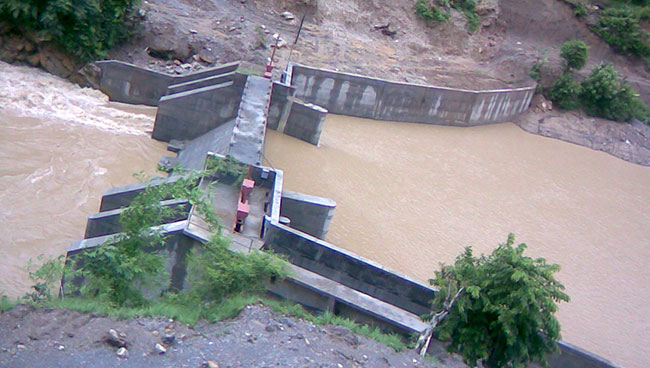
The authority has effectively converted the ‘take or pay’ provision into ‘take and pay only if delivered,’ citing delays in constructing cross-border transmission lines (such as Dhalkebar–Muzaffarpur, Butwal–Gorakhpur) and internal transmission lines, using contingency clauses as justification.
Due to weak internal transmission lines and insufficient capacity, electricity from several projects along the Dordi Corridor is placed under contingency and subject to cuts, Dulal explained.
The Electricity Authority serves as producer, transmitter, distributor, and system operator. As system operator, in emergencies or transmission issues, it may order power shutdowns for safety.
However, Dulal accuses the authority of shutting private sector electricity under technical pretexts to protect its own projects, especially when market demand is lacking or when the authority wants to run its own plants at full capacity.
“There is a conflict of interest as the authority is both producer and system operator,” he said. “If transmission and trading were managed by independent entities, the private sector’s electricity would receive fair treatment without being influenced by the authority’s profit concerns.”
Infrastructure Weaknesses and Quality Concerns
During the rainy season, demand for cooling appliances rises in the Terai region, along with increased use of induction stoves as an LPG alternative, yet low capacity transformers, weak conductors, and aging transmission infrastructure cause both scheduled and unscheduled load shedding.
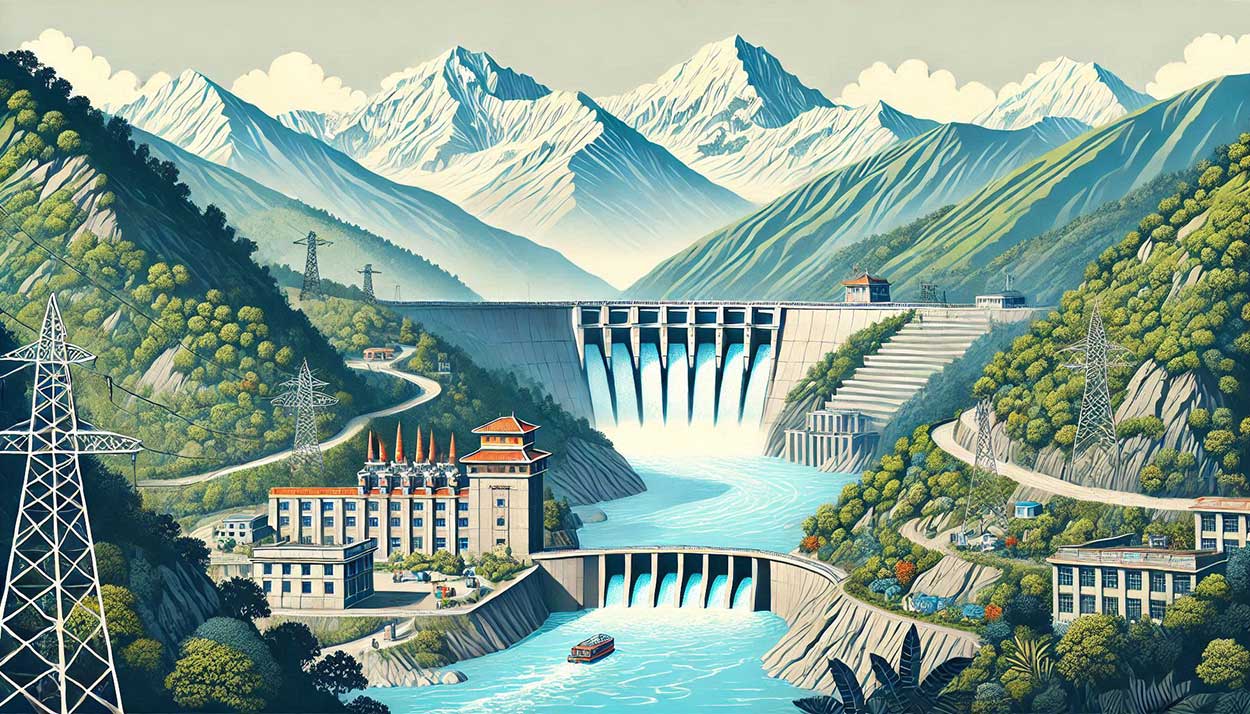
Although promoters have built transmission lines up to substations, weak or insufficient infrastructure beyond this point leads to electricity wastage. Past irregularities and substandard quality in transformer procurement have resulted in transformer failures and repeated power outages.
Dulal insists that restructuring the Electricity Authority is essential to solve current energy sector problems. He advocates dividing the authority into separate autonomous companies for generation, transmission, distribution, and trading.
“Until the management of trade and transmission lines is handled by a neutral body, the electricity produced by the private sector cannot be guaranteed,” Dulal emphasized.
He also calls for strengthening and activating regulatory bodies like the Electricity Regulatory Commission, ensuring adequate representation of the private sector.