
The Battles Fought by Abhiman Singh Basnet
Article Summary
Reviewed.
- Kaji Abhiman Singh Basnet fought various battles from 1819 BS onwards during the expansion of the Gorkha Kingdom.
- In 1830 BS, Abhiman Singh successfully incorporated Majh Kirat into the Gorkhali Kingdom and served as its administrator in Vijaypur.
- In the 1848 BS war between Nepal and Tibet, Abhiman Singh was assigned the responsibility to lead an attack towards Kerung.
Serving the then Gorkha Kingdom, warriors from various prominent regional clans earned immortal names in history. During the Gorkha kingdom’s expansion campaign, groups such as Thapa, Basnet, Pandey, Kunwar, along with Magar warriors, displayed great prowess in battle, shaping history.
Basnets traditionally worship the family deity Masht, distinguishing them from the Khas regional clans. The Basnet clan includes subgroups like Shripali, Khulal, and Khaptadi. The Shripali Basnets are believed to have originated from the Saipal Himal region of Bajhang district, carrying the name Shripal. The region still houses Shripal Kot, once the seat of the Shripal kingdom.
At that time, the kingdom of King Nagaraj spanned Shripal, Khaptadi, Kalikot, Khulal, and Sinja. Later, the residents of Shripal kingdom became known as the Shripali clan. Until 900 BS, this kingdom stretched from eastern Mansarowar to Gandaki (Dr. Binod Thapa, ‘Contribution of Shripali Basnets in Nation Building, Nepal’–2074:29–30).
According to author Purnaprakash Sharma ‘Yatri’, when new settlements were established, conflicts and legal matters frequently arose, requiring the appointment of a judge called ‘Basnyarthi.’ Over time, the word evolved into Basnyat, Basnyat, or Basnet. The settlements inhabited by these groups—Shripal, Khaptad, and Khulal—were named accordingly, with the residents called Shripali, Khaptadi, and Khulali respectively (Thapa, 2074:31–32).
Madan Singh Raja was a notable figure in the Shripali Basnet lineage. During the time of his clan member Bharat Singh, the Khas kingdom was divided. The children of this lineage settled in different regions. For example, Shivram Singh Basnet, son of Jayaraj Singh, was active during King Narbhupal Shah’s reign and became a famed military leader during Prithvi Narayan Shah’s era (Thapa, 2074:32–34). Shivram Singh had four sons—Naharsingh, Keharsingh, Abhiman Singh, and Dhaukalsingh—who gained prominence during Prithvi Narayan Shah’s rule. Several battles were led under Shivram Singh’s command.
At the time of Shivram Singh’s death, Kaji Abhiman Singh Basnet was only 1.5 years old. His upbringing was carefully overseen by his mother, Suraprabha, with King Prithvi Narayan Shah allocating lands to support their care (Tulsiram Vaidya et al., ‘Military History of Nepal’–2049:460).
Abhiman Singh Basnet showcased his military talents in numerous battles during the Gorkha Kingdom’s territorial expansion campaigns. He fought across fronts from Kathmandu to the east, west, north, and south. He gained fame under the reigns of Kings Prithvi Narayan, Pratap Singh, and Ran Bahadur Shah. Below is a brief overview of the battles he fought.
First Battle in Teenage Years
Abhiman Singh began demonstrating his military capabilities from 1819 BS. Under King Prithvi Narayan Shah’s direction, Keharsingh Basnet led the fight against Makwanpur, with Abhiman Singh present on the frontlines. Following Makwanpur’s annexation, he was active in the campaigns to capture seven villages in 1920 BS.
He displayed valor during the captures of Kathmandu in 1825 BS and Bhaktapur in 1826 BS (Thapa, 2074:85). This marked the beginning of Kaji Abhiman Singh’s military career.
War and Treaty with the Limbu
After concluding conflicts in the central region, King Prithvi Narayan Shah ordered Abhiman Singh to advance eastwards. Efforts began to incorporate Majh Kirat into the Gorkha Kingdom. Coordinating with priests from Chaudandi, Abhiman Singh deployed Bange Basnet there.
The Gorkhali army, led by Sardar Ram Krishna Kunwar and deputy leader Amar Singh Thapa, was sent towards Majh Kirat. On Bhadra 13, 1829 BS, they crossed the Dudh Koshi River by boat. Meanwhile, Abhiman Singh remained delayed in Makwanpur (Baburam Acharya, ‘Brief Biography of His Majesty King Prithvi Narayan Shah’–417–418).
Later, Abhiman Singh moved with ally Parath Bhandari towards Chaudandi, and by Saun 1830 BS, Chaudandi was annexed to the Gorkha Kingdom. Historical sources mention severe atrocities imposed on local Limbu communities in the hilly Majh Kirat region, affecting men, children, and even pregnant women under harsh conditions (Dr. Ramesh Dhungel, ‘Himal’ 15:22, Fagun 2062:61).
At that time, Harinanda Pokharel also provided financial support to the Gorkhali army. Letters have been found indicating that Abhiman Singh and his associates sent funds during this period (Imansingh Chemjong, ‘Brief History of Kirat-era Vijaypur’–2059:78–79).
After Majh Kirat, Abhiman Singh advanced toward Vijaypur, where internal conflicts among ministers were rampant. Minister Buddhikarna Rai had already assassinated King Kamdatt Sen. When Gorkhali forces entered Vijaypur, 85 Limbu soldiers were killed (Acharya, 2061:421–422).
However, the Limbu did not easily accept Gorkhali supremacy. Amid rising tensions, Abhiman Singh and others compelled them to take a salt-water oath to accept Gorkhali rule. Consequently, King Prithvi Narayan Shah issued red seals (lal mohar) in the names of the Limbu leaders (Chemjong, 2059:94–96).
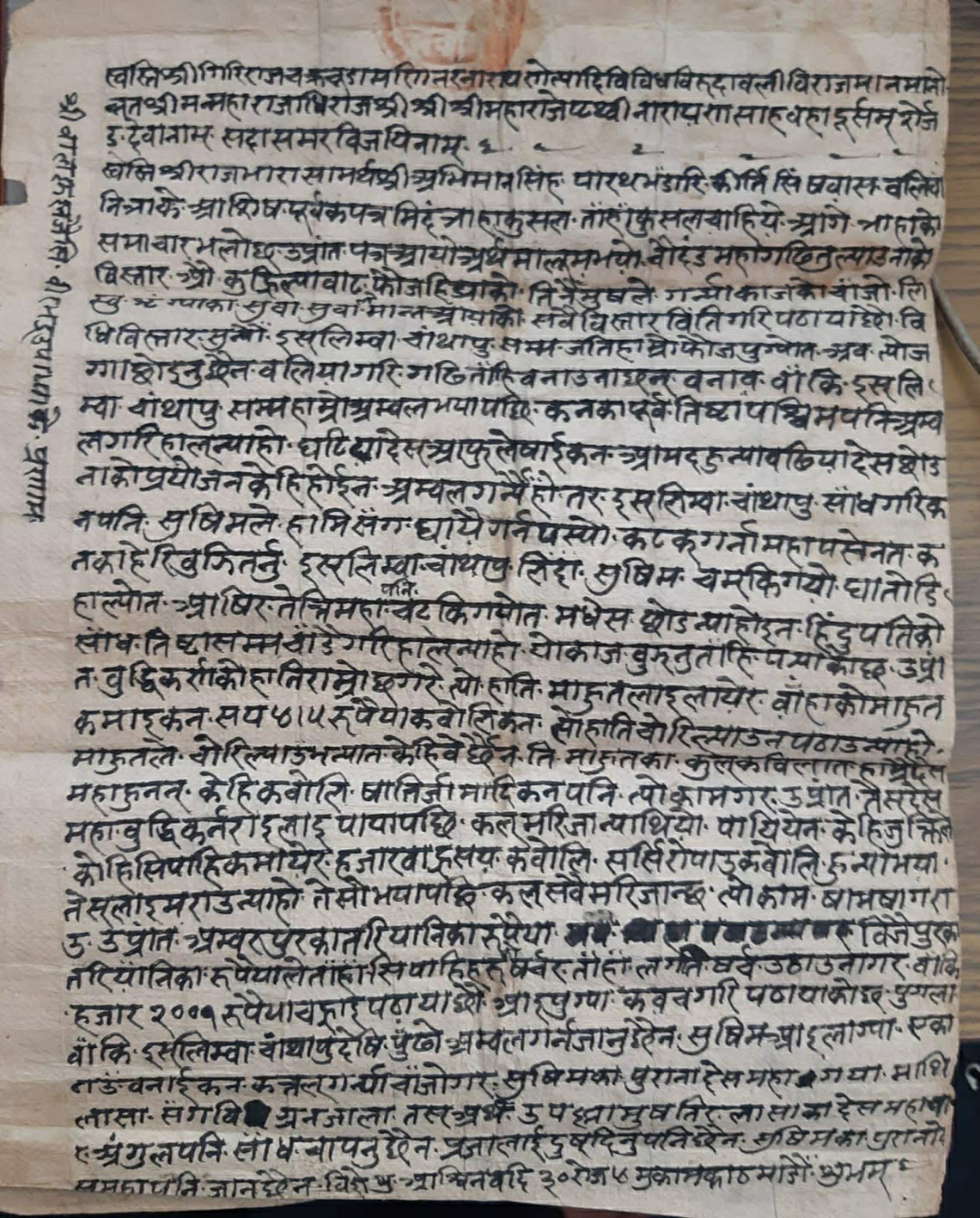
This red seal issued on the 1st and 2nd of Saun by King Prithvi Narayan Shah was documented by historian Shankarman Rajbanshi in the journal ‘Prachin Nepal’ (Issue 3, Baisakh 2025:29–30).
After subduing the Limbu, Abhiman Singh advanced through Kurlegadhi towards Isilimba and Chyangthapu regions of Panchthar. According to a red seal issued on Ashwin 30 by King Prithvi Narayan Shah, forces were dispatched to build the Chaudandi Mahagadhi fortification, preserved by Abhiman Singh’s descendants.
During the Gorkha expansion campaign, Abhiman Singh served as administrator of Vijaypur until 1834 AD. He received orders to arrest and execute the former minister Buddhikarna Rai, after the death of King Prithvi Narayan Shah.
Following Buddhikarna Rai’s assassination, peace prevailed among the Gorkhali. King Pratap Singh Shah expressed his gratitude in a letter to Abhiman Singh Basnet, who was subsequently rewarded generously, including grants of land and jagir.
Victory in Chitwan
The present-day Chitwan (Sumeshwar) was under Tanahun Kingdom at the time. With British observers watching closely, King Pratap Singh Shah appointed administrator Abhiman Singh for the eastern front. He was also specifically directed towards Chitwan in the red seal letters.
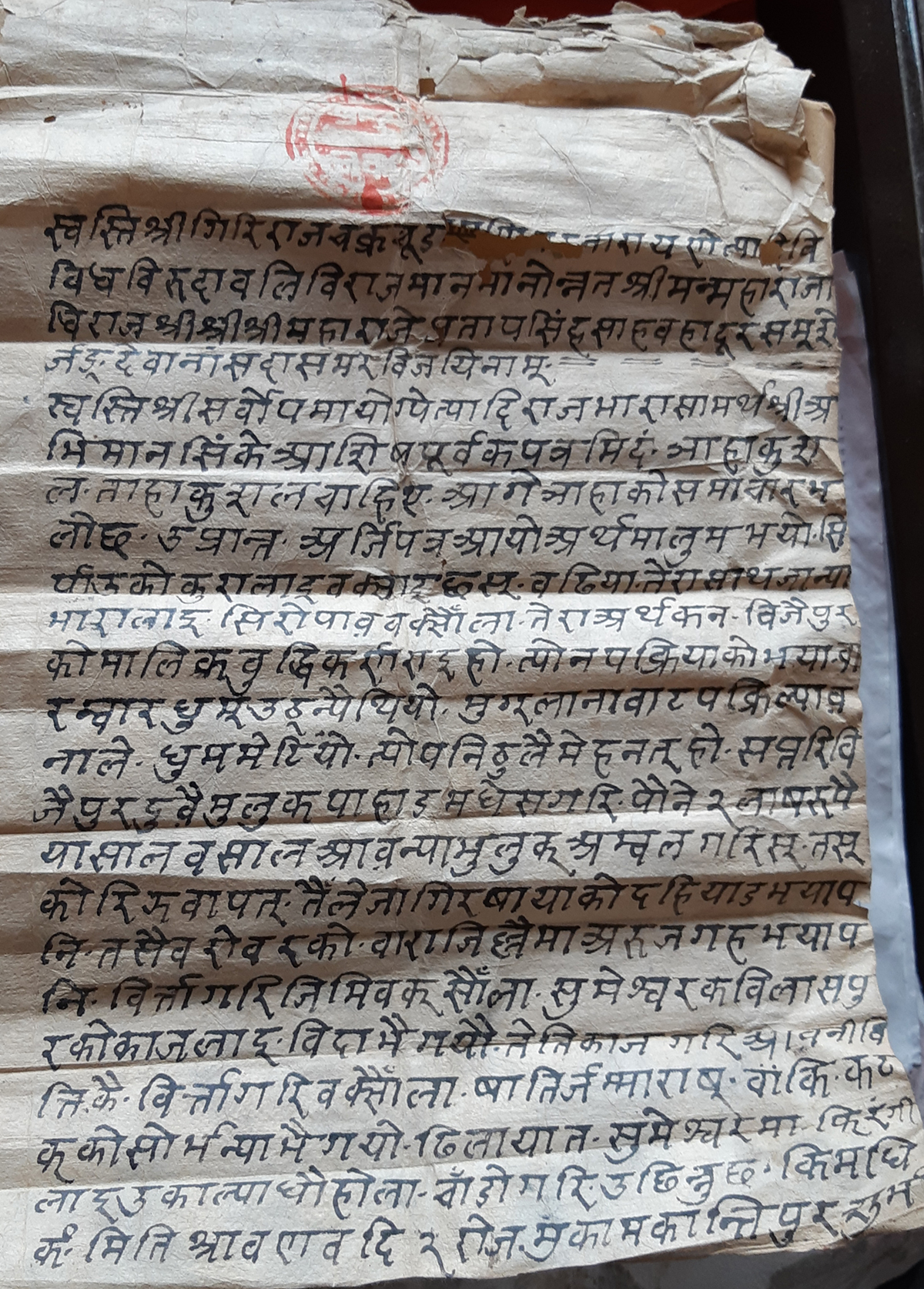
During the campaign to capture Chitwan, Kaji Swarup Singh Karki was sent from Kathmandu. The then Tanahun King Harakumar Datt Sen had his forces stationed at Sumeshwar and Kavilasgarh. Fierce battles took place as the Gorkhali encircled Kavilaspur, eventually forcing Tanahun forces to retreat. Among Abhiman Singh’s forces were Swarup Singh Karki, Ram Krishna Kunwar, and Parath Bhandari. On Saun 6, Kavilaspur was captured followed by Sumeshwargarhi on the 26th. Chitwan was annexed to the Gorkha Kingdom. Examples of the southern front campaigns include battles in Saptari, Chaudandi, and Chitwan.
Leadership on the Western Front
Abhiman Singh also distinguished himself in battles on the western front. He participated in battles for Palpa and Lamjung. During the war with the Parvat kingdom, commander Ganesh Malla was captured. While Abhiman Singh remained in Tanahun, Swarup Singh returned to Kathmandu. They secured victories in Rishing, Ghiring, Charikot, and Paitu. During Bahadur Shah’s deputyship, when Kaji Damodar Pandey advanced toward the Kaligandaki region, Abhiman Singh also fought alongside him (Vaidya et al., 2049:434).
Abhiman Singh in the Northern Campaign
In 1848 BS, a war broke out between Nepal and Tibet over conflicts related to mosque management in Khasa. Abhiman Singh Basnet and Ranjit Kunwar were tasked with leading an attack from Kerung. They departed the battlefield on Saun 30 and fought on Bhadra 26. However, the Nepali side was defeated and forced to retreat to Keraubari (Baburam Acharya, ‘China Tibet and Nepal’–2059:152).
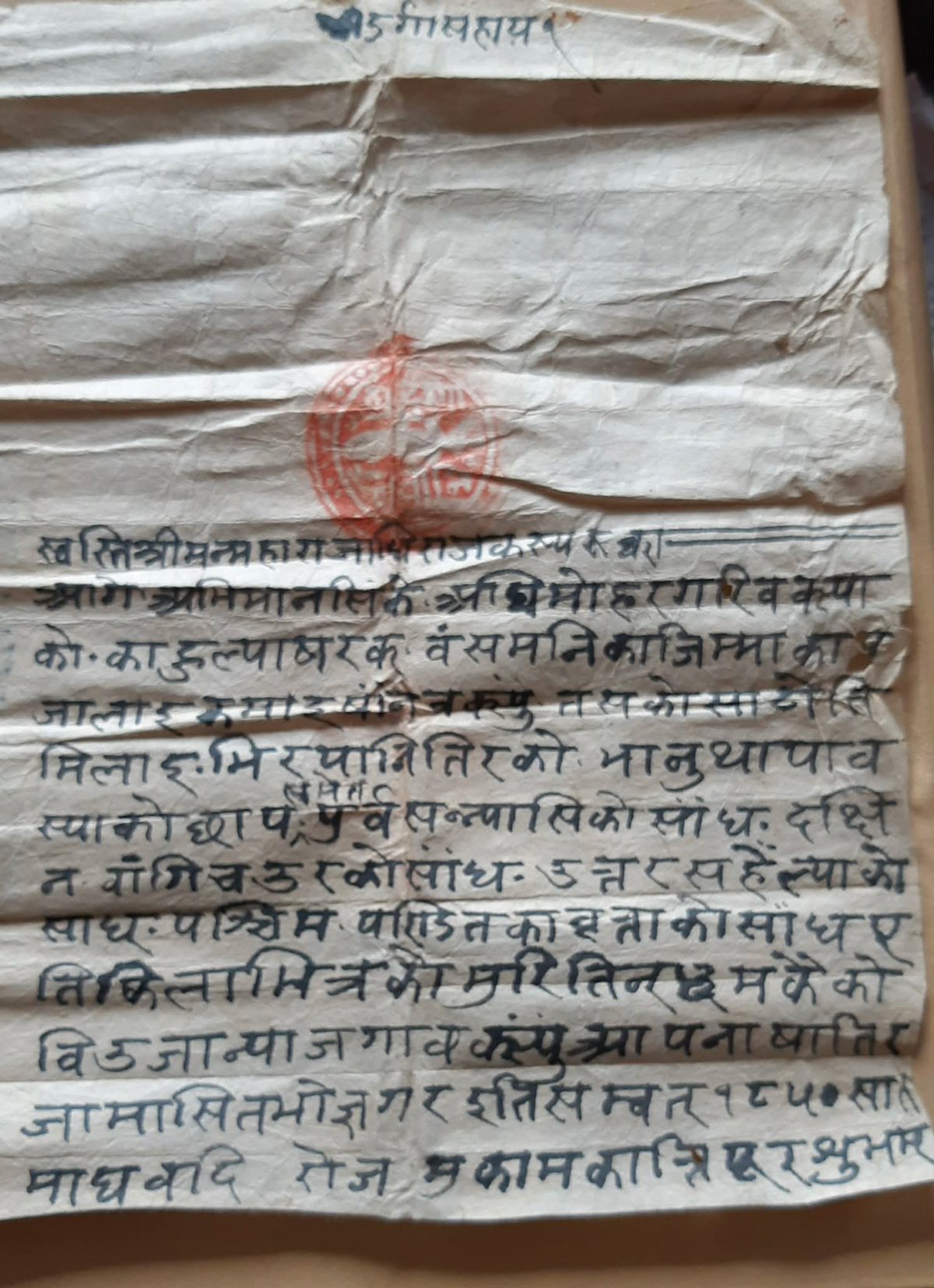
Following the looting of a monastery by the Nepali forces in Ditcharga town, China entered the war. Facing the massive Chinese army proved difficult. Tibetan-Chinese troops advanced as far as the Betrawati River. Despite the outcome, the Nepali army displayed significant valor and inflicted heavy damage on the opposing forces.
Eventually, both sides reached a peace agreement, signing a treaty on Bhadra 11, 1849 BS. A farewell feast was held for the Chinese forces, the necessary provisions for which were arranged by Abhiman Singh (Acharya, 2059:172–177).
Kaji Abhiman Singh Basnet’s extensive experience on the central, eastern, western, northern, and southern fronts has immortalized him in history as a brave warrior.
Abhiman Singh’s Residence
In Kathmandu’s Kel Tol area of Bal Kumari, an old palace showcasing exquisite Malla-era artistry still stands. Known as Tilanga House or Paltan House, its original name was ‘Man Mandir.’ This was the private residence of Kaji Abhiman Singh Basnet. In the then Narayanhiti complex, Abhiman Singh’s younger brother Dhaukalsingh Basnet had a separate residence.
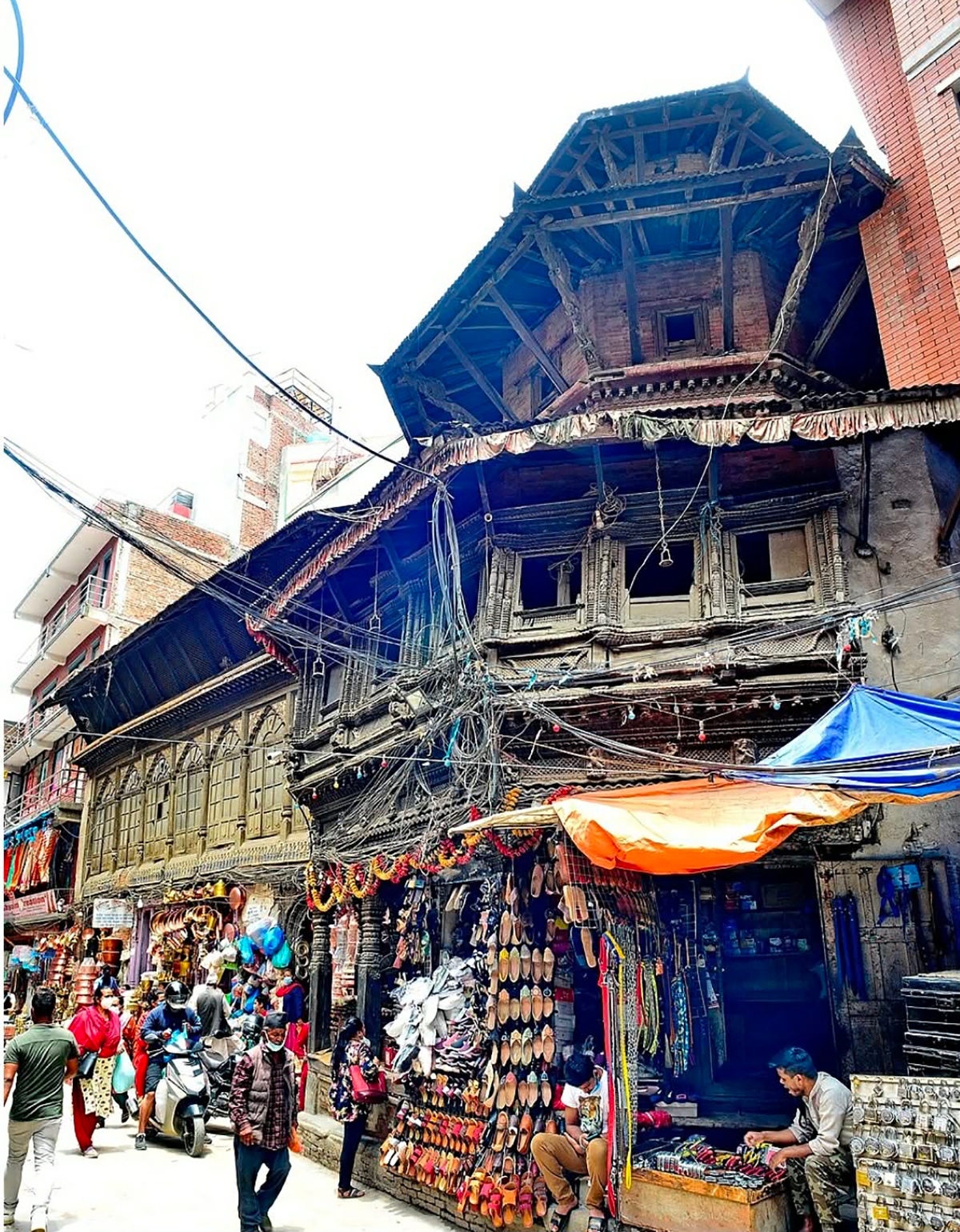
On Poush 10, 1833 BS, Abhiman Singh placed an inscription in the house complex, detailing its beauty, religious activities, and economic prosperity (Dhanvajra Bajracharya and Tek Bahadur Shrestha, ‘Inscriptions of the Shah Period’–2037:127–128).
The house originally belonged to Bhajudev Brahmin, the priest of Jayaprakash Malla. After the conquest of Kathmandu, it was confiscated and later granted to Abhiman Singh. In 1832 BS, King Pratap Singh Shah deposited one-sixth of the agreed sum and officially handed the house to Abhiman Singh. Old records bearing his name have been found there. Today, the house remains in ruins and is divided among the descendants of Abhiman Singh’s younger brother Dhaukalsingh.