
Customs Clearance Halted As MRP Labeling Becomes Mandatory; Over 1,000 Containers Held at Border Points
April 29, Kathmandu — Since the government mandated maximum retail price (MRP) labeling on imported goods beginning April 28, customs clearance for most imported products has come to a standstill.
On April 12, the Department of Commerce issued a notice informing that MRP labels would be compulsory on both domestically produced and imported goods from April 28 onward.
According to this timeline, customs offices report that they are not processing clearance for any goods lacking an MRP label starting Tuesday.
Under Section 6, Subsection 3 of the Consumer Protection Act 2018, producers for products made in Nepal and importers for foreign goods are required to label items in Nepali or English with the MRP.
The law prohibits the distribution and sale of goods in the market without a clear price label understandable to the general public. It mandates that MRP must include all taxes when setting prices.
Labels must also clearly indicate the product’s weight, manufacturing date, batch number, expiry date, and any potential adverse effects.
Hardware, electrical devices, and machinery must include warranty or guarantee periods, while products that pose health risks must feature warning messages or images.
Penalties of up to NPR 300,000 have been stipulated for illegal business activities or non-compliance, although implementing these provisions poses significant challenges.
The government prioritized effective market regulation and mandatory MRP implementation as part of its 100-point public sector reform agenda.
On April 12, 2026, the Department of Commerce issued the directive that enforcement of mandatory MRP labeling would begin on April 28, 2026. The rule applies to food and processed goods, requiring brand and MRP labeling.
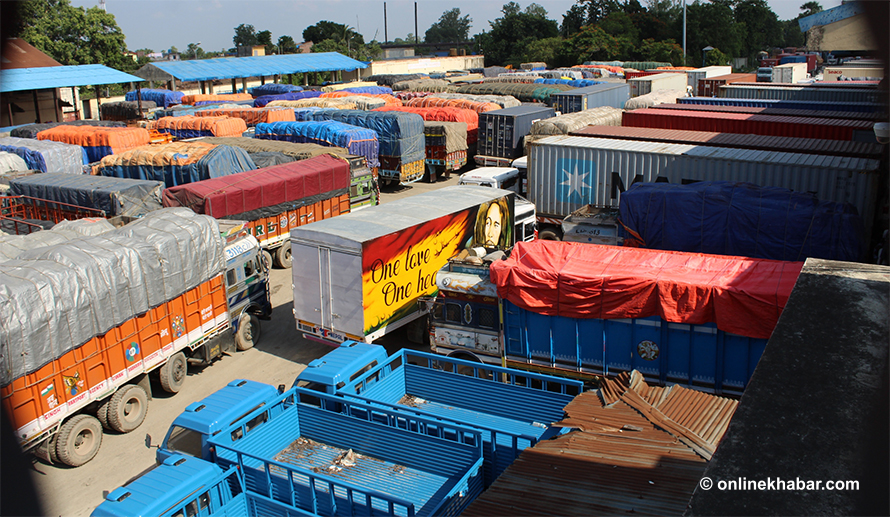
At major customs points across the country, including Birgunj, Bhairahwa, Biratnagar, Rasuwa, Nepalgunj, and Kakarbhitta, customs clearance has been completely halted for goods without MRP labels.
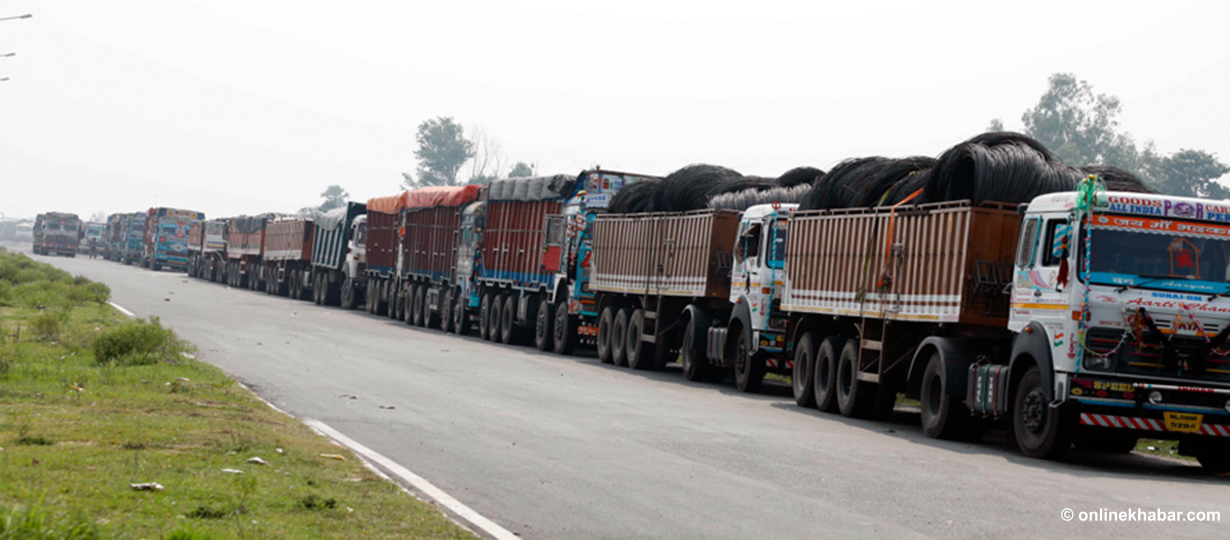
More than 1,000 containers have been held up due to the customs clearance halt, with 600 containers alone stuck at Birgunj.
Customs offices have noted that essential and industrial materials continue to be cleared without interruption.
Four customs office chiefs confirmed regular clearance of fresh vegetables, fruits, and industrial materials currently under laboratory testing.
According to Uday Singh Bista, customs officer at Birgunj, goods failing to meet labeling standards are not cleared, while importers remain uncertain about the MRP labeling process.
Harihar Paudel, head of Bhairahwa customs, stated only items with properly assigned MRPs are being cleared.
Rasuwa customs information officer Thakur Gautam reported that 20 containers have been held due to absent MRPs, and some business operators have refused to complete customs declaration forms.
Biratnagar customs chief Umesh Shrestha insisted that goods without MRPs cannot be released through customs if traders do not comply with the law.
Despite the government’s intent to protect consumers by enforcing mandatory MRP labels at customs points, traders have expressed resistance citing lack of preparation and unclear procedures.
Although industry minister and commerce department heads met with business representatives delivering appeal letters, the government remains firm on enforcing MRP regulations.
The Nepal Overseas Exporters Association has criticized the sudden implementation without adequate preparation or infrastructure, describing the situation as stressful for traders due to blocked goods.
Association secretary general Jayant Agrawal said the government introduced MRP enforcement without obtaining consensus from the business community.
“We submitted formal letters to the commerce department stating that the rule is technically and practically unfeasible, yet goods were stopped without our agreement,” Agrawal said.
“Foreign companies do not produce separate packaging for Nepal”
Agrawal lamented that as Nepal is a small market, foreign companies do not prepare special packaging including Nepal-specific MRPs, a factor he says the government has failed to understand.
He noted, “Foreign manufacturers do not send goods with distinct labels for our market, and prices often differ by the time goods reach customs.”
Business operators stated they lack the infrastructure to affix MRPs at customs points, and demurrage and delay fees contribute to increasing costs, which will lead to higher prices.
This has caused mental stress among traders, especially for goods currently en route by ship or those under letters of credit that have already been opened.
While businesses support the rule in principle, they emphasize that implementation must be practical.
Agrawal requested, “Let’s first classify the goods and then allow MRP labeling after products reach warehouses.”
“Goods cannot be released from customs by paying fines”
Hariprasad Gautam, president of Birgunj Industry and Commerce Association, called the policy of affixing MRPs at customs points “completely impractical.”
“How can containers be opened to label individual units? Foreign manufacturers do not produce special packaging for our small market,” he explained.
Gautam emphasized that MRP ignores geographic distance and transport costs, creating problems in pricing goods originating from Birgunj, where transport expenses are higher.
He also cited daily fluctuations in dollar exchange rates and changing agricultural product prices as further complications in setting MRPs.
He warned that paying fines at customs will not facilitate the release of goods.
They suggested that MRP regulations should apply only to everyday consumer products.
Morang Trade Association Requests Labeling at Own Warehouses
The Morang Industry Trade Association demanded that MRP labels be allowed only after goods arrive at warehouses.
Association president Anupam Rathi elaborated, “Setting MRPs at customs points causes complications in cost and price determination.”
He explained that 28% customs duties, domestic transport costs, and retailer margins make fixing MRP difficult.
While supporting the consumer protection goal, Rathi stressed that implementation must be realistic.
Lack of Coordination Among Government Agencies
The Nepal National Entrepreneurs Federation declared that poor coordination among government bodies has caused confusion among business operators.
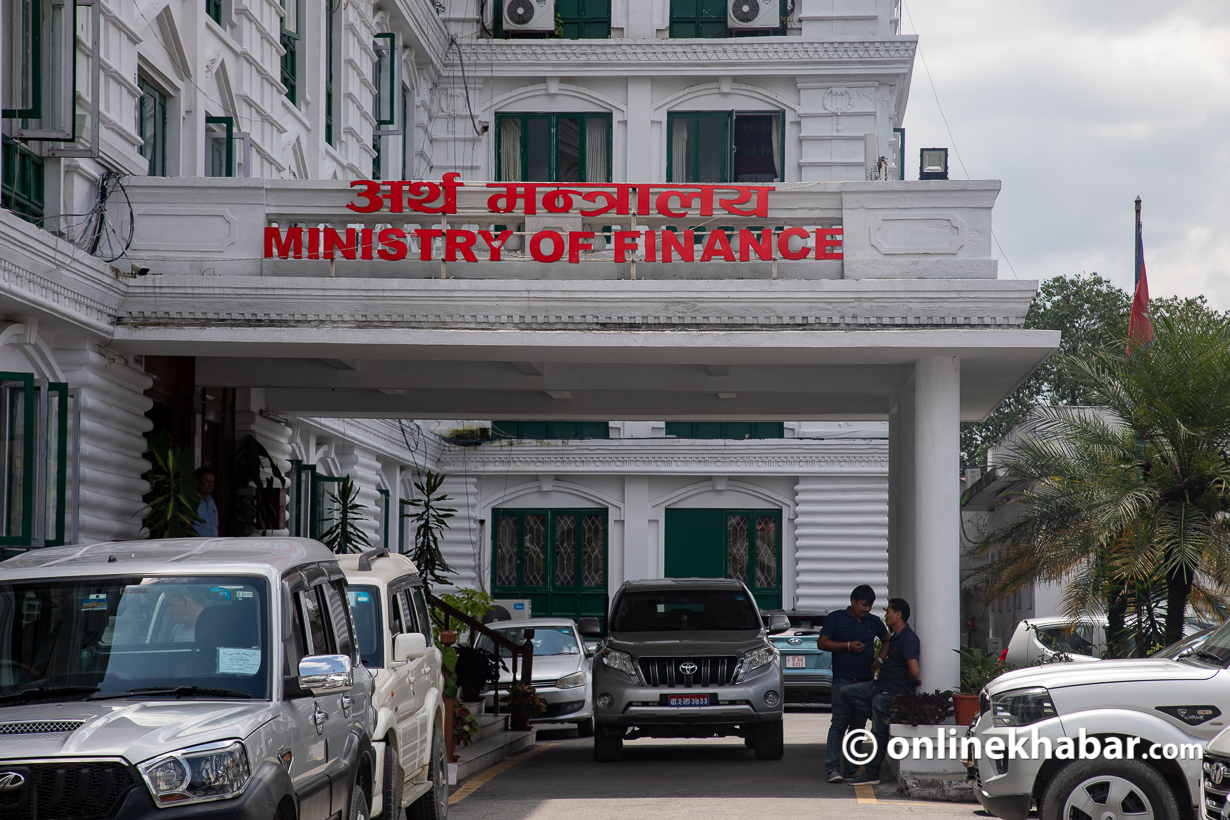
Chairman Manoj Babu Shrestha noted conflicting approaches between the Department of Commerce, Customs Department, and Ministry of Finance have resulted in customs clearance standstills.
He further explained that while the Commerce Department has reduced consumer benefits, the Customs Department has taken a strict stance that goods without MRPs cannot be cleared.
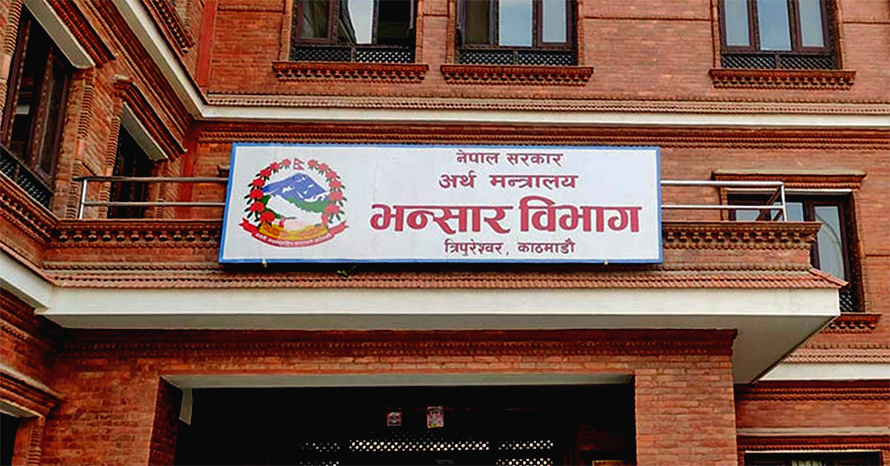
Customs officials plan to replace the reference price book with MRP-based valuation methods.
Shrestha warned that goods accrue transport and margin costs before reaching retailers, making customs duty assessment based on MRP impractical.
He expressed concerns that high customs rates could reduce customs revenue and encourage smuggling.
The federation accused the government of attempting to apply MRP rules contrary to the Consumer Protection Act 2018 by mandating the regulation on all goods rather than limited categories.
Shrestha said the law restricts MRP to essential goods and medicines, but that authorities are trying to enforce it on all products.
Eight Years of Neglect, Now Sudden Enforcement Causes Issues
Netra Acharya, president of Siddhartha Industry and Commerce Association, noted that the law had remained unenforced for eight years before sudden enforcement led to current difficulties.
Acharya lamented that customs agents and importers now find themselves unable to operate, partly due to a lack of prior notice.
He argued that requiring MRP on goods once the letter of credit is opened and cargo is en route is unjustified.
According to Acharya, small traders often import mixed product consignments in single containers from different suppliers, making affixing MRPs impossible.
He acknowledged the government’s good intentions but criticized flawed implementation.
No Tolerance for Violating State Law: Officials
Director Narhari Tiwari of the Department of Commerce affirmed the government’s firm commitment to the mandatory implementation of MRP labeling.
He emphasized that all importers must comply with the law and that no exemptions will be granted to violators.
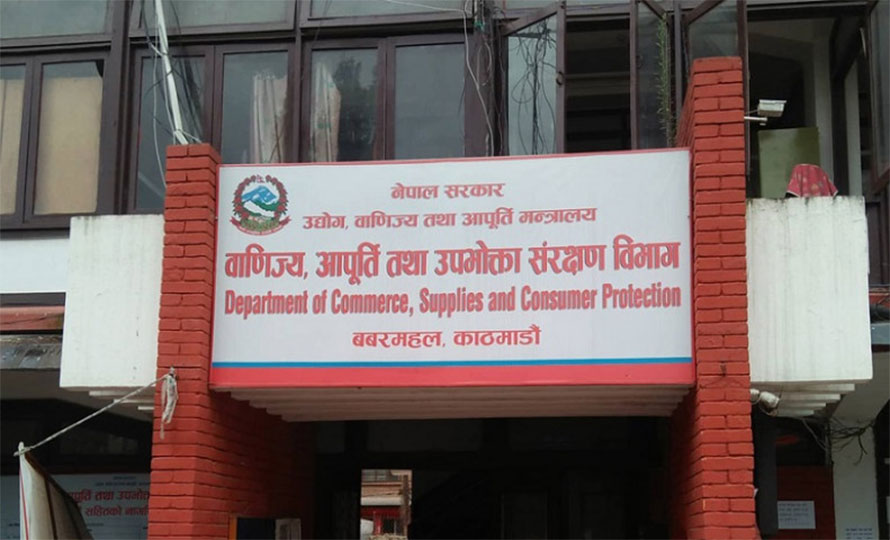
Tiwari stated the law will be strictly enforced and no goods may be offered in the market without an MRP label.
He confirmed discussions from the Prime Minister’s Office to the Ministry of Commerce and reiterated the government’s unwavering stance on this issue.
While acknowledging that traders may encounter initial challenges with the new regulations, he underlined the necessity of compliance.
MRP stickers or tags are mandatory for imported goods to be cleared through customs, a move the department believes will help regulate arbitrary pricing.