
Alliance Dispute: Madhesh Government Crisis Averted for Now
News Summary
Editorial content under review.
- The crisis facing the Nepali Congress-led government in Madhesh Province has been averted for now, with the four parties in the ruling alliance agreeing to continue the government.
- The ruling alliance holds a majority of 62 seats out of 107 in the Madhesh Provincial Assembly, with ongoing support from the CPN-UML.
- The legal unification process between JSP and LOSPA is in its final stage, with a merger expected within a few days.
April 11, Janakpur-Dham – The crisis threatening the Nepali Congress-led government in Madhesh Province has been temporarily averted.
Following the Janamat Party’s withdrawal of support from the government on April 4, there were concerns that JSP Nepal might also withdraw its backing. Such a move could have led to the collapse of the government led by Chief Minister Krishna Prasad Yadav.
However, with the parties within the ruling alliance, including JSP, clearly standing in support of the government, the immediate crisis surrounding the Congress-led administration has subsided.
On Sunday, the four parties constituting the government coalition decided to continue the current government. A joint meeting of the Nepali Congress, JSP Nepal, Communist Party of Nepal (CPN), and LOSPA Nepal resolved to maintain the current leadership under Chief Minister Yadav and to seek a vote of confidence at the earliest.
“On the date 2083 Baishakh 27 [April 11], a meeting was held among the leaders of the ruling parties in Madhesh Province Government which resolved to continue the government led by Honorable Chief Minister Krishna Prasad Yadav and to hold a vote of confidence at the earliest,” the decision stated.
The meeting was attended by Chief Minister Yadav, who also leads the Congress parliamentary party; Saroj Kumar Yadav, parliamentary leader of JSP Nepal; Yubaraj Bhattarai, CPN parliamentary leader; and Rani Sharma Tiwari, representing LOSPA in place of their parliamentary leader who was absent.
The LOSPA parliamentary leader, Rain Kathmandu, was in the capital and reportedly unaware of the meeting, according to one lawmaker. It appears Minister Sharma Tiwari represented LOSPA under party chairperson directives and signed the decision.
Out of 107 members in the Madhesh Provincial Assembly, 54 seats are required to form a government. The four parties in the ruling alliance hold a clear majority of 62 seats: Congress with 22, JSP Nepal with 17, CPN with 15, and LOSPA with 8. The government also continues to enjoy support from the main opposition party, CPN-UML.
This situation suggests that unless there are unexpected changes within the alliance, the current government is likely to endure for a considerable period.
Although JSP and LOSPA have announced their unification months ago, the legal merging process has not yet been completed. It is now reportedly in its final stage, with the two parties preparing to officially unite within two to three days. Following this, a new parliamentary party leader will be selected, according to a lawmaker familiar with the matter.
However, some dissatisfaction has emerged within the parties about continuing the current government. A LOSPA lawmaker revealed that Chief Minister Yadav hastily convened the coalition meeting and secured the decision. With the unification process underway between LOSPA and JSP Nepal, differing opinions may emerge regarding whether to remain in the government or not.
“The Chief Minister hurriedly called the meeting and got the decision approved. But as LOSPA and JSP Nepal are in the process of merging — expected within two to three days — the decisions of the newly selected parliamentary leader could change the scenario,” the lawmaker stated.
According to a Janamat Party legislator, prior to the election held on Falgun 21 [March 5], there was already a strategy to form a government led by Madhesh-centric parties including Janamat and the then-merging JSP-LOSPA alliance.
Janamat was expected to support this alliance. Confident of JSP’s backing, Janamat withdrew its support from the existing government. However, JSP stayed on its previous position.
“This strategy was in development from the beginning. Janamat withdrew from the government due to JSP’s stance but eventually JSP also pulled back,” a Janamat lawmaker explained. “We are now closely monitoring how JSP and LOSPA’s unification and subsequent decisions unfold.”
Efforts were also made to exclude CPN from the current government and realign the political equations. However, CPN maintained a position in favor of continuing the current government and avoided joining any alternative arrangements. Subsequently, the party engaged in talks with UML to explore new alignments.
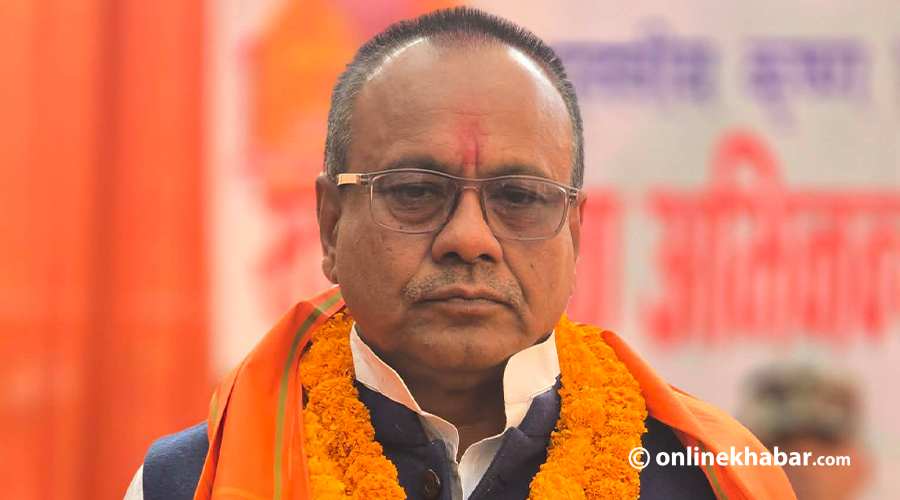
JSP noticed the risk that if it left the government, UML might betray by rejoining the current government, which still enjoys UML support. Furthermore, alliance governments led by UML and Congress exist in five other provinces. Discussions also took place at the top leadership level. When JSP felt at risk, party chairman Upendra Yadav recommended they stay in the government, which reportedly prevented their exit. Leaving the government would have placed JSP on the opposition benches, a position they wished to avoid.
The Congress-led government, formed on December 5 with support from seven parties, has been unable to deliver significantly effective governance. There is widespread dissatisfaction within the ruling alliance parties. However, with budget spending ongoing and a new budget formulation underway, discontented lawmakers admit the government has an obligation to continue rather than engage in power struggles.
After Janamat’s exit, tensions arose within the party. As a result, Janamat has removed Mahesh Prasad Yadav, its Finance Minister in the current government, from the parliamentary party leadership. Chandan Kumar Singh, also the party’s chief whip, has been appointed as the new parliamentary leader.
Janamat’s withdrawal from the government came after JSP’s urging. However, Janamat’s ministers—including Finance Minister Mahesh Prasad Yadav and Minister for Social Welfare and Sports Basant Kushwaha—remain in their posts. The Provincial Chief’s Office has issued a notification reflecting Janamat’s withdrawal since Baishakh 22 [April 6].
The government is required to seek a vote of confidence within 30 days. According to an alliance leader, the government intends not to remove the two Janamat ministers until the vote of confidence is held.
Given JSP’s commitment to support the government, it is anticipated that Janamat may also lend positive support for the vote of confidence, according to current coalition assessments.
Janamat provincial lawmaker Sanjay Kumar Yadav stated that the party left the government due to dissatisfaction with the traditional style of governance and will thus remain in opposition.
“Janamat has withdrawn support. Madhesh-centric parties no longer exist under Congress-UML leadership. The party has fallen behind due to the status quo and conventional politics. We will now remain in opposition,” he said.
Currently, the Madhesh Provincial Assembly consists of 24 CPN-UML members, 22 Nepali Congress members, 17 JSP Nepal members, 12 Janamat members, 15 CPN members, 8 LOSPA members, and 1 Nepal Federation Socialist Party member.