UML Revises Its Statements; Thapa Reiterates Them in Parliament
News Summary
- UML parliamentary leader Ram Bahadur Thapa has raised questions again on the government’s policy and program, urging for its rewriting.
- Thapa criticized the government’s silence on the role of the Nepalese Army and the encroachment of Lipulekh.
- Following Thapa’s remarks, Rastriya Swatantra Party (Raswapa) and Rastriya Prajatantra Party (RPP) MPs demanded the removal of his statements from parliamentary records.
April 11, Kathmandu – At the current parliamentary session, UML parliamentary party leader Ram Bahadur Thapa has once again made controversial remarks regarding the Nepalese Army, similar to those he voiced during the previous session.
While participating in the discussion on the government’s policy and program on Tuesday, Thapa also expressed critical views about the army.
“When the country was devastated and the headquarters of our Commander-in-Chief was attacked, why did the Nepalese Army, the nation’s chief protector, remain mysteriously silent?” Thapa questioned in the House of Representatives on Tuesday. “While encroachment took place at Lipulekh, why was the unaware army conducting parades in settlers’ villages?”
He remarked that the government’s policy and program is worthy of rejection and recommended that it be rewritten. “The hundred-point policy and program is merely a new version and continuation of the so-called hundred-point manifesto. Therefore, to protect the nation from an extraordinary crisis, it needs to be discarded and rewritten,” he said.
Thapa alleged that the Rastriya Swatantra Party (Raswapa) is part of a planned process aiming for unilateral rule and raised several questions that were not addressed in the policy program. Following opposition from other MPs within the parliament who did not support his statements, UML seemed to be on the defensive as well.
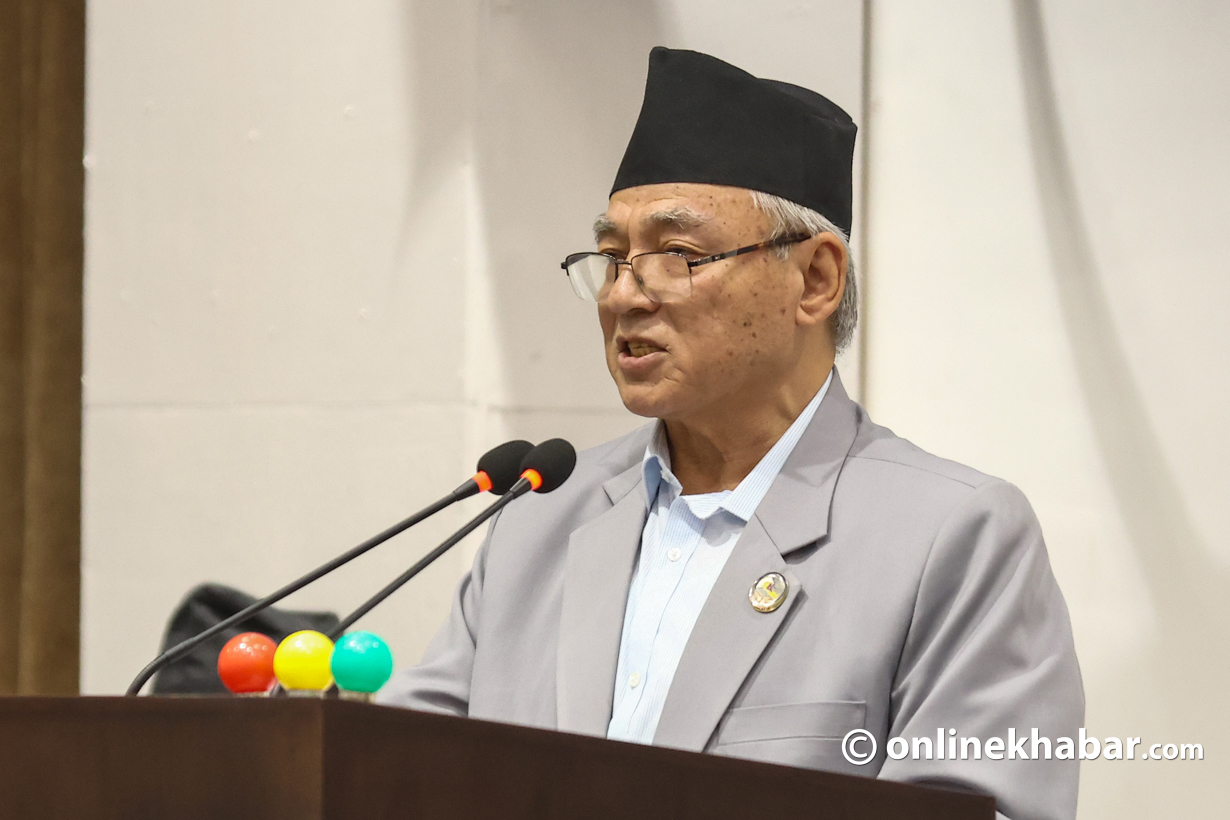
Thapa raised questions about the rise of Raswapa, scenes from the People’s War movement, and the role of the Nepalese Army. His pointed questions on the army in particular received significant attention.
UML Vice President Thapa prioritized discussions on the army, leaders of the People’s War, and Raswapa over key issues in the policy and program.
“Why does this policy program remain astonishingly silent on the treasonous people who burn the national flag?” he asked amidst opposition from parliamentarians. “Why is this policy and government silent about the unruly behavior of armed groups mocking non-alignment policies?”
Raswapa MP Manish Khanal raised objection to Thapa’s characterization of Raswapa as an anarchic mob during Badal’s address. Speaker Dwijaraj Aryal allowed Badal to continue after his request. Later, MP Khanal urged Badal to respect the dignity of the army and recognize the will of the people expressed through elections.
“You have made statements that bring the Nepalese Army into controversy,” Khanal said. “You called those elected by the people an anarchistic mob. I demand that your entire speech be removed from the parliamentary records.”
Similarly, Rastriya Prajatantra Party MP Khusbu Oli also expressed dissent. “Comments regarding the Nepalese Army are not mere institutional criticism but an assault on national morale,” Oli stated. “This has been ongoing continuously and I deeply regret it. I demand that such statements be expunged from parliamentary records.”
Facing opposition within parliament, Badal was also confronted by journalists with contrasting questions outside the chamber. When asked about rumors that suggested his statements led to UML’s decline amid Oli’s actions, Badal responded:
Badal said, “Because of me, UML will rise further.”
However, the agenda he raised today had been controversial before.
On March 2, at a House of Representatives meeting, Thapa had made similar remarks as the UML parliamentary party leader.
The conclusion drawn on February 3 following the House elections was that the Nepalese Army, government employees, the government led by Sushila Karki, and foreign power centers collectively contributed to UML’s defeat.
Senior UML officials publicly opposed this conclusion. Vice Presidents Vishnu Prasad Paudel and Secretary Yogesh Bhattarai argued that UML could not have reached such a conclusion as suggested by Badal.
Following leaders’ opposition on social media, the UML secretariat convened a meeting on March 4. With party chairman KP Sharma Oli detained, Badal chaired that meeting. The secretariat decided to correct Badal’s statements during this session.
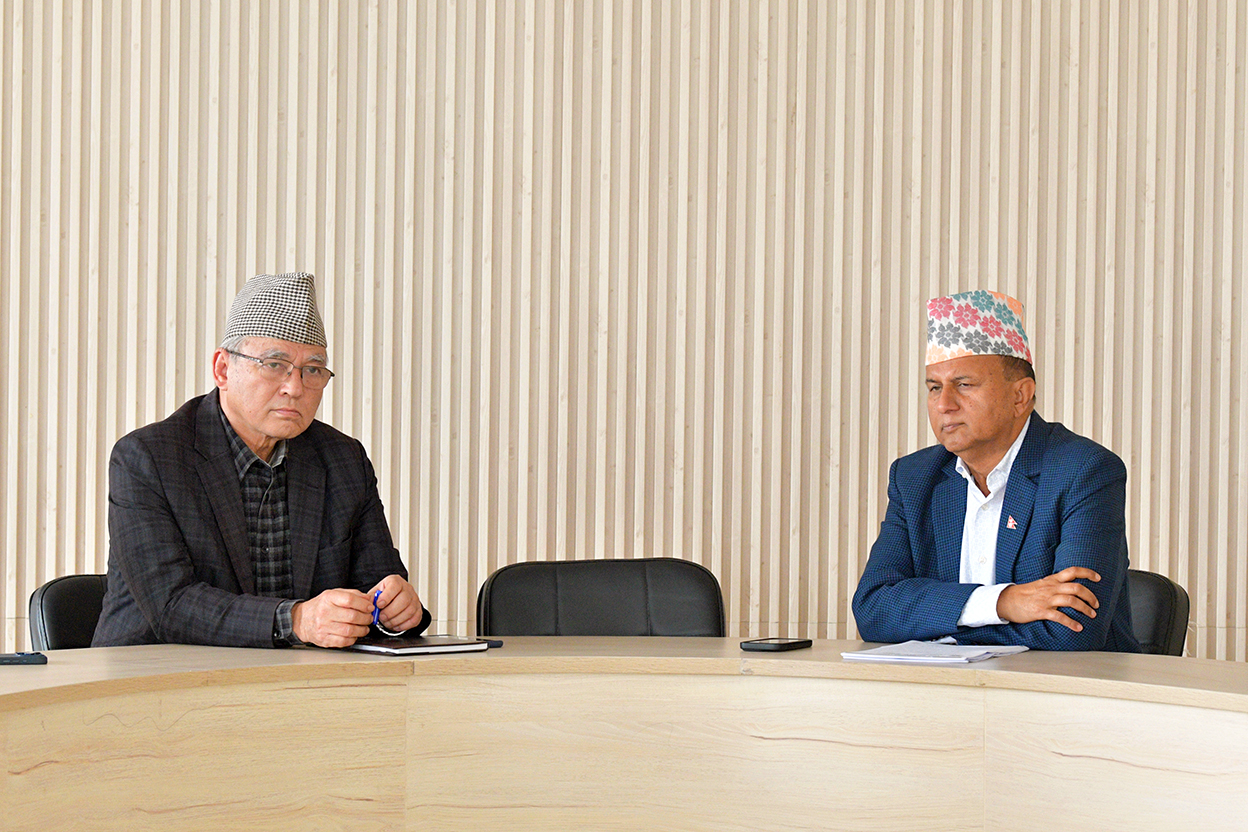
After six hours of discussion, a decision was made to revise Badal’s conclusion in parliament and to hold an election review meeting soon.
However, UML has yet to conduct any meeting to review the election defeat. Chairman Oli, released by Supreme Court orders, is currently resting due to health issues. Vice President Vishnu Prasad Paudel and General Secretary Shankar Pokharel have been pressuring Oli to convene a review meeting.
Although Oli has been reluctant to hold the meeting, Badal, who is close to him, has once again raised the matter as parliamentary party leader despite it having been formally corrected by the party secretariat.
A UML leader suggests that Badal’s stance warrants close examination. “Within UML’s internal conflicts, Badal supports Oli and is engaging leaders who have previously worked with Oli in party restructuring,” he said. “Today’s statements by Badal also reflect this ongoing struggle.”
At the end of March, during a visit to Pokhara, Badal had hinted in this direction. At the March 2 secretariat meeting, Badal’s statements were considered aligned with the party line, and leaders opposing it were labeled right-wing elements according to Oli’s preferences. Thus, the statements Thapa made in parliament had been corrected by the party secretariat before.
However, today in parliament, Thapa reiterated the agenda that UML had already corrected earlier.