
Improvements Observed in Economic and Social Indicators Across All Three Levels Following Federalism Implementation
News Summary
Prepared after editorial review.
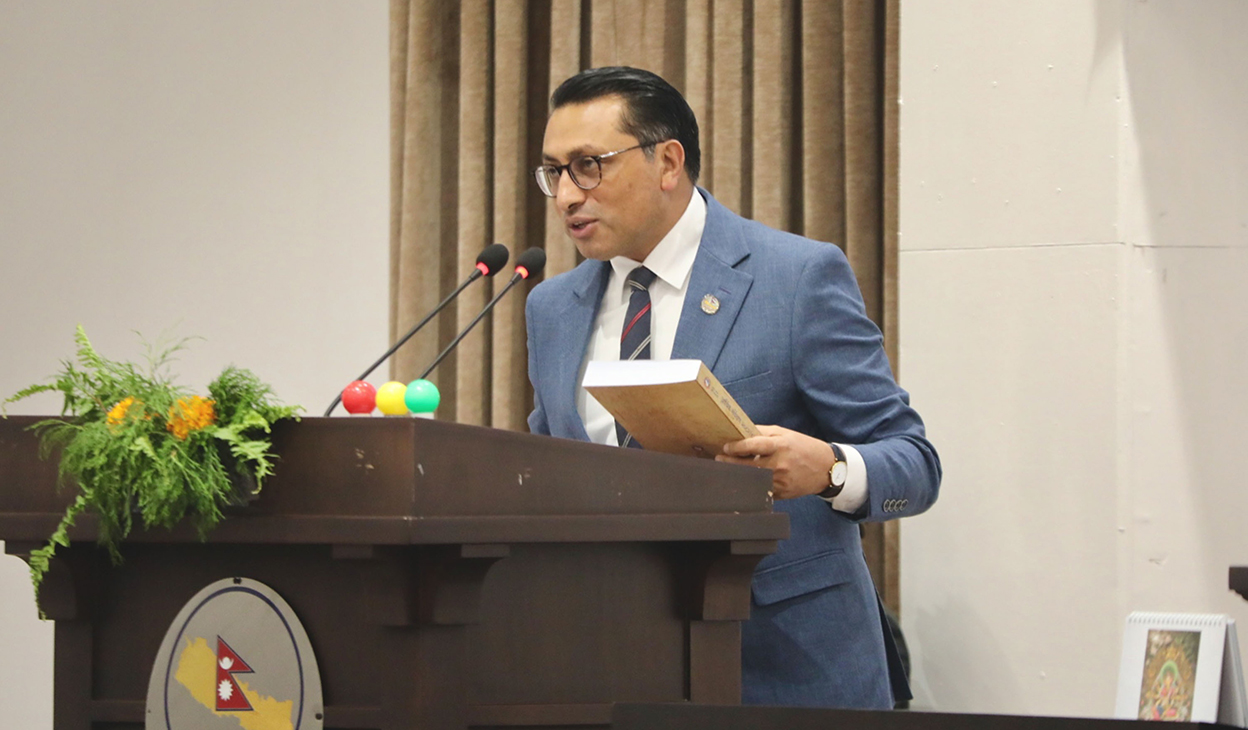
- Finance Minister Dr. Swarnim Wagle unveiled the Economic Survey for fiscal year 2082/083 on Wednesday.
- Bagmati Province accounts for the highest share of 36.7% in the total Gross Domestic Product of the current fiscal year, while Karnali Province has the lowest at 4.2%.
- Per capita GDP is highest in Bagmati Province at $2,644 and lowest in Madhesh Province at $934 for FY 2082/083.
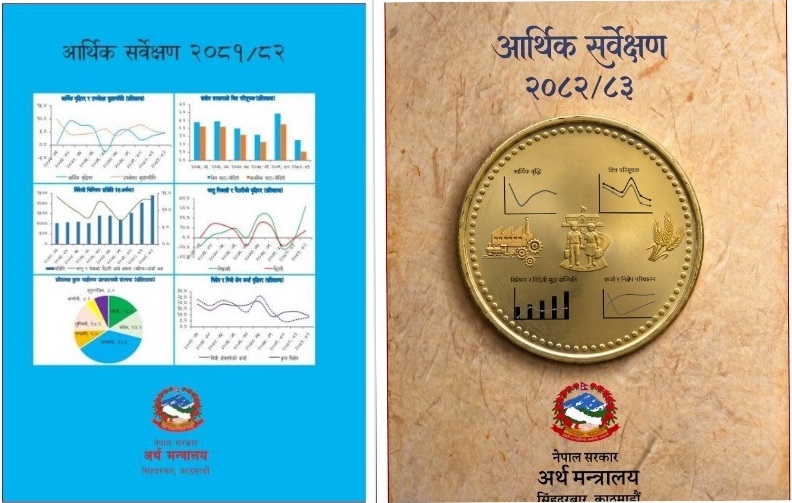
May 28, Kathmandu – Finance Minister Dr. Swarnim Wagle on Wednesday presented the “Economic Survey 2082/083.” In his address, Minister Wagle asserted that the practice of federalism has led to improvements in economic and social development indicators across all three tiers of government.
The Economic Survey 2082/083 highlights that with the implementation of the federal governance system, there have been notable advancements in the economic and social indicators at the federal, provincial, and local levels.
According to the survey, the economic growth rates of Bagmati and Gandaki Provinces surpass the national average. Since the introduction of fiscal federalism, the survey indicates that provincial and local governments have maintained savings in their accumulated funds.
The government states that post the federalism rollout, provinces and local bodies have increasingly become the focal points for development, construction, and the delivery of services.
The federal structure has prompted institutional development in budgeting and planning systems, expansion of administrative frameworks, improvement in intergovernmental coordination, and the provision of services at a more localized level, according to the government.
The Economic Survey captures a comprehensive picture of the national economy, incorporating public finance, monetary and financial sectors, and external sector dynamics, alongside comments on economic growth.
For the fiscal year 2082/083, the total Gross Domestic Product (GDP) at current prices is estimated at NPR 66.09 trillion, with Bagmati Province contributing the largest share of 36.7% and Karnali Province the smallest at 4.2%.
Other provinces’ shares are estimated as follows: Koshi Province at 15.8%, Lumbini Province at 14.2%, Madhesh Province 13.1%, Gandaki Province 9.0%, and Sudurpaschim Province 7.0%, according to the survey.
The survey projects economic growth increases across all provinces for the current fiscal year. However, except for Bagmati and Gandaki, the growth rates in other provinces are expected to remain below the national average of 3.85%.
Within provincial GDP composition for the current year, the primary sector has the highest contribution in Madhesh Province at 35.1% and the lowest in Bagmati Province at 11.8%.
The secondary sector’s contribution peaks in Gandaki Province at 18.4% and is lowest in Karnali Province at 9.9%.
The service sector’s share is highest in Bagmati Province at 76.5% and lowest in Koshi Province at 49.9%, as per the survey.
Regarding national agricultural production, Koshi Province holds the largest share at 21.4%, while Karnali Province has the smallest at 5.5%.
Madhesh Province contributes 19%, Lumbini 17.6%, and Bagmati 17.2% to national agricultural output, the survey reveals.
Sudurpaschim and Gandaki Provinces have respective shares of 9.8% and 9.6% in national agriculture production.
In industrial input to provincial GDP, Gandaki Province leads with 19.0%, followed by Koshi at 17.7%, Lumbini at 15.3%, and Sudurpaschim at 13.9%. Karnali Province has the smallest industrial share at 10.1%.
Bagmati and Madhesh Provinces each contribute 12.2% to the industrial sector in GDP, according to the survey.
In FY 2082/083, Bagmati Province’s per capita GDP is estimated to be the highest at $2,644, while Madhesh Province’s is the lowest at $934.
Bagmati and Gandaki Provinces’ per capita GDP figures exceed the national average of $1,513, whereas all other provinces are below this average.
Specifically, Koshi is projected at $1,410, Lumbini $1,208, Sudurpaschim $1,170, and Karnali $1,108 per capita GDP.
The survey shows annual consumer inflation as of Falgun 2082, with Madhesh Province highest at 4.74% and Sudurpaschim Province lowest at 2.28%.
Other provinces’ inflation rates are: Koshi 4.57%, Bagmati 3.11%, Gandaki 2.67%, Lumbini 4.29%, and Karnali 3.07%.
In FY 2081/82, Karnali Province recorded the highest ratios of expenditure and revenue to provincial GDP at 7.22% and 3.22%, respectively.
Conversely, Bagmati Province showed the lowest expenditure and revenue ratios at 1.91% and 1.93%, respectively. The survey explains this is due to Bagmati’s substantial GDP share of 36.0%, resulting in lower relative shares of revenue and expenditure.
Sudurpaschim’s expenditure and revenue ratios were 4.79% and 2.29%, Gandaki’s 3.85% and 2.07%, and Madhesh’s 3.63% and 1.63%, respectively.
The survey notes Lumbini Province’s expenditure and revenue ratios at 2.98% and 1.75%, and Koshi’s at 2.70% and 1.66%, respectively.
Total provincial expenditure increased by 8.0% to NPR 198.8 billion in FY 2081/82. Of this, current and capital expenses accounted for 39.1% and 60.9%, respectively.
In FY 2080/81, provincial expenditure decreased by 10.1%, totaling NPR 184.11 billion, the survey indicates.
Within provincial expenditures, capital expenditure had the highest proportion in Madhesh Province at 68.8%, and the lowest in Koshi Province at 49.0% during FY 2081/82.
The survey highlights a decline in capital expenditure’s share in Sudurpaschim, Gandaki, Bagmati, and Koshi Provinces compared to the previous fiscal year, while other provinces saw an increase.
As of Falgun this fiscal year, total provincial expenditures decreased 13.1% to NPR 5.954 billion, with expenditure dropping in all provinces except Madhesh.
The survey notes Koshi Province experienced the steepest decline in provincial expenditures, falling by 30.2%.
Up to Falgun this fiscal year, Bagmati Province bore the highest share of provincial expenditure at 0.25, while Madhesh Province held the lowest at 0.09, according to the survey.
Provincial expenditures accounted for 20.7% of the budget at Falgun, down from 24.6% in the same period last fiscal year.
Among provincial expenditures, Lumbini Province had the highest share at 27.6%, and Madhesh Province had the lowest at 11.6%.
As of Ashad 2082, all provinces have reported positive savings in their accumulated funds, totaling NPR 3.665 billion. In contrast, the accumulated fund was NPR 4.809 billion at the end of Ashad 2081.
Local government total expenditures increased by 3.2% to NPR 4.374 trillion in FY 2081/82, the survey states. In FY 2080/81, local expenditure had declined by 6.6% to NPR 4.238 trillion.
Within local expenditures in FY 2081/82, current expenses represented 65.2%, capital expenses 34.7%, and financial management-related costs 0.1%.
In FY 2080/81, these shares stood at 66.0%, 33.9%, and 0.1%, respectively.
The survey reveals that in FY 2081/82, Sunsari’s Koshi Rural Municipality spent the highest proportion of its capital budget at 97.8%, whereas Janak Nandini Rural Municipality in Dhanusha spent the lowest at 4.4%.
In FY 2080/81, Kaike Rural Municipality in Dolpa spent the highest capital budget proportion at 96.7%, while Fatuwabijaypur Municipality in Rautahat spent the lowest at 13.4%.
While capital expenditure shares in total local government spending had been falling through FY 2080/81, the Economic Survey points to a modest increase in FY 2081/82.
Specifically, capital spending accounted for 39.9% of total expenditures in FY 2077/78, declining to 33.9% in FY 2080/81.
In FY 2081/82, capital expenditure in local governments rose to 34.7% of total spending.
In FY 2081/82, 76.4% of the allocated local budgets were spent, a slight decrease from 76.8% in FY 2080/81.
The capital budget expenditure rate declined to 65.6% from 66.6% over the same period.
Within Sudurpaschim Province local governments, the highest budget utilization was 83.1%, while the lowest among Bagmati Province local governments was 69.1% for FY 2081/82.
Up to Falgun this fiscal year, local government expenditures decreased by 1.5% to NPR 1.9063 trillion. Among this, current and capital expenses comprised 78.9% and 21.9%, respectively.
In the same period last fiscal year, local government expenditure had reduced by 20.6% to NPR 1.9361 trillion, with current and capital spending at 74.6% and 25.4%, respectively.
Capital expenditure by local governments as of Falgun this year amounted to 16.8% of the allocated capital budget, compared to 20.0% during the same period last year.
Among local governments, Bagmati Province’s entities accounted for the highest expenditure share at 0.24, while Karnali’s local bodies contributed the lowest at 0.08, according to the survey.