Historic Moment as Three Female Referees Officiate Together at World Cup Match
On the evening of June 18, at Atlanta Stadium, the names of Tori Penso, Brooke Mayo, and Kathryn Nesbitt will be remembered for many years in world football history. That day, they did not just officiate a match; they also ushered in a new era of possibilities.
Summary
- At Atlanta Stadium, three female referees officiated the Group A match between South Africa and the Czech Republic, making World Cup history.
- Main referee Tori Penso became the second woman, after France’s Stéphanie Frappart, to officiate a men’s World Cup match.
- The all-female on-field refereeing team, including assistant referees Brooke Mayo and Kathryn Nesbitt, oversaw the 1–1 draw.
Kathmandu. Atlanta Stadium. Thursday, June 18.
Only minutes remained before the Group A fixture was set to start. Thousands of spectators focused their attention on the field.
The players of the Czech Republic and South Africa were preparing to emerge from the tunnels. Before the national anthems played, the atmosphere gradually grew more electrifying.
The excitement of another critical World Cup match filled the stadium with a lively energy.
That day, the attention of fans, media, and football enthusiasts briefly shifted away from the players toward the center of the pitch.
The reason: three women standing there, whistle in hand.
Main referee Tori Penso and her assistants Brooke Mayo and Kathryn Nesbitt had entered the field to officiate the match.
Usually, the arrival of referees is not considered major news. But that day, the situation was entirely different.
Before the match started, international media began highlighting this game as a special milestone. The spotlight was not on the players but the refereeing team.
Photos of these referees started circulating widely on social media. Many sports journalists described this as a historic moment in World Cup history even before the kickoff.
Why was this moment so significant?
Perhaps this moment transcended the game and the players.
Typically, World Cup coverage centers on star players: who will score, which team will win, and who will advance to the next round.
But on that day, the three women—who earned their places through years of hard work, dedication, and high-level performance—became the highlight.
Women have officiated in football for many years, but opportunities to referee in a men’s World Cup remain rare.
Moreover, having an entire on-field refereeing team composed exclusively of women was an extraordinary event.
This was not just an appointment; it was a signal of change in world football.
The appointment of Tori Penso, Brooke Mayo, and Kathryn Nesbitt reflected this transformation.
The decision to place them on the field was not symbolic tokenism but based on their proven competence in domestic leagues, international tournaments, and high-pressure matches.
FIFA, the American football community, and analysts worldwide saw this as an important achievement in football history. Many commentators noted, ‘This is not just representation, but a triumph of merit.’
Let’s explore how these female referees were selected for the World Cup.
Tori Penso: The lone woman among 117 referees
The most discussed figure that day was lead referee Tori Penso. Born in Stuart, Florida, Penso’s relationship with football began in childhood.
At 10 years old, she informed her mother of her desire to play football—a decision that later shaped her life’s path.
Her ability to understand the pace of the game, deep knowledge of the rules, and clear decision-making under pressure propelled her forward.
Initially, she refereed minor matches for modest pay, but this small role transformed her life.
According to a story published in The Sun, her talent quickly attracted attention, leading to invitations to referee camps hosted by the Olympic Development Program in Texas.
At that time, Tori herself was still playing football and studying marketing at university, uncertain about turning refereeing into a full-time career.
Over time, she progressed from top-level domestic competitions to major international FIFA tournaments.
After years of dedication, she obtained FIFA referee certification in 2021.
She subsequently delivered consistent, outstanding performances at the international level.
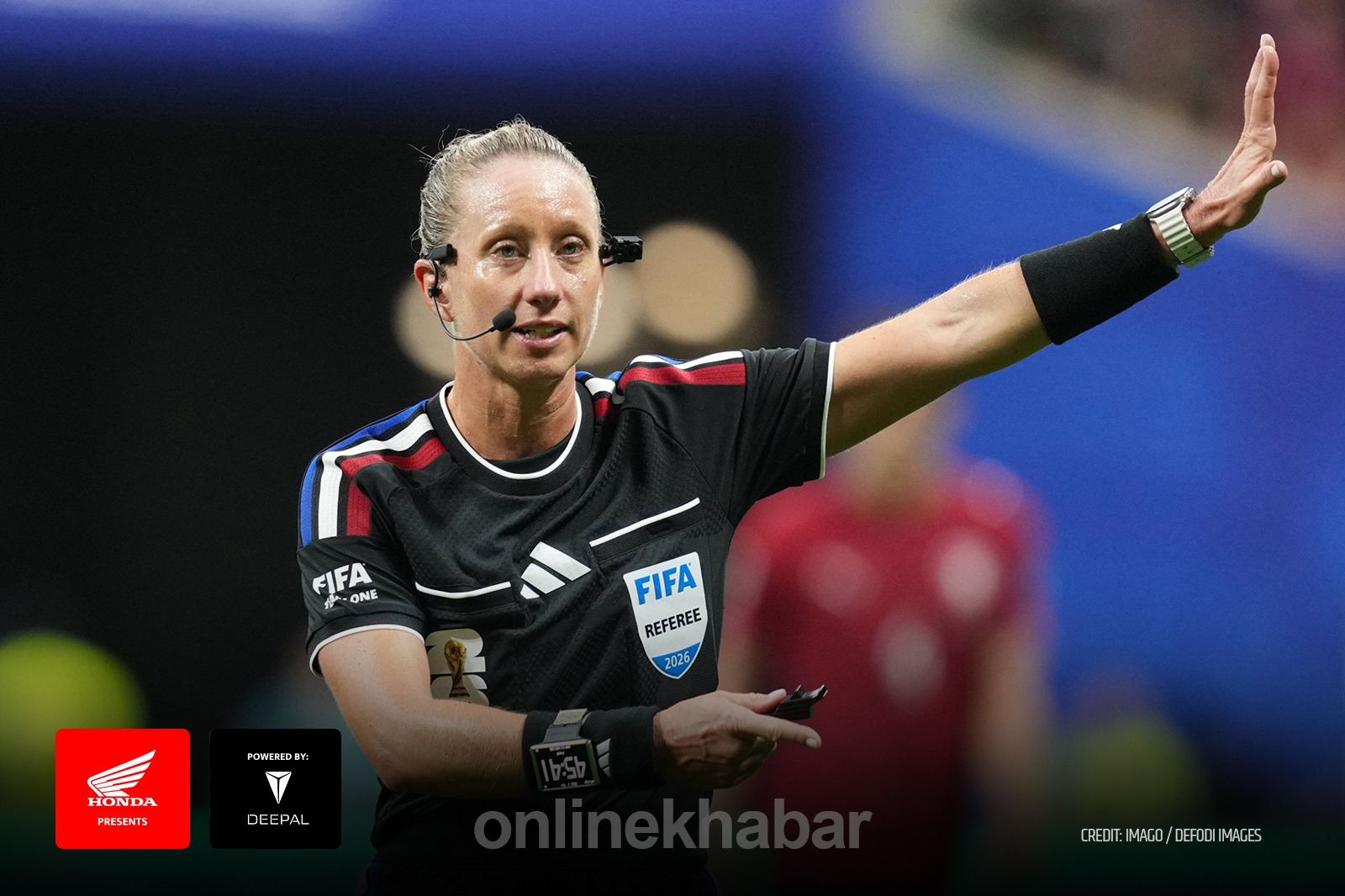
A major milestone in her career was refereeing the final match of the 2023 Women’s World Cup. She managed four games, including the semifinal between England and Australia, and the final between Spain and England.
Since then, she has become one of the most respected referees in world football.
In 2025, FIFA released a list of 117 referees selected for the Club World Cup, where she was the only woman.
Recognizing her talent, FIFA again selected her for the 2026 World Cup.
By officiating the match between South Africa and the Czech Republic, she became the second woman to referee a men’s World Cup match after Stéphanie Frappart from France in 2022.
In an interview with FIFA.com, she shared, ‘In the early days, there were no full-time female referees in the U.S., so I didn’t see it as a viable career. But I believed it wouldn’t be temporary and that this would help me understand my country and the world.’
Later, she bravely left a job at an advertising agency to become a full-time referee.
Her decision paid off.
Refereeing at the highest level requires not only knowledge of the rules but also outstanding fitness, mental toughness, deep understanding of the game, and pressure management skills.
Penso has demonstrated all these qualities on the field over the years.
Brooke Mayo: Whistling from age 13
Another name making history alongside Tori Penso was Brooke Mayo.
Raised in Garland, Texas, Mayo first blew her referee whistle at age 13. The journey she began then took her all the way to the biggest stage in world football.
In an interview with the U.S. Soccer Federation, Mayo said she set the World Cup as a goal and focused fully on achieving it.
She emphasized spending extra time in the gym, paying special attention to fitness and recovery, and treating every game as a learning opportunity.
After consistent effort for years, she secured her place on the historic World Cup officiating team.
Kathryn Nesbitt: From a diverse background to the World Cup
Kathryn Nesbitt’s story is no less fascinating. She is not only a football referee but also a scientist.
Alongside her refereeing career, she has studied and researched in the field of biological sciences.
According to FIFA’s official referee profile, Nesbitt is one of the most experienced assistant referees in world football.
She has overseen duties in various international competitions and earned her spot at the World Cup through consistent performance and experience.
Before establishing herself in world football, Nesbitt pursued studies and research in biological sciences. She notes that although football and science are different fields, both have helped her develop discipline, analytical skills, and precision.
The U.S. Soccer Federation’s profile highlights her continuous progress in both sciences and refereeing responsibilities.
After accumulating years of domestic, international, and FIFA tournament experience, she reached the World Cup stage.
“We are not just women, we are qualified referees”
Brooke Mayo’s remarks before the World Cup clarify the significance of this achievement.
In an interview with the U.S. Soccer Federation, Mayo stated that they prefer to be seen not as a “female referee team” but a “strong referee team.” Yet when a father requests a photo because his daughter is inspired, or women say such opportunities seemed impossible in their time, they realize the importance of their work.
For Mayo, the World Cup match was much more than just another game.
Asked how it felt to step onto the field from the tunnel, her response was emotional.
She described herself as a highly emotional person who struggles to hold back tears when entering high-stakes games.
“I’m living my dream. Family and friends are in the stadium cheering me on. I can never take such moments for granted,” she said.
Perhaps for this reason, that World Cup game was not merely an appointment but the culmination of years of dedication, sacrifice, and dreams realized.
Confidence demonstrated during the match
Making history is one thing; officiating a match fairly and successfully is another challenge.
During the game, Tori Penso awarded a penalty for South Africa following a handball inside the box, making a rule-based decision with confidence.
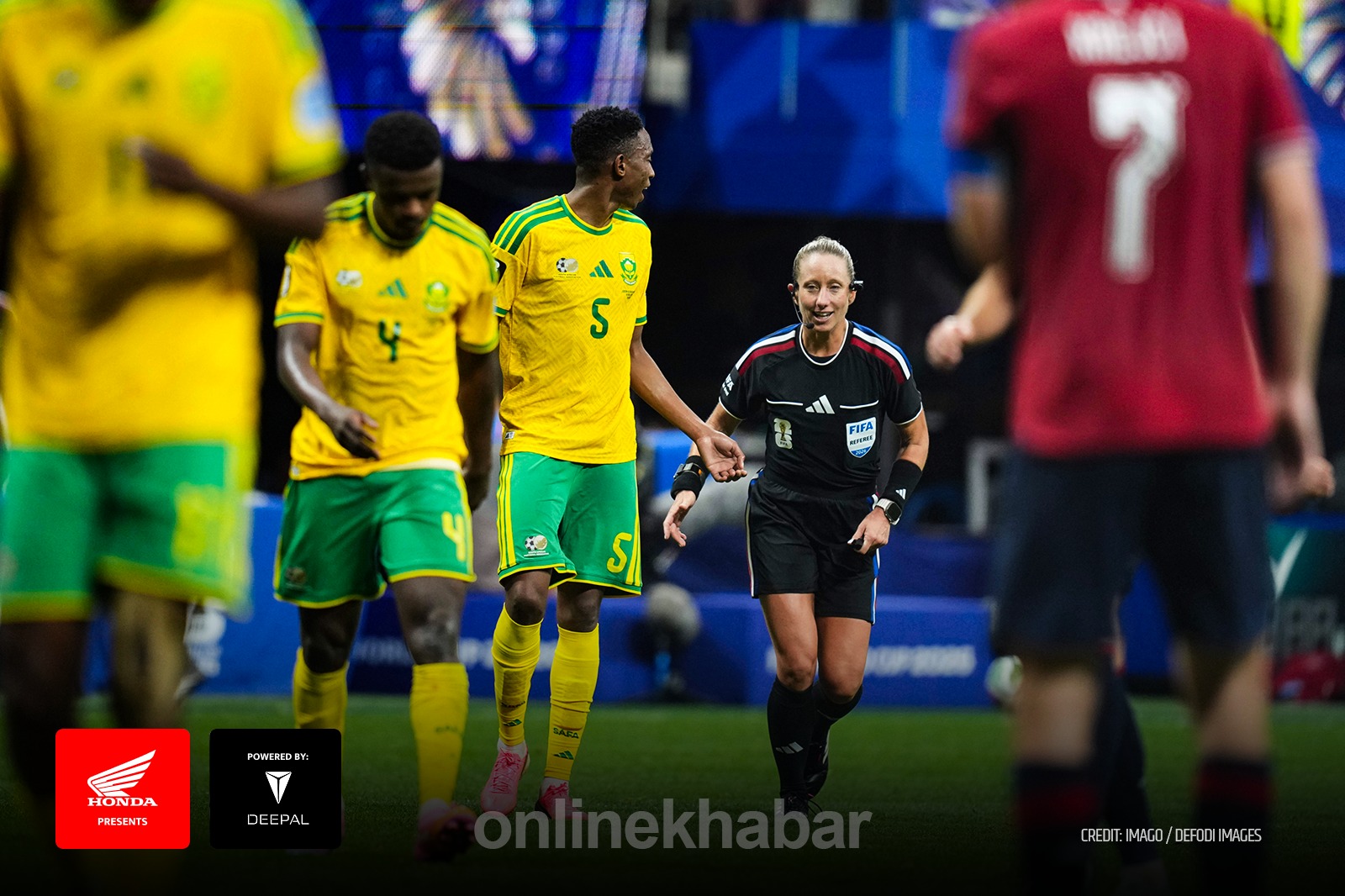
South Africa capitalized on that opportunity by scoring an equalizer late in the match. The game ultimately ended in a 1–1 draw, with both teams sharing the points and continuing their respective campaigns.
However, post-match discussions focused more on the historic significance than the scoreline.
That June 18 evening, the names Tori Penso, Brooke Mayo, and Kathryn Nesbitt will be recalled by world football for many years because, on that day, they did more than just officiate a game—they opened a new chapter of possibilities.