Norway’s Viking Roar: A Cultural Phenomenon Bridging History and Present
Before the match against Ivory Coast, the Norwegian Embassy in Kathmandu shared a video on social media featuring the Viking Roar.
News Summary
- Supporters have launched a special cultural campaign called the ‘Viking Roar’ to cheer for Norway’s team returning to the World Cup after 28 years.
- Norwegian MPs have actively participated in the campaign by performing the Viking Roar during parliamentary sessions to boost players’ morale.
- Conceived by primary school teacher Ole Froystad, this campaign started from the football field and has spread to daily life in America and Europe.
New York’s Times Square is densely packed with people. However, unlike the usual chaos, this crowd is orderly. Many individuals wearing red jerseys are gathered on the steps. Against this backdrop, a loud horn blares.
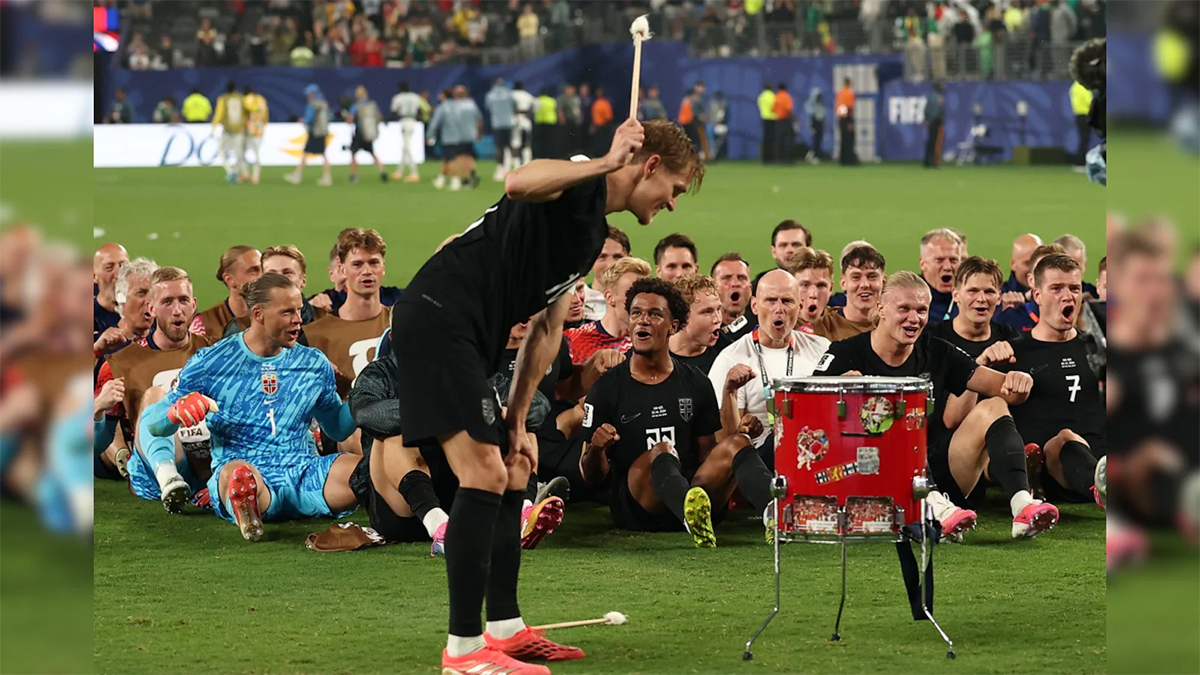
A man wearing a horned Viking-style helmet beats a drum. What unfolds next is exhilarating for many – everyone simultaneously sits on the ground and, imagining they are rowing a boat, shouts together in rhythm – Ro! Ro!! Ro!!!
This was neither a movie shoot nor a religious ritual. It was the Viking Roar performed by Norway’s supporters, celebrating the team’s return to the World Cup stage after 28 years.
Norway’s team has been performing the Viking Roar after every victory. By now, the roar has transcended the playing field; Norwegian fans spontaneously start the Viking Roar whenever they gather.
On June 22, Norwegian parliamentarians even paused their regular session to perform the viral Viking Roar, led by Speaker Masud Gharahkhani, in honor of their team’s World Cup qualification.
Similarly, before their Round of 32 match against Ivory Coast, the Royal Norwegian Embassy in Kathmandu posted a video of the Viking Roar on social media.
Ahead of the World Cup, Norway launched the ‘Viking Campaign.’ This initiative has stirred a cultural wave not only in stadiums across America, Mexico, and Canada but also on social media and city streets worldwide.
What is the Viking Roar?
Historical records reveal many misconceptions about Vikings. Many perceive them as a distinct tribe or nationality.
However, historically, ‘Viking’ was not an ethnic identity but a way of life and activity. In Old Norse, the term referred to individuals who traveled abroad or embarked on maritime expeditions.
Notably, the word ‘Viking’ is believed to derive from the Old Norse term ‘vík,’ meaning ‘bay’ or ‘sea inlet.’ Thus, the literal meaning refers to those who courageously set out from bay areas to journey across the sea.
During the Viking Age (circa 750 to 1050 AD), Scandinavians were known as ‘Norsemen.’ Among them, only those who ventured on ships for trade, exploration, or occasionally raids were labeled Vikings.
While history often depicts Vikings as brutal raiders, they were also skilled traders, farmers, shipbuilders, and explorers.
Their history was not solely about war and plundering; Viking society was notable for granting property rights to women, allowing divorces, and stable household leadership during men’s absences.
Norway’s neighbor and historical rival Sweden has expressed discontent over the Viking claim; Swedish journalists argue that historically, Swedes rowed ships more than Norwegians, as they traveled extensively on rivers.
Norwegian Viking history is particularly distinguished.
Norwegian Vikings established settlements in Iceland and Greenland, and notably, the Norwegian explorer Leif Erikson reached the North American coast around 1000 AD—nearly 500 years before Christopher Columbus.
At the current World Cup, Norwegians have embraced this history as their strength, presenting their past of adventurous and just societies through football.
Interest from Norway’s prime minister and royal family confirms that this is more than a sports celebration; it’s a strategic effort to amplify national identity globally.
A Cutting-Edge Shipbuilding Technique from a Millennium Ago
The backbone of Viking success was their shipbuilding expertise. Around a thousand years ago, they developed ship construction technology considered advanced for its time.
Their iconic longships were built by fitting oak planks edge-to-edge. The vessels were designed to navigate both shallow rivers and the open sea effectively.
These double-ended ships could move forwards or backwards without turning, an advantage for maneuvering through icy seas and rocky passages.
A skilled Viking crew could propel these ships at speeds of 15 to 17 knots, enabling surprise attacks on enemies.
The rowing activity aboard these ships inspired the ‘Viking Roar’ now witnessed in the World Cup stadiums.
World Cup 2026
Norway approached this World Cup not merely as a football competition but as a branding opportunity to fill a 28-year absence.
Prior to the tournament, the Norwegian Football Association presented its players as Viking warriors. Star striker Erling Haaland was depicted in full Viking attire, wielding a sword and shield, with long braided hair.
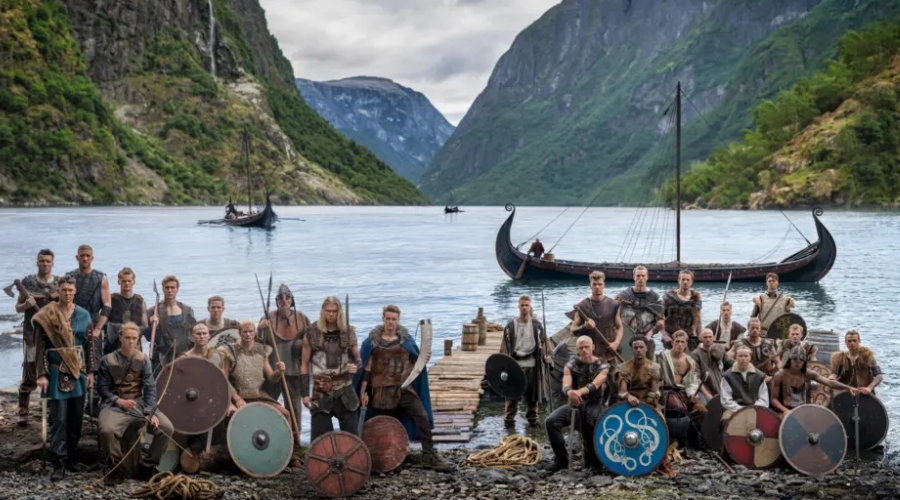
King Harald V of Norway delivered an inspiring speech during the team announcement, elevating the Viking Campaign to a matter of national pride. Players wore Viking jerseys adorned with runic script to emphasize their historic identity worldwide.
On the field, Haaland’s performances have resembled a fierce Viking warrior; his goals against Iraq, Senegal, brought Norway to knockout stages, and his decisive goal against Ivory Coast propelled them further.
From Bar Notepads to Times Square
Surprisingly, this global sensation was not orchestrated by a major marketing agency but originated from the imagination of a primary school teacher.
Ole Froystad from Oslo devised the concept about a year ago while discussing with friends at a bar. He sought a unique way to position Norway on the football map.
He adapted the old slogan of Norwegian club Rosenborg, ‘Ro-sen-borg,’ linking it creatively with Viking ship rowing.
The concept is simple yet energetically powerful.
First, a Viking horn signals everyone to prepare. Supporters then sit together in a line mimicking a boat crew. As drums beat, they rhythmically move their arms forward and backward chanting ‘Ro,’ progressively increasing in tempo until the group stands in celebration.
To further energize the movement, musician Jonas Thomassen composed a rock anthem called ‘Viking Blood,’ celebrating the Vikings’ arrival in America 400 years before Columbus. Currently, the track tops Norway’s Spotify charts.
A Wave that Unites All
The most compelling aspect of the Viking Roar is its inclusivity. It resonates beyond Norway into streets of America, where videos of Norwegian fans performing the roar, such as at a Boston escalator, have amassed over 40 million views.
This wave has surpassed stadium boundaries, integrating into everyday life. A simple search for “Viking Roar” on Google yields countless videos.
From Dallas police officers welcoming Norwegian flights along highways to NFL stars learning the roar, Viking culture has created a distinct impact in America, often viewed as Norway’s form of soft diplomacy.
Controversies and Criticisms: Is it Just Imitation?
Like any prominent campaign, it faces critics. Some accuse it of copying the famous Icelandic ‘Viking Clap’ from 2016.
Norwegian football journalist Alexander Schou described it as “a nightmare for introverted individuals,” where those not participating may face social media backlash.
Norway’s neighbor Sweden has expressed dissatisfaction, claiming Swedes historically rowed ships more due to extensive river travel, challenging Norway’s Viking rowing narrative.
Nonetheless, Norwegians continue their campaign undeterred.
Today, the Viking Campaign stands as a powerful medium showcasing Norway’s proud history to the world. As captain Martin Ødegaard noted, it energizes the team and connects supporters deeply.