
Constitution Violated by Granting Cooperative Regulatory Powers to Provinces and Local Levels Risks Billions in Deposits
Article Summary
- Granting cooperative regulatory authority to provinces and local levels, which is not provided by the constitution, through the Cooperative Act, puts billions of deposits at risk.
- Though Dharan Sub-Metropolitan City declared Barah and Shreya Cooperatives problematic, it has failed to form management committees, delaying the deposit refund process.
- According to the Cooperative Authority, complaints have been filed against more than 800 cooperatives, with an initial estimate of over two hundred billion rupees misappropriated.
September 24, Kathmandu – The constitutional provision denying regulatory authority to provinces and local levels has been bypassed by laws granting such powers, risking billions of rupees in public deposits.
The Cooperative Act 2017 assigns cooperative regulatory authority to the federal government, provinces, and local governments. However, due to inefficiencies in the provincial and local governments, this authority remains ineffective, placing cooperative depositors’ savings at risk.
For instance, Dharan Sub-Metropolitan City declared Barah Cooperative, which reportedly misappropriated about 1.1 billion rupees, as problematic on January 12, 2025 (29 Poush 2081 BS). Yet, it has not been able to form a management committee to resolve the issue.
Similarly, Shreya Savings and Credit Cooperative, which faced problems after misappropriation of 160 million rupees, was declared problematic by Dharan on April 28, 2025 (16 Baisakh 2082 BS). However, without a management committee, depositors’ refunds have not progressed.
An official from Dharan Sub-Metropolitan City cited lack of manpower, coordination capacity with government and other agencies, as reasons for the delay in forming management committees.
The official commented, ‘The central government failed to manage cooperative problems and simply shifts this responsibility to local levels. Without skilled personnel and cooperation from provincial and central governments, committee formation delays are inevitable.’
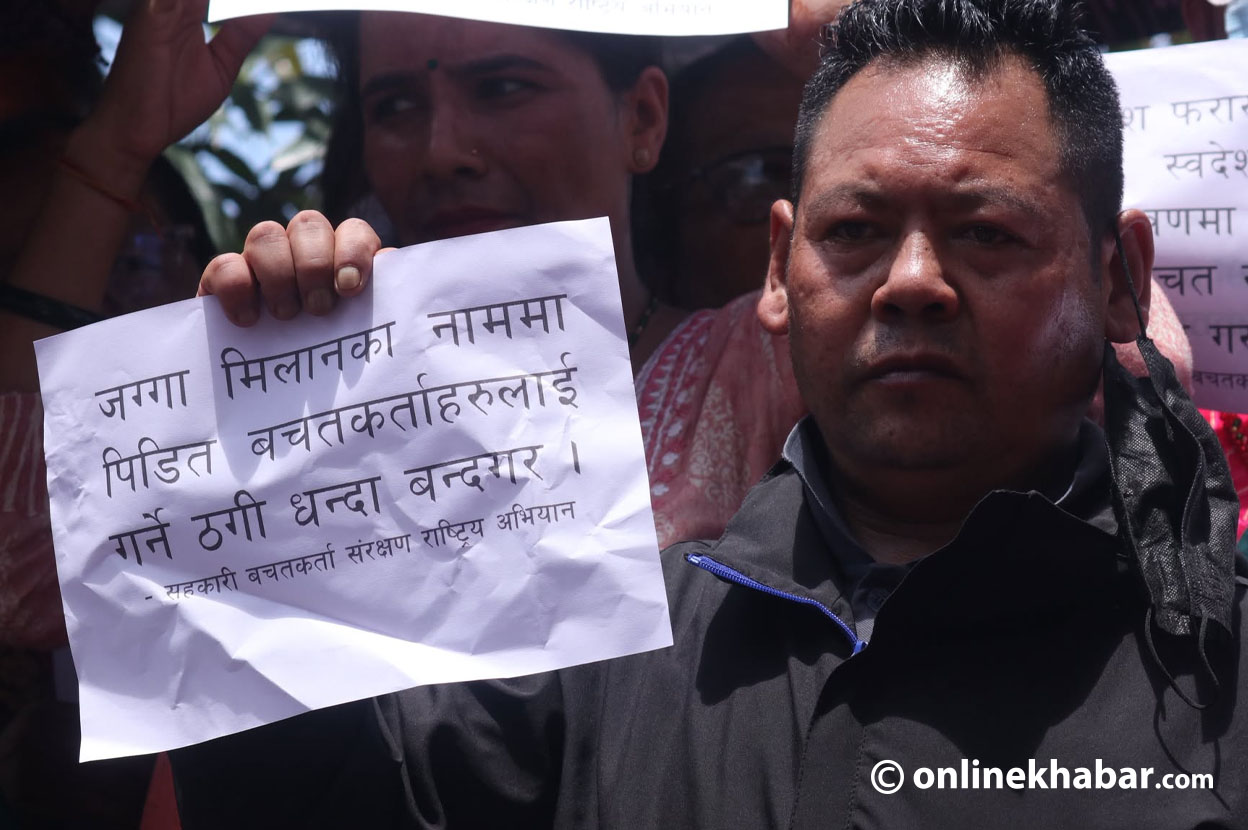
Victims who file complaints at local levels to declare cooperatives problematic often see their claims rejected because local governments are unable to effectively manage cooperative liabilities and assets, said Kushal KC, chairperson of the National Campaign for Protection of Cooperative Depositors.
‘When asked why committees have not been formed, Kathmandu Metropolitan City responded that they are incapable of doing so. This raises concerns about who else could manage them,’ KC added.
KC further accused local governments of protecting fraudulent cooperatives by not taking initiative to declare troubled cooperatives problematic.
He stated, ‘Though management committees are necessary for problem cooperatives, delays caused by difficulties in asset management, weak loan recovery, inadequate savings protection, legal complexities, and lack of coordination have hindered expected outcomes.’
Up to now, only 23 cooperatives have been declared problematic at the federal level, with Bagmati and Koshi provinces forming provincial committees, and Thimi Municipality being the sole local body to set up such a committee. The Cooperative Act (Section 104) mentions that all seven provinces and over 750 local levels are authorized to form such committees.
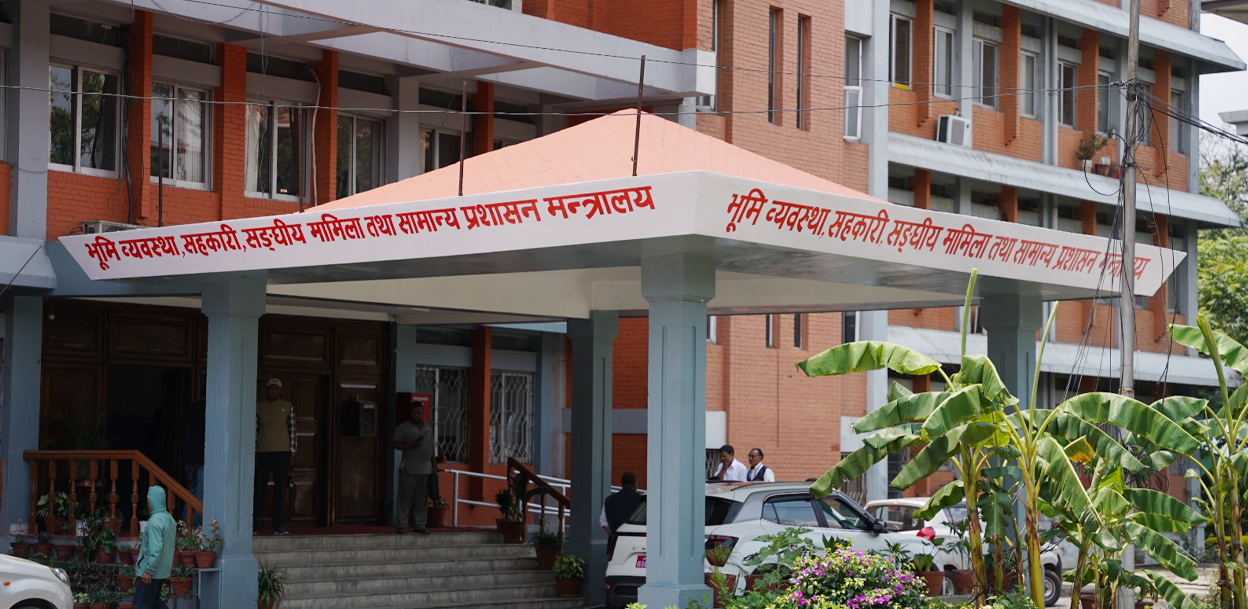
The Act stipulates that declaring cooperatives problematic is to be done according to province and local-level cooperative legislation, with management committees responsible for assisting in asset and liability management. The ministry has sent letters to concerned agencies for coordination and guidance.
Cooperative Regulations 2018, rules 71 and 72, allocate regulatory powers to Nepal Rastra Bank, federal, provincial and local governments, and related departments and authorities. However, most provinces and local governments have yet to draft their own laws, hampering effective regulation.
According to Dharan Sub-Metropolitan City, about 13,000 depositors of Barah Cooperative have requested refunds amounting to roughly 1.1 billion rupees, while 531 depositors of Shreya Cooperative have sought refunds totaling 159 million rupees.
The Commission for Investigation of Cooperative Irregularities’ 2025 report states that due to lack of technical capacity, skilled manpower, record keeping, and coordination, irregularities in cooperatives are increasing.
The report emphasizes that ineffective regulation has worsened cooperative malpractice. Even where management committees are formed, intervention delays, asset management difficulties, weak debt recovery, insufficient savings protection, complex legal proceedings, and coordination gaps prevent achieving desired results.
Employees of Dharan Sub-Metropolitan City and officials from provincial and federal problematic cooperative management committees conclude that solutions are not feasible through current committee mechanisms.
An ordinance led by Prime Minister Balendra Shah to amend the Cooperative Act has granted provinces and local levels authority to declare cooperatives problematic and to form management committees.
The ministry has issued correspondence for regulatory bodies and government agencies to coordinate and cooperate accordingly.
Following federal declarations of cooperatives as crisis-affected, procedural support guidelines of 15-16 points have been issued, according to Dharan Sub-Metropolitan City staff.
Barah Cooperative chairman Man Bahadur Bishwakarma stated that the cooperative repeatedly invested depositors’ money into other companies, leaving non-members as depositors as well, complicating refunds.
Acting Mayor of Dharan Sub-Metropolitan City, Eindra Bikram Bheghale, assured, ‘We will promptly form a management committee for the problematic cooperative and initiate a resolution process.’ However, he did not address the delays in committee formation.
Constitutional Conflict Regarding Multi-level Regulation
According to Schedule 5 of Nepal’s 2015 Constitution, sole regulatory power over cooperatives is vested in the federal government. Provinces and local levels have authority only over cooperative institutions, not regulatory powers.
Yet, the Cooperative Act 2017 controversially grants regulatory powers to federal, provincial, and local governments, conflicting with the Constitution.
The Cooperative Act also prescribes that registration and regulation of cooperatives at local and provincial levels are carried out separately by respective tiers.
The Local Government Operation Act 2017 grants policy, legal, standard implementation, and regulatory authority over cooperatives to local governments.
However, this multi-regulatory framework deviates from the Constitution, causing contentious legal and operational challenges.
A report by Dr. Jayakant Raut as task force coordinator highlights that weaknesses in legal and regulatory frameworks have exacerbated the cooperative crisis.
The report states, ‘Due to transitional challenges in constitutional and legal cooperative management frameworks and limited regulatory capacity, cooperative regulation remains weak. Inability to implement certain provisions of the Cooperative Act and lack of capacity at all three levels have intensified problems.’
Current Status of Cooperatives
The government has announced the return of cooperative victims’ deposits within 100 days, advancing efforts by establishing a revolving fund.
The initial phase prioritizes refunding depositors of problematic cooperatives, with special attention to small depositors.
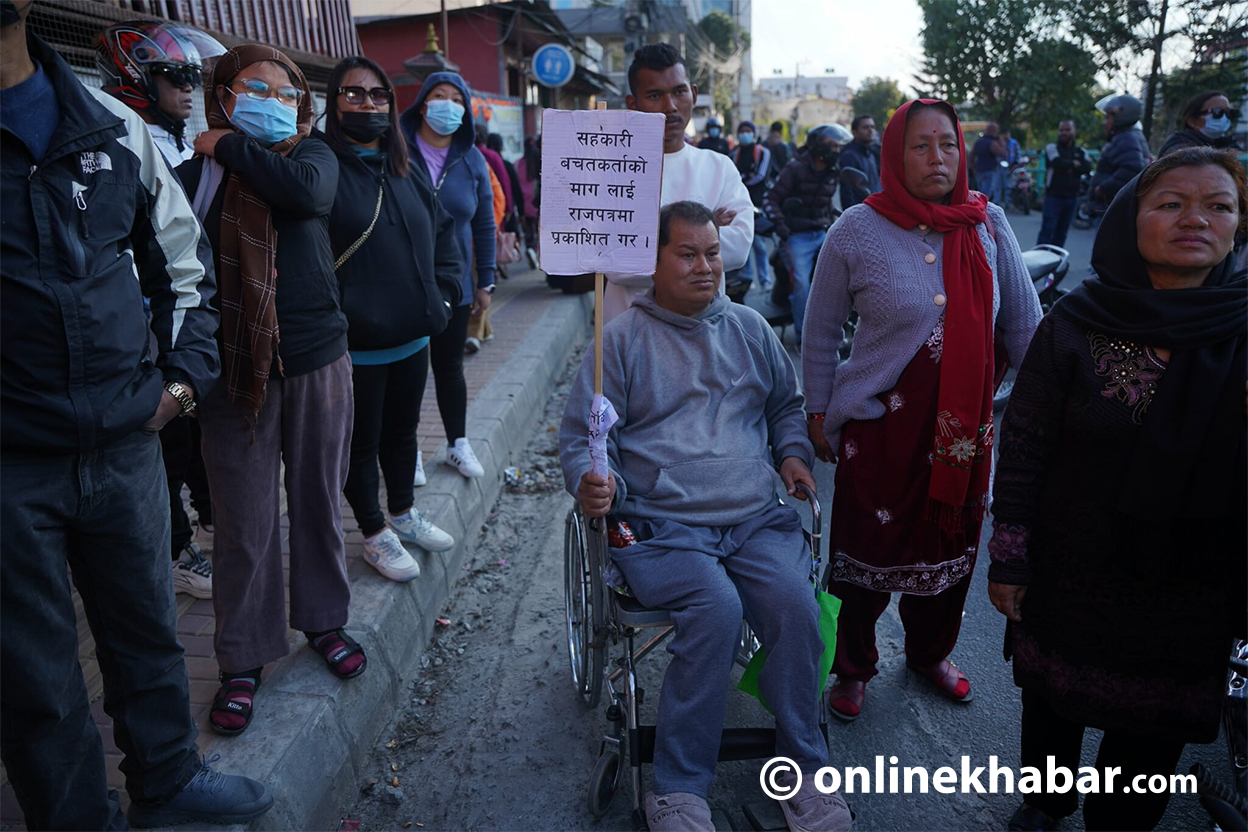
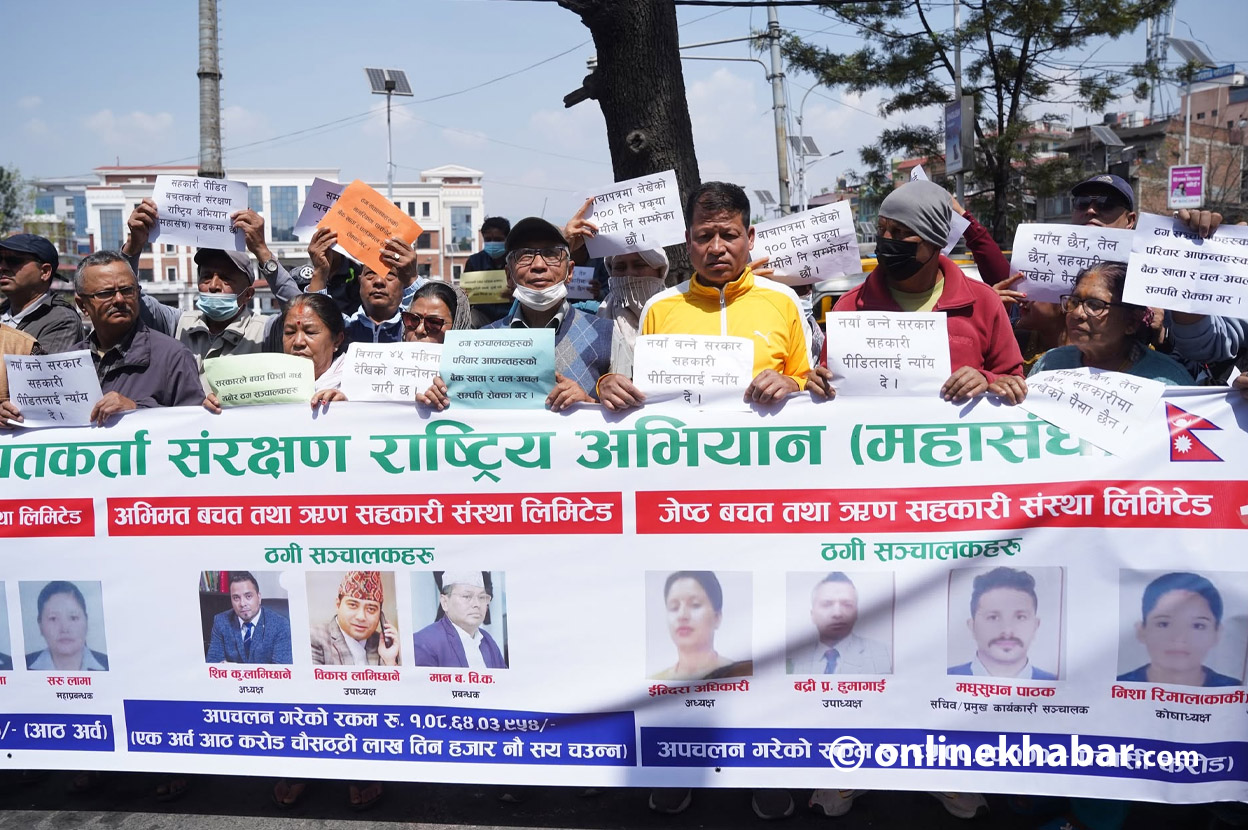
However, protests in Kathmandu by victims have occurred, objecting to distinctions made between small and large depositors. The government has not assured full refunds yet.
Cooperative Minister Pratibha Rawal requested six months to refund all depositors’ money, which led to suspension of protests.
The ministry has amended legal frameworks to identify and recover assets from fraudulent cooperatives, but results remain ineffective.

Approximately Two Hundred Billion Rupees Misappropriated in Cooperatives
So far, the federal government has declared 23 cooperatives problematic. Among provinces, Bagmati has declared five, and Koshi one cooperative problematic.
In Kathmandu Metropolitan City alone, 187 cooperatives have complaints regarding failure to refund deposits, with thousands of depositors claiming over 800 million rupees remain unpaid.
The National Federation to Protect Cooperative Depositors currently has 619 victim depositors enrolled, representing over 500 problematic cooperatives. The federation has submitted requests for declarations to relevant authorities.
The Cooperative Authority reports 894 complaints against more than 800 cooperatives, with an initial estimate of over two hundred billion rupees misappropriated.