Flood at Rasuwa-Gadhi Deals Another Blow to Auto Market Recovering from Jenja Movement
Summary of Key Points
- Following the Jenja Movement, over half a dozen automobile showrooms in Thapathali—including Tata, CG, Mahindra, Suzuki, and Hyundai—were damaged by fire and vandalism, causing losses amounting to nearly one billion Nepali rupees.
- Sipradi Trading rebuilt the Tata showroom despite suffering 80% structural damage and losing eight vehicles, reopening for business within 70 days starting from Mangsir 1, 2082 (mid-November 2025).
- On Bhadra 10, 2083 (September 26, 2026), flooding of the Bhotekoshi River in Rasuwa caused massive damage at the Rasuwa-Gadhi customs yard, washing away over 500 vehicles and more than 200 freight trucks, disrupting the automobile supply chain again.
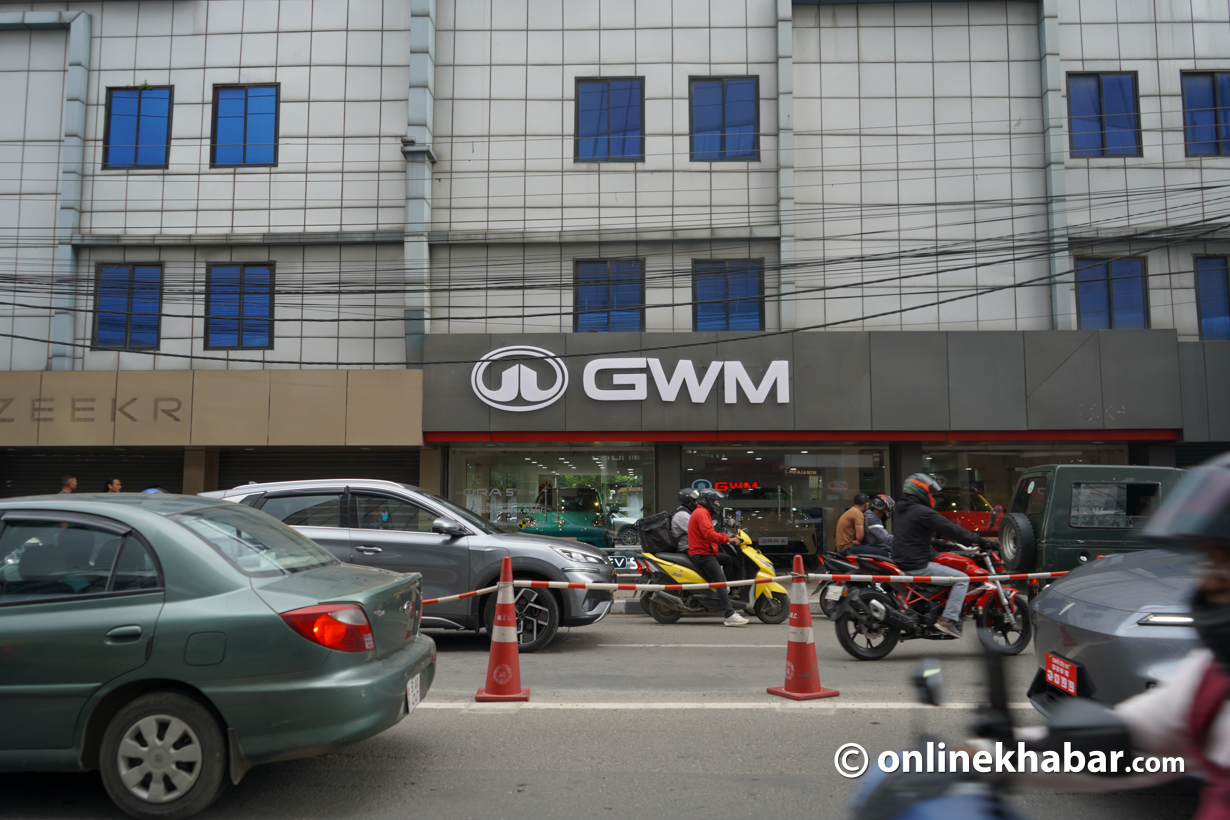
September 8, Kathmandu.— One year ago, the automobile showrooms in Thapathali area faced severe destruction; some had shattered glass, others burned beyond recognition, and in some cases, the showroom structures were entirely destroyed.
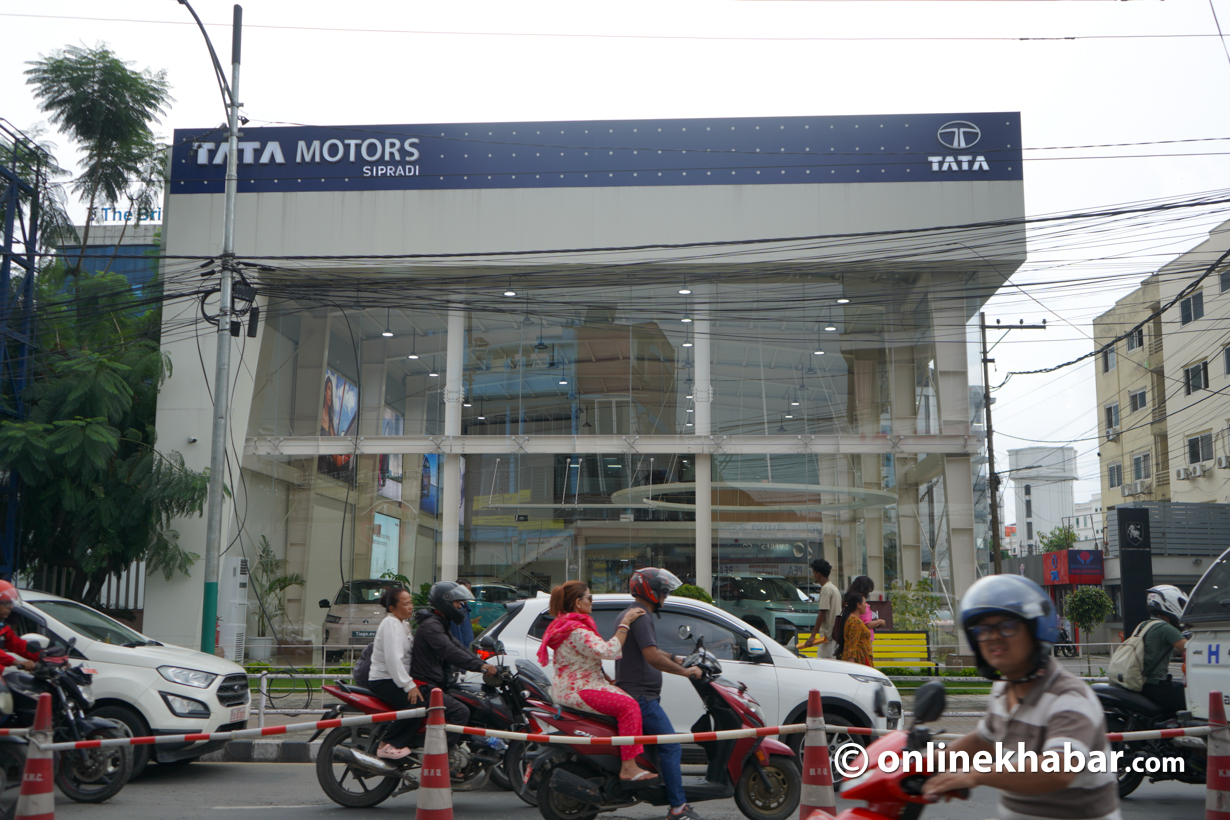
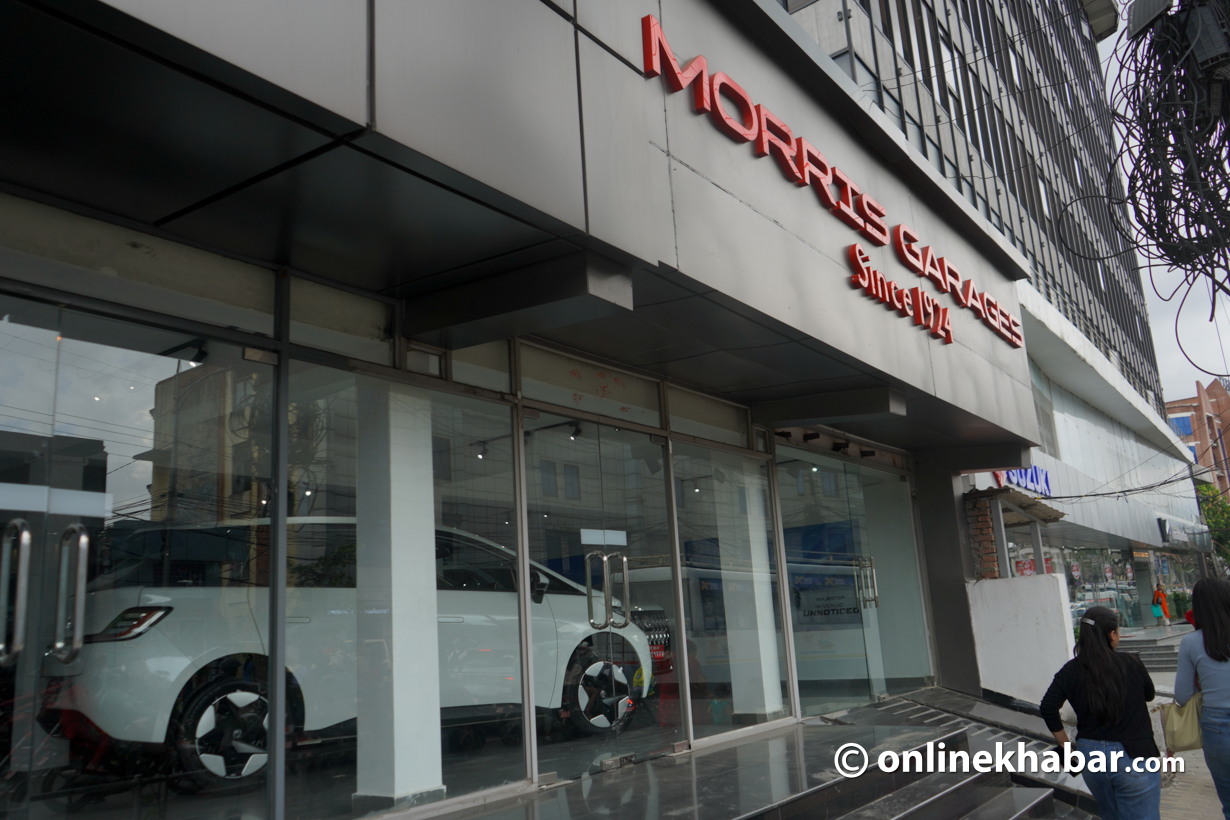
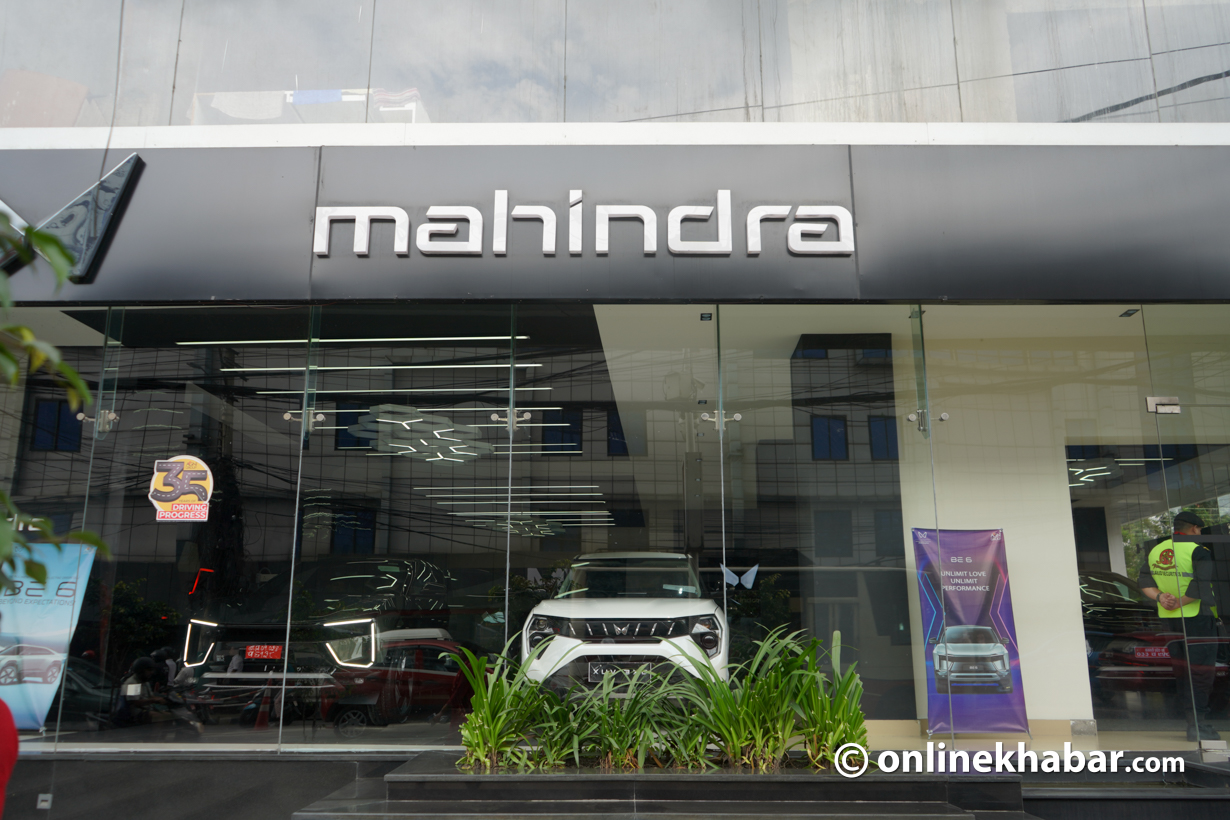
On Bhadra 23 and 24, 2082 (September 8-9, 2025), during the second day of the Jenja Movement protests, more than half a dozen key automobile showrooms in Thapathali, Kathmandu’s main auto hub, were vandalized and set ablaze. Showrooms of brands such as Tata Motors, CG Motors, Mahindra, Suzuki, and Hyundai were directly targeted.
According to reports released after the movement, the auto industry alone suffered nearly one billion rupees in damages. CG Motors reported damage amounting to approximately 400 million rupees due to the complete destruction of three of its showrooms. Sipradi Trading, the authorized dealer for Tata Motors, reported damages of about 200 million rupees. Suzuki, Hyundai, and Mahindra showrooms also suffered losses in the millions.
Several new vehicles stored in the Thapathali showrooms were destroyed by fire. The damage affected not only physical assets like vehicles and buildings but also deeply impacted the psychology of customers. The political and social turmoil had injected uncertainty into the market.
Market Recovering from the Ashes
Time, however, does not remain stagnant. Following the movement, the damaged showrooms began gradual reconstruction. Business operators resumed operations from temporary structures. Many provided services and sales through alternative service centers.
Despite facing 80% structural damage and complete destruction of eight vehicles, Sipradi reconstructed the Tata showroom in Thapathali and resumed operations in a new form within approximately 70 days. During the main showroom’s closure, the company maintained business through temporary sales centers.
The damaged showroom, affected by fire and vandalism, was rebuilt and reopened on Mangsir 1, 2082 (mid-November 2025).
Sipradi Trading Pvt. Ltd.’s Passenger Vehicle Division General Manager, Sawantjang Sijapat, confirmed the showroom’s reconstruction and full operational restart within 70 days after the Jenja Movement. The fire and vandalism had resulted in full loss of eight vehicles and 80% structural damage to the showroom.
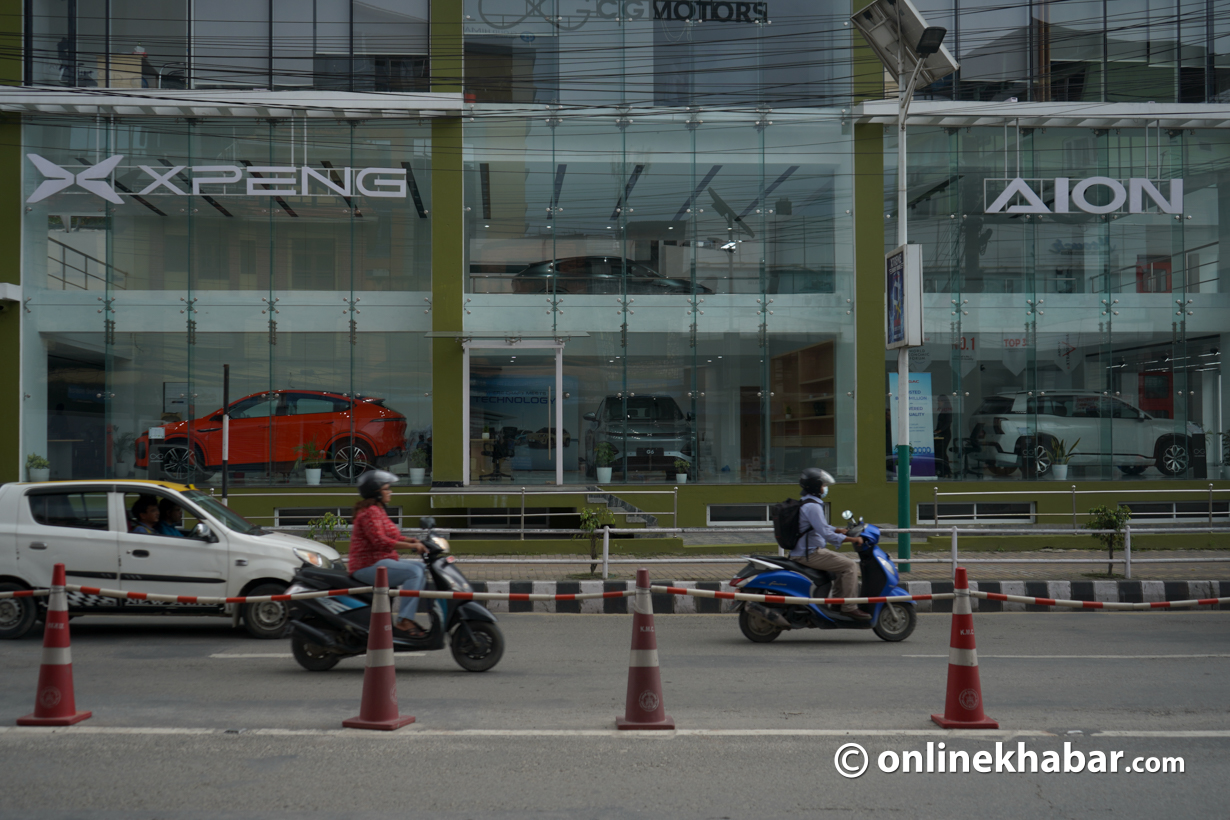
This demonstrated that though the auto market was once devastated, it does not perish permanently. Customer confidence gradually returned, companies introduced new models, and competition intensified. Notably, the Nepali market began to see new brands and models of electric vehicles introduced.
Within a year, from the Nima Mobility Expo to the NADA Auto Show, the auto market landscape transformed. The Nima Expo showcased 53 brands and 40 new models, while the NADA show featured over 200 stalls representing 53 vehicle brands.
Dealers noted growing customer interest in viewing and purchasing new vehicles. At the Bhrikuti Mandap event, numerous brands unveiled new models, offers, and financial plans.
The auto market was moving from “post-protest recovery” into a phase of “new competition”. However, a new challenge emerged a year later.
Flood Damage After One Year
Approximately one year after the Jenja Movement, on Bhadra 10, 2083 (September 26, 2026), the Bhotekoshi River in Rasuwa overflowed, delivering a severe blow to the auto sector.
This time, it was not fire but water that swept away vehicles. Initial reports indicate that more than 500 vehicles were washed away and destroyed in the Rasuwa-Gadhi customs yard.
The flood also damaged not just the vehicles, but a large number of containers and trucks transporting goods from China to Nepal. It is estimated that over 200 freight trucks were swept away by the floodwaters.
In other words, the auto sector that faced losses due to fire in Kathmandu’s sales hubs a year ago now suffered critical damage at a crucial point in its supply chain.
The impact extends beyond the immediate vehicle losses. The Rasuwa-Gadhi border is a significant gateway for importing vehicles, auto parts, and other goods from China. The flood severely damaged customs facilities, roads, bridges, and other infrastructure, further disrupting the automobile supply chain.
Showrooms Have Recovered; Supply Routes Are Still Struggling
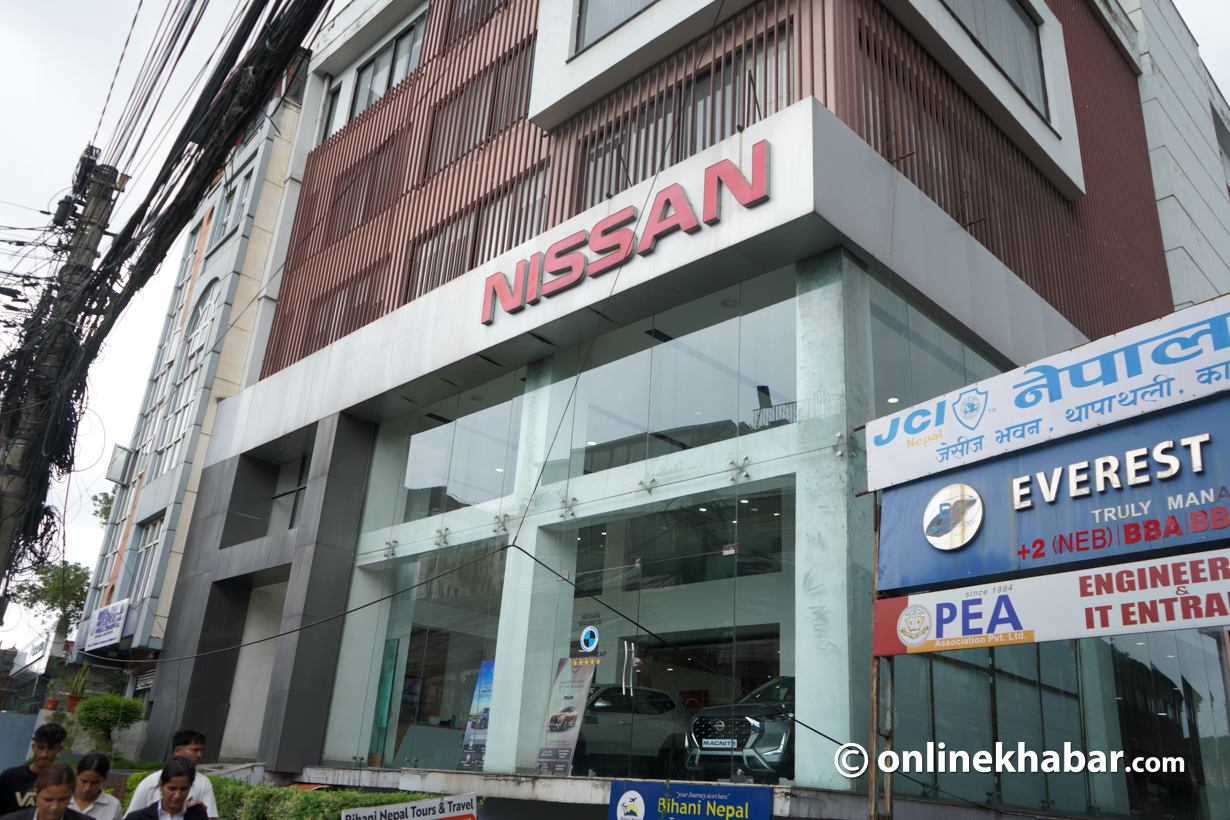
The irony of the auto business is that one year ago, customers were unable to visit showrooms due to fire damage. Over the course of a year, dealers rebuilt showrooms, imported vehicles, made offers, and customers returned.
Currently, the challenge lies along the supply routes. The Rasuwa-Gadhi floods have completely destroyed the customs infrastructure and damaged roads and bridges from Rasuwa to Galchi.
The government’s preliminary assessment estimates losses of over two trillion rupees across roads, hydropower, tourism, and customs sectors due to the flood.
This will directly impact the supply of vehicles, auto parts, tires, batteries, and other materials imported from China. Given the recent rise in electric vehicles and related parts coming from China to Nepal, the disruption in Rasuwa-Gadhi is not just a customs issue but also a critical problem affecting the automobile supply chain.
Market Was Transforming, But Challenges Persisted
Within one year, Nepal’s auto market has experienced destruction stemming from political unrest and natural disasters. Showrooms can be rebuilt; destroyed vehicles replaced. Yet reconstructing roads, bridges, and customs facilities takes time.
More importantly, when one crisis ends and another begins soon after, businesses cannot simply account for losses. Rather, strategies encompassing risk management, insurance, alternative import routes, secure parking yards, diversification of supply chains, and disaster preparedness must become integral to automobile industry planning.
The showrooms burning down in Thapathali initiated the auto sector’s revival one year ago. But today, hundreds of vehicles lost in Rasuwa-Gadhi raise a pressing question: how will Nepal’s recovering auto market overcome the supply chain destruction caused by floods?
Finding the answer will require collaboration between the government, customs authorities, infrastructure sectors, banks, insurers, and auto businesses.
Business and Morale Decline During Festival Season
Nepal’s automobile sector has recently suffered greatly due to natural disasters and social movements, says Ritu Singh Baidya, President of Nepal Automobile Importers & Manufacturers Association (NIMA). She notes that both the destructive Jenja Movement last year and recent devastating floods have seriously affected the physical infrastructure, imports, and the morale of traders in the auto sector.
Most automobiles are insured, so some relief is expected, she added. While a few vehicles were uninsured, the majority were covered.
“An entire container of our spare parts was washed away by the flood, and luckily it was insured. We are currently in the process of insurance assessment,” she explained. Insurance also made damage management easier during the fires in Thapathali showrooms earlier.
For auto traders, the main festival seasons like Dashain, Tihar, and Chhath are crucial for business. Unfortunately, the floods have deeply impacted not just trade but also human sensitivity and morale.
“Our office celebrations such as Teej parties and other festive events have been postponed. With human lives lost and many people missing, no one feels like celebrating,” Baidya said.
The Jenja Movement did not cause human injuries in the auto sector, but now some are unaccounted for due to the floods in Rasuwa-Gadhi.
The floods severely damaged key trade routes such as Rasuwa, Tatopani, and Korala, used for importing vehicles. “Our trade routes were already fragile; now they have been destroyed. We are worried about where to source items,” Baidya remarked.
She emphasized the need to consider climate risk in future urban development and commercial settlement planning, learning from past mistakes. She observed that floods repeatedly cause damage where proper planning for riverbank settlements and infrastructure is lacking.
Business Losses Overlooked, Says Industry Expert
Dipak Thapaliya, General Manager of Laxmi Intercontinental, expressed concern that society has not sensitively viewed the damages to the automobile sector caused by the Jenja Movement and the Rasuwa floods.
During the Jenja Movement, some Hyundai vehicles and showrooms were damaged. While the loss was comparatively low for other brands, it took six to seven months to recover from the physical damages through insurance.
Thapaliya pointed out that the societal attitude towards businesses is more troubling than physical damage. “There was a widespread perception that businessmen only seek profit, and that profit is wrong,” he said. “Before recovering from this psychological impact, the flood struck again.”
He criticized the casual expectation that insurance will cover all losses. “Insurance doesn’t reimburse 100% of costs. Some losses will always remain,” he said. “Business losses are ultimately the country’s losses too.”
Every year, some disaster damages businesses. Thapaliya emphasized that businessmen should also be seen as victims.
“There is no proper accounting recognizing businessmen themselves as victims, yet they have to provide relief as well,” he said. “We have to consider the sensitivity of the losses they bear and their restoration.”
While some form of compensation must be arranged through various channels, blaming businessmen when costs rise is unfair. “If garlic prices increase by 20 to 50 rupees, businessmen are accused of being thieves. But someone has to cover these losses,” he added.