
Tunnel Rescue Remains Challenging After 17 Days, Hope for Lives Still Alive
News Summary
Editorial review and preparation.
- After the Bhotekoshi flood, 916 workers are missing from operational hydropower projects in Rasuwa, Nuwakot, and Dhading, with 13 hydropower projects and five solar plants affected.
- According to an RDNA report, restoring energy and grid systems requires NPR 390.62 billion.
- Search and rescue efforts for those trapped in tunnels and underground powerhouses involve the Nepal Army, police, project teams, and foreign technicians working jointly.
- The Ministry of Energy plans to improve design guidelines and safety protocols following the Bhotekoshi incident.
September 11, Kathmandu – The devastating flood that occurred in the Bhotekoshi River on August 26 caused extensive damage to hydropower facilities in Rasuwa, Nuwakot, and Dhading districts. Beyond structural destruction, hundreds of workers remain missing and out of contact.
Data collected by the Independent Power Producers Association Nepal (IPAN) indicates that 916 workers at various hydropower projects have been unreachable since the flood. Even after 17 days, search and rescue operations for missing individuals, including those trapped inside tunnels, have not been completed.
A rapid damage and needs assessment (RDNA) report prepared by the National Planning Commission in coordination with the National Disaster Risk Reduction and Management Authority reveals significant losses in the energy sector.
The report states that 13 hydropower plants with a combined capacity of 759 MW and five solar plants totaling 24 MW have been affected. It estimates that NPR 390.62 billion is required to restore energy production and grid infrastructure.
While physical damages are extensive, the current critical concern is the search and rescue of those trapped in tunnels and underground powerhouses.
Access Issues Hampering Delivery of Equipment
Sunil Paudel, Joint Secretary at the Ministry of Energy, Water Resources, and Irrigation, said that the biggest challenge in the rescue effort has been reaching the tunnels and transporting necessary equipment to the sites.
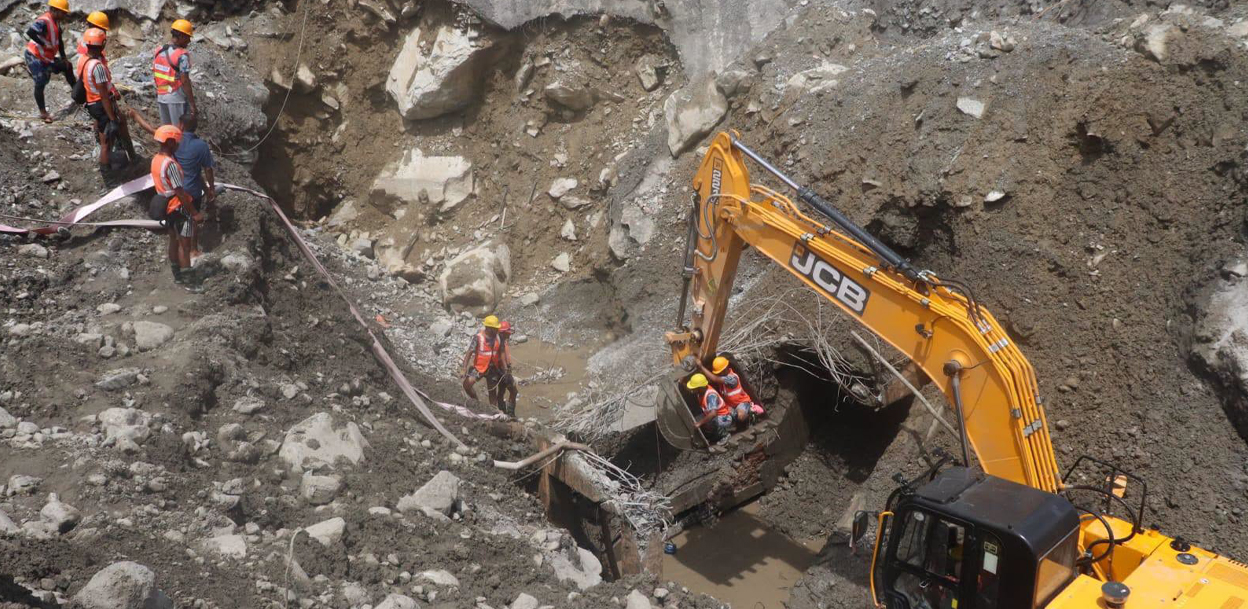
Damage to roads and access infrastructure caused by the floods has made it difficult to bring large and complex machinery to the locations. Limited helicopter capacity has also slowed rescue operations.
Paudel said, “With no roads and helicopters unable to deliver all equipment, the rescue faces significant challenges.” Currently, efforts are ongoing to transport required machinery to the project sites. The Nepal Army leads the rescue operations, with support from the Nepal Police, Armed Police Forces, project technicians, foreign experts, and volunteers.
Technical equipment issues have also caused delays. For example, work halted for about one and a half hours when an excavator’s tooth broke but was quickly resolved.
“Because these are complex machines, some parts must be imported while others can be sourced locally. We are coordinating and managing this,” he added.
Giriraj Adhikari, director of the Upper Trishuli-1 project—where the highest number of people remain out of contact—said that heavy machinery has yet to reach the site to aid rescue. A mini excavator was only delivered recently.
He said, “The rescue is extremely difficult. Roads are completely destroyed, bridges are missing, there is no internet, and the rescue tunnel area has no electricity. The rescue teams return to the Rasuwa district headquarters at Dhunche every day.”
Conditions Inside the Tunnels Pose the Greatest Challenges
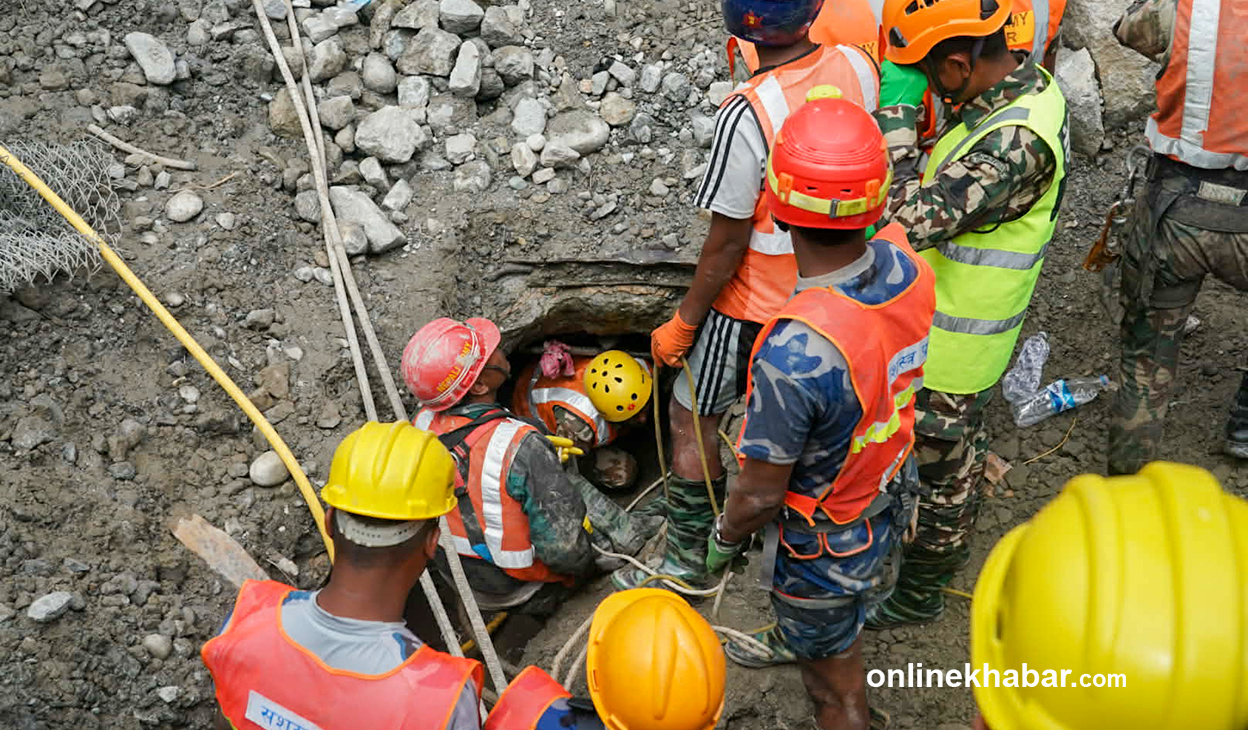
Geotechnical engineer Uday Raj Nyaupane explained that tunnel rescue cannot proceed with a single method. Conditions inside the tunnels—water, mud, rocks, wood, and other obstacles—require changing strategies repeatedly.
He shared that rescuers have had to modify plans multiple times while attempting to save two technicians trapped in the underground structure of Upper Trishuli-3 ‘A’.
“If one technical approach fails, another must be tried. Altering techniques and equipment usage is necessary whenever conditions shift,” Nyaupane said.
Having equipment alone is not sufficient; effectively combining the available technology with the actual conditions is equally critical.
The geological probing radar (GPR) technology used by foreign experts is only effective at limited depths and cannot locate structures or individuals buried more than 100 meters deep.
He noted, “Rather than lacking technology, a combination of appropriate tools, approaches, and mindset suited to the situation is crucial.”
During rescue at Upper Trishuli-3 ‘A,’ drilling had to reach 112 meters, requiring specialized equipment. A large-capacity helicopter’s availability would ease transporting heavy machinery, he added.
Current Locations of Search Operations
The Nepal Army reports ongoing search and rescue activities in different project tunnels. At the Rasuwagadhi Hydropower Project, a joint team including the Composite Quick Reaction Team and project representatives is searching the powerhouse, transformer room, and control points.
A 25-member Nepal Army team is engaged in tunnel searches at Langtang Hydro. At Chilime Hydro, a team with foreign technicians is removing debris inside the tunnel. Blasting to create access routes is underway, with about 35 meters still remaining to reach the tunnel.
Searches are also ongoing in a tunnel at Hakubenshee in Upper Trishuli-1 by the Nepal Army. A joint team is operational at the powerhouse and tunnel areas of Trishuli-3 ‘B’, with continued search efforts at Trishuli-3 ‘A’ as well.
These efforts demonstrate joint cooperation among government security forces, project authorities, and private and foreign technical experts, although challenging geography and uncertain tunnel conditions are slowing progress.

‘Trained Personnel and Practice are Essential for Rescue’
According to Uday Raj Nyaupane, Nepal’s incident underscores the need for specially trained, organized personnel for tunnel rescues. Alongside technical knowledge, mental preparedness to work in adverse conditions, teamwork, and focus are indispensable.
“Many people trained in rescue operations are necessary. Going into such places requires mental readiness,” he said. “Compassion, teamwork, and a united goal are critical.”
He warned that seeking equipment and manpower only after disasters will delay rescues. Therefore, Nepal must identify available tools, their capacities, and deployment methods in advance.
Kulman Ghising: Regular Flood Designs Cannot Address Such Catastrophes
Former Energy Minister and ex-Executive Director of the Nepal Electricity Authority, Kulman Ghising, described the Bhotekoshi flood as an extraordinary event far exceeding a typical flood.
He explained that underground powerhouses at hydropower projects are normally designed above river level, considering potential flood heights.
However, on this occasion, the floodwater reached 50 to 100 meters above the tunnel entrances in certain locations—far beyond expected levels.
“Designs meant for ordinary floods cannot accommodate this event,” Ghising said, “This was a flood exceeding normal parameters.”
He noted that water, mud, and debris entered underground structures through tunnel passages due to the unprecedented flood levels.

Are Those Trapped Inside the Tunnels Still Alive?
Ghising said, “If the tunnels are not completely filled with water and debris, some pockets may still have air and oxygen.” Therefore, concluding that trapped individuals are no longer alive before the search is finished would be premature.
“Even if the tunnel is half filled, there remains a chance for survival,” he said. However, the extent of water and mud, precise locations of people, and the amount of air remaining are key factors determining their fate.
Single Tunnel Access Closes Off Alternatives
The Bhotekoshi disaster also raised a serious question regarding underground hydropower infrastructures — how many emergency exits exist?
Ghising explained that many projects currently rely on a single main tunnel for powerhouse access. If that route becomes blocked, those inside cannot escape.
He emphasized that the design of powerhouses and access tunnels must include alternative emergency exits.
“There should be a small separate path or an alternate tunnel at upper sections for emergency exit,” he suggested.
Nyaupane also recommended identifying secure locations and alternative routes at project sites in advance. He noted that, at Upper Trishuli-3 ‘A’, although a large empty space existed above the powerhouse, reaching it was narrow, steep, and challenging.
This case underscores that project designs must consider not only machinery and production capacity but also how to ensure human safety and evacuation in extreme disaster scenarios from the outset.
Need to Revise Safety Designs of Hydropower Projects
Ghising stated that both existing and under-construction projects require risk reassessment following the Bhotekoshi event.
He highlighted the need to include factors like extreme seasonal events, glacial changes, and possible threat from high-altitude lakes due to climate change in risk evaluations.
Given multiple projects within the same river basin, assessment must cover comprehensive basin-wide risks rather than focusing on individual projects alone.
“Designs should prioritize not only the structures but also safe evacuation plans for workers in case of major disasters,” Ghising stressed.
He also proposed progressively transitioning powerhouses to remote operations allowing external monitoring and reducing the time workers spend underground.
However, since maintenance will still require personnel underground, emergency exits, oxygen supplies, communication systems, and safe zones must be integral parts of design.
Ministry Moves Toward Improvements
The Ministry of Energy has acknowledged the need to enhance rescue procedures and safety standards for hydropower projects after the Bhotekoshi disaster.
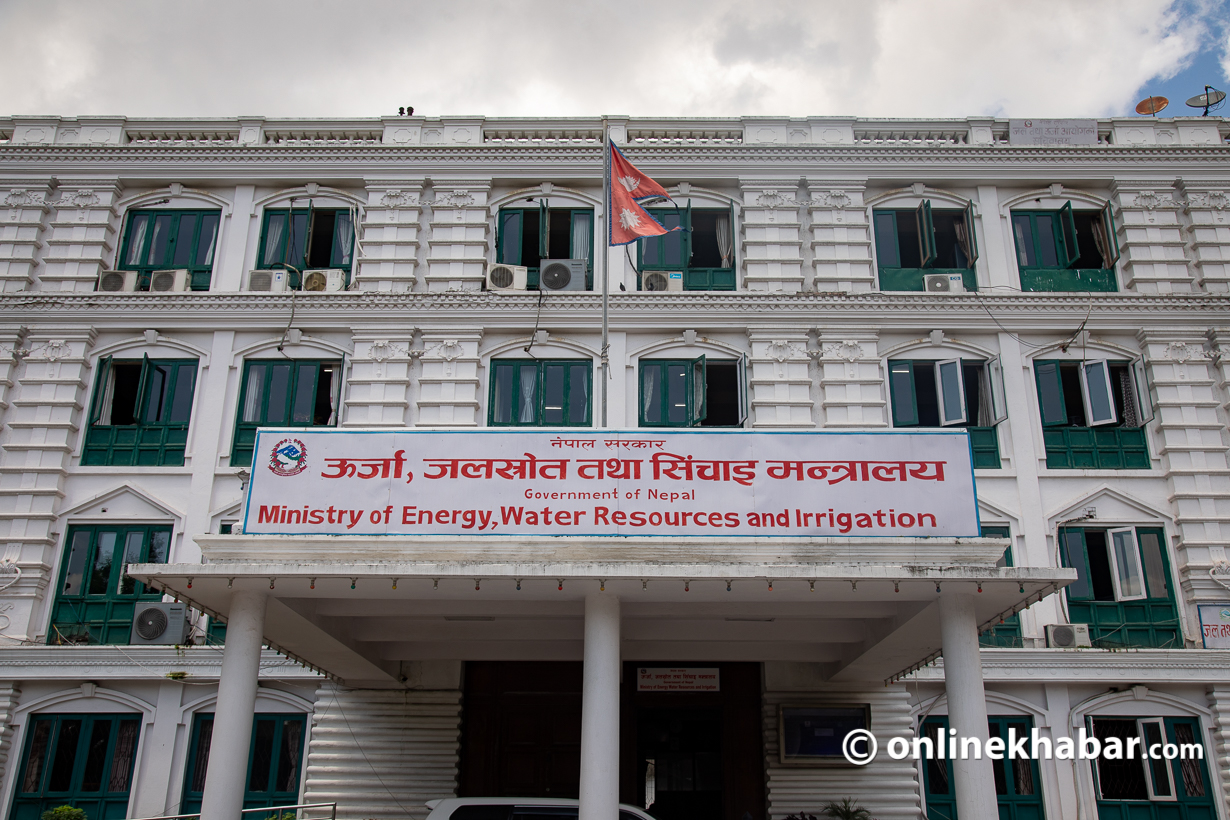
According to Joint Secretary Paudel, the ministry is preparing to revise design guidelines and safety protocols incorporating lessons learned from this tragedy.
“This is not reform but a correction,” he said.
He noted that government bodies, universities, and organizations like ICIMOD are collaborating to study the weaknesses of project designs and the shortcomings observed during the rescue, along with international researchers examining these aspects.
The purpose is not only to understand why and how the Bhotekoshi disaster occurred but also to develop scientific methods to mitigate future damages from similar events.
“Knowing what happened and how to prevent it next time allows for better preparedness,” Paudel stated.