
Foreign Hunters Actively Hunting 14 Naur and 10 Jharal at Dhorpatan Hunting Reserve
News Summary
- During the second hunting season from Falgun to Baisakh at Dhorpatan Hunting Reserve, foreign hunters are actively hunting naur, jharal, and bandel.
- This year, hunting permits have been granted for 14 naur, 10 jharal, and 13 bandel, awarded to foreign hunters through a competitive process.
- Since 2016, the Nepal Army has been responsible for reserve security, with hunters typically spending between 3 to 3.5 million Nepali rupees.
Chaitra 23, Baglung – The second hunting season is currently underway in Dhorpatan, Baglung, with active participation from foreign tourists.
Dhorpatan is Nepal’s only hunting reserve, where foreigners focus on hunting in the high mountain blocks. This year, 14 naur and 10 jharal hunting permits have been issued, according to ranger Sagar Subedi of the Dhorpatan Hunting Reserve.
During the second hunting season from Falgun to Baisakh, many hunters are busy pursuing game in Dhorpatan, while some foreign hunters are preparing to arrive.
Ranger Subedi added that permissions have also been granted to hunt 13 bandel this season. The reserve issues permits for hunting in different blocks based on approval from the Department of Wildlife.
American citizens arriving through Global Safari Pvt. Ltd. have already hunted a naur and a jharal, and other American and Danish hunters through Himalayan Safari Nepal are currently active in the reserve, Subedi said.
Foreign hunters obtain their permits through a competitive bidding process, paying revenue to hunt naur and jharal. With the season ongoing, reserve staff and the Nepal Army are actively present alongside hunters in the hunting blocks.
During the current season, a Danish citizen arranged through Himalayan Wildlife Outfitter has received permission to hunt one naur, one jharal, and one bandel in the Fagune block.
Similarly, American, Belgian, and French nationals through Open Nepal Wildlife Safari and Trek Pvt. Ltd. have obtained permits for hunting three naur, two jharal, and one bandel in the Sundah and Seng blocks.
Likewise, Russian, African, and French hunters preparing to arrive via Nepal Travel Expedition Pvt. Ltd. have permits to hunt three naur, three jharal, and three bandel in the Ghustung block.
According to the Department of National Parks and Wildlife Conservation, organized hunting takes place in two phases annually: the first between Ashoj and Mangsir, and the second between Falgun and Baisakh. Groups including foreign hunters must complete their hunting within a specified 15-day period in their assigned blocks.
Hunters residing within the forest area are only allowed to hunt during the designated timeframe after entering the reserve. Dhorpatan has become a popular destination among foreign tourists for adventurous travel and thrilling hunting experiences.
The Department determines hunting quotas and revenue rates through electronic auctions each season.
Individuals through Global Safaris Pvt. Ltd. have received permits to hunt four naur, two jharal, and four bandel in the Sundah and Dogadi blocks for American and Danish hunters.
American hunters via Himalayan Safaris Nepal Pvt. Ltd. were permitted two naur, one jharal, and two bandel, of which one naur and one jharal have already been hunted. Additionally, a Spanish citizen through Trek and Dealers Pvt. Ltd. has permission for one jharal, one naur, and one bandel, Subedi added.
The first hunting season of the current year raised approximately 30.3 million Nepalese rupees in revenue, with revenue collection ongoing as the second season continues.
Hunters began arriving in Nepal with their equipment and supplies from the second week of Falgun. Most foreign hunters reach the hunting blocks directly by helicopter.
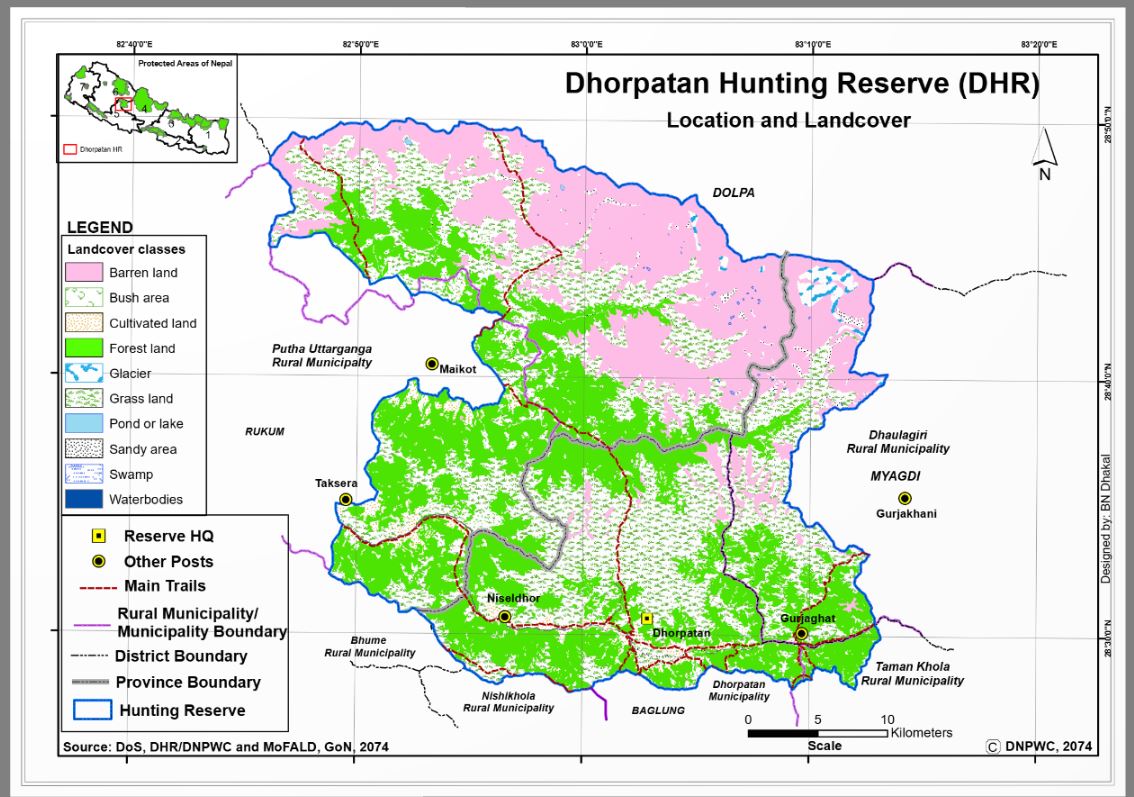
Established in 1987, the Dhorpatan Hunting Reserve spans the districts of Eastern Rukum, Baglung, and Myagdi, with its main office located in Dhorpatan Valley, Baglung.
During hunting expeditions, reserve staff work alongside foreign hunters, assisted by Nepalese guides. The department sets annual quotas for naur and jharal hunting.
The costs for hunting naur and jharal, block reservation, licenses, helicopter services, and accommodations amount to approximately 3 to 3.5 million Nepalese rupees per hunter.
Hunting opportunities are predominantly available to wealthy foreigners, with Nepalese citizens generally excluded from this privilege. Since 2016, the Nepal Army has been responsible for securing the reserve.
Foreign tourists often take photographs with naur after successful hunts in Dhorpatan. Photo: Dhorpatan Hunting Reserve