
Foreign Employment Numbers Remain Steady Despite War in Western Asia
News Summary
Presented with analysis.
- More than 62,000 youths have gone abroad for employment within one month of the new government formation.
- Despite the government’s suspension of labor permits in the Gulf region, overall foreign employment figures remain unchanged.
- Labor and migration expert Rameshwar Nepal notes that the government has not taken concrete measures to reduce foreign employment.
April 28, Kathmandu – Even after one month since the formation of the new government, there has been no significant decline in the number of youths going abroad for foreign employment.
According to recent data, 62,265 Nepalis have gone abroad for work during the period between March 24, 2026 and April 15, 2026, coinciding with the appointment of Prime Minister Balendra Shah of the Rastriya Swatantra Party (Raswapa).
Statistics from the Department of Foreign Employment show that among those who obtained labor permits, 55,272 were men and 6,993 were women. On average, approximately 60,000 to 65,000 Nepalis go abroad for work each month.
Due to the recent conflict in Western Asia, labor permits were suspended from March 1 to March 20, 2026, during which Nepali workers were unable to travel to 12 countries in the Gulf and Western Asia region.
Despite the government led by Balendra Shah facing various obstacles, there has been no decrease in the number of individuals going for foreign employment.
Even after completing one month in office, the number of foreign employment migrants remains unchanged. In fact, during this period, labor permits were halted for major destination countries.
Up to the month of Chaitra (mid-April) in the current fiscal year 2082/83 (2025/26), a total of 587,332 individuals have obtained labor permits for foreign employment, including 517,929 men and 69,403 women.
The department reports that in Falgun (February/March), 52,944 people and in Chaitra, 61,819 people received labor permits for overseas employment.
Despite the new government’s slogans of good governance and change, confidence among youths to remain and work in Nepal has yet to strengthen.
After the new government was formed, an average of 2,075 people per day have been heading abroad for foreign work. This daily average was 2,299 in the previous fiscal year 2081/82. This indicates that the urge or compulsion to pursue foreign employment remains persistent.
Although government ministers continue to promise swift results, foreign employment data poses a challenge to the administration.
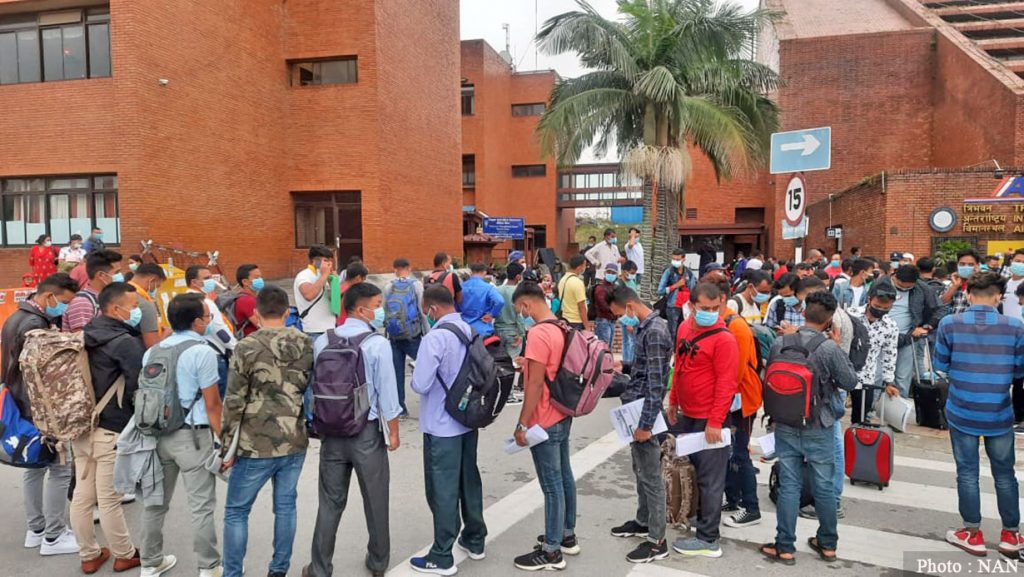
Labor and migration expert Rameshwar Nepal explains that although the government has undertaken some immediate initiatives in certain areas, it has failed to raise solid hopes for the most affected group – Nepali workers heading to the Gulf countries.
Specifically, expectations held by citizens before the election and the current ground realities show a significant gap. He points out that the government has not taken concrete steps to reduce foreign employment or bring workers back.
Although recent initiatives such as the Foreign Employment Board’s easy loan and “seed money” programs have generated some hope among youths, weak implementation has led to growing disappointment.
The current government is increasingly being criticized for focusing more on propaganda rather than implementing effective plans for migrant workers.
Although only 32 days have passed since the government’s formation, experts suggest that calling it a complete failure may be premature; however, early signs are not encouraging.
Excluding the impact of COVID-19, the stability or growth in foreign employment reflects a lack of confidence in the state, he adds.
If the government truly aims for good governance, it should prioritize creating domestic employment opportunities to reduce dependency on foreign employment, he recommends.
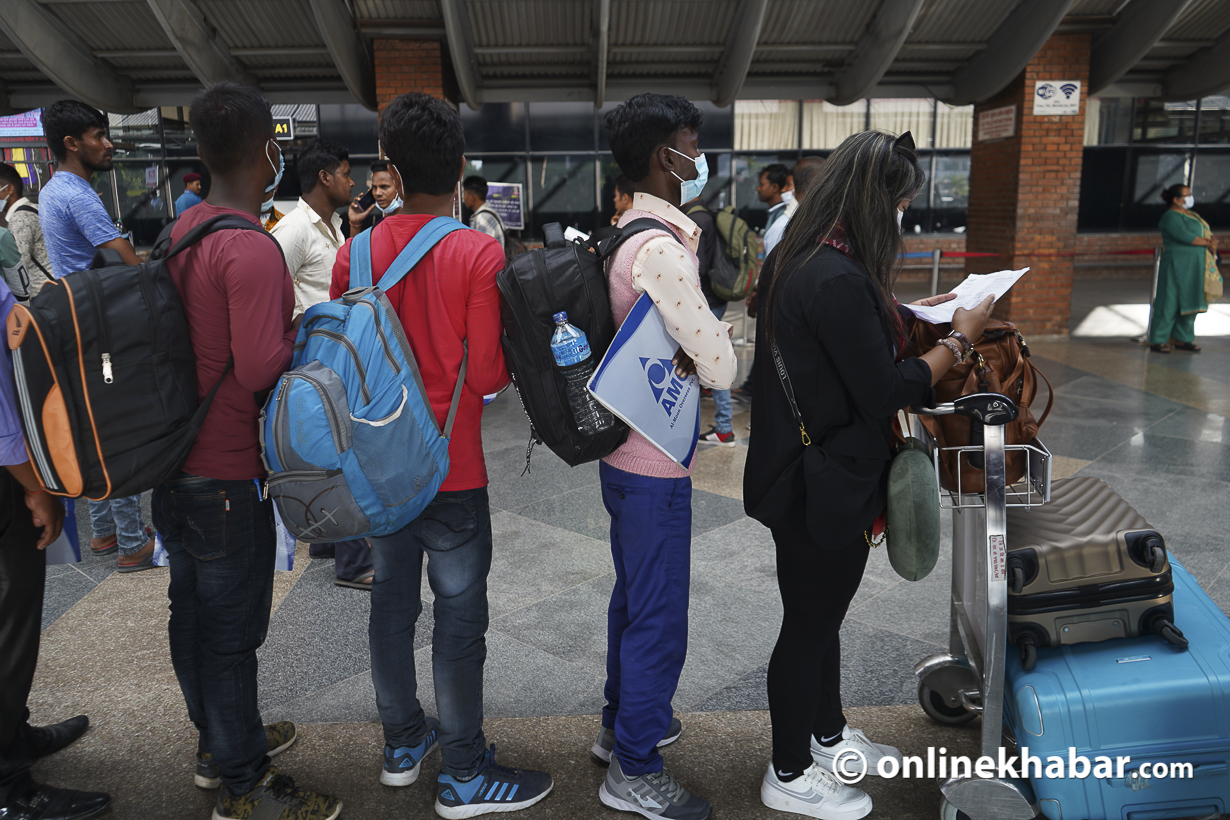
The government has stated that limited employment opportunities within the country are increasing dependence on foreign employment.
The Fourth Nepal Living Standards Survey indicates that the national unemployment rate stands at 12.6 percent. Over the past decade, the annual average growth rate of Nepali workers migrating abroad has been 28.6 percent.
While high foreign employment provides short-term relief to the economy through remittances, the government believes it also increases the risk of a domestic shortage of skilled and semi-skilled workers, leading to long-term human capital loss.
The Ministry of Finance’s economic report emphasizes the need to create employment opportunities domestically to reduce compelled foreign employment.