
When Will Workers’ Rights and Safety Be Truly Honored?
April 30, Kathmandu – April 30, also known as May 1, is celebrated worldwide as the day when workers raise their voices for their rights.
The slogan, “Eight hours of work, eight hours of recreation, and eight hours of rest,” originated in Chicago, USA, in 1886. Yet, even by 2026 (2083 BS), for many Nepalis, this slogan remains a distant dream.
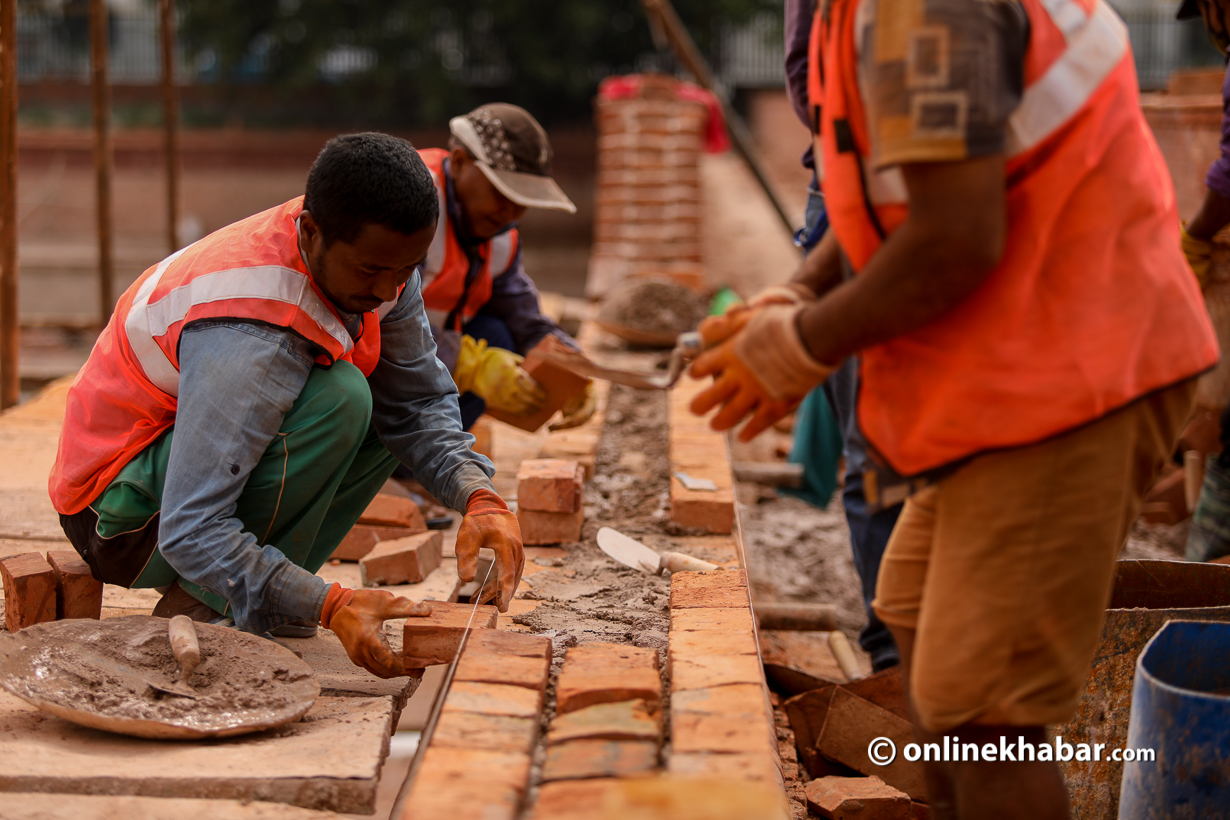
As the 137th International Workers’ Day is commemorated globally today, Nepali workers—from bustling city intersections in Kathmandu to the deserts of the Gulf—share a common question: “When will the government take our concerns seriously?”
Nepal’s Constitution and the Labor Act of 2017 (2074 BS) articulate workers’ rights commendably. However, the actual implementation of these rights remains considerably weak.
Labor and migration expert Dr. Jeevan Baniya notes that while policy reforms have occurred in Nepal, their benefits have yet to reach the actual workers.
“There have been many policy changes; the ILO standards and our Labor Act address workers’ rights, but practical challenges persist,” he explains. “Although the minimum wage is set at NPR 19,500, many informal sector workers do not receive this amount. Workers in agriculture and small establishments, particularly women, face 5 to 10 percent greater risks compared to others.”
Baniya also highlights that Nepal’s labor administration remains centralized. For him, a single labor office in Bagmati Province overseeing multiple districts and establishments raises questions about effective monitoring.
The structure of labor inspectors is weak. Self-conducted labor audits by establishments lack credibility. There is a prevalent tendency for workplaces with 100 workers to report details for only 30 employees, excluding the rest from social security benefits.
Globally, approximately 2.9 million people lose their lives in work-related incidents each year. Around 402 million workers suffer from occupational accidents, diseases, and health problems.
According to Nepal’s National Occupational Safety and Health Profile 2021 (2078 BS), from 2010 to 2019, there were 394 occupational accidents in the country, resulting in 46 deaths.
The Department of Labor and Occupational Safety’s 2023 (2080 BS) annual report recorded 95 accidents between 2021 and 2023. The Social Security Fund provided compensations for 2,883 accident and disability cases in 2023 alone.
Labor expert Rameshwar Nepal believes that the very process of policy-making determines workers’ future, and he describes Nepal’s policy formulation as “flawed.”
“Policies should be created based on genuine needs and consultations with stakeholders, but here they are drafted inside Singha Durbar, away from the people,” Nepal explains.
Nepal faces a paradox of unemployment. On one hand, ministers responsible for infrastructure complain about contractors’ inability to find laborers, while on the other, thousands of young people leave daily through Tribhuvan International Airport seeking overseas employment.
“In 2018 (2075 BS), about 1,200 people went abroad daily for foreign employment; now that number has surpassed 2,400. The government’s declaration to end foreign employment within five years has proven to be merely on paper,” says Nepal.
He views the number of foreign employment departures as a true indicator of unemployment in Nepal. “Until self-employment is promoted and the registration process—which currently involves lengthy waiting and bureaucratic hurdles—is simplified, this situation will not improve,” Nepal asserts.
Vinod Shrestha, President of the Nepal Trade Union Federation (GEFONT), paints a grim picture of Nepal’s labor market. “Currently, fathers go out seeking labor work, sons go looking for jobs, but by evening, neither the father finds work nor the son secures a job,” he says.
This paradox stems from a lack of dignified employment. According to Shrestha, because the minimum wage is insufficient to support families, young people have no incentive to stay—they just want to “keep breathing.”
Shrestha also points to the mindset of industrialists. “Employers consider money spent on labor as expenditure rather than investment; they fear investing in people more than in machinery or land,” he notes.
He mentions that the Ministry of Labor is often viewed by political parties and the government as a “neglected” ministry. “Labor Ministry is usually the last choice; while society advances towards robotics, fintech, and AI, our labor policies remain stuck in the era of heavy loads and manual tools,” he says.
Traditional approaches no longer suffice to solve workers’ problems. The Labor Day has increasingly become merely a formal calendar event, and Shrestha emphasizes the importance of focusing on employment within the country.
The core principle that “Respect for labor is the foundation of national development” has been embraced, and the government asserts its commitment to ensure fair wages, dignified workplaces, and labor rights for workers across all sectors.
Labor, Employment, and Social Security Minister Ramjee Yadav highlights that workers from all trades and classes contribute to nation-building. He stresses the need to foster a culture where everyone values, respects, and appreciates each other’s contributions.
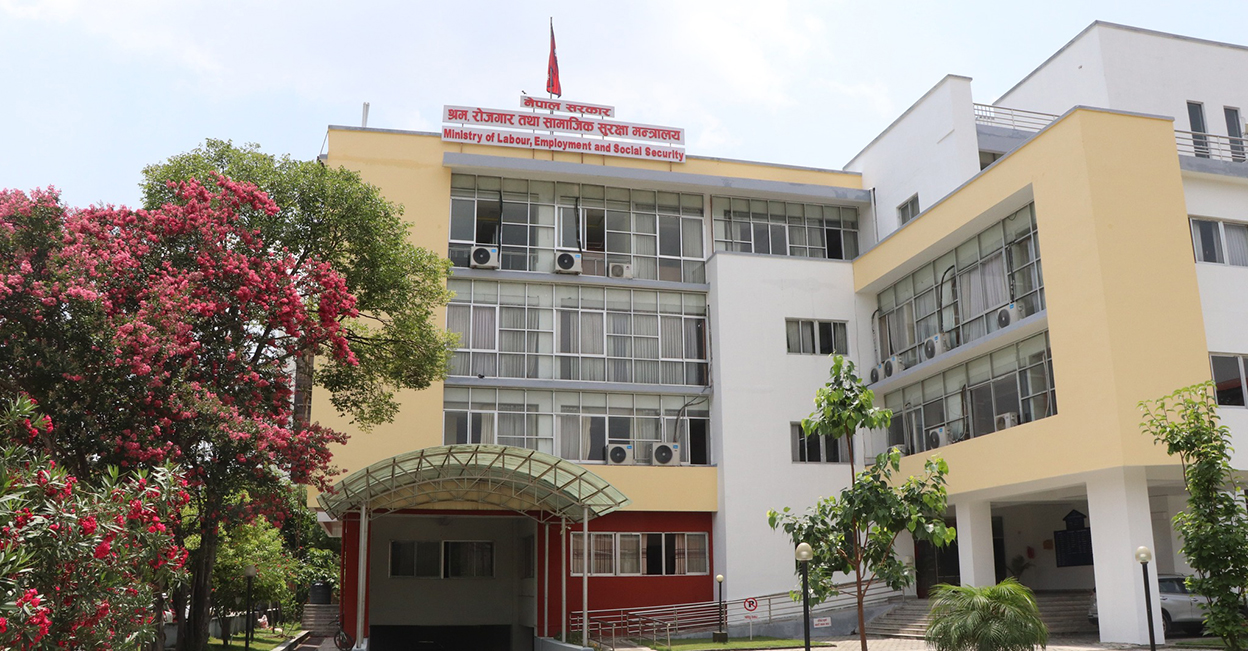
Labor expert Nepal argues that labor administration must be decentralized to the ward level, empowering local governments legally to register workers and resolve wage disputes.
He also stresses that the state should implement a “cost-sharing” concept to enroll informal sector and self-employed workers into social security schemes.
Dr. Baniya suggests providing tax exemptions and concessionary loans in the initial years for new startups instead of burdening them immediately with social security costs.
He further urges coordination with the private sector to teach the necessary skills required in the market and to ensure that workers operate in dignified environments.
Experts believe that the country cannot rely solely on remittances sent by workers abroad. Currently, 80 percent of remittances are spent on food, education, and healthcare, which indicates the failure of social security and public institutions in Nepal.
Therefore, experts conclude that respect for labor must go beyond speeches on May 1 and be evident every day throughout the year, in workers’ homes and workplaces alike.