
Why Are Bulldozers Being Used on Houses With Ownership Certificates?
News Summary
Editorial review completed.
- Following the government’s deployment of bulldozers in areas such as Thapathali, Manohara, and Shantinagar in Kathmandu, homeowners have been attaching photocopies of their ownership certificates to their homes.
- According to the report published by the Rawal Commission, 1,800 ropani of government land in Kathmandu has been encroached upon, with some plots having been reverted back to government ownership.
- The Chief District Officer of Kathmandu stated that a decision team, including representatives from Survey, Land Revenue, Urban Development, and the Metropolitan Office, has been formed to remove unauthorized settlements and take appropriate action.
April 20, Kathmandu – After the government started operating bulldozers, homeowners in informal settlements in Thapathali, Manohara, Shantinagar (Gairigaun), Banshighat, Shankhamul, Balkhu, Anamnagar, Balaju, and other areas have been hurriedly pasting photocopies of their ownership certificates (lalpurja) onto their structures.
However, these pasted copies of ownership certificates have not saved all homes from demolition. On Saturday, bulldozers operated on eight houses with ownership certificates along the Vishnumati riverbank.
On Sunday, bulldozers were also used on an eight-story building in Anamnagar, where ownership certificates had been displayed. The building near Rudramati Bridge had posted the Supreme Court order, approved building plans, and land tax receipts.
Why was the bulldozer operated on that building? An official on site said, ‘Some parts of the eight-story building were designated as encroached land by the Rawal Commission, so those parts were demolished.’
The eight-story building that went viral on social media is registered to Swechha Rai. According to Swechha’s father, Indra Rai, the land was purchased from Kanchhinani Adhikari.
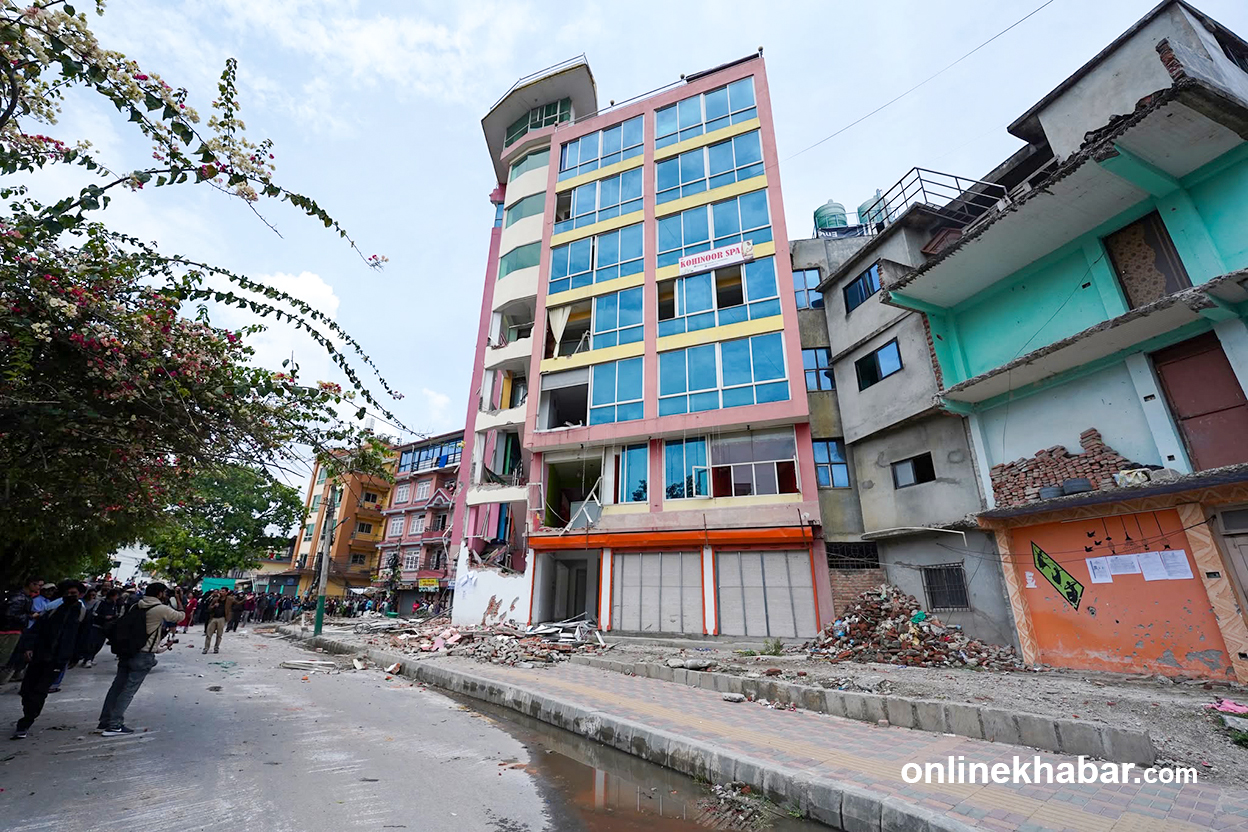
The Rawal Commission reported that the plot numbered 60 was encroached upon during the tenure of Kanchhinani Adhikari. According to the commission’s findings, Kanchhinani was involved in illegal occupation of public (ailani) land.
Swechha Rai accepted that only six floors of the eight-story building had approved building plans. Dilli Raj Bhandari, the Chief Survey Officer at the Survey Office in Dillibazar, said some ownership certificates may have been reduced based on recent decisions.
He further explained, ‘It is difficult to say exactly what has happened without seeing the plot number, but even with ownership certificates, the Rawal Commission’s report may have led to some deductions. It is also necessary to examine under which decision the registration was made.’
What is the Rawal Commission? Let’s discuss. Formed in mid-January 1993 under the chairmanship of former secretary Ram Bahadur Rawal, the High-Level Commission for Research and Protection of Government and Public Land is popularly known as the ‘Rawal Commission.’
Following the political change in 1990, the first elected government led by Girija Prasad Koirala assigned the Rawal Commission the responsibility of investigating encroachment on government and public lands.
Although the commission took two years to prepare its report, the government never officially released it. Investigative journalist Akash Kshetri obtained the report using the Right to Information Act, revealing that only in Kathmandu, 1,800 ropani of land has been encroached.
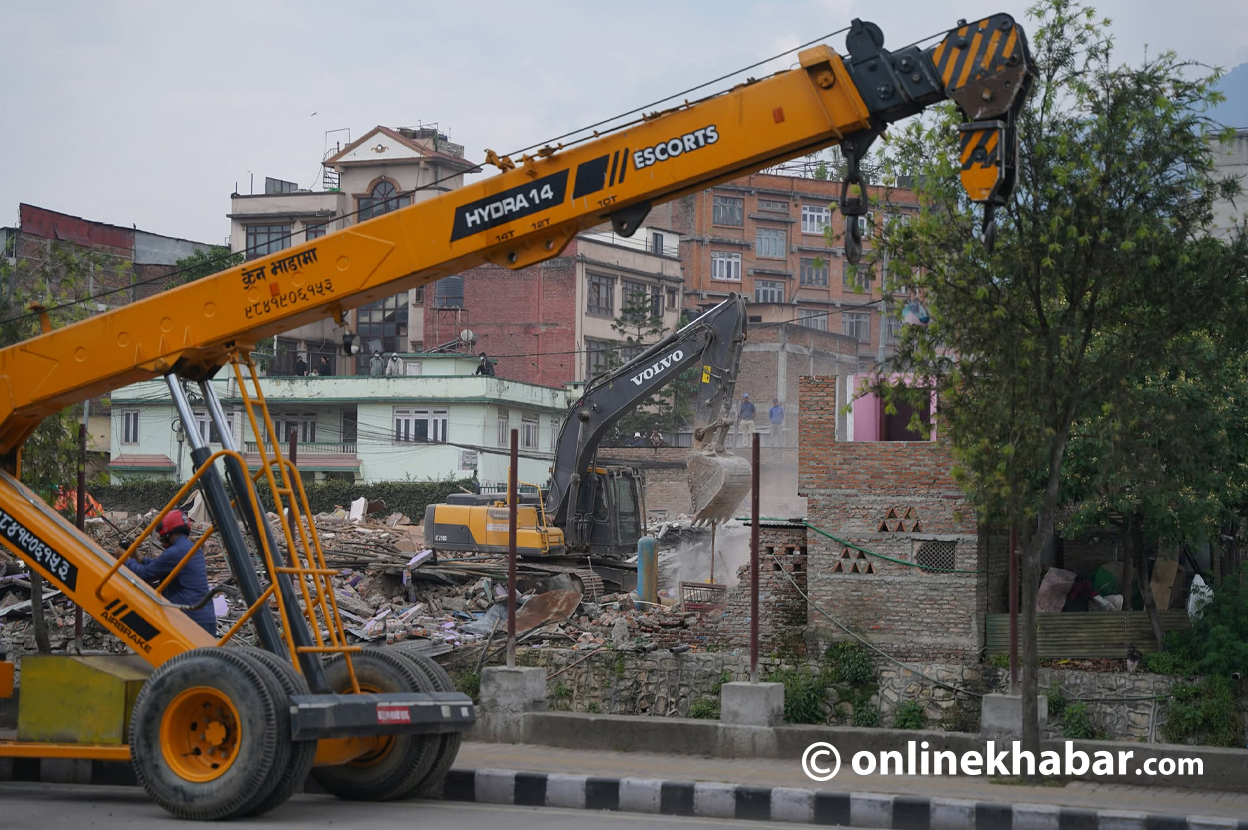
Some land plots with ownership certificates where taxes were paid have been invalidated by the commission, said an official from the Ministry of Land Management. Some of these lands have been re-designated as government property.
There are also cases where landowners purchased small plots of one or two annas but ended up encroaching on adjacent government and public lands. Three decades ago, the Rawal Commission declared that 5,978 individuals had encroached upon 1,347 ropani of government land along riverbanks in Kathmandu.
Another area targeted for bulldozing is Khadi Settlement in Samakhushi, where some homeowners have also attached ownership certificates. One individual posted a certificate for 122 square meters (three annas, three paisa, one dam) of land along the Samakhushi river.
However, a separate study indicated that the house, which includes two sheds, would require at least seven annas of land to be legally constructed. An official said, ‘At first glance, the structure clearly requires at least seven annas of land. It’s evident the structure was built by encroaching on the river.’
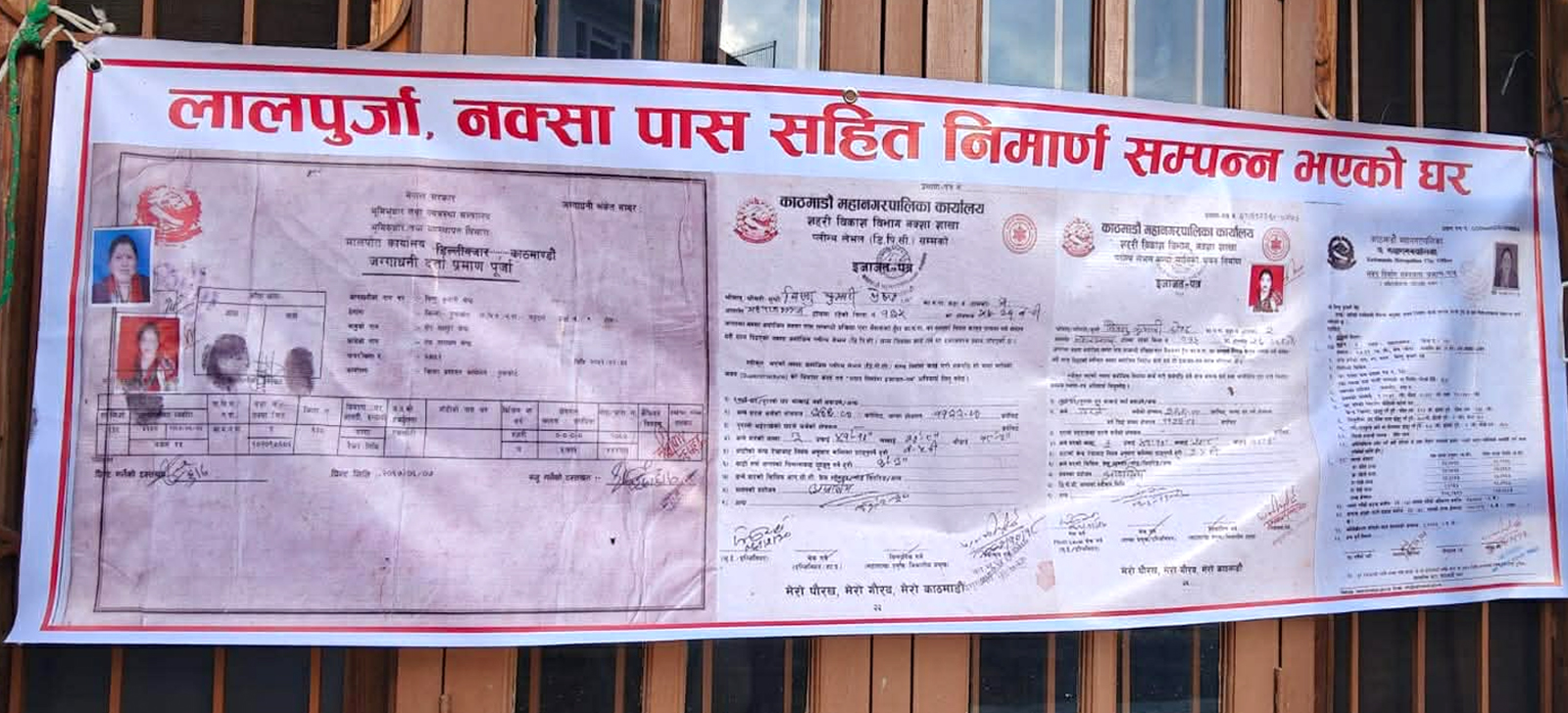
Nearby, a yellow-colored house has pasted colorful prints of ownership certificates and approved building plans. Although the building is five stories, only a three-story plan was approved.
Dayanand Joshi, information officer at the Survey Department, stated that even if ownership certificates exist, structures that do not have certificates for the land area they occupy will be subject to demolition.
Some homeowners along the Vishnumati riverbank claimed they have been paying annual land taxes even for plots on roads and river areas. Land Revenue officers have suggested subtracting those disputed plots from property records. An official said, ‘If the taxpayer does not take actions to rectify the records and continues paying land taxes, the government tends to retain those revenues.’
Chief District Officer of Kathmandu, Ishwar Raj Paudel, explained that as owners began presenting ownership certificates while encroachment removal was underway, a separate team was formed to survey and take necessary decisions.
‘The team includes representatives from Survey, Land Revenue, Urban Development, and the Metropolitan Office, as well as experts capable of interpreting court rulings,’ Paudel said. ‘The team has been instructed to make decisions and act promptly.’
A spokesperson for Kathmandu Metropolitan Office clarified that despite possessing ownership certificates, structures that violate regulations are considered illegal. He stated, ‘If a structure violates standards, the ownership certificate does not provide legal protection.’