
Why Did Madhesh Chief Minister Withdraw from Calling Assembly to Seek Vote of Confidence?
News Summary
Reviewed from an editorial perspective.
- Madhesh Chief Minister Yadav withdrew from seeking a vote of confidence in the provincial assembly meeting but is preparing to take it on 22 May (Jestha 8).
- The Janamat Party protested the withdrawal of the confidence vote proposal and questioned the Speaker’s role.
- The unification of JSP Nepal and LSP has made JSP Nepal the largest party in the Madhesh Provincial Assembly, causing dissatisfaction within the government.
May 15, Janakpurdham: The Madhesh Provincial Assembly was scheduled to convene at 11 a.m. on Friday to allow Chief Minister Krishna Prasad Yadav to seek a vote of confidence.
Following the Janamat Party’s withdrawal of support on April 4 (Baisakh 21), the provincial head had called the first session of the seventh assembly based on the government’s recommendation. However, ambiguity arose when the assembly was convened at 11 a.m., as Chief Minister Yadav withdrew from seeking the confidence vote.
Though the assembly convened for the first session of the seventh term at 3 p.m., the Chief Minister did not proceed with the confidence vote.
The main reason for this was the risk of floor crossing by dissident lawmakers even within his own party, the Nepali Congress. According to a Congress leader, seven provincial lawmakers aligned with Gagan Thapa and Dr. Shekhar Koirala factions were expected to defect, leading Chief Minister Yadav to decide against taking the confidence vote at this time.
Another reason was the evident tension within the ruling coalition. The coalition partner, Janata Samajwadi Party (JSP) Nepal, had not decided to support the confidence vote in its parliamentary party meeting. Hence, Yadav withdrew the confidence proposal during the Procedural Committee meeting.
Congress’s chief whip Kumar Kant Jha has stated preparations are underway for a confidence vote on May 22 (Jestha 8). Meanwhile, the Janamat Party has objected, accusing the assembly of being convened arbitrarily and the proposal of confidence vote being withdrawn abruptly.
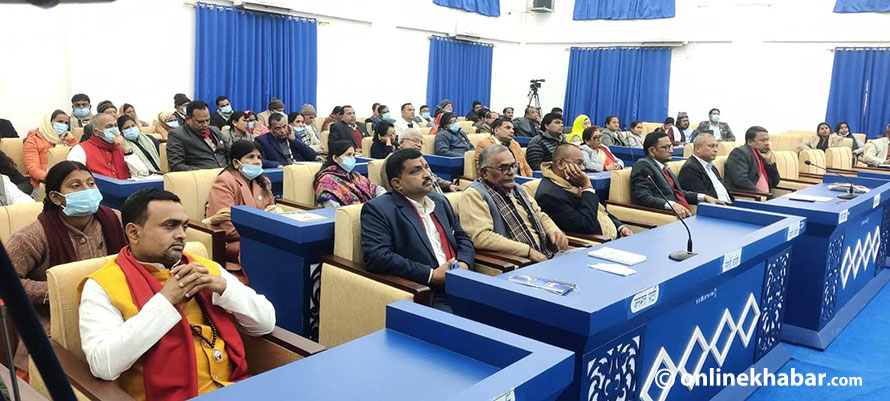
Janamat Party lawmaker Sanjay Kumar Yadav accused the assembly leadership of changing the agenda against rules in a ‘hit-and-run’ manner. He also questioned the Speaker’s role, saying, “We were summoned at 11 a.m., but only at noon in the Procedural Committee meeting did we learn that the Chief Minister had withdrawn the confidence vote proposal. While there is a right to withdraw the proposal, such arbitrary withdrawal was evident today.”
There is mounting dissatisfaction within the government coalition over its performance, which was evident during the assembly session. Coalition partners have voiced discontent over schemes allegedly being distributed through letterbook sales via consumer committees.
Provincial assembly member Bechi Lungeli from the Nepal Communist Party (NCP) also alleged that scheme letterbooks are sold openly. She warned, “If this continues, the government might officially run offices to sell schemes through letter inflation.”
Since elections, JSP Nepal has been working to ally with Madhesh-centric parties intending to form a government under its leadership. This is why Janamat Party left the government. The day after Janamat withdrew support, JSP Nepal was also preparing to take a confidence vote but was instructed by its leadership not to leave the government immediately, causing the party to hold back. JSP Nepal is waiting for a favorable moment. There are observable divisions within JSP regarding the government.
The merger with LSP Nepal has made JSP Nepal the largest party in the provincial assembly, increasing demands that it should lead the government. The unification was legally formalized on Wednesday.
Although LSP has legally merged into JSP, joint meetings have yet to be conducted. A JSP Nepal legislator commented, “We should have meetings to decide on the government and move unanimously on the confidence vote, but despite legal unity, meetings haven’t happened, so no decisions have been made.”
Consequently, during the first session of the seventh assembly, representatives of JSP Nepal and LSP separately extended greetings. Former Chief Minister Lal Babu Raut spoke on behalf of JSP Nepal, while Ramita Pradhan delivered a speech from LSP.
Assembly Dynamics
In the 107-member Madhesh Provincial Assembly, JSP Nepal has become the largest party with 25 members—17 from JSP and 8 from LSP.
Previously, the Nepal Communist Party (UML) was the largest with 24 members, followed by Congress with 22, NCP with 15, Janamat with 12, and one member each from Rastriya Prajatantra Party and Federal Socialist Party.
On May 11 (Baisakh 27), coalition partners Congress, JSP Nepal, NCP, and LSP agreed to continue the current government, and accordingly, Chief Minister Yadav was expected to seek a confidence vote soon.
However, by Friday, the situation appeared unstable, which Chief Minister Yadav evidently recognized. Nonetheless, no party in the ruling coalition has decided to withdraw support or pursue an alternative government at this time.
JSP Nepal leader and former Chief Minister Lal Babu Raut stated, “JSP Nepal will continue to support the current government.” He added that Yadav was uncomfortable today, hence the decision to take the confidence vote at a later date.
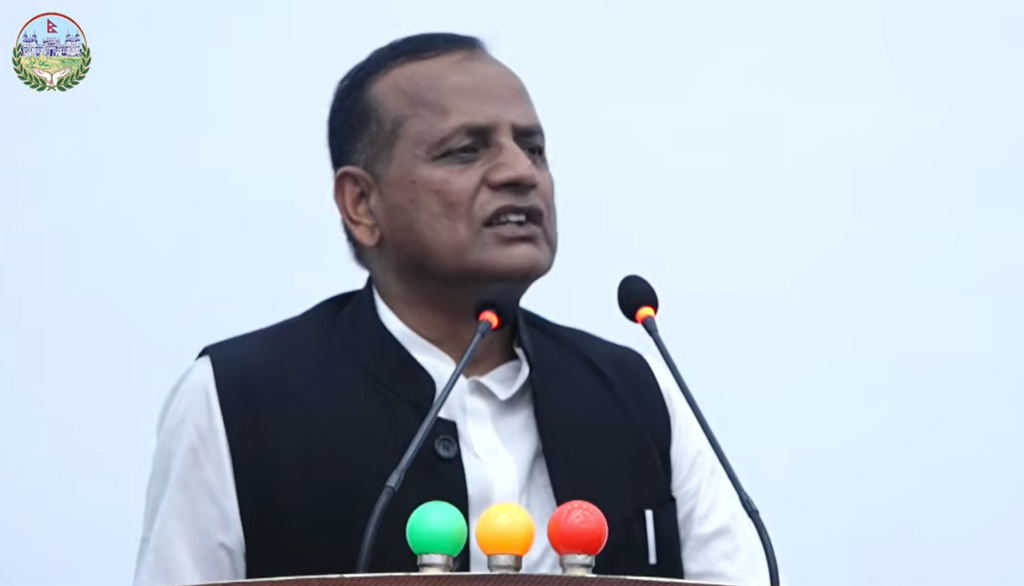
It is presumed that Chief Minister Yadav postponed the confidence vote awaiting instructions from the party central committee. An NCP lawmaker indicated that national-level talks among Congress, UML, and NCP aim to coordinate provincial alignments across all seven provinces.
While Madhesh has a distinct political configuration, governments in other provinces remain under Congress-UML coalitions. Current plans are underway to incorporate NCP into these governments, restructuring them accordingly, sources said.