
Eighty Lives Lost Annually in Police Custody and Prisons
Summary
Editorial review completed.
- In Khurkot, Sindhuli, Shrikrishna Bik committed suicide by hanging himself with his shirt while in police custody, revealing negligence in police duty.
- Seven deaths in police custody have been recorded across different provinces in Nepal during the current fiscal year, a rise compared to previous years.
- Psychiatrists attribute increased suicide risks among detainees to lack of mental health services and inadequate physical infrastructure in custody facilities.
May 18, Kathmandu – On April 20, Shrikrishna Bik was found dead in custody at the Khurkot Police Station in Sindhuli. He was discovered hanging by a noose made from his own shirt in the detention toilet.
Shrikrishna was declared dead by doctors after being taken to the district hospital. He had been under police investigation for an alleged rape case involving a 16-year-old girl, to whom he was reportedly married by choice. His death occurred four days following his arrest.
His death inside the police custody attracted national attention. A ruling party member of parliament visited the site and raised his voice for justice on behalf of Shrikrishna. Subsequently, the Chief of Police, Inspector General Dan Bahadur Karki, formed a five-member investigation committee led by DIG Dinesh Acharya.
Due to suspicions raised by the family regarding the mysterious circumstances of Shrikrishna’s death in custody, the body was sent for post-mortem examination at Tribhuvan University Teaching Hospital in Maharajgunj. The post-mortem report and investigation committee findings have been submitted. Police sources confirmed the cause of death as hanging.
According to Nepal Police central spokesperson DIG Avin Narayan Kafle, the committee’s report has been forwarded to the Ministry of Home Affairs. The report recommends disciplinary action against Inspector Basant Bhujel, the in-charge of Khurkot, and police constable Arjun Singh, who was on duty at the detention. Additionally, ten other police personnel posted at Khurkot have been cautioned and warned.
Experts have identified police negligence in these custodial suicides. Those in custody should be safer than outside due to continuous 24-hour supervision, which normally eliminates external threats. However, such deaths reveal shortcomings in monitoring.
Spokesperson Kafle admitted shortcomings in duty whenever a detainee dies or commits suicide in custody. “It is the police responsibility to prevent suicides in custody. Sometimes, duty personnel show lapses, which we are working to correct,” he stated.
At the time of the Khurkot incident, Shrikrishna was the only detainee, and the duty was assigned to a single constable, Arjun Singh. The police acknowledge that despite this, the suicide is a tragic event.
A member of the investigation panel noted, “Prisoners should not be allowed to lock the toilet door when alone in custody. There was no valid reason for door locking in this case.”
Due to such failures in custody duty, disciplinary recommendations have been made against the responsible personnel.
National Independent Party (RASWAPA) MP Rima Bishwakarma, who has protested over Shrikrishna’s death, stated that deaths in custody are not always suicides.
Speaking in parliament on May 12, MP Bishwakarma said, “It is nothing new to label Shrikrishna Bik’s death as suicide, but many deaths in custody should not be simply termed suicides.”
Rising Deaths Signal Concerning Trend
Shrikrishna’s case is not isolated. According to the Nepal Police headquarters data, seven people have died in police custody during the current fiscal year 2082/83 (Nepali calendar).
The deaths occurred in Koshi Province (1), Bagmati Province (2), Lumbini Province (3), and Karnali Province (1). With two months left in the fiscal year, numbers could rise further.
By comparison, one death was reported in custody in fiscal year 2081/82 and one in 2080/81. Five deaths were recorded in 2079/80 across different provinces.
The highest number in the last five years was 10 deaths in 2078/79 in various provinces.
These statistics raise questions about both police custody duty and the physical condition of custody facilities. Although 24-hour CCTV is installed, many deaths occur by hanging inside toilet pipes, indicating structural issues.
Psychiatrists explain that detainees often adopt criminal-like behavior and experience mental stress under detention, increasing suicide risks.
“People become stressed upon arriving in custody; facing an uncertain future can deteriorate mental health, leading to such tragic incidents,” a psychiatrist said.
Former Deputy Inspector General of Police Pitambar Adhikari stressed that physical health must be addressed, but mental health has often been neglected.
While police check for physical injuries post-arrest, evaluation of detainees’ mental conditions is less emphasized, Adhikari noted.
He recommended psychosocial assessment of detainees akin to psychological evaluations already practiced in juvenile justice.
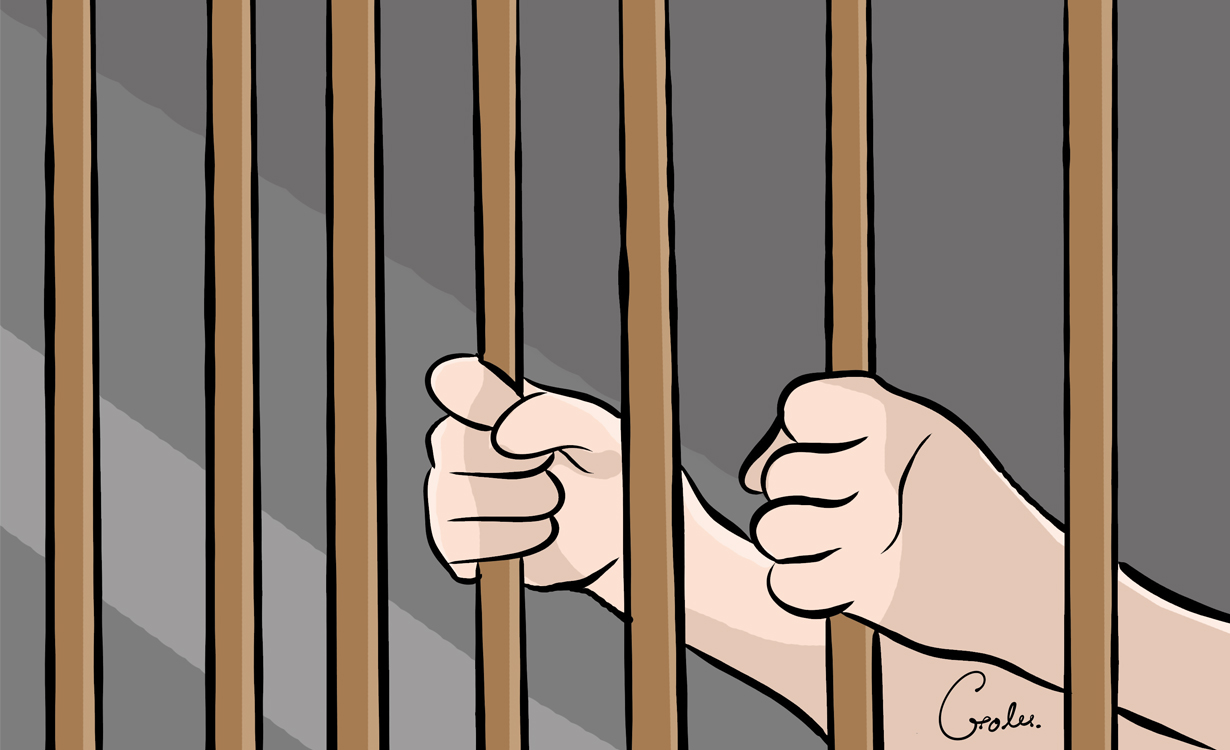
Prison Conditions are Even More Alarming
It’s not just police custody; prison conditions are equally problematic. Annual analysis shows that approximately 80 deaths occur each year in prisons and custodies combined.
So far, this fiscal year, 54 inmates have died in prisons, including one woman and 53 men.
During fiscal year 2081/82, 79 deaths occurred, 82 deaths in 2080/81, 79 in 2079/80, and 69 in 2078/79.
Higher inmate numbers, including elderly and seriously ill prisoners, contribute to the elevated mortality, authorities say.
Jaganath Deval Central Prison in Sundhara operates an on-site hospital treating chronic patients.
Prison security, overseen by police personnel under the Prison Management Department, has recurrent issues such as riots and escapes, provoking concerns.
For instance, on Saturday midnight, death-row inmate Sapana Tamang escaped Sundhara Prison and remains missing.
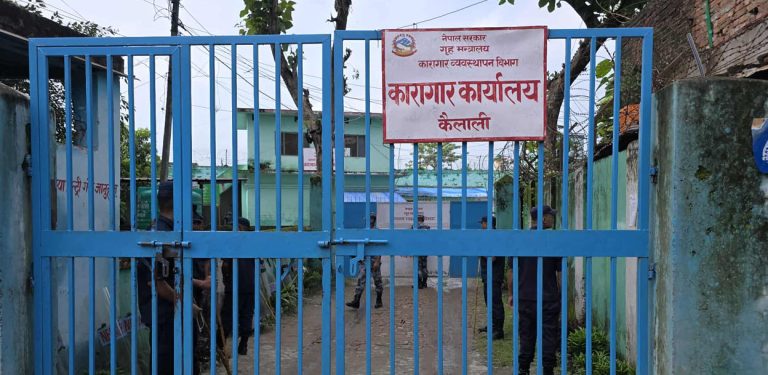
Such incidents expose severe lapses in prison security. Kailali Prison has also experienced frequent riots and deaths. Juvenile correction facilities present additional challenges.
Human Rights Advocates Reject Simplistic Suicide Label
Human rights groups argue that deaths under police protection should not be dismissed as suicides alone. Deaths due to natural causes or chronic illness are understood, but suspicious deaths, including suicides, require thorough investigation and cannot be treated casually.
Organizations like the Human Rights Commission and INSEC periodically investigate and report on deaths in prisons and custody with recommendations for reform, yet comprehensive improvements remain elusive.
Experts highlight the need for continuous monitoring and psychological counseling to understand detainees’ mental state.
During Minister Narayan Kaji Shrestha’s tenure, a yoga initiative was launched in prisons and custodies to promote positive thinking.
Security experts emphasize the urgent need to train duty police properly, upgrade custody facilities, and provide mental health support.
“Uncertain Futures and Regret Can Push Inmates Toward Suicide”
Psychiatrists warn that inmates in police custody or prisons face a significantly higher suicide risk. Senior psychiatrist Dr. Ananta Prasad Adhikari notes global studies showing high suicide incidence among newly incarcerated individuals, particularly within the first month.
Worldwide estimates indicate about 800,000 suicides occur annually inside prison systems, mainly due to mental health challenges.
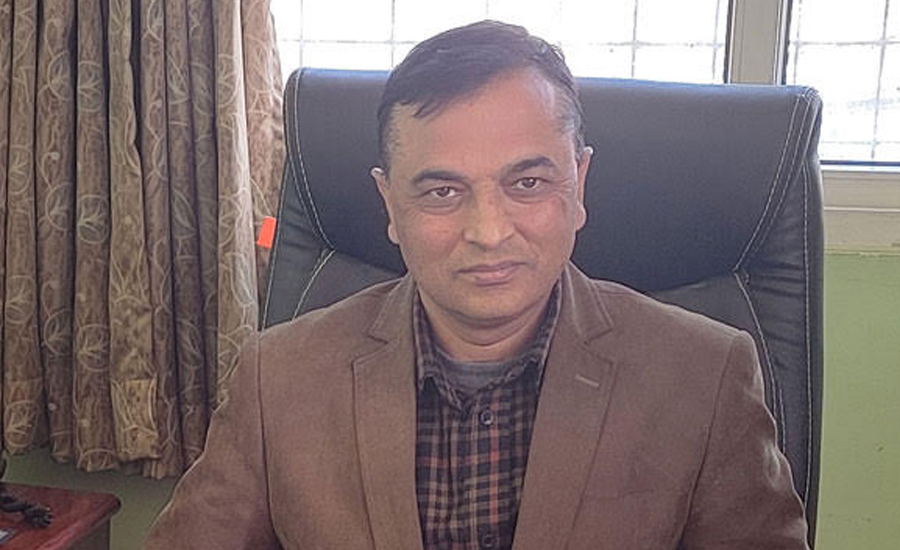
Dr. Adhikari explains, “Detained persons undergo intense mental trauma, fear, shame, and uncertainty about their future, especially in the initial seven days, when suicide risk peaks.”
International studies indicate approximately 66 percent of suicides in jail occur within the first month of detention.
Psychiatrist and researcher Dr. Rishabh Koirala adds that custody induces acute mental stress, regret, and despair. Having to face consequences for impulsive or violent actions exacerbates psychological vulnerability.
Dr. Koirala states, “People may commit impulsive acts during conflicts or while under influence of drugs, but entering custody triggers ‘what now?’ fears, deeply pressuring their mental health.”
Sensitive individuals find prison conditions extremely challenging, with some contemplating suicide as their only escape.
Occasionally, innocent individuals must also be detained during investigations.
Providing counseling and mental health services to vulnerable detainee groups can significantly reduce suicide risk, Dr. Koirala concludes.