
Crusher Industry Operators Threaten Staff and Endanger Lives, Monitoring Blocked in Dhanusha
June 6, JanakpurDham – About two months ago, Ganeshman Charnath Municipality in Dhanusha began monitoring crusher and sand processing industries operating within its jurisdiction.
Following inspections at Kamalmai Crusher Industry in Ganeshman Charnath Municipality–7 Portaha and Kamaleshwari Sand Processing Industry in Ward No. 8, the operators of these crushers created a hostile environment by threatening to kill employees.
“As soon as we started monitoring, we were threatened with removal and even death for inspecting just two locations. This scared all team members, eventually halting the monitoring effort,” a team member shared.
Currently, 10 crushers and sand processing industries are active in Ganeshman Charnath Municipality. These include Kamala Stone Crusher in Ward No. 6; Kamalmai Crusher, Shiva Sand Processing, and Devaki Sand Processing industries in Ward No. 7.
Ward No. 8 hosts Gaurav Sand Crossing, Lavkush Sand Processing, Sankat Mochan Sand Processing, and Kamaleshwari Sand Processing industries. Ward No. 9 features Sameer Sand Processing and Se.Ja. Ali Sand Gravel Processing (washing) industries.
Shortly after monitoring was stopped, on March 27, the District Monitoring Committee for River and Mining Materials conducted an inspection along the Kamala River and found stockpiles of illegally extracted riverine material.
Dhanusha District Coordination Committee Chair Rajnandan Mandal, Chief District Officer Premprasad Luintel, and security personnel decided that Ganeshman Charnath Municipality would soon confiscate and auction off the stockpiled materials.
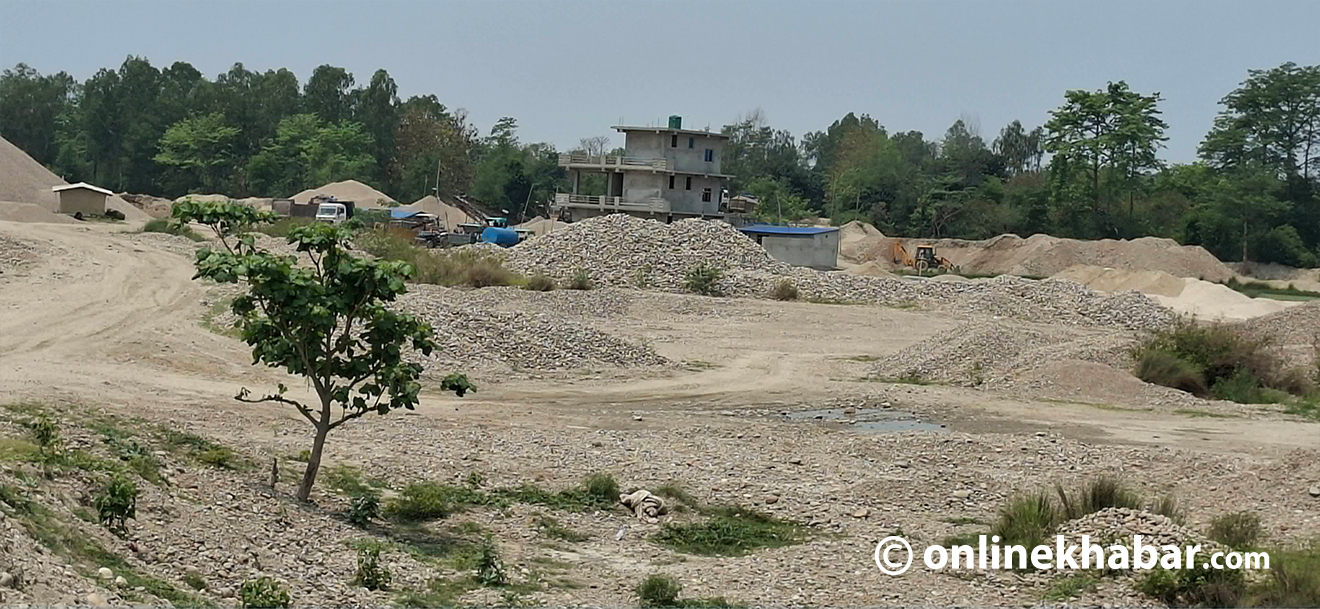
During a follow-up inspection led by Deputy Mayor Tulsakumari Pandey in the third week of March, the stockpile had disappeared from the original village location. After some investigation, the materials were found at Kamalmai Crusher and Kamala Stone Crusher.
According to an inspection team member, measuring both raw and processed riverine materials whose sources were unclear revealed 331,616 cubic meters of sand, gravel, and stones. Kamalmai Crusher held 159,968 cubic meters and Kamala Stone Crusher had 171,648 cubic meters, totaling approximately 5 million Nepalese rupees in value.
Kamala Stone Crusher was registered on November 28, 2005, in the name of Mahadev Mahto Sudi, while Kamalmai Crusher was registered on December 10, 2008, under Sanjay Sharma. Kamaleshwari Mai Sand Processing Industry was registered on October 28, 2018. Notably, none of the crushers or sand processing industries in the municipality have successfully renewed their licenses.
The municipality has prepared a report concerning the missing riverine stockpile, but lacks the courage to bring the two crusher industries under disciplinary action.
Mayor Jeetnarayan Yadav stated that he has no information about the missing stockpile, while Deputy Mayor Tulsakumari Pandey declined to comment on the issue.
Chief Administrative Officer Tekraj Bhattarai said he is newly appointed and unaware of the matter, though internal sources report that the report remains in the office. It is alleged that close ties between elected representatives and crusher operators have prevented any disciplinary measures.
Due to collaboration between local government and police administration, crushers wield significant power, threatening and assaulting lower-level security personnel and employees.
An attack on Police Constable Birendra Yadav of Portaha Police Post in December exemplifies this. On the night of November 15, he was seriously injured while attempting to halt illegal excavation activities on the Kamala River.
The brutal murder of 25-year-old Dilip Mahto from Mithila Municipality–5 Shripur on January 9, 2020, at Churiyamai Sand Processing Industry by the Aurahi River is widely known. The industry was registered under Bipin Mahto’s name on February 17, 2019.
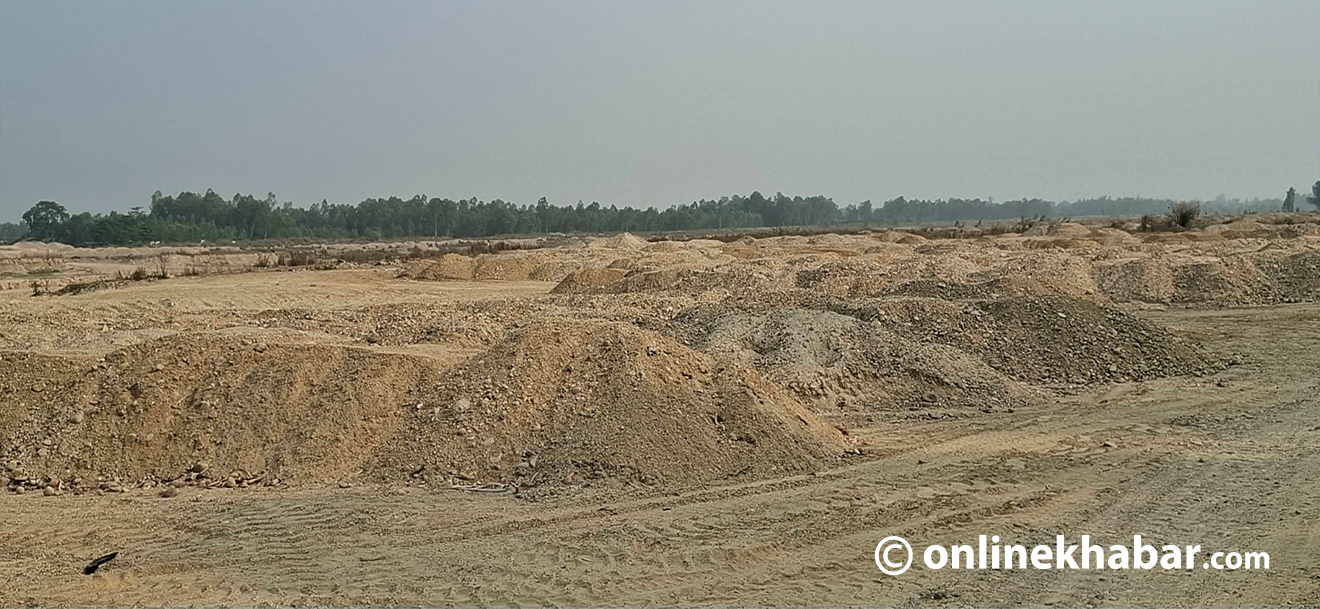
Though the crusher was temporarily closed following the murder, it has since resumed operations unhindered along with two others in close proximity.
About 15 crushers and sand processing industries are registered in Mithila Municipality, including Shubham Washing Industry and Kshireswor Sand Processing in Ward No. 2; Aurahi Baba Sand Processing, Jagdamba Sand Processing, Bandebi Aurahi Baba Sand Processing, Rohan Sand Processing, and Jai Shiv Bhole Sand Washing Industry in Ward No. 3.
Ward No. 4 has Mithila Sand Processing, Ward No. 5 has Churiyamai Sand Processing, the former Bengadawar–8 area hosts Dhaneshwor Sand Processing, Kshireswor Mahadev Crusher, and Jai Bajrang Sand Processing industries. Ward No. 9 features Chamini Mai Sand Gravel, Rodha, and Gitti Washing Industries alongside Sumit Crusher, with Dhaneshwor Crusher Industry in Ward No. 10 and a Crusher and Cooking Industry in Ward No. 11 Tulsi.
Failure to Renew Licenses for All 32 Crushers in Dhanusha
According to the Land Registry Office, 32 crusher industries have been registered in Dhanusha between 2005 and 2021. These include Kshireswor Nath Sand Processing Industry in Kshireswor Nath Municipality–7 and Subhash Crusher Industry in Janakpurdham Sub-Metropolitan City–19 Bengashivpur.
Other active industries include Jai Mata Di Stone Crusher Industry in Ghodghas of Nagarain Municipality, Kumari Ma Gitti Industry in Nagarain, and Sah Gitti Industry in Giddha of Videha Municipality–6.
Domestic authorities confirm that most registered crushers have not renewed their licenses in recent years, and irregular monitoring by government bodies has allowed industries to operate with impunity.
Santosh Sah, chief of the Land Registry Office in Dhanusha, confirmed that no crusher industry has renewed its license recently and that there has been no consistent monitoring for an extended period.
“No new crusher registrations will occur in Dhanusha now. No renewals have happened for years,” he said. “We used to conduct monitoring, but now the Coordination Committee handles that.”
Dhanusha District Coordination Committee has admitted that exact figures of operating crushers within the district are unavailable. Despite having a committee to regulate riverine materials, locals complain about the lack of regular inspections and enforcement.
According to Coordination Committee Chair Rajnandan Mandal, local governments are capable of monitoring crushers, but while the committee issues directives and oversight, the local levels frequently fail to implement them.
Dhanusha Chief District Officer Premprasad Luintel acknowledged inspections occur on rivers but not on crushers. He also noted that crusher license renewals have been halted nationwide.
“We monitor rivers, but crushers are not inspected. Tax evasion is managed by the Revenue Office, and renewals and compliance are lacking,” he explained.
Villagers’ Tractors Used for Illegal River Excavation
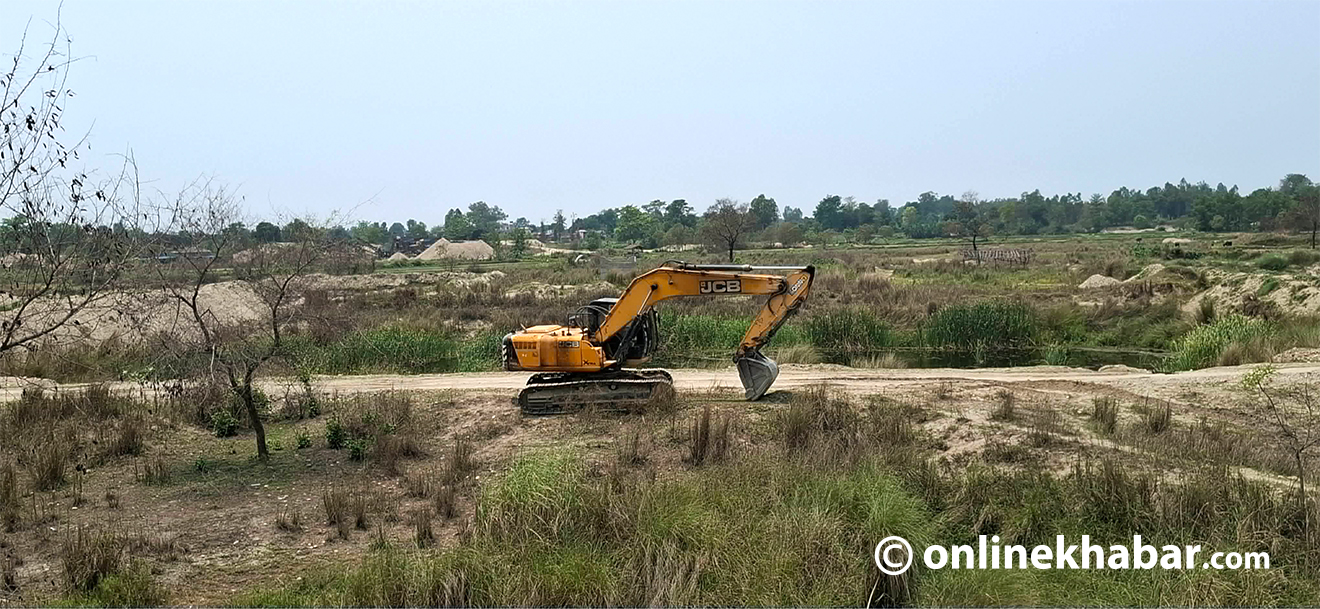
Following Dilip Mahto’s murder, the terror imposed by crusher mafias in other river areas has intensified, accelerating indiscriminate extraction that is pushing the Chure area toward desertification and worsening the environmental crisis. Pits and trenches increase drowning risks for children during monsoon rains. Despite local protests, illegal excavation persists.
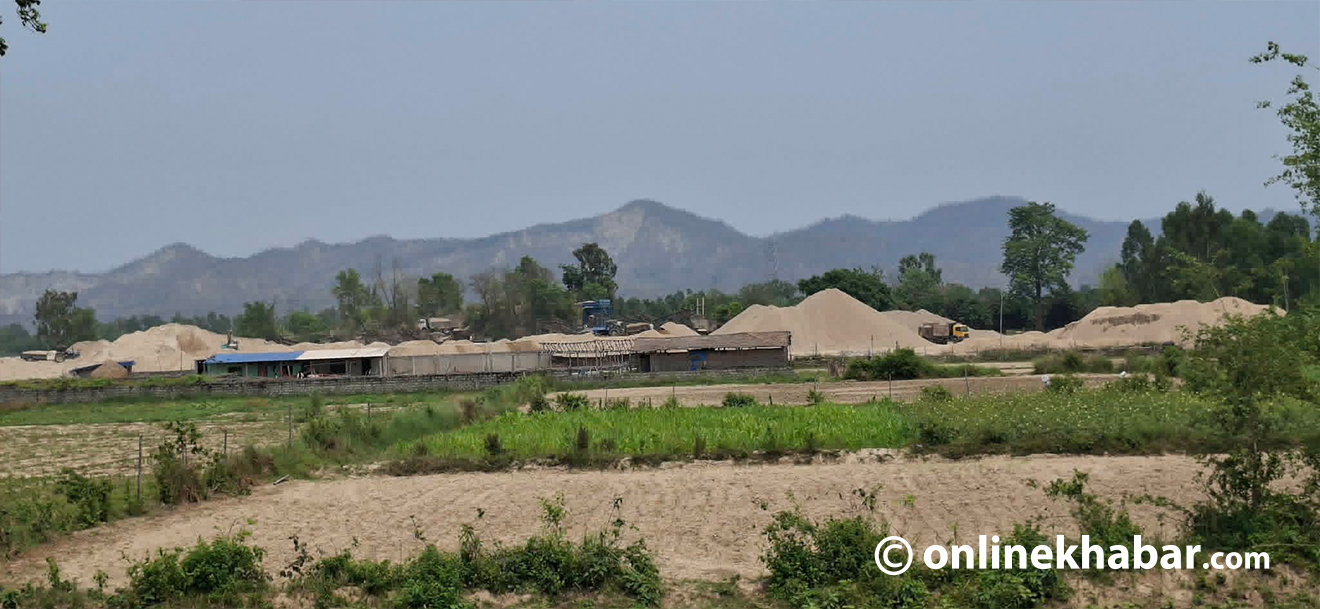
Crusher mafias sow division within the community to facilitate illegal river mining. Tractors owned by villagers, intended for agriculture, are being used for river excavation. The number of tractors near riverbank villages is increasing.
“Crushers employ tractor owners. Paying them per trip, tractor drivers extract river materials at night and deliver them to crushers,” a local explained.