
Inexpensive Chinese Cars Create Crisis in Europe, Raising Risks of a New Trade War
News Summary
- Kaja Kallas, the chief diplomat of the European Union, compared efforts to end Europe’s dependency on China to a painful “chemotherapy” treatment.
- Massive imports of electric vehicles from China have pushed the EU’s trade imbalance with China to historic highs.
- Europe is preparing new policies under the Industrial Accelerator Act to regulate Chinese companies and protect its own industries.
May 16, Kathmandu – Kaja Kallas, chief diplomat of the European Union (EU), recently likened the EU’s efforts to end dependency on China to treating a serious illness. She stated that a painful process, comparable to chemotherapy, may be necessary and that it will be very difficult.
Her comments clearly reflect Europe’s increasingly firm stance toward China, its second-largest trading partner after the United States.
As Beijing pursues an aggressive trade policy, imports of Chinese goods into Europe have surged rapidly. This has alarmed European leaders and companies, motivating discussions on how to break free from dependence on China. With China’s growing power in manufacturing, European industries are facing existential threats.
Jeromin Zettelmeyer, director of the Brussels-based economic think tank Bruegel, said, ‘Europe is currently filled with fear. There is a significant risk that European industries could collapse at any moment.’
The UK has responded strongly to this concern, warning that any imposed restrictions will be met with harsh retaliations. This indicates that future disputes may intensify.
At the upcoming G7 meeting in Avignon, France, world leaders will discuss global economic imbalances. Following that, the 27 leaders of the European Union are expected to address China-related issues during their summit.
The EU’s executive body will hold a preliminary debate on China-related policies this Friday, which is expected to guide subsequent high-level discussions.
European officials still aim to cooperate with China to correct trade imbalances; however, due to Beijing’s rapid export growth, this deficit has deepened. European nations are now considering stricter measures to curb China’s growing influence in sensitive sectors.
Reducing dependence on China will be complex and challenging. European politicians and businesspeople are anxious about potential Chinese reprisals. Yet consumers continue to prefer inexpensive Chinese products.
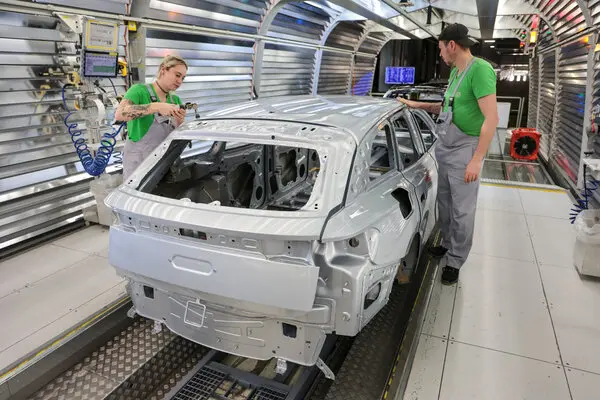
Europeans, in particular, favor affordable electric vehicles. Despite EU efforts to address this issue, these vehicles have strengthened their position in the market.
Rebecca Arcastati, analyst at the Mercator Institute for China Studies in Brussels, stated, ‘Our current situation is extremely challenging.’ She explained that European leaders struggle to curb the flow of Chinese goods because they must address voters and short-term political interests, and that any retaliatory measures from China would only complicate matters further.
‘Our systems were not prepared to face such a major challenge,’ she added.
The Chinese government provides subsidies and various programs that have strengthened its industries. Following challenges in the real estate sector, Beijing accelerated industrialization to boost economic growth. The impact of US tariffs has pushed Chinese manufacturers to expand exports into markets like Europe.
In the first quarter of this year, imports from China to Europe increased rapidly. According to customs data from 2026 analyzed by Soapbox and the Mercator Institute for China Studies, the surge in Chinese electric vehicle popularity pushed the trade imbalance to historic highs.
Chinese car manufacturers have aggressively entered the European market after a decline in domestic demand. Following the rise in fuel prices caused by the West Asia conflict, European consumers have increasingly opted for environmentally friendly alternatives.
EU statistics show that in 2025, Europe suffered an almost $418 billion deficit in goods trade.
These developments have placed European producers and workers in crisis, especially in traditional manufacturing countries like Germany, known for cars and chemicals.
Supply chain disruptions have highlighted Europe’s heavy dependence on China.
In response, Europe is adopting tougher policies regarding trade relations with China.
French President and longtime critic of Chinese policy Emmanuel Macron has called for the EU to establish policy frameworks, similar to US sanctions, to defend its key industries.
Similarly, Spain’s Prime Minister Pedro Sánchez warned that China could marginalize Europe if it remains closed off.
Yet Spain and countries like France, Italy, Lithuania, and the Netherlands have jointly highlighted systemic issues stemming from China’s massive industrial production capacity.
According to economist Brad Sencer of the Council on Foreign Relations think tank, European leaders are cautious due to fears of Chinese retaliation, though in countries like Germany, the threat of industrial collapse is even greater.
Therefore, Europe has already taken some defensive actions, such as the Industrial Accelerator Act, which aims to block certain Chinese companies from receiving government subsidies and to promote electric vehicles made in Europe.
China has criticized this policy as protectionist and issued threats of retaliation.
China’s aggressive trade behavior has further hardened anti-China sentiment in Europe.
Last year, China twice imposed export restrictions on rare minerals and magnets in retaliation to US tariffs. These measures also affected Europe, which relies on these materials for technology and green energy production.
This has highlighted European companies’ dependence on China.
In April, China introduced new regulations allowing investigations into company bankruptcies, employee interrogations, and the restriction of executives who assist in relocating supply chains outside China.
The European Chamber of Commerce in China warned that these rules could cause unprecedented damage to the European economy.
Noah Barkin, a specialist at the research organization Rhodium Group, says China’s tough stance stems from tensions between Washington and Brussels, preventing the US and Europe from acting as a united front.
Barkin commented, ‘China is sending a message to Europe that its closest ally, the US, is not stable either, and is seeking its own security. So do not test us.’
(Report by Gina Smialek and Alexandra Stevenson, originally published in The New York Times)