
Consumers to Pay 5% VAT on Electricity, 13% VAT on Water Supply, Hospitals, and Schools
News Summary
Prepared after review.
- The government has decided to impose Value Added Tax (VAT) on electricity starting from the upcoming fiscal year 2083/84.
- Under the new arrangement, household consumers will be charged 5% VAT, while industrial and other sectors will be subject to 13% VAT.
- Finance Minister Dr. Swarnim Wagle has stated that revenue adjustments will be made by Shrawan 1 (mid-July) to ensure consumers do not face extra burdens.
May 31 (Jestha 18), Kathmandu – The government has announced that the Value Added Tax (VAT) introduced on electricity will increase prices by 5% for household consumers and 13% for users in irrigation, drinking water, charging stations, and other sectors.
Finance Minister Dr. Swarnim Wagle declared that VAT on electricity will be implemented from the upcoming fiscal year 2083/84. According to his announcement, the Economic Bill 2083 states that “a 5% tax shall be levied on the value charged by the final electricity service provider to consumers.”
Minister Wagle confirmed the 5% reduced VAT on electricity for households while remaining firm on the details. However, according to the Economic Bill and the Internal Revenue Department’s interpretation, all consumers aside from household customers will have to pay 13% VAT.
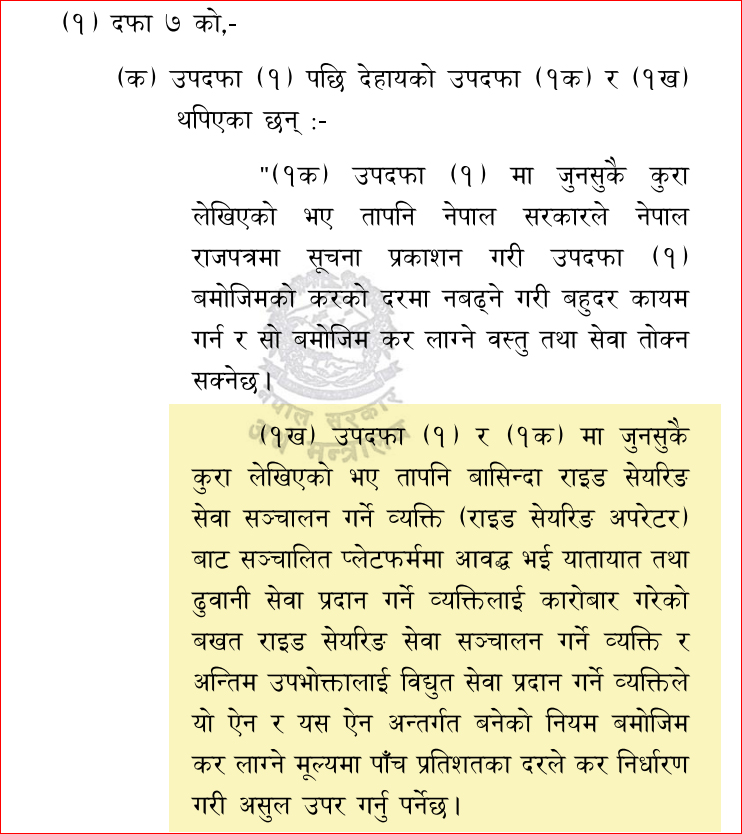
According to the Nepal Electricity Authority’s Electricity Revenue Collection Regulations 2078, there are 13 categories of electricity consumers. Director of the Internal Revenue Department, Shiv Sharma, mentioned that VAT will not apply to household consumers consuming up to 50 units, but 5% VAT will apply on consumption above that.
“A 5% VAT applies to electricity sold to household customers by the authority, while all industrial and other customers will be charged 13% VAT,” Sharma explained. “The final consumer mentioned in Section 55 of the Economic Bill refers to household consumers only, hence all other consumers must pay 13% VAT.”
Since industrial consumers outside households are registered for VAT, Sharma said they can claim credit on the 13% VAT paid, which means their costs won’t significantly increase due to VAT.
However, former Deputy Executive Director of the Nepal Electricity Authority, Prabal Adhikari, pointed out that the authority sells electricity to not only household and industrial-commercial purposes but also to 13 categories of customers.
“According to the authority’s regulations, these all are final consumers; from the government’s perspective, they should also be subject to 5% VAT,” Adhikari stated.
He further noted that the definition of the final consumer differed in the budget speech. “According to the budget speech, only residential customers using more than 250 units qualify as final consumers, but the government has not clearly stated this. There appears to have been policy formulation without sufficient study on how the electricity market operates,” he added.
Director Sharma of the Internal Revenue Department also confirmed that consumers other than households will face 13% VAT.
Categories Subject to 13% VAT on Electricity under the New Policy
- Industrial
- Commercial
- Non-commercial (including government offices, affiliated institutions, schools, universities, hospitals, etc.)
- Irrigation
- Drinking water
- Street lighting
- Transport (including public transport and charging stations)
- Religious and spiritual sites
- Temporary lighting
- Non-residential (embassies, foreign missions, schools, hotels, etc.)
- Entertainment businesses
- Community bulk consumers
No VAT on Electricity Producers; Authority Cannot Claim Credit
Director Sharma of the Internal Revenue Department stated that while vendors selling electricity to consumers must charge 5% VAT, the Nepal Electricity Authority (NEA) cannot claim VAT credit.
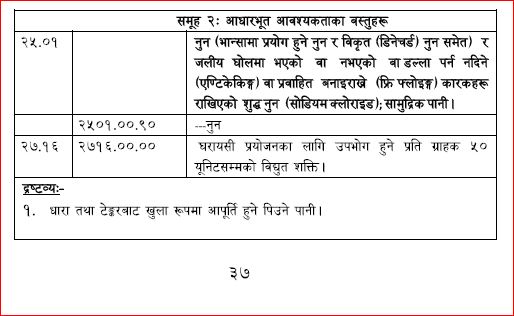
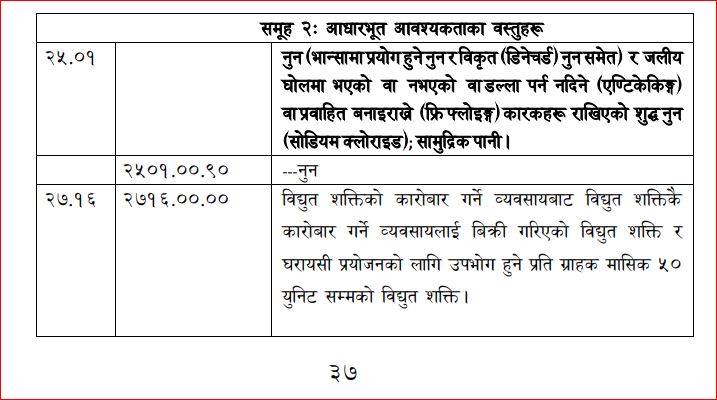
The Economic Bill includes provisions exempting electricity producers from VAT when selling electricity to the NEA. It grants tax exemption on production and sales of electricity businesses, and allows household consumers to use up to 50 units per month tax-free.
The initial version of the bill did not include this provision; it provided VAT exemption only for household use up to 50 units.
On Monday, the updated Economic Bill was uploaded on the Ministry of Finance website, incorporating the exemption for businesses engaged in electricity production and commercialization from VAT on electricity sold.
As a result, electricity producers will no longer have to pay VAT when selling power to the authority. Director Sharma explained that this measure was introduced to prevent a cascading VAT impact on prices.
Although initially the law implied that all electricity consumption beyond 50 units for households would be taxed, the government amended the Economic Bill to exempt development projects from VAT, said guardian official Sheshmani Dahal.
“There is controversy about who the final consumer is; if the authority recognizes industrial consumers as customers, they should be charged 5% VAT, but if the final consumer is only households, others will face 13% VAT,” Dahal said.
However, a former tax official argued that if the authority collects VAT and does not provide input credit, it should not be considered VAT.
“A tax without credit and refund cannot be called VAT,” he stated. “Charging 13% VAT on electricity purchase from producers but only 5% VAT on sales to consumers creates a peculiar situation.”
He also remarked that repeated amendments to the Economic Bill have caused policy formulation challenges.
“Tax policy changes require thorough preparation, and other countries spend years on this process, but the government seems to be proceeding hastily,” he added.
Minister Wagle has stated his commitment to adjusting tariffs so that consumer prices do not increase even if electricity prices decrease. He also promised to complete tax adjustment by Shrawan 1 (mid-July).
“We will request the Electricity Regulatory Commission to make necessary price adjustments. Even a reduction of 50 paisa per unit would provide relief,” he said on Monday in Kathmandu.
He also noted that although VAT imposition was debated several times, this is his first effort to make it effective. He mentioned preparations for relief considering Nepal’s ownership of 700 MW of power plants.
He emphasized that imposing VAT on electricity serves the country’s long-term interests.
Stakeholders Say Not Charging VAT on Electricity Producers Is Unfair
Electricity producers have long demanded VAT imposition on electricity, but stakeholders believe exempting producers from VAT is unjust.
“We pay VAT on goods purchased during project construction, but there is no VAT refund when selling electricity, increasing the cost of electricity projects and thereby electricity prices,” a stakeholder said.
Therefore, they demand VAT should be imposed on electricity sold by producers.