Concerns Mount Over Gas Shortage: Will the Half Cylinder Policy Resolve or Worsen the Issue?
June 16, Kathmandu – Complaints about the shortage of cooking LPG gas have surged abruptly across various districts of the country.
From hill areas outside Kathmandu Valley to Terai districts, consumers have been forced to stand in long queues for gas, with both sellers and consumers voicing concerns over the growing problem.
Although the government introduced the “half cylinder” policy to ensure equitable gas distribution and ease supply, business owners and consumers claim that instead of solving the problem, it has exacerbated the shortage.
The policy was implemented by Nepal Oil Corporation (NOC) as a proactive measure considering the risks of fuel supply disruptions amid tensions among the United States, Israel, and Iran.
Following a recommendation from the NOC’s board of directors, gas distribution began on March 13, 2026, with cylinders filled to only 7.1 kilograms instead of the usual full cylinder weight.
Originally intended to last 15 days, this policy has been in effect for three months without any review. Industry representatives argue that this short-term solution to the crisis has unintentionally become the main cause behind the gas shortage.
Consumers from hilly districts like Salyan, Surkhet, and Gulmi to Terai areas such as Janakpur and Sarlahi have reported severe difficulties obtaining gas.
As gas supply shortages began to emerge, some business owners were also suspected of hoarding gas to create artificial scarcity.
The Nepal Gas Sellers Federation counters this claim, attributing the problem not to artificial scarcity but to increased transportation costs under the half cylinder policy and technical complications arising from industries being unable to stock adequate supplies as per demand.
The federation highlighted that in remote and distant districts outside the capital, higher transportation costs have been a key factor leading to delays in gas supply.
Issues in Janakpur
The Janakpur area is facing significant problems in LPG gas supply. Gas seller Ganesh Jha explained that delays from other districts and rising transportation costs have created difficulties in the market.
“It takes a long time for gas to arrive from Birgunj, Bara, and Simra; even when industries send requests, gas arrives only after seven days. What does this imply?” he said. “Previously, gas used to arrive within two or three days, but now it is considerably delayed.”
Jha added that pressure is mounting on sellers and consumers as industries delay supplies and often cite various excuses.
“Whether we bring a full cylinder or half, the vehicle consumes the same amount of fuel. Traveling from Birgunj to Janakpur is about 150 kilometers one way—that means over 300 kilometers for a round trip. This doubles fuel consumption and transportation costs,” he stated.
Due to expensive transportation, industries prioritize gas sales to nearer districts, causing longer wait times for gas in more distant areas.
Situation in Gulmi
The half cylinder policy designed to ease gas supply has failed completely in the hilly district of Gulmi. Increased transportation costs and technical problems have caused hardship for consumers.
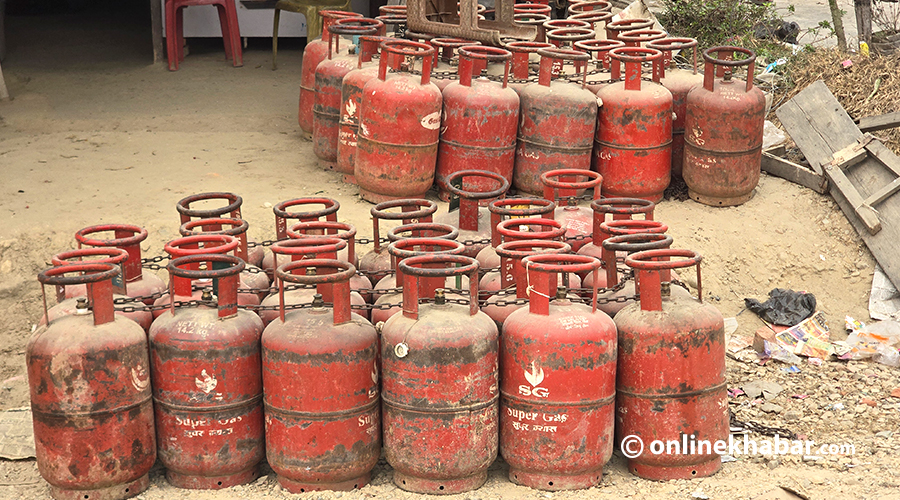
Gas seller Maniram Aryal from Gulmi described the situation in hill regions as extremely complicated and unbearable.
He pointed out that due to low pressure in the half-filled cylinders, even household and large industries face operational issues.
“In the 7.1 kg cylinder, about 1 to 1.5 kg of gas settles at the bottom, resulting in insufficient pressure, which hampers functionality,” he explained. “Hotels, restaurants, and bakery industries are especially struggling, with many shifting to coal stoves.”
Transportation costs from Bhairahawa to Gulmi have significantly increased gas prices. According to Aryal, by the time a half cylinder reaches Gulmi, consumers have to pay NPR 1,250.
“Transportation costs are NPR 150 from Bhairahawa, with loading and unloading fees of around NPR 10 each. Due to geographical remoteness, jeep services demand NPR 150-200 to deliver directly to homes,” he added.
Demand in Surkhet Doubled
Surkhet is also experiencing a cooking gas shortage.
Gas seller Binod Dahal from Surkhet stated that there is a substantial gap between gas demand and supply. “Demand in Surkhet is double,” he said, “all because of the half cylinder policy.”
Dahal noted that previously about 25-26 thousand full cylinders were consumed monthly, but now industries have to send half cylinders to meet the same level of demand.
“Earlier, we imported 25-26 thousand full cylinders; now we have to bring 52 thousand half cylinders, but due to a lack of transportation, this is impossible,” he explained. “Currently, only 27-28 thousand half cylinders are arriving, increasing the shortage.”
With limited transport vehicles, it has become difficult to supply half cylinders as per demand, resulting in losses for both industries and consumers.
Following a downed electrical pole in Surkhet, power outage persisted for around 35 days, pushing consumers to rely on gas instead of induction stoves.
LP Gas Industry Association Blames High Transport Costs for Gas Shortage
The ongoing conflict in the Middle East has increased diesel prices, resulting in higher transportation costs which have caused significant losses for industry players, according to the LP Gas Industry Association.
The decision to supply only half cylinders has drastically reduced earnings for gas dealers and industries.
Previously, dealers earned a commission of NPR 58 per cylinder, but now they must be satisfied with NPR 29. Similarly, industry commissions dropped from NPR 31.90 to approximately NPR 16.
Profits from transportation fees, previously NPR 45.88, have halved to NPR 23, which has made business operations increasingly difficult.
The Nepal LP Gas Industry Association admitted that transportation costs in hill and Terai districts are a significant reason behind gas shortages.
Although gas imports from India remain regular, doubling transportation costs for half cylinder distribution have created shortages, Association President Diwan Chand said.
He explained that transporting from Kailali Attariya to Baitadi or Darchula can cost up to NPR 100,000 per truck.
Originally introduced as a 15-day temporary policy, the extension of the half cylinder rule for three months has caused major losses to industries, leading Chand to reject claims of an artificial shortage.
Industry Claims of Gas Smuggling to India from Terai
Gas entrepreneurs identified gas smuggling into India via open borders as another cause behind the shortage in Terai areas.
They claim that gas is regularly taken across the open border from regions like Janakpur to India.
“Previously, dealers sold 100 cylinders; now demand is 200-250 cylinders,” an industry source said, “the increased demand is due to gas being diverted to India.”
Due to price hikes and stricter regulations in India, Nepal’s cheaper gas is being smuggled across the border, they claim.
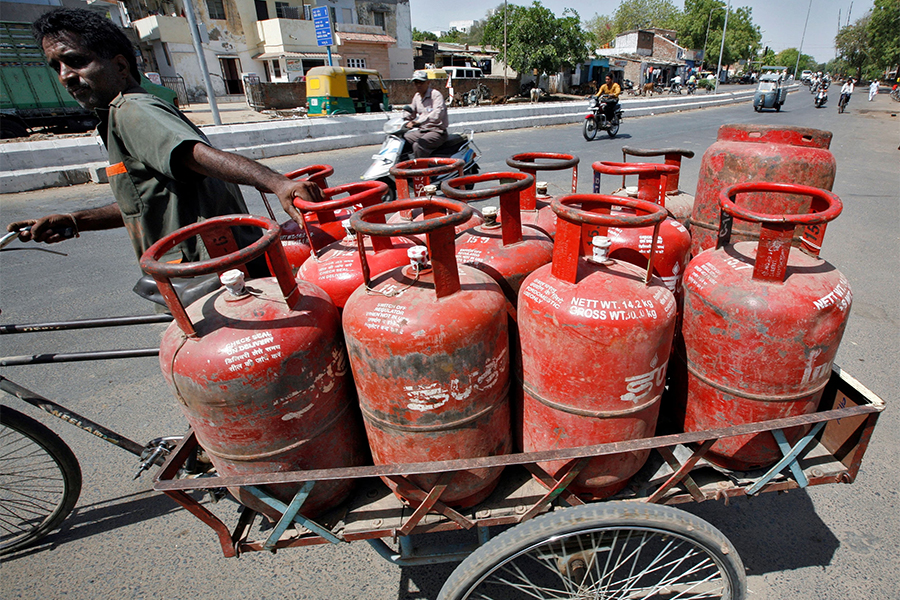
“In India, subsidized cylinders are available only once every 28 days, and additional cylinders are expensive,” the source explained. “India has a five-kilogram cylinder policy, and since Nepal offers 7.1 kg half cylinders cheaply, gas is increasingly being smuggled through the border.”
The association has demanded that the Nepal Oil Corporation revoke the half cylinder policy and resume full cylinder distribution, provided India does not cut the gas quota it supplies to Nepal.
No Gas Shortage, Demand Has Fallen: Oil Corporation
While rumors of shortage continue, Nepal Oil Corporation has stated there has been no cut in gas supply.
Spokesperson Manoj Thakur said gas distribution is proceeding as per their quota.
“Our quota is about 49,500 tons, and industries are receiving gas accordingly. We have no issues with imports,” he said.
Thakur claimed that gas demand has decreased since the half cylinder policy was implemented.
“In February, we imported 51,000 tons of gas. After switching to half cylinders, consumption has dropped to about 35,000 tons,” he said.
NOC attributes shortages in various districts to internal disputes between industries and distributors.
He confirmed there have been no discussions within NOC about removing the half cylinder policy and resuming full cylinder distribution.
Thakur added that the ongoing war in West Asia shows signs of ending, which may lead to a decline in international petroleum prices and could reduce costs in the near future.
Disagreement Between Oil Corporation and Sellers’ Federation
Despite the Oil Corporation’s claim that demand and consumption have dropped following the introduction of the half cylinder policy, the Nepal Gas Sellers Federation rejects this assertion.
The federation claims that consumers consider filling half cylinders inconvenient and prefer to keep empty cylinders at home while waiting for full cylinders.
Federation president Gyaneshwar Aryal explained that fears of running out of gas and transportation difficulties have caused consumers to stop refilling half cylinders.
“The corporation says demand has dropped, but in reality, many people are holding onto empty cylinders at home, hoping full cylinders become available,” he said.
The federation also pointed out that due to reduced loading by the corporation and lower imports from India, industries have been unable to supply fuel as per demand.
The federation has warned NOC that there could be a large influx of empty cylinders in the market once the decision to resume full cylinder filling is made.
They stated that filling a full cylinder requires 100 to 120 loading trucks daily, but currently only about 70-80 trucks are servicing, leading to supply management issues.
With NOC reluctant to reverse the policy and industries and transporters unable to bear the technical and financial burdens of the half cylinder system, a gas shortage has surfaced in the market.
This situation forces daily consumers to endure long queues and pay higher prices for gas.