Escalating Conflict in the Strait of Hormuz: US-Iran Ceasefire at Risk
News Summary
- The US-Iran attacks and retaliations in the Strait of Hormuz on Friday night have further weakened the existing ceasefire between the two nations.
- The US military targeted Iranian missile and drone storage sites as well as coastal radar installations, while Iran claims to have responded with attacks on US security bases.
- Tensions rose after Iranian drones attacked a cargo ship on Thursday, disrupting United Nations rescue operations.
June 28, Kathmandu – The ongoing war tensions between the United States and Iran flared again on Friday night in the Strait of Hormuz, undermining the ceasefire established between the two countries. This marks the 120th day since the conflict began.
The US Central Command (CENTCOM) reported carrying out attacks on Iranian missile and drone storage facilities and coastal radar systems on Friday. This operation was in retaliation following the Iranian drone attack on a cargo ship a day earlier. Iran’s Islamic Revolutionary Guard Corps (IRGC) also claimed to have struck US military bases in the region in response.
The crisis first emerged several months ago in February. On June 17, both sides signed a 14-point agreement declaring a 60-day ceasefire, in which Iran committed to waiving fees and ensuring the safe passage of commercial vessels.
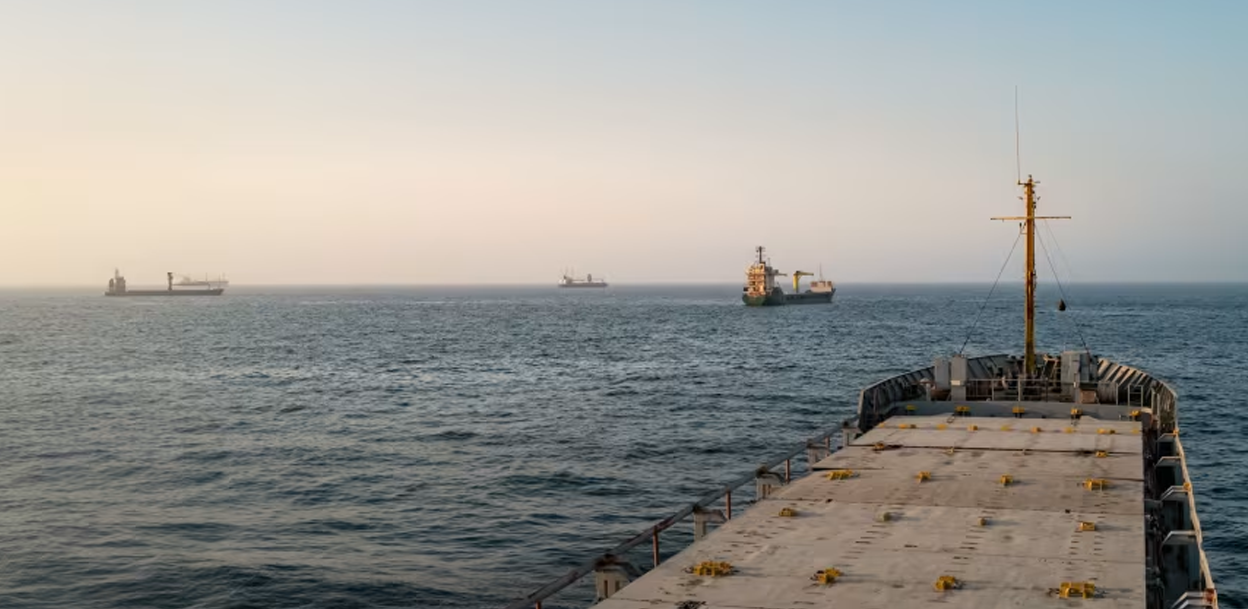
On Thursday, Iranian drones attacked the “Ever Lovely” cargo ship, which flies the Singaporean flag and is owned by Evergreen Marine Corporation. According to UK Marine Trade Operations (UKMTO), the attack occurred about 7.5 nautical miles southeast of Oman’s Duqm port.
The ship was navigating a recommended route when a missile strike damaged its bridge. It was confirmed that all crew members are safe and the damage was limited.
There were no casualties or significant environmental impact from the attack. However, the International Maritime Organization (IMO) has had to suspend rescue operations for over 11,000 seafarers due to the escalating tensions.
US President Donald Trump condemned the attack as a “foolish” violation of the ceasefire. On social media, he stated, ‘Iran launched four unilateral drone strikes on ships in the Strait of Hormuz.’
He added, ‘One of these drones directly hit the upper deck of a large cargo ship causing damage, but the vessel was able to continue on its course. The other three drones were intercepted by our defenses.’
Addressing reporters from the Oval Office about the US response, Trump refrained from giving a direct answer, stating, “You’ll find out.”
When asked if the ceasefire still holds, he gave an ambiguous reply and described Iran’s behavior as “somewhat different.”
Earlier at a conservative Christian event in Washington D.C., he mentioned that Iran still possesses some attack capabilities but is not winning the war. He described the attack as surprising and unprecedented.
On Friday, the US strikes targeted Iranian missile and drone storage centers and coastal radar systems. CENTCOM described this as a “powerful response.”
According to CENTCOM’s statement, ‘The Iranian attack on commercial vessels clearly violated the ceasefire,’ and Iran’s conduct has obstructed secure maritime passage along treaty routes. The statement reiterated the commitment to ensuring the safe transit of commercial ships via the Sindh route. Military command also released video footage of the attacks. A US official told CNN that the military activity was limited and not the beginning of a large-scale war.
Iran’s Foreign Ministry released a statement on Saturday morning declaring retaliatory attacks on relevant American sites and blamed the US administration for breaching the agreement.
The IRGC claimed attacks on American military bases in the region and warned of a broader response if such strikes are repeated, stating, ‘If attacks repeat, we will respond on a large scale.’
The Pentagon has yet to provide an official response. Vice President Mike Pence said Friday evening, “Violence only begets violence,” affirming that Iran signed the ceasefire agreement and the US is complying with it.
Pence added, “Iran can contact us immediately if it has any questions about the implementation.”
Ibrahim Azizi, head of the National Security Committee of the Iranian Parliament, accused the US via social media of attacking Iran during ongoing negotiations and warned that the ceasefire violation will bring regret to the US, stating that the blame game will no longer be effective.
The main cause of this dispute is Iran’s imposition of fees on ships passing through the Strait of Hormuz. Most international legal experts consider this fee system to be contrary to international law.
On Wednesday, Trump said that Iran had informed the US it would not impose fees, and warned that negotiations would end immediately if this proved false.
On Tuesday, Iran and Oman discussed the management of the Strait’s future at a meeting in Muscat. Oman’s Foreign Minister Badr Al-Busaidi expressed commitment to maintaining free and secure passage for ships.
However, Iran’s lead negotiator Mohammad Bagher Ghalibaf stated, ‘Management of the Strait of Hormuz will not revert to pre-war conditions.’
On Thursday, the IRGC challenged US claims of complete openness by warning that only vessels following routes communicated by Iran would be permitted safe passage.
Al Jazeera’s Rasoul Sardarat reported from Tehran that the IRGC based its position on Article 5 of the agreement, asserting that coordination with Iran is necessary when transiting the Strait.
Iran argues that ships must coordinate when crossing Iranian or Omani maritime borders. The dispute remains unresolved and the Strait of Hormuz continues to be a key strategic lever for Iran.
Despite the risks amid negotiations, Iran has issued warnings of further retaliatory attacks.
According to Andrea Dessy, an analyst at the University of Rome, recent tensions indicate the agreement is weakening and may be on the brink of collapse. Both sides are reportedly trying to avoid full-scale war.
He noted that tensions could resurface again within 30 to 60 days as both parties seek to assert control over the Strait, potentially leading to future clashes.
Tehran University researcher Mohammad Islami explained that after recent attacks, both sides seek to appear victorious, but diplomatic commitments have limited the scale of military activities.
Iran defends its actions as defensive and has warned Gulf neighbors against allowing their territories to be used for attacks on America.
Iran is preparing to adopt a policy that rejects the Strait of Hormuz as an international treaty and plans to impose new fees on other nations, forcing them to pay charges. According to Iran’s firm stance, goods must pay these fees under the new rule. (With agency contributions)