‘Excessive Fines Alone Do Not Deter Traffic Violations’
News Summary
Reviewed by Editorial Board.
- The Kathmandu Valley Traffic Police Office has launched a one-month Traffic Awareness Campaign starting from 1st Asar, aimed at reducing vehicle accidents.
- Traffic Chief SSP Suresh Kafle emphasized the necessity of technology-driven traffic management and disciplined road users to prevent road accidents.
- The Valley traffic police have intensified actions against motorcycles causing noise pollution and drivers violating traffic rules.
One of the leading causes of significant human and property losses in Nepal is road accidents. Nepal has consistently ranked among the countries with the highest accident rates globally. Over the past decade, more than 24,000 deaths have been recorded due to road accidents. In the last five years alone, 2,661 pedestrians have lost their lives.
According to the World Health Organization, injuries from road accidents are the leading cause of death among children and youth aged 5 to 29 years. Around 92% of global road traffic deaths occur in low- and middle-income countries.
On average, seven people die daily in Nepal due to road accidents, impacting not only human lives but also having direct social, economic, and health consequences. While most assign full responsibility to drivers, in reality, safe travel depends on three pillars: roads, vehicles, and road users (drivers, passengers, pedestrians).
It is the government’s obligation to ensure awareness and implement necessary actions involving all three sectors. Essential elements for safe travel include proper laws, their effective enforcement, safe vehicles and infrastructure, responsible road users, and efficient post-accident care and rehabilitation.
The Kathmandu Valley Traffic Police Office at Ramshahpath has initiated a month-long traffic awareness campaign starting 1st Asar (mid-June) aimed at controlling traffic violations and vehicle accidents in the valley.
Even pedestrians crossing at zebra crossings have faced fatal accidents in Kathmandu Valley. High traffic congestion, lack of traffic signals, and inadequate infrastructure have created chaotic conditions for drivers on the roads. Below is an edited excerpt from the conversation with Valley Traffic Police Chief SSP Suresh Kafle on the current scenario.
You have been in charge for only two weeks. How does the traffic situation feel before and after assuming responsibility?
Since I live in Kathmandu, I was already aware of the traffic management issues here. However, after taking charge, the problems have become even clearer. Currently, discussions are ongoing with various agencies to find solutions.
What programs are included in the campaign?
This campaign aims to spread daily awareness about accidents and their causes among road users. We are informing every citizen on proper road crossing, use of overhead bridges and zebra crossings, and the importance of lane discipline.
Similar campaigns have been conducted before, but violations have not decreased. Is there a weakness in the campaign’s approach?
The efforts of previous chiefs are commendable. Statistics show that the numbers of deaths and injuries have somewhat decreased. Our goal remains zero accidents. Going forward, technology-driven monitoring and participation from everyone in rule compliance will be essential.
What is the main traffic issue in Kathmandu Valley?
The biggest problem is the mismatch and disorderly movement of various types of vehicles. Two-wheelers, four-wheelers, and others not operating according to time and place, lack of lane discipline, and indiscipline among road users are major concerns.
Do you review the condition of vehicles?
This primarily falls under the Department of Transport’s mandate. While we have limited technology for mechanical inspections, coordination is ongoing.
Despite having 1,590 traffic police, why do problems still persist?
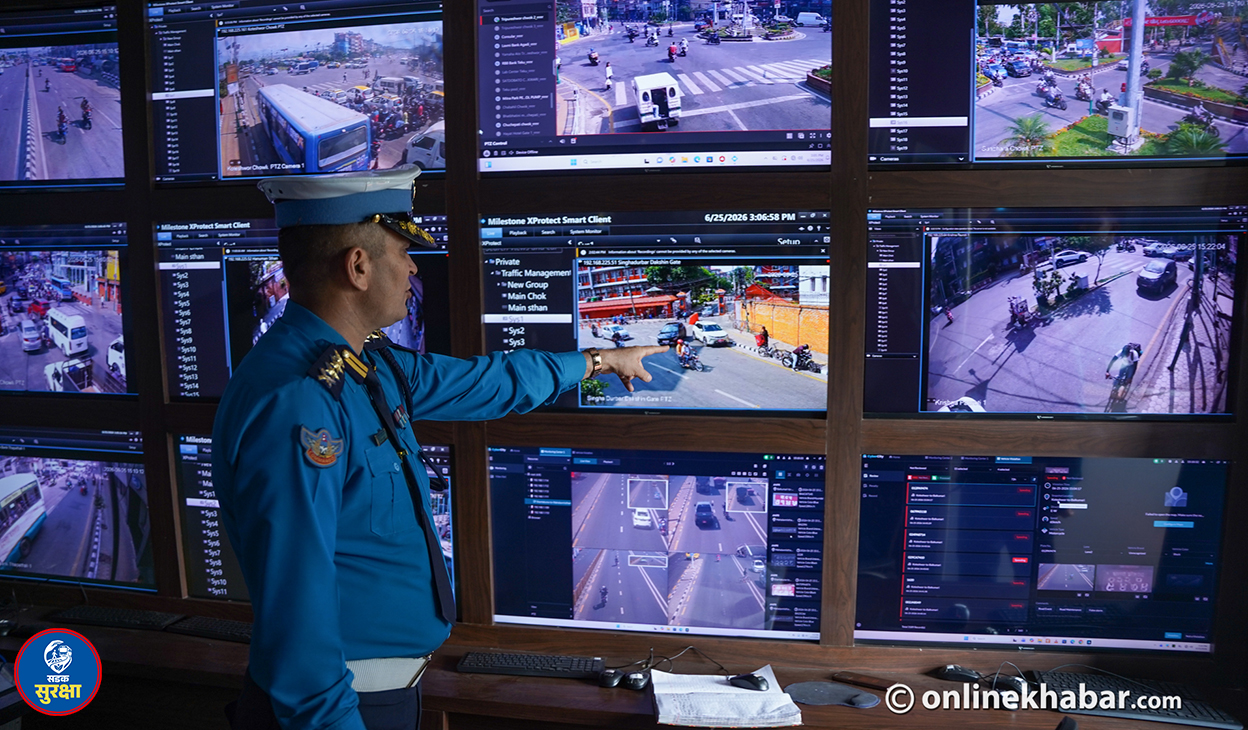
Physical presence alone cannot solve problems without utilizing technology. We are focusing on ‘faceless trafficking,’ meaning technology-based monitoring. Increasing technology on roads will also reduce risks for traffic police officers.
What challenges do traffic police face?
They work under heavy stress and risk. Dust, smoke, noise pollution, and other environmental factors affect them. We have provided protective gear like masks and glasses to ensure their safety.
What technologies are available for faceless trafficking?
The government is emphasizing technological integration. We have deployed AI-powered cameras and Number Plate Recognition (NPR) cameras to easily monitor and take action against violators.
There is talk of traffic management at Thapathali without traffic police. What is the context?
Some intersections employ fully technology-based monitoring. Control rooms monitor the area and take action when violations occur.
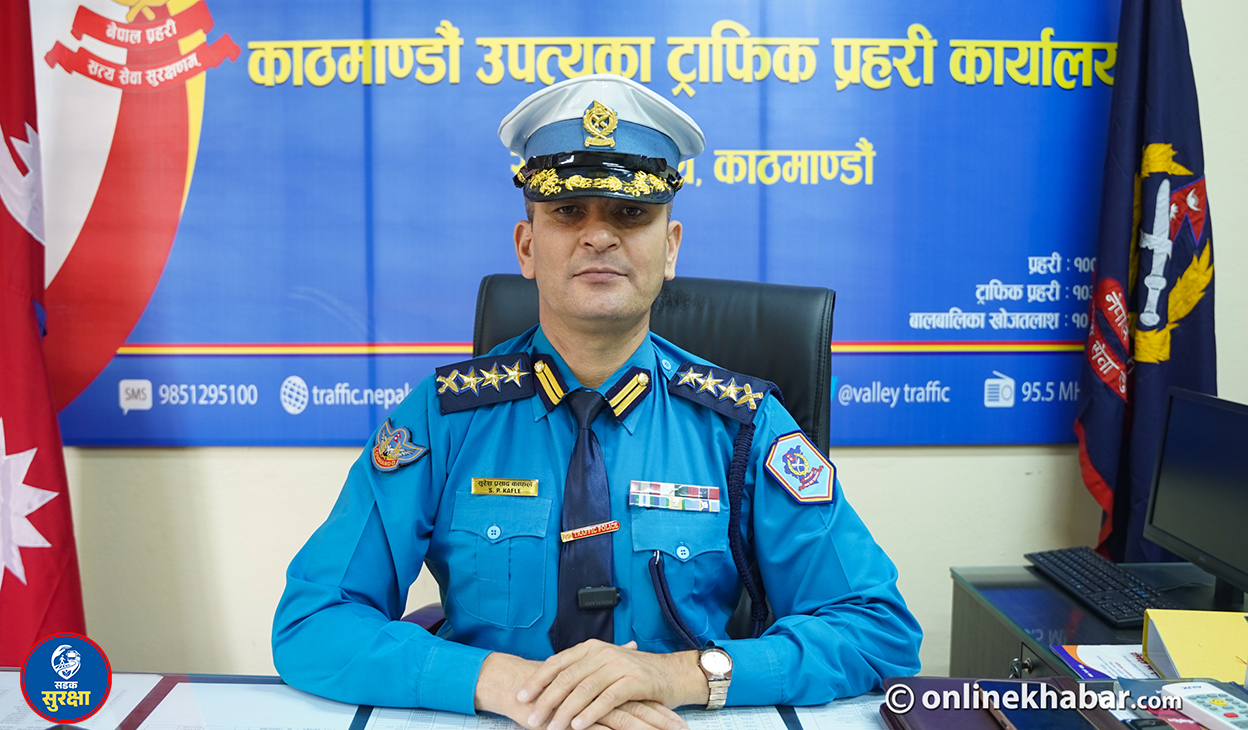
Incidents like the Speaker’s vehicle breaking traffic laws and being fined have been publicized. How effective are such penalties?
We do not adopt a stunt-performance style for enforcement. Road safety is critical for everyone, and legal action is taken against offenders per the law. CCTV cameras continuously monitor traffic and appropriate actions are taken.
Driving under the influence, especially among school bus drivers, is reportedly increasing. How is this being addressed?
This has become a social illness spreading widely. We are targeting inspections towards long-distance vehicles, ambulances, garbage trucks, and school bus drivers. Many have already been penalized.
How do you prevent misconduct or disputes between traffic police and road users?
We have implemented a code of conduct that prohibits unnecessary questioning, handshaking traditions, and mandates civil and restrained behavior. This is expected to reduce conflicts.
There is a proposal to increase fines up to NPR 50,000. Do you believe such fines will reduce violations?
Fines alone are not the sole issue. Violating traffic rules endangers human lives. Therefore, fines should be sufficiently high to encourage caution. The higher the fine, the more it fosters compliance.
What if fines increase but violations still continue?
Awareness that everyone must follow rules without needing fines is crucial. Human life on the road is invaluable and beyond monetary value. Hence, everyone is urged to avoid breaking traffic laws.
What is the status of road infrastructure and traffic signals?
Infrastructure is being gradually improved. We consider fines an important tool for rule enforcement. Enhancing infrastructure promptly is necessary to ensure effective rule compliance.
What plans exist for pedestrian safety?
Pedestrian deaths mostly result from carelessness. In this one-month campaign, we have raised awareness among the public about traffic rules. Pedestrians must also adhere to these rules.
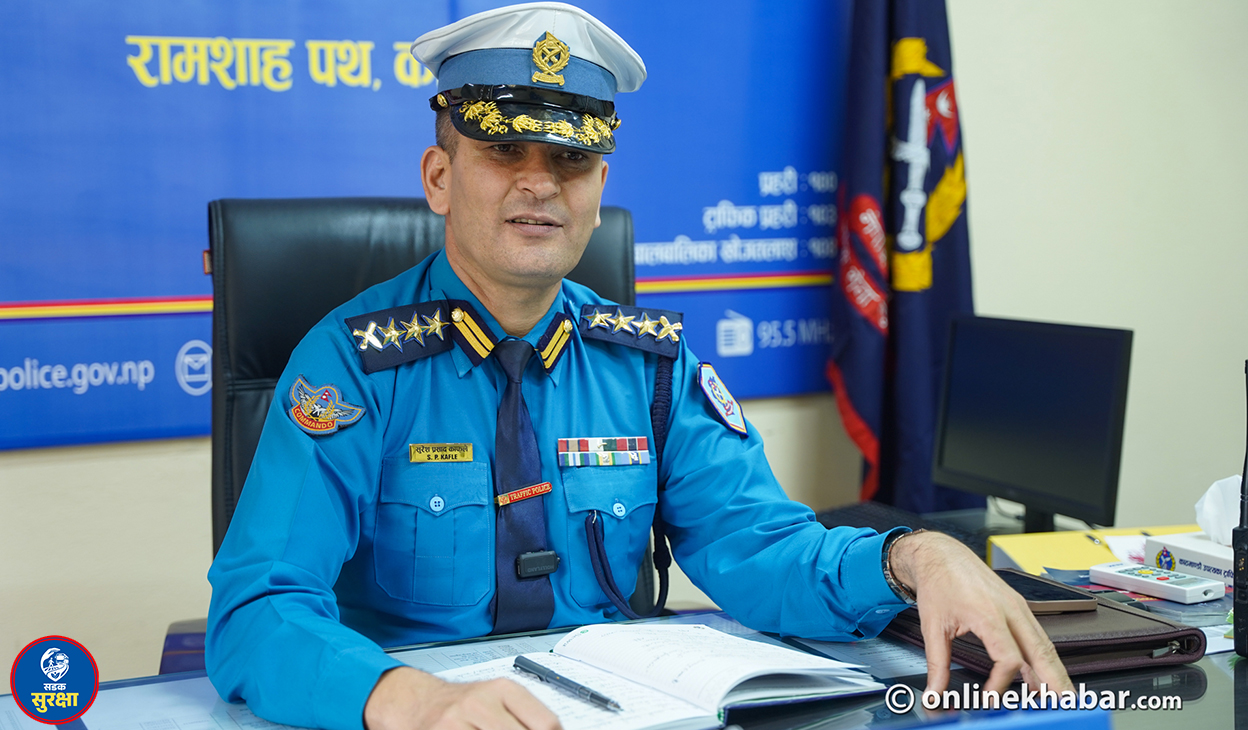
The issue of motorcycles operating at excessive noise levels seems to be increasing. How are you addressing this?
This is a major complaint. Traffic police have taken action against almost 150 motorcycles. We are working to reduce noise and enforce regulations.
Finally, what message would you like to convey to citizens?
The road is a shared space for everyone. All must follow traffic rules. Pedestrians should also cross roads according to rules and always walk on the right side to ensure their safety.
Road Safety Series-1
Road Safety Series-2