
Commission Finds Former Prime Minister Did Not Take Timely Action Despite Being Informed of Security Situation
Summary
- The inquiry commission concluded that the then government failed to take necessary decisions or appropriate precautions against the Gen Z movement.
- The commission noted that former Prime Minister KP Sharma Oli did not make proper decisions regarding the potential crisis related to the Gen Z protests.
- The commission pointed out that the cabinet and security committee took no concrete decisions on events of September 8 and 9, resulting in significant damage.
March 24, Kathmandu – The inquiry commission has determined that the then government erred by failing to adopt necessary decisions or appropriate vigilance in response to the Gen Z movement.
According to the report submitted by the commission, former Prime Minister KP Sharma Oli did not take proper decisions regarding the demands of the Gen Z protesters, the possible nature of the protests, and the emerging crisis.
The report particularly analyzes events and government decisions around September 8, 9, and 10, highlighting the weaknesses of Oli’s administration.
“The security arrangements on September 9 were based on intelligence gathered by the National Investigation Department from various sources, estimating participation of around 3,000 to 5,000 people, which proved to be inaccurate,” the report states.
The commission found that the National Investigation Department failed to collect necessary information from the Ministry of Home Affairs and relay it to the Prime Minister’s Office.
The report details a series of missteps by the government that proceeded without clear knowledge of the number of participants in the Gen Z protests. “A letter from the Prime Minister and Cabinet Secretariat showed no recorded decisions regarding events on September 8 and 9,” it says.
In other words, all decisions concerning the Gen Z movement were verbal. “At the National Security Council meeting on the evening of September 9, following grim incidents earlier that day, there should have been a thorough assessment of potential risks and well-planned deployment of security forces starting September 10, along with formation of a high-level investigation committee. However, only mild and oral decisions were made, with no written records, indicating a lack of formal action,” the report explains.
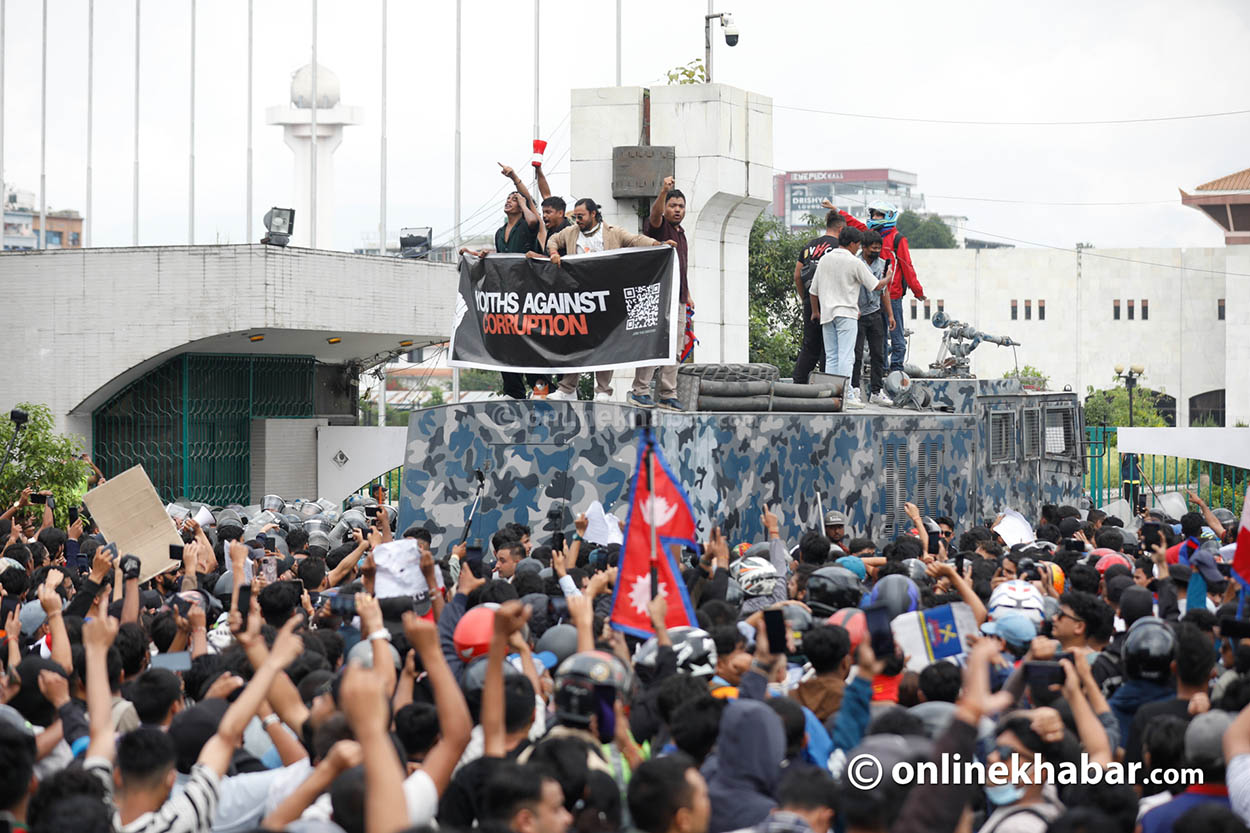
The commission attempts to clarify the negligence of the government from the decisions made during the council and security committee meetings on September 9, when 17 young students were killed.
Former Minister of Communications Prithvi Subba Gurung had informed that decisions were made to lift the social media ban and to form a committee to investigate the Gen Z movement.
However, those decisions existed only verbally rather than in writing. Only the promotion of a joint secretary at the Ministry of Agriculture and the appointment of former AIG Dan Bahadur Karki were documented in writing. The security committee’s meeting decisions remain problematic; for instance, at the time when police suppressions occurred against young students, the committee instead decided to purchase weapons.
“The security committee’s September 9 decision was to recommend to the government to approve the acquisition of weapons, ammunition, and other military materials required by the Nepali Army for fiscal year 2082/83,” the report notes. Yet, no firm decisions were made regarding the evolving situation amid the Gen Z protests.
According to the commission, the security committee and cabinet were in a position to make necessary decisions for army deployment. “During the National Security Council meeting on the evening of September 9, the option existed to impose a state of emergency from September 10, to ensure peace and security and deploy the Nepali Army, but no concrete decision was made,” the report states, “This failure led to unprecedented events on September 9 and 10, causing significant damage to life and property.”
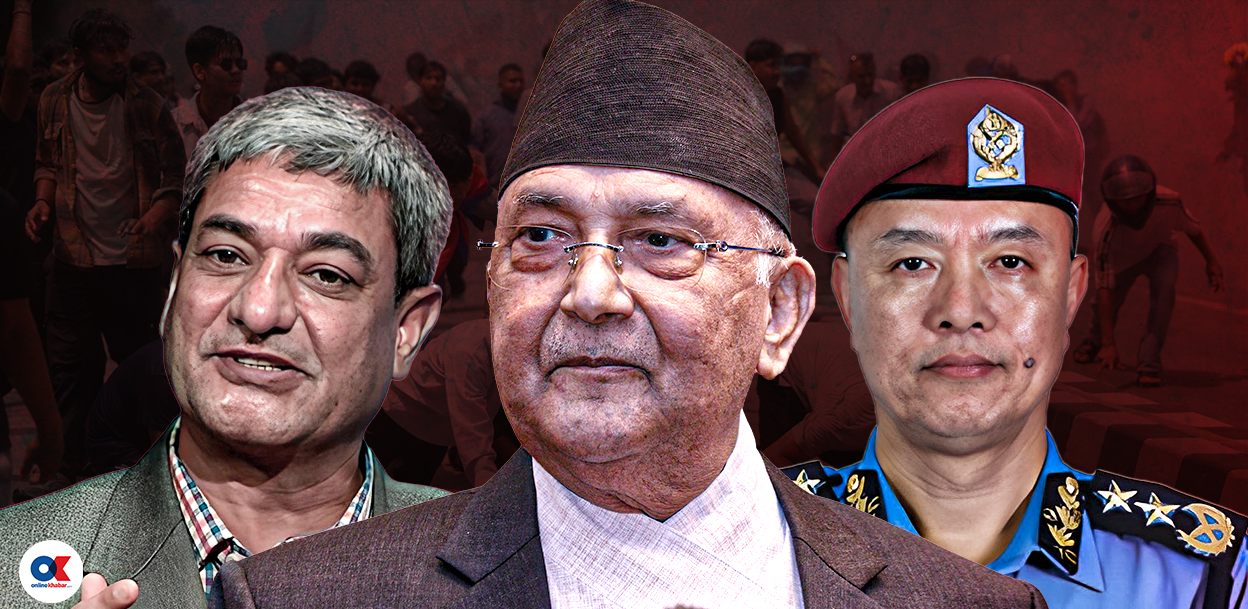
Security agency leaders had informed the Prime Minister in advance about the Gen Z protests. Despite a National Security Council meeting on September 8 and warnings about possible infiltration by organizers, no decisive action was taken. This fact is highlighted in the report.
“As of the evening of September 8 and 9 a.m. on September 9, peace and security were considered normal, but by noon on September 9, the situation was reportedly slipping beyond control, and army assistance was requested,” the report says. This indicates increasing errors due to insufficient attention to the Gen Z movement.
The report also notes that not only did the cabinet and security council fail to make timely decisions, but local administrative decisions were also delayed. “Outside Kathmandu, curfews were imposed from noon on September 9, but effective enforcement was lacking, and on September 10 most districts experienced large-scale property damage while security forces were unable to ensure their own safety,” the commission concluded.
The report attributes blame to the head of government for the failure to take necessary decisions despite multiple meetings. The Kathmandu administration convened five different meetings on September 9 but could not reach effective decisions.
Decisions from district security committee meetings reveal that warning signs of potential crisis were known to security agencies. For example, Lalitpur district administration, on September 9, decided to close schools for two days and to adopt necessary security precautions for party offices including Congress and UML, telecom facilities, and ministerial residences.
Bara and Kaski districts decided to increase security personnel at airports. Bara administration arranged for 12 additional security personnel at Simara Airport, while Kaski planned to upgrade security levels at Pokhara International Airport. Other district administrations also made decisions based on local assessments.
Nevertheless, the commission concluded that the former Prime Minister, leading the country at the time, failed to take timely and necessary actions to avert the potential crisis posed by the Gen Z movement. “Despite being informed about the security situation, there was no timely and appropriate initiative by the Prime Minister,” the report states.