
Addition of New Subsection in Procedure Provides Relief to Over 10,000 Young Entrepreneurs
News Summary
- The Ministry of Industry, Commerce and Supplies has added a new subsection to the Startup Enterprise Loan Operation Procedure 2082, eliminating the need for over 10,000 young entrepreneurs to travel to Kathmandu for loan presentations.
- In the current fiscal year 2082/83, 10,244 project proposals have been submitted for startup loans, doubling the number from the previous year.
- Instead of presentations, evaluation committees will now select entrepreneurs based on local inspection reports, photos, videos, and documents provided by local-level enterprise development facilitators.
March 22, Kathmandu – The inclusion of a new subsection in the procedure has simultaneously benefited more than 10,000 young entrepreneurs. Thanks to the revisions made by the Ministry of Industry, Commerce and Supplies to the Startup Enterprise Loan Operation Procedure 2082, entrepreneurs are no longer required to come to Kathmandu for presentations.
According to the ministry’s spokesperson, Netra Prasad Suvedi, this fiscal year has seen 10,244 project proposals submitted for startup enterprise loans. Under the procedure until 2081, every applicant was required to present in person for 10 minutes in Kathmandu. The recent amendments have lifted this obligation, easing the process for entrepreneurs.
The updated procedure for 2082 added subsection 2 under clause 24, allowing the inclusion of support from provincial governments and local-level enterprise development facilitators for loan applicants.
On this basis, the Industrial Enterprise Development Institute, under the ministry, collaborated with local governments to conduct site inspections of project proposals under the startup loan program this year.
Spokesperson Suvedi explained that evaluation committees will score entrepreneurs based on inspection details, photos, videos, and documents submitted in the format prescribed by the institute, all collected by local enterprise development facilitators.
Although presentations carried a scoring weight in the procedure, the assessment will now be based solely on submitted details and documents. Entrepreneurs scoring above 50 percent in the preliminary list will be prioritized for credit checks through banks and recommended for loans.
Clause 23 of the 2081 procedure mentioned cost-sharing arrangements can be made among the institute, provincial governments, local authorities, private sector, academia, and universities.

This year, the provision was clarified and expanded by adding the subsection stating, “The institute may seek assistance from provincial government entities registering industries and local-level enterprise development facilitators, coordinated through the provincial government, to enhance loan recommendation and program implementation effectiveness, necessary data collection, loan disbursement monitoring, and evaluation.”
To facilitate the implementation of this provision, Executive Director E. Umesh Kumar Gupta of the Industrial Enterprise Development Institute wrote a letter to the ministry in Magh last year. Based on this letter, on Magh 28, 2082, the Ministry of Industry wrote to the Ministry of Federal Affairs and General Administration requesting facilitation.
The Ministry of Federal Affairs notified all municipalities and rural municipalities on Magh 29, instructing them to implement the institute’s request. The site inspection form for startup loan 2082 project proposals was also made available during this process.
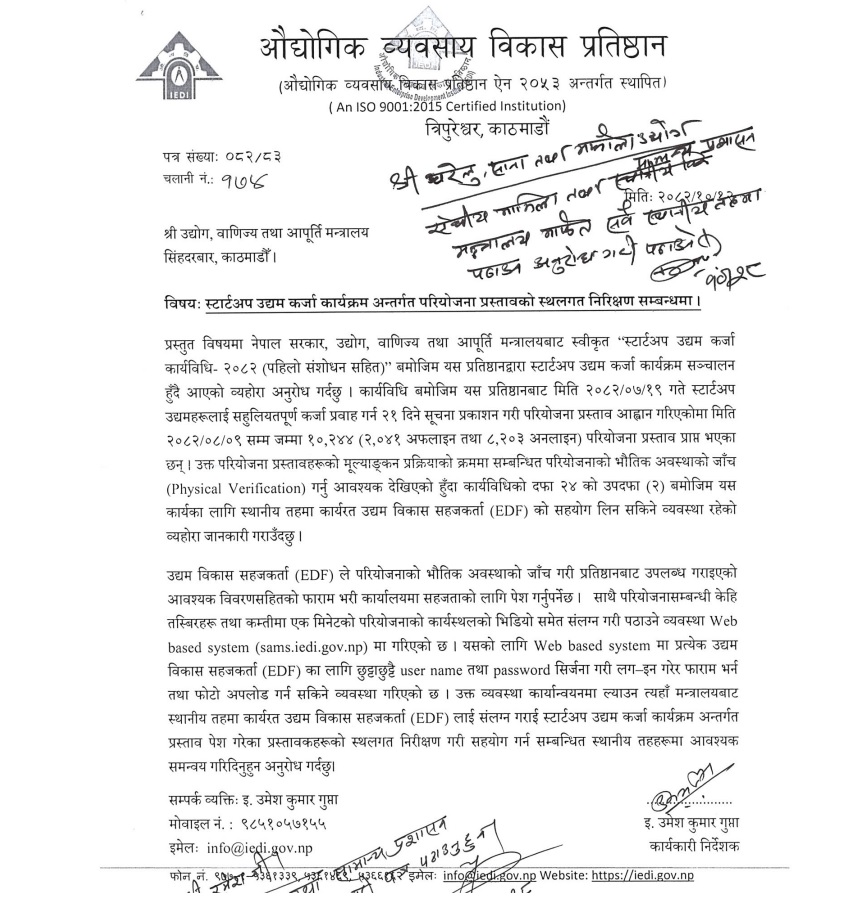
Proposals Double Compared to Last Year
During the current fiscal year 2082/83, 10,244 entrepreneurs submitted proposals for startup loans, which is double the 5,158 proposals submitted during fiscal year 2081/82. The government has been providing startup loans annually to encourage youth to transform innovative knowledge, ideas, skills, and capacities into businesses.
According to the Ministry of Industry, Commerce and Supplies, a budget of 860 million NPR has been allocated for this program this year. Eligible entrepreneurs will receive loans without collateral at a 3% interest rate, with loan amounts ranging from a minimum of 500,000 NPR to a maximum of 2 million NPR per entrepreneur, according to the Startup Enterprise Loan Procedure 2082.
The Industrial Enterprise Development Institute had requested submission of proposals related to easy loan disbursement for startups by Kartik 19.
The ministry reported that a total of 10,244 project proposals were received within the deadline; 2,041 physically and 8,203 electronically. Enterprise development facilitators conducted physical site monitoring and submitted detailed forms including photos and one-minute videos showing entrepreneurs’ operations or products for each proposal. Evaluation committees will now select entrepreneurs based on these details and submitted documents instead of presentations. Proposals came from 77 districts and 713 local units this year.
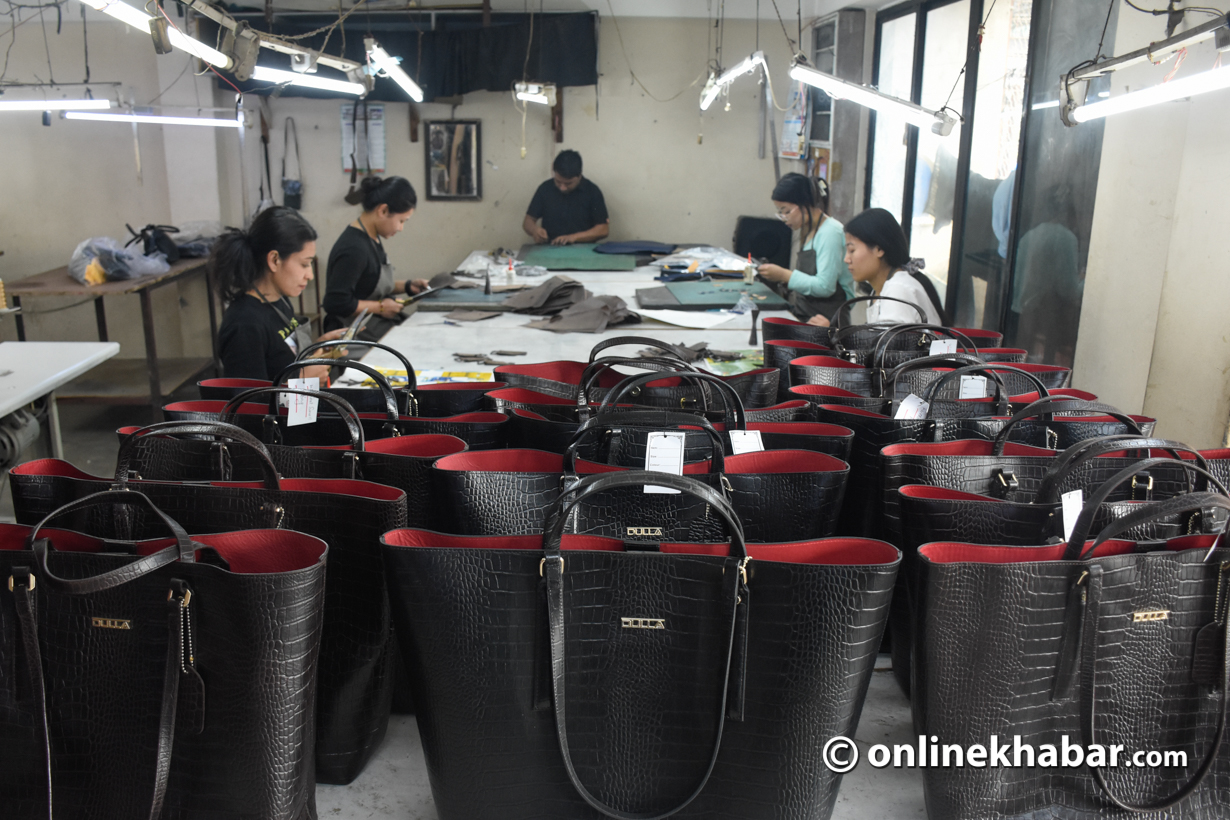
Preliminary Screening Supported by Artificial Intelligence
The ministry stated that the projects submitted through the institute are being evaluated by an expert panel. Simultaneously, artificial intelligence-based screening software is conducting preliminary evaluations, which is believed to provide approximately 80% accuracy. The institute will publish a preliminary list including projects that meet procedural criteria.
Selected proposals, which typically require business presentations, entail higher costs, complex procedures, and longer durations that may affect program completion within the fiscal year. Therefore, this year the evaluation will rely on inspection reports, photos, videos, and official documents submitted by enterprise facilitators, as explained by spokesperson Suvedi.