Can Mamata Banerjee’s Stronghold Be Broken by BJP?
April 23, Kathmandu – Assembly elections are currently underway in Assam, Kerala, West Bengal, Tamil Nadu, and the Union Territory of Puducherry. Voting is taking place today, April 23, with the final phase scheduled for April 29.
Among these four states, the most attention is focused on West Bengal this time around. Historically, elections in West Bengal have been conducted in 6 to 8 phases. By comparison, this election’s schedule is notably brief.
In West Bengal, the contest is intensely competitive between Mamata Banerjee-led Trinamool Congress (TMC), which ended the Communist stronghold after 15 years, and Indian Prime Minister Narendra Modi’s Bharatiya Janata Party (BJP). This election is widely regarded as the most compelling. Indian newspapers, television channels, and other media outlets are extensively covering the electoral process.
Election Environment
Voting in the first phase began at 7 a.m. on Thursday and, according to Indian media reports, nearly 90 percent of eligible voters cast their ballots by 5 p.m.
This phase covers 152 constituencies across 16 districts where 36 million voters will participate. Out of 1,478 candidates, 167 are women. The Election Commission has deployed substantial security measures to ensure a free and fair process, including 2,450 companies of central paramilitary forces.
Incidents of Violence
There have been reports of violent incidents in some areas during voting. Tensions rose in Naoda, Murshidabad, following the arrival of Humayun Kabir from the Aam Janata Unnayan Party, leading to protests by TMC supporters. In Domkal, Murshidabad, some voters alleged threats and intimidation.
Stone-pelting targeted BJP candidate Agnimitra Paul’s vehicle in Asansol South. BJP candidate Suvendu Adhikari claimed that TMC workers attacked him in Kumargram. These incidents reflect the continuation of a legacy of electoral violence in the region.
Political violence is a common sight in West Bengal before, during, and after elections. Statistics reveal that the most lives lost to political attacks during elections are reported from West Bengal. In rural areas, it is common for supporters and workers of losing parties to be chased from their homes, forcing them to seek refuge elsewhere for months.
Why Is This Election Important?
This election is regarded as a decisive turning point in Indian politics. From a national perspective, it is a critical test of BJP’s long-term strategy to expand into South and East India. BJP has long aimed to make West Bengal a key political base, and this election will determine the extent of that success.
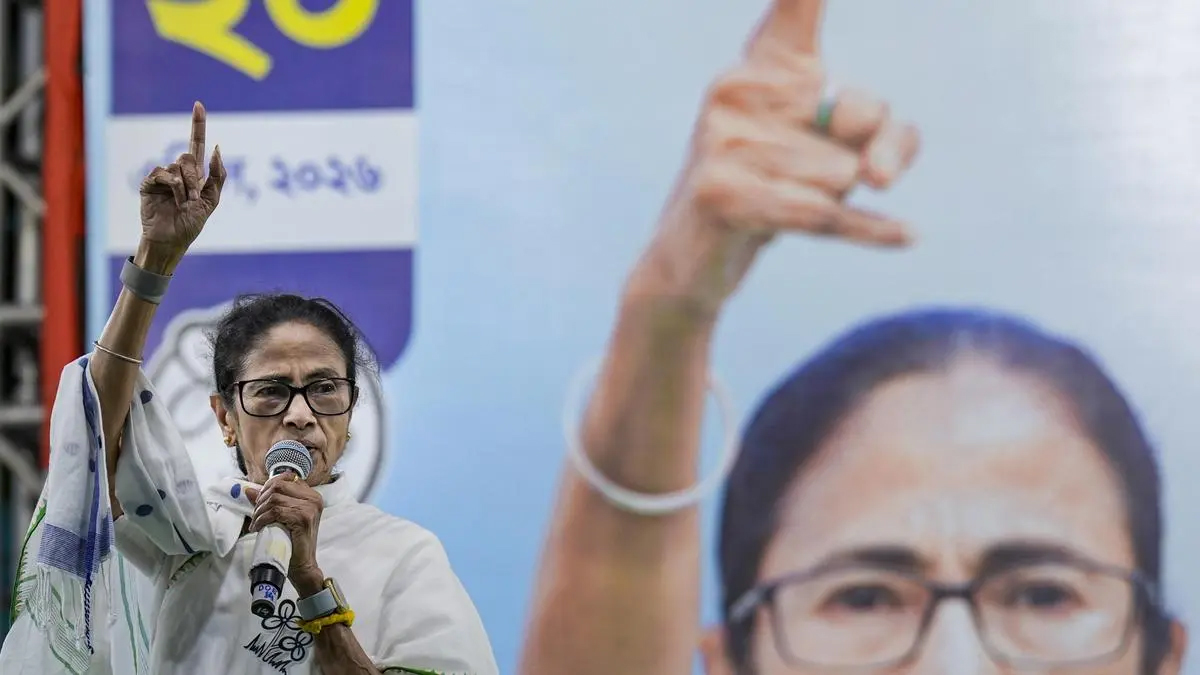
This election is not merely about a win or loss but represents a profound struggle between regional and national parties. Mamata Banerjee’s TMC presents itself as the sole protector of Bengali culture and regional identity. In contrast, BJP advocates a platform of national unity, Hindutva, and development, striving to break Banerjee’s regional political fortress.
Political analysts in India are calling this election the ‘semifinal’ ahead of the 2029 Lok Sabha elections. West Bengal has 42 Lok Sabha seats, which significantly impact the national power dynamics. Thus, this election has become a prestige battle for the government in Delhi.
For Banerjee, who has governed West Bengal for 15 years, this election will affirm whether her stronghold remains intact. TMC has retained power thrice in a row. Should they sustain their grip for a fourth term, Banerjee will become the longest-serving chief minister in West Bengal’s history.
The Contest Landscape
Chief Minister Banerjee’s TMC has centered its campaign around its traditional slogan, ‘Ma, Mati, Manush’ (Mother, Soil, People).
The party emphasizes key initiatives such as direct cash transfer schemes for women, youth employment programs, and social security projects as main electoral agendas.
Banerjee’s influence is so entrenched that despite years of efforts, BJP has not been able to field a credible alternative candidate in West Bengal. Although the TMC government has faced allegations of administrative failures and corruption, Banerjee’s personal popularity remains largely unaffected.
Modi’s BJP pitches itself as the agent of change. Modi has claimed during rallies that the people of Bengal will give a mandate for change this time. BJP has fielded formidable leaders such as Suvendu Adhikari, Dilip Ghosh, and Agnimitra Paul, focusing its campaign on good governance, law and order improvements, and curbing illegal immigration.
Despite forming the majority government at the center since 2014, BJP has not yet made significant inroads in West Bengal against Banerjee’s popularity. In the 2021 assembly elections, Amit Shah aimed to win over 200 seats but secured just 77.
Meanwhile, leftist parties and the Indian National Congress, which had no seats in 2021, are striving to regain their lost standing. Congress leader Adhir Ranjan Chowdhury is contesting from Baharampur, while the Left Front promises permanent jobs for every family.
Election History
After India’s independence, West Bengal was chiefly governed by the Indian National Congress government for about 30 years, except for some weak coalition governments. In 1977, West Bengal fell under the control of the Left Front for the first time.
The Communists maintained their stronghold for 34 years until 2011 when Mamata Banerjee, campaigning on a platform of change and in alliance with the Congress, toppled the Communist bastion. The TMC-Congress coalition won 225 of 294 seats, while the Left Front was limited to 62 and BJP just 2 seats.
In the 2016 polls, TMC won a commanding 211 seats independently, retaining power despite accusations of corruption, with the public still backing Banerjee. BJP increased its vote share to 10.17 percent.
In 2021, despite BJP’s slogan ‘Abki Bar, 200 Par’ (This time, 200+ seats), they did not succeed. TMC won 215 seats while BJP increased its vote share to 38.13 percent but secured only 77 seats.
One notable 2021 result was the complete wipeout of the Congress and leftist parties, which had led the state government for many years.
What Do Surveys Indicate?
Current surveys show a fierce contest between TMC and BJP. Most polls have TMC slightly ahead.
According to ‘Matrigrowth’, TMC is projected to receive 43 percent of the vote, with the BJP alliance close behind at 41 percent. The ‘C-Voter’ poll projects 44 percent for TMC and 40 percent for BJP.
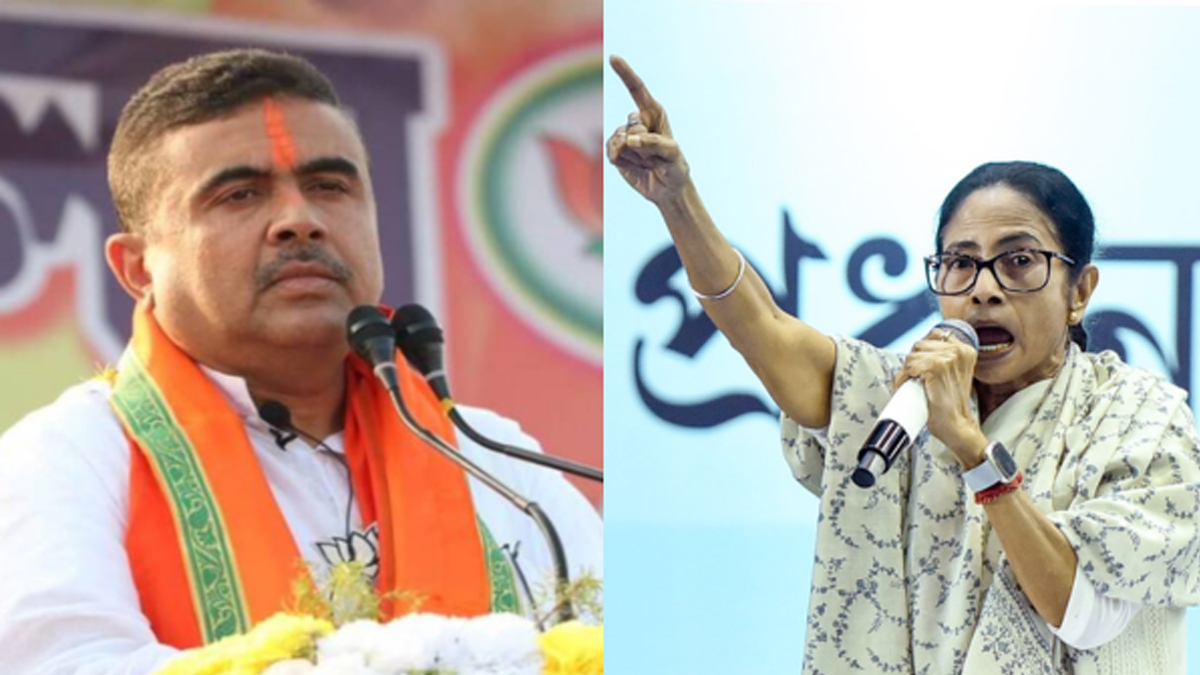
Regarding seat projections, the surveys conducted by ‘Vote Vibe’ and ‘CNN-News18’ estimate that TMC could win between 184 and 194 seats, comfortably securing a majority, while BJP is expected to capture between 98 and 108 seats.
Surveys also indicate Mamata Banerjee remains the preferred candidate for Chief Minister, with about 48.5 percent of voters choosing her compared to 33.4 percent favoring BJP’s Suvendu Adhikari, underscoring her continued popularity in the state.