
Displaced Residents Uneasy in Temporary Shelter
Summary
- Residents displaced from Thapathali and Gairigaun were relocated without force by security personnel to the Radhaswami Satsang Byas Ashram in Kirtipur.
- The Kathmandu Metropolitan City arranged temporary accommodation for 232 individuals at the ashram, with only 132 having eaten meals on Sunday.
- Displaced residents expressed concerns about living conditions at the new location, as well as education and healthcare arrangements for their children.
April 13, Kathmandu — Residents displaced from settlements in Thapathali and Gairigaun were relocated without any use of force by security personnel who assisted in the transfer. The residents were given time to pack their belongings and moved to a government-designated site.
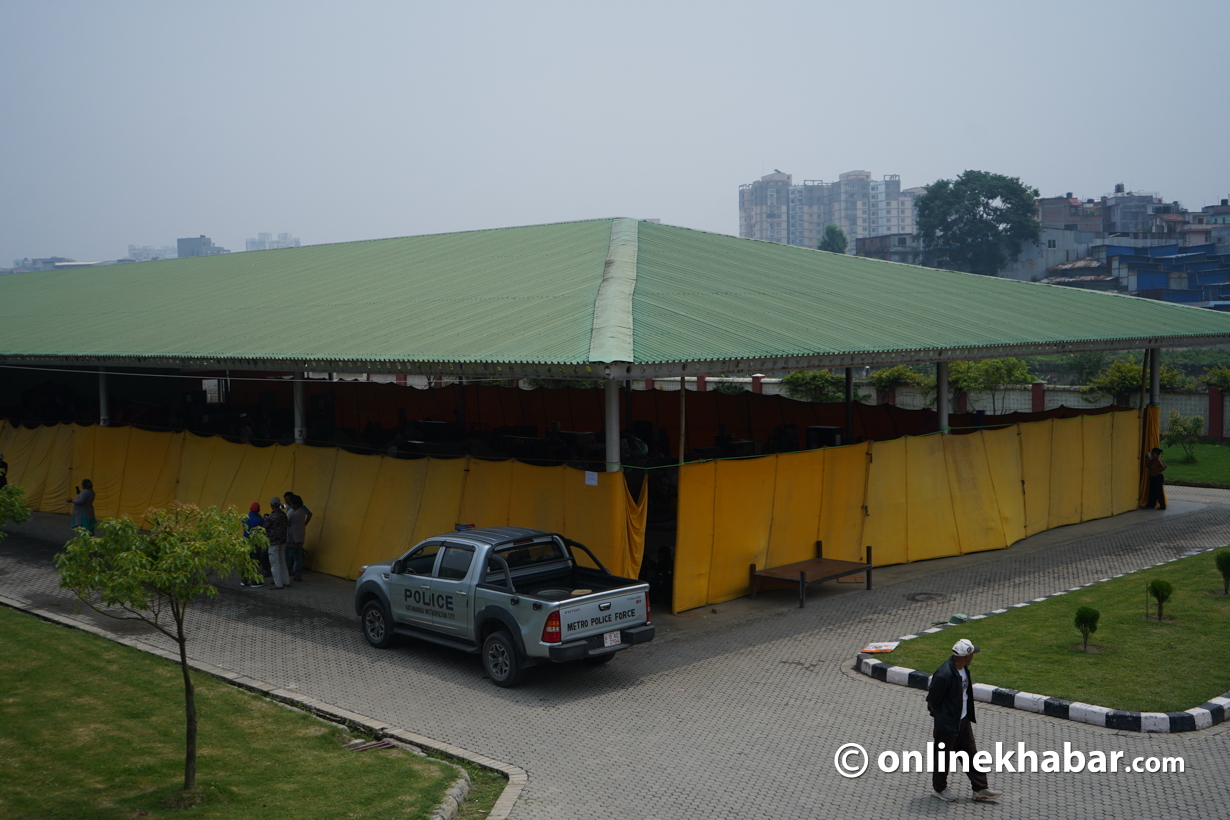
Most of those relocated on Saturday have been temporarily settled at the Radhaswami Satsang Byas Ashram in Kirtipur. According to the Kathmandu Metropolitan City, 232 people registered to stay at the ashram. From morning to evening, members of 51 families were brought to Kirtipur on Saturday.
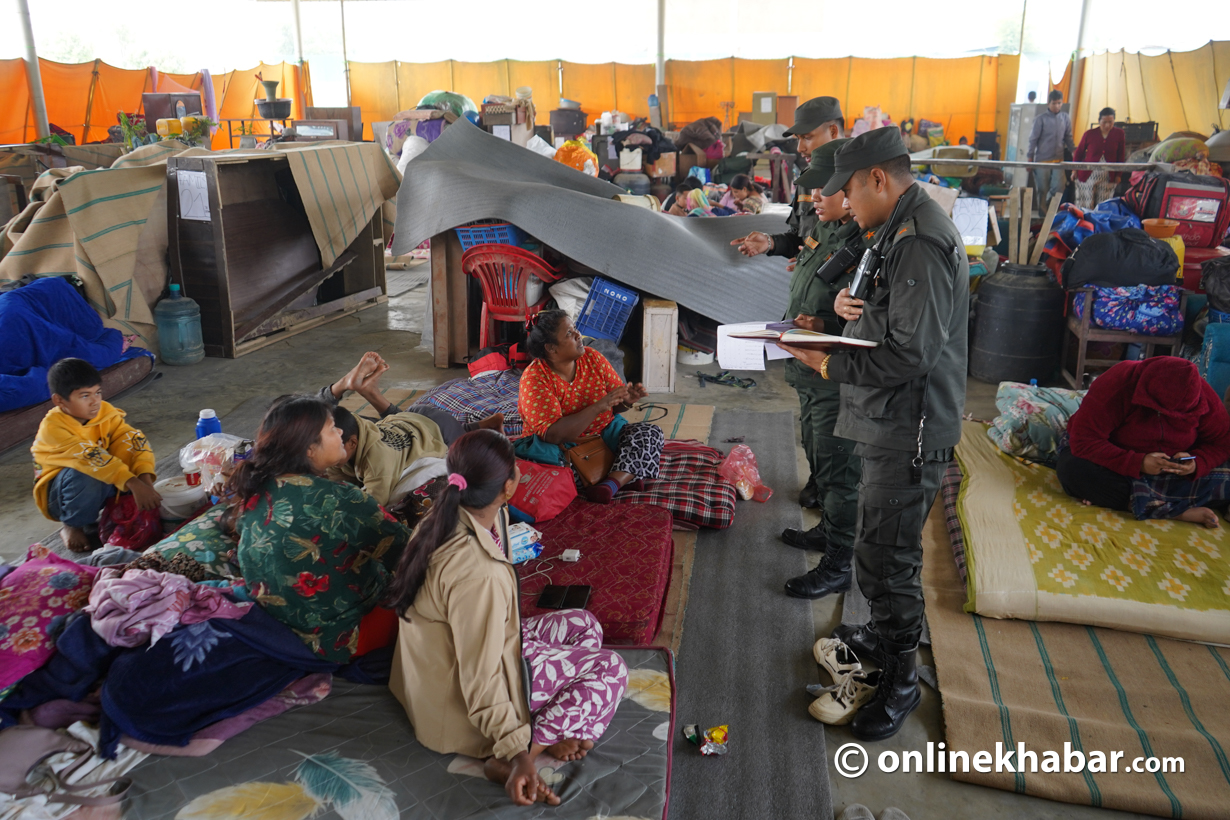
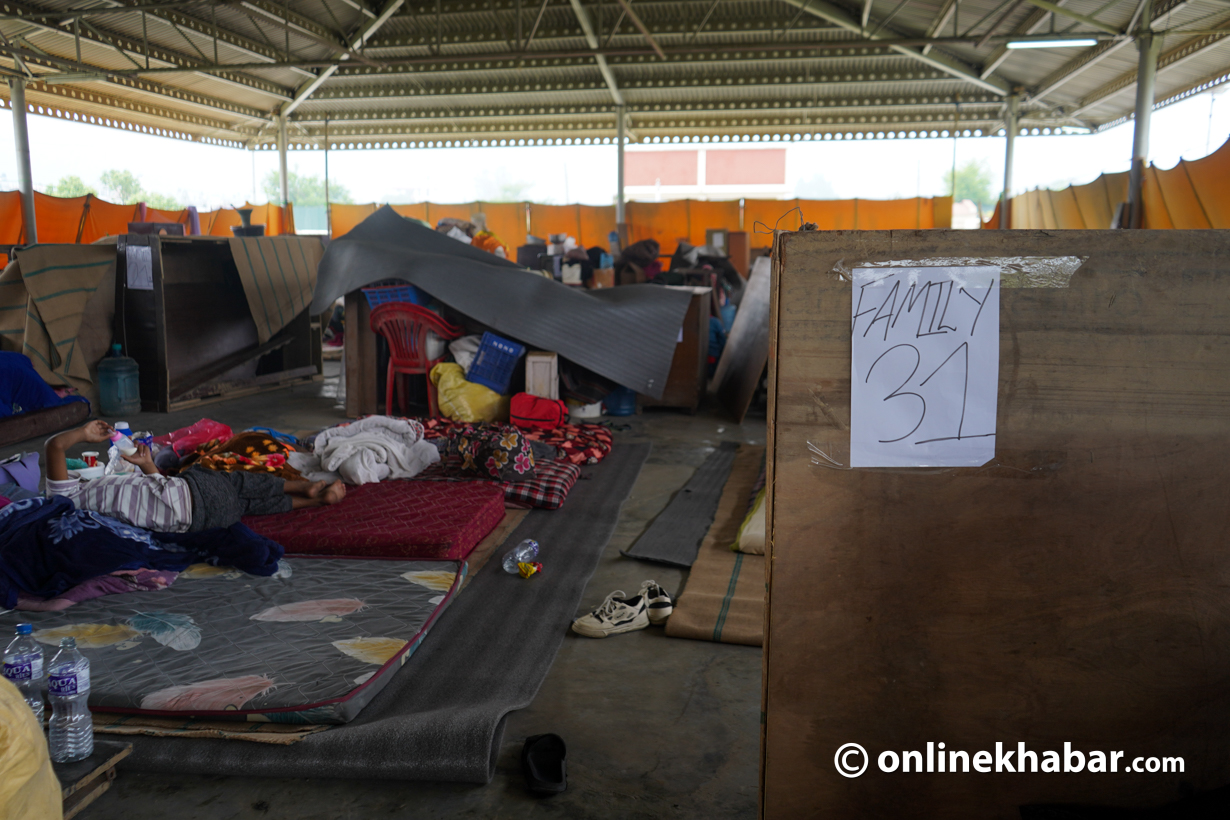
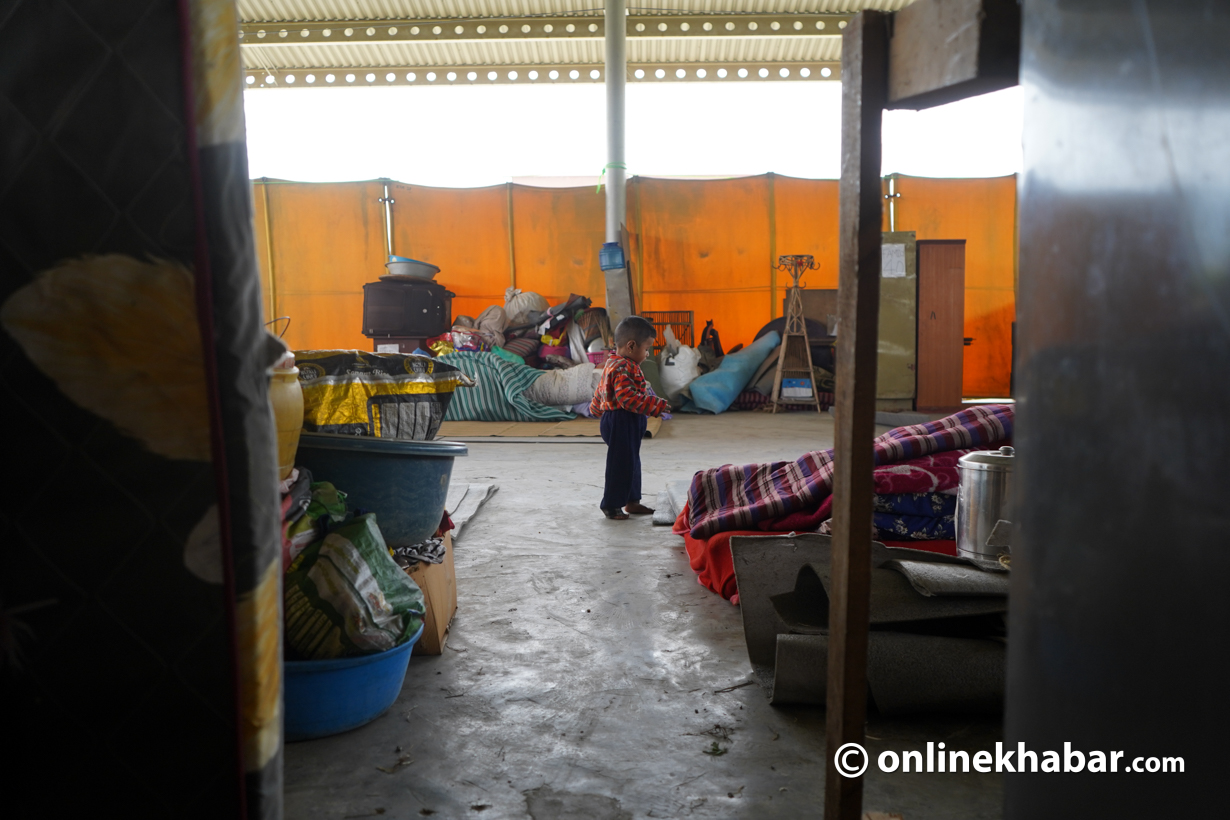
The metropolitan city allocated space within the ashram’s large hall where beds were arranged together. Residents placed their belongings separately according to nameplates labeled “Family One,” “Family Two,” and so forth. Beds were spaced to maintain distance between families. They ate meals provided in packets brought by the metropolitan city. Some could satisfy their hunger, while many said the food was insufficient. The displaced residents spent their first night in the new environment at the ashram.
On Sunday morning, the metropolitan city supplied tea and biscuits. Those who had woken up enjoyed the tea and biscuits, while some still asleep were not disturbed by security personnel. Those wishing to leave had their names and phone numbers recorded and were granted permission by security forces. Two individuals left with permission on the grounds that they had homes elsewhere, according to officers stationed at the ashram.
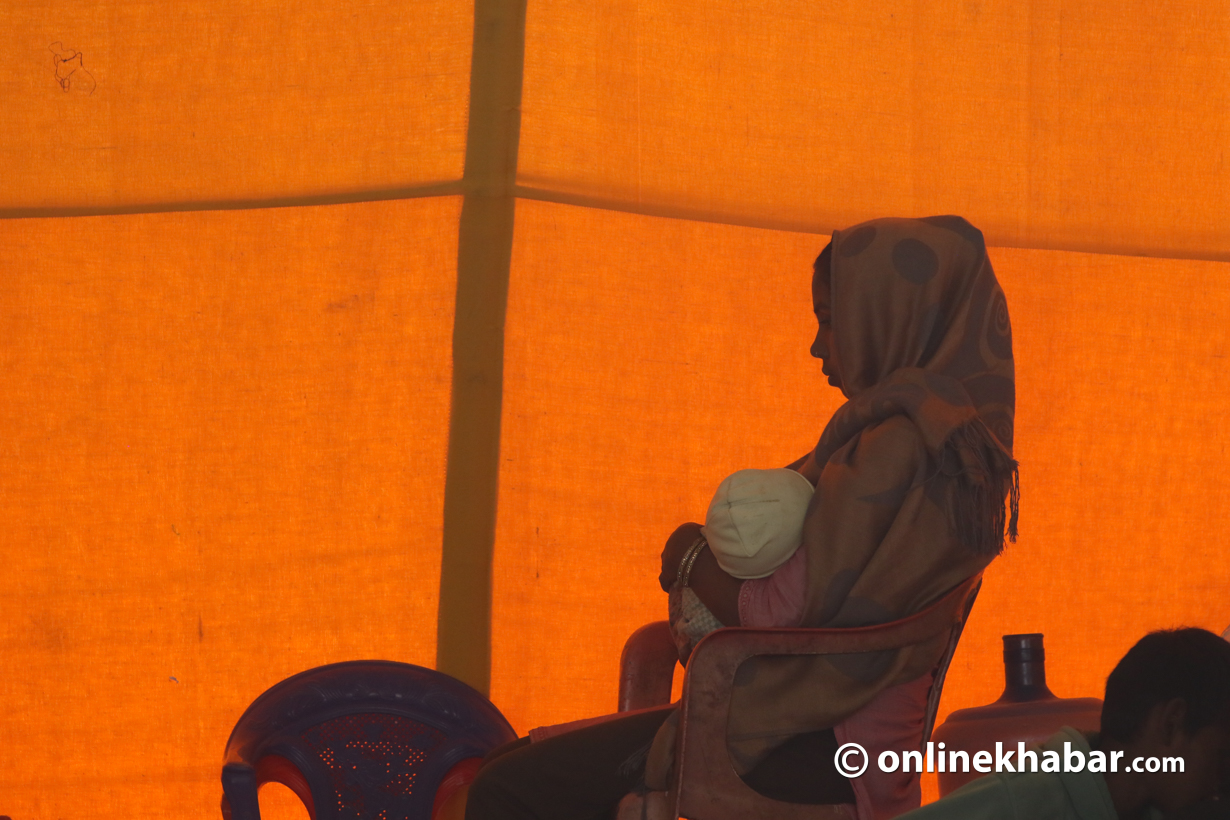
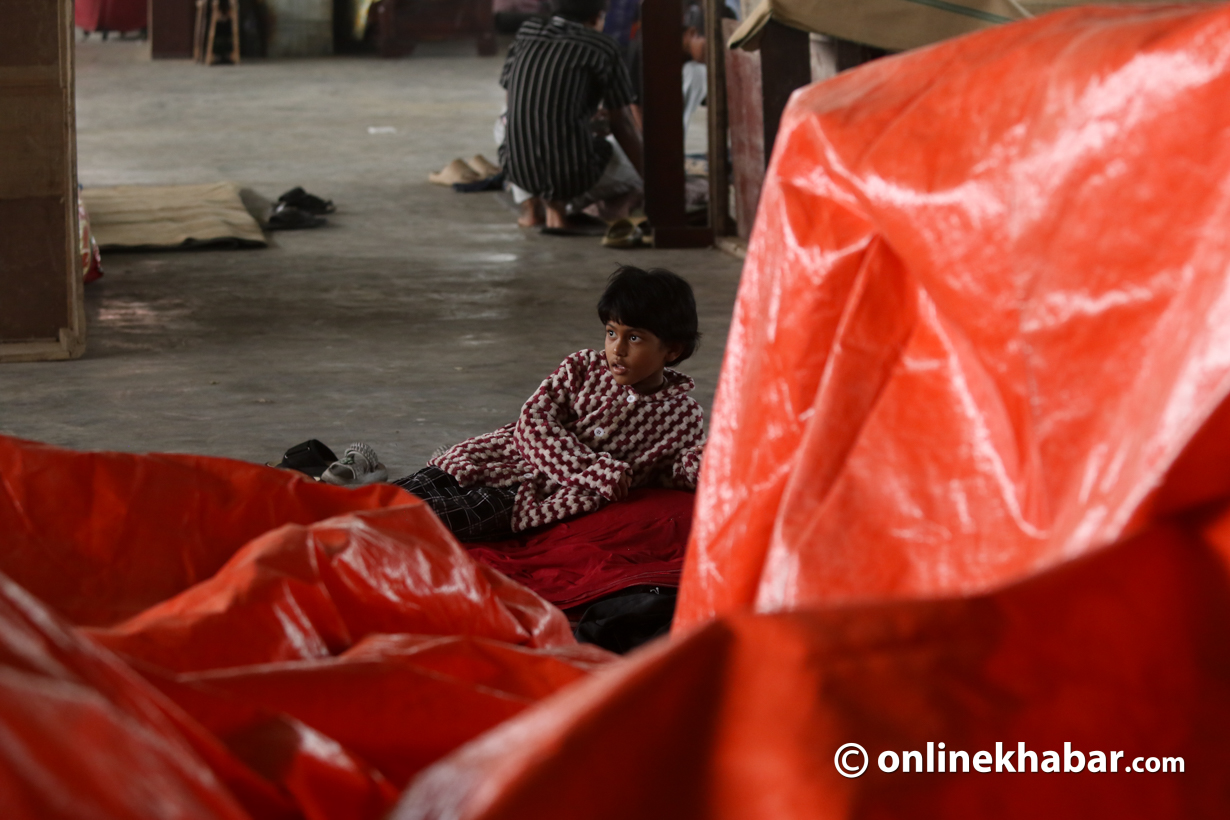
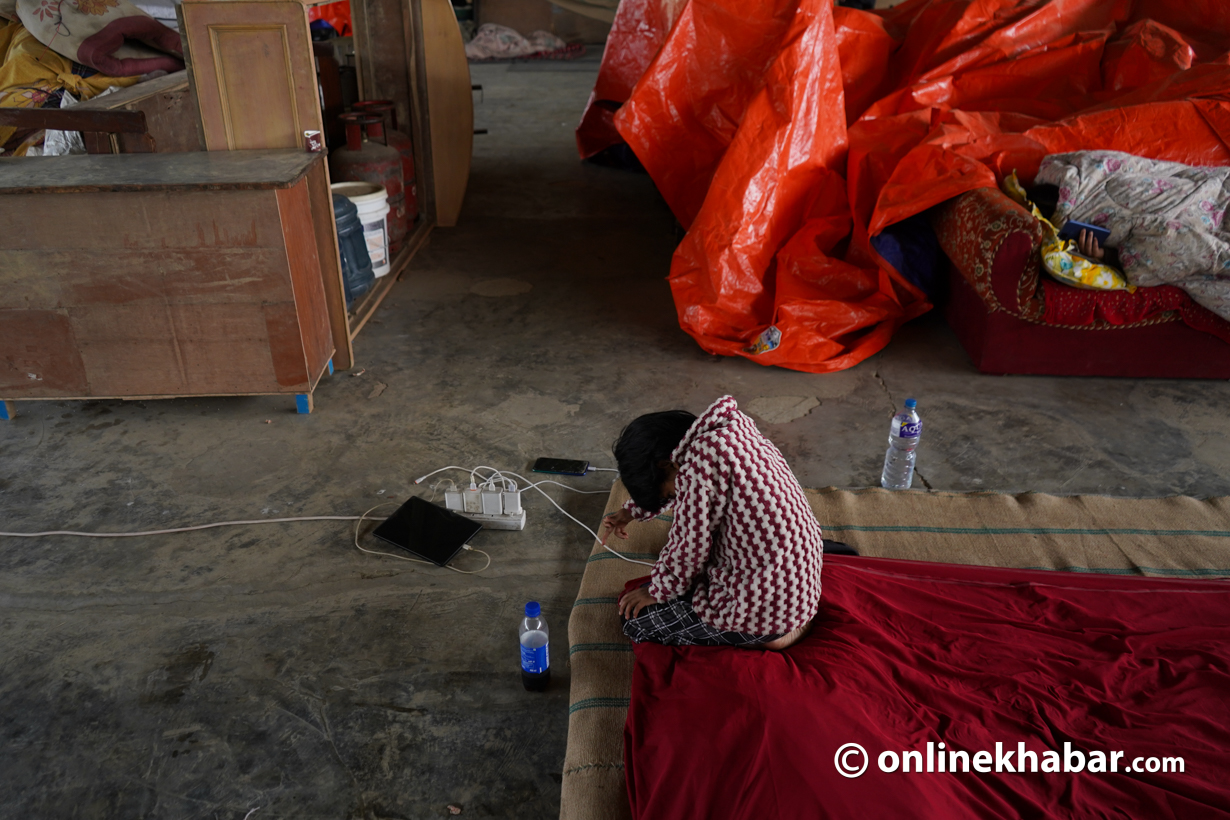
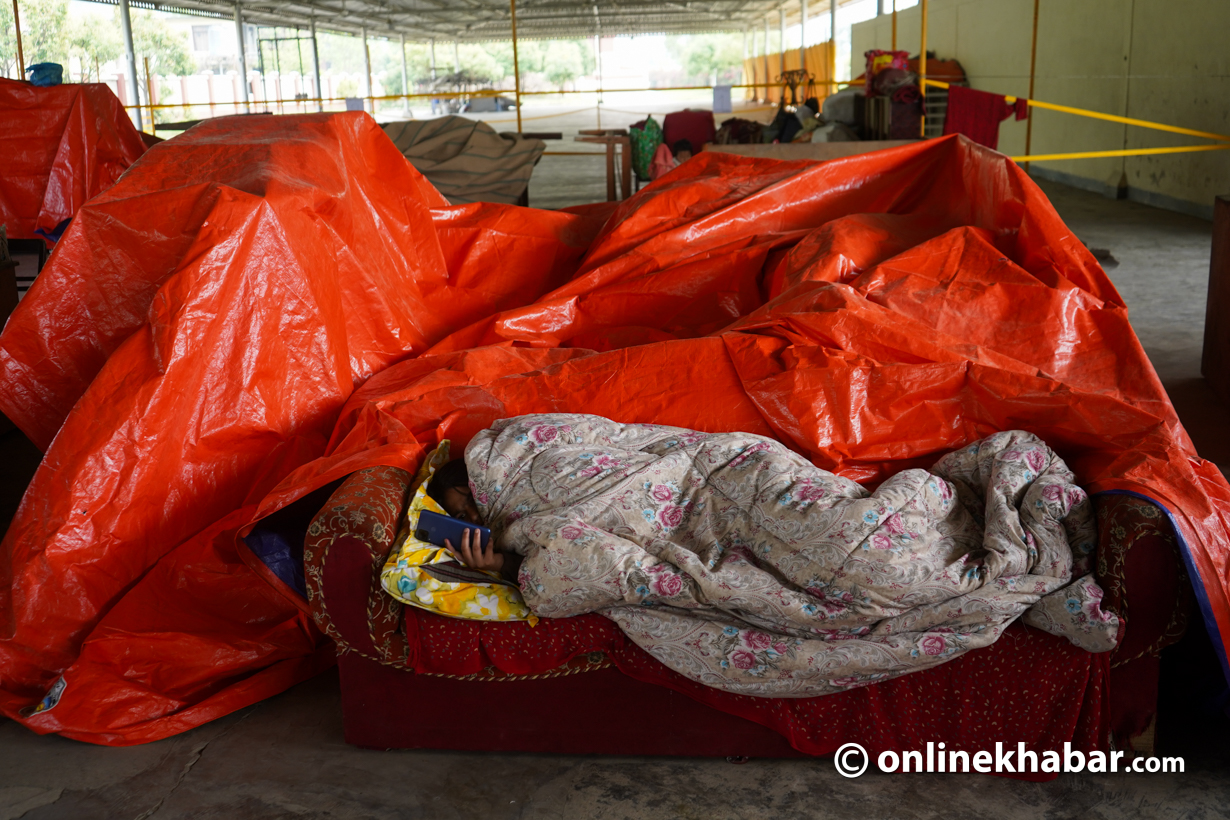
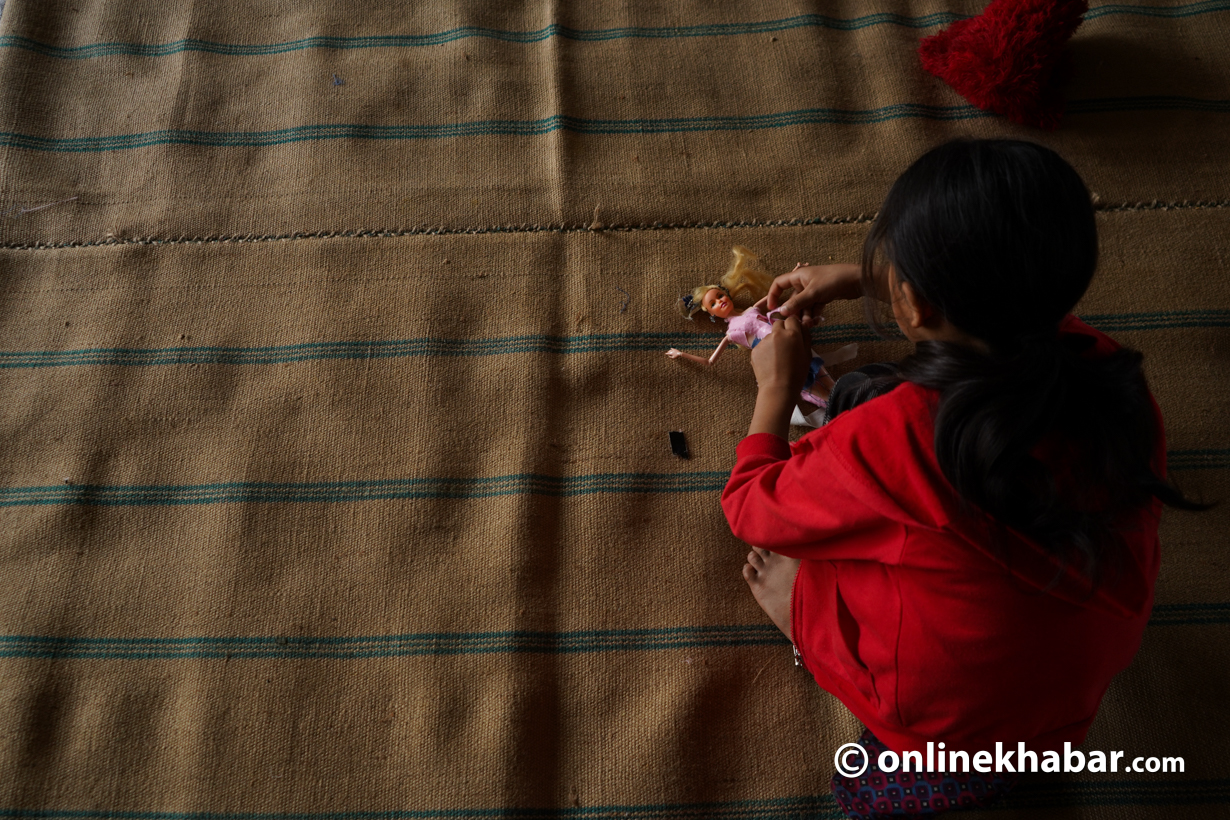
Routines among the displaced changed with the new setting. Children started playing, elders engaged in chores around the ashram, some occupied themselves with phone calls, others played games on their mobiles while lying in bed. Mothers of newborns attended carefully to their infants. Some families brought their pet dogs along, spending mornings lovingly tending to them.
As food had not arrived by 11 a.m. on Sunday, frustration grew among the displaced. A young man showed a neck injury and questioned security personnel sharply over lack of treatment. Health workers attempted to reassure them by saying, “Medical supplies will arrive soon.” Anxiety about the future increased among those lacking permanent addresses.
The residents voiced concerns regarding the government’s designated settlement, its infrastructure, and the arrangements for the education, health, and employment of their children. A woman from an eastern hill district expressed particular worry about her child’s schooling. The new academic session is about to begin, but educational provisions for the relocated children remain unsettled. She said, “We don’t know where we will live. My son is to be enrolled in grade five. What will the conditions be like at the new place?”

Some residents possess knowledge about a government housing facility built in Nagarjun Municipality during former Prime Minister Dr. Baburam Bhattarai’s administration. At that time, plans were made to settle displaced residents there, but many were reluctant to leave Thapathali for that location. Even now, they are unwilling to move to that area.
About 100 people who reached the ashram yesterday went out seeking rooms and relatives. According to the metropolitan city, 232 people were brought to the ashram on Saturday; however, only 132 had meals on Sunday, with others continuing to leave to find accommodation or relatives.
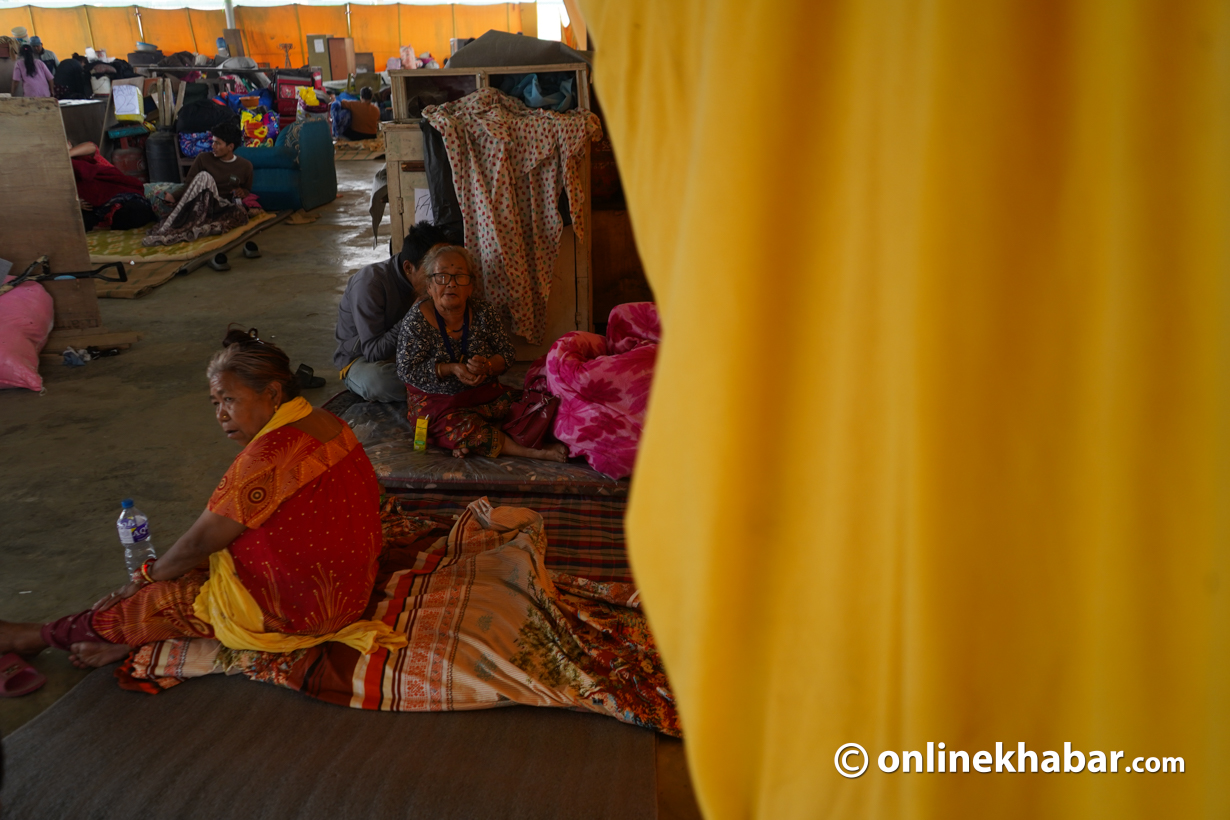
Nilam Thapa, who has lived in the squatter area since 2006 BS (circa 1949), said the main reason for leaving Thapathali was the ability to work and earn a living. She said, “In Thapathali, we could work and get food, transport was easy if we had to go somewhere, and the hospital was nearby. It was comfortable for poor people to live there.”
A woman from an eastern hill district, who had earned a livelihood by cleaning others’ houses and doing laundry, expressed curiosity about the new location. She asked, “Will transportation to work be available from there?”
With food delayed on Sunday morning, the displaced gathered discussing the government-assigned location. Five to seven adults were engaged in conversation; among them was Gopal Bahadur Sunar, a leader in the Thapathali squatter community. He expressed little interest in moving to the government-built facility in the village. He stated, “Our demand is to be provided with three and a half aana (a unit of land) plots on the outskirts of Kathmandu, Bhaktapur, or Lalitpur on installments.”
They envision purchasing land through installments and constructing homes. Another woman described the building from Bhattarai’s time as unsuitable, saying, “You bump into things everywhere, it’s hard to fit even a single bed in the room.” They also raised questions about past classification and documentation processes. Their demands included access to medical care, employment, and attention to their children’s education.
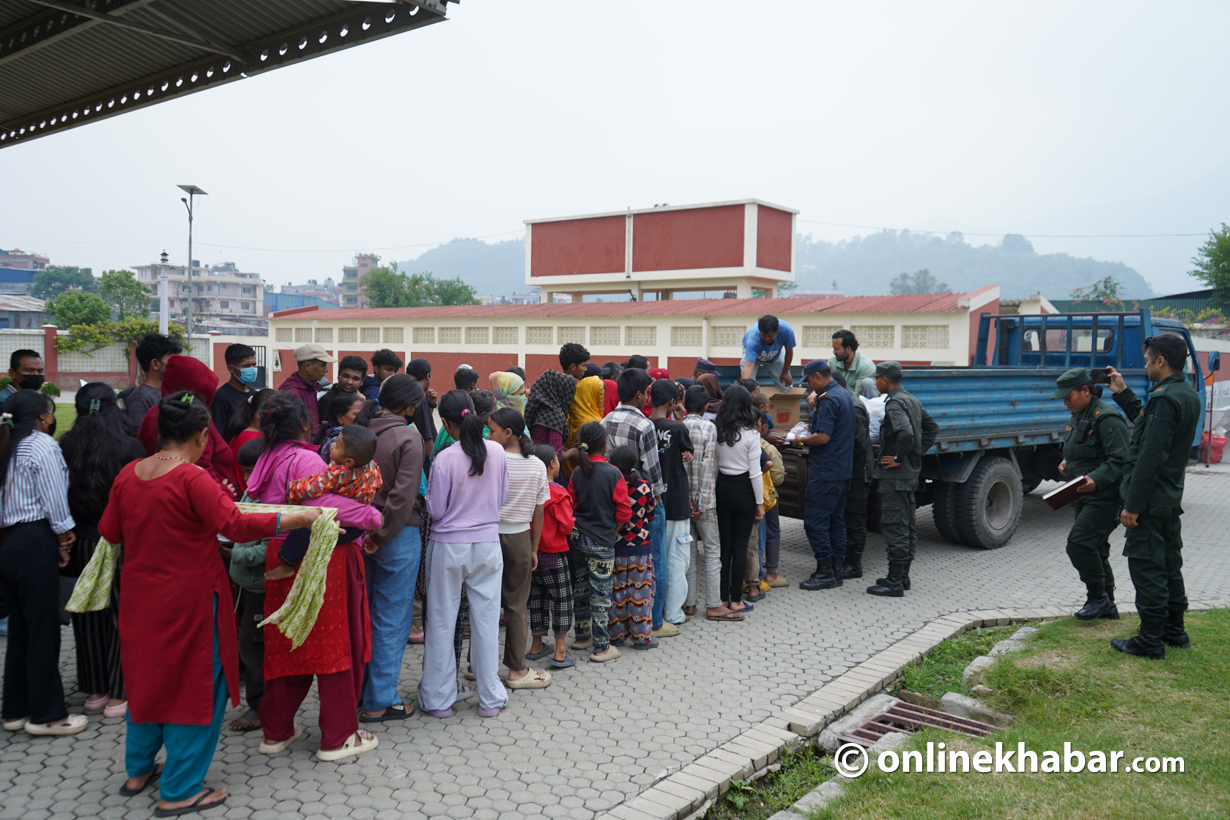
Near noon, the metropolitan city sent a vehicle with packaged food. Security personnel organized the displaced into lines and distributed equal-sized meal packets to children, youth, adults, and elders alike. The meal included a small portion of vegetables and pickles on both sides.
However, many youths and adults expressed dissatisfaction with the quantity of food, some complaining about insufficient portions and others criticizing delays in food delivery. Many took extra packets with them.
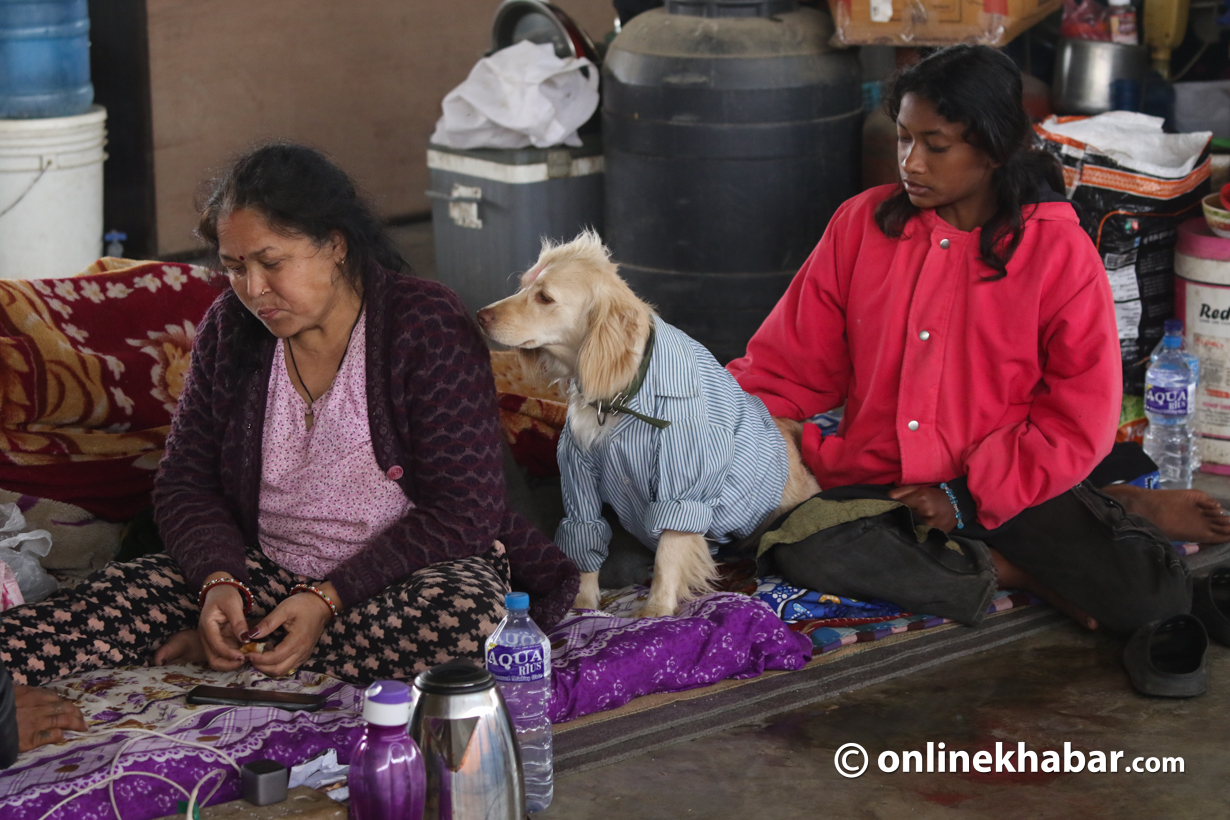
Some fearful of the metropolitan city’s presence moved away after taking food and remarked, “Food was delivered at 12 o’clock. Will this amount suffice?” A notable decrease in the number of meals served Sunday morning was observed compared to Saturday night. According to metropolitan data, 232 people were present at Radhaswami Satsang Byas Ashram on Saturday, but only 132 took meals on Sunday.
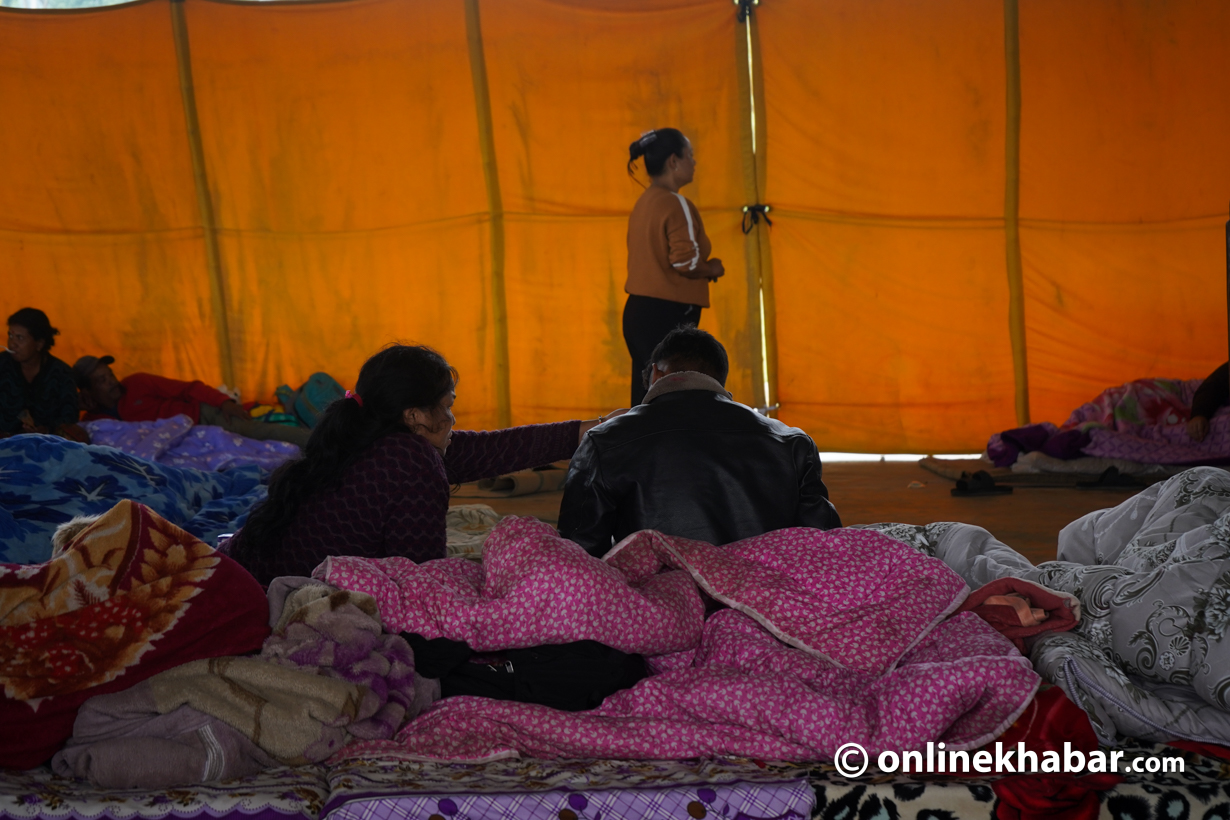
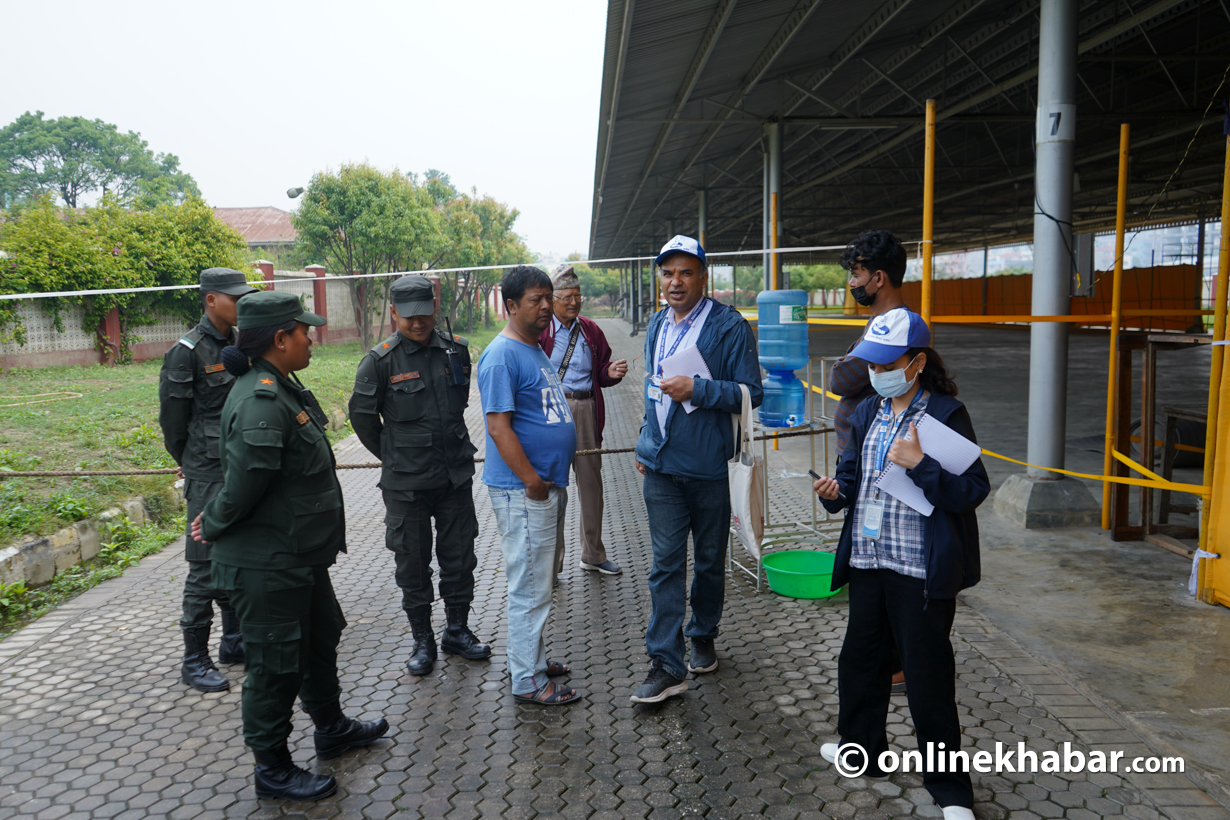
For security and care, three police officers from Nepal Police are deployed at the site, along with three metropolitan officials and three municipal police officers assigned to the ashram.
Municipal employees working at the ashram said no decision has been made yet regarding how long the displaced will remain there. They noted, “Painting and repair work is underway at their new designated location. Once completed, a relocation plan will be implemented.”
The municipality has also arranged children’s play materials and made preparations for school to start.
Photographs by Aryan Dhimal