
Does the President Have the Authority to Return an Ordinance?
Summary
- President Ramchandra Paudel has returned the ordinance related to the Constitutional Council to the government for reconsideration.
- The President urged the government to preserve the essence of the ordinance and the spirit of the Constitution by preventing the majority system in the Constitutional Council from being undermined.
- Legal experts have expressed differing opinions regarding the constitutional authority of the President to return an ordinance.
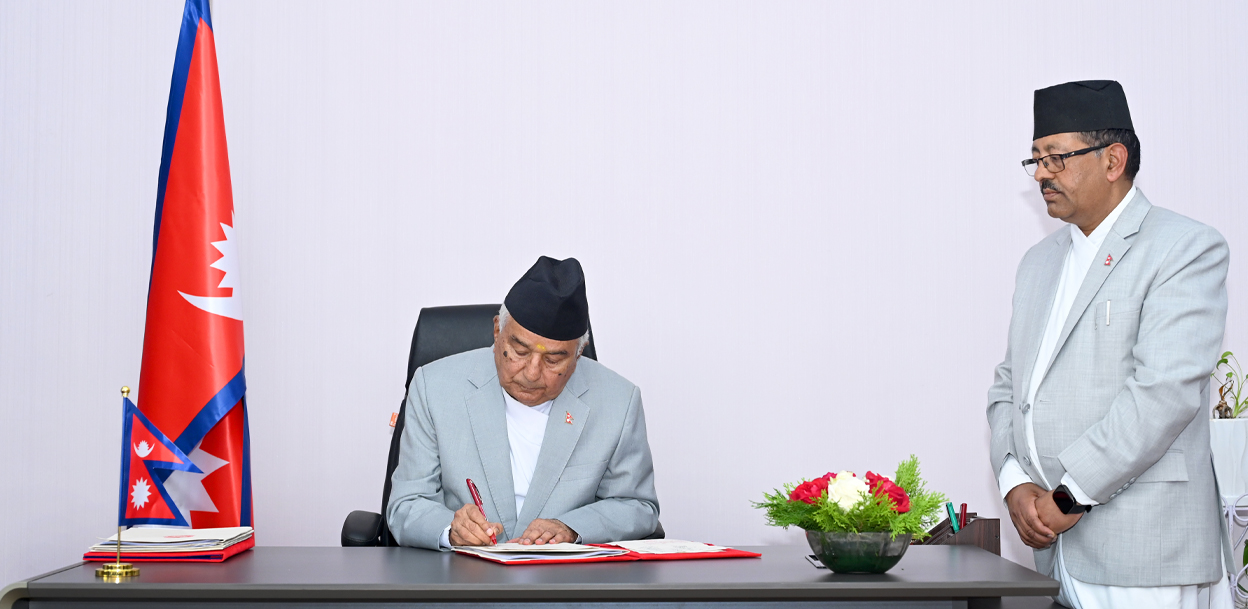
April 20, Kathmandu – President Ramchandra Paudel has promulgated seven of the eight ordinances recommended by the government. However, he has returned the ordinance concerning the Constitutional Council to the government for reconsideration.
The President maintained his longstanding stance that the majority system envisioned by the Constitution within the Constitutional Council should not be undermined, applying the same principle to this ordinance.
The ordinance allows decisions to be made by just three members in a six-member Constitutional Council, prompting the President to send it back to the government for further scrutiny.
He aims to uphold the spirit of the Constitution and the majority system, hence the request for reconsideration to the government.
According to the message issued by the President, “The total structure of the Constitutional Council does not appear to represent a majority, and considering the Supreme Court’s full bench ruling on maintaining the majority system consistently, the ordinance has been returned for reconsideration.”
The President also addressed arguments presented by central government ministers and some legal professionals who claim that legal ambiguity may arise if an ordinance is not passed via a replacement bill or becomes inactive.
The Supreme Court has previously ruled that if an ordinance becomes inactive, the existing act remains effective. Therefore, the President understands that the current law, enforced by the Constitution for appointments and decisions of constitutional office bearers, remains applicable.
He also recalled the process behind returning bills and why such procedures exist.
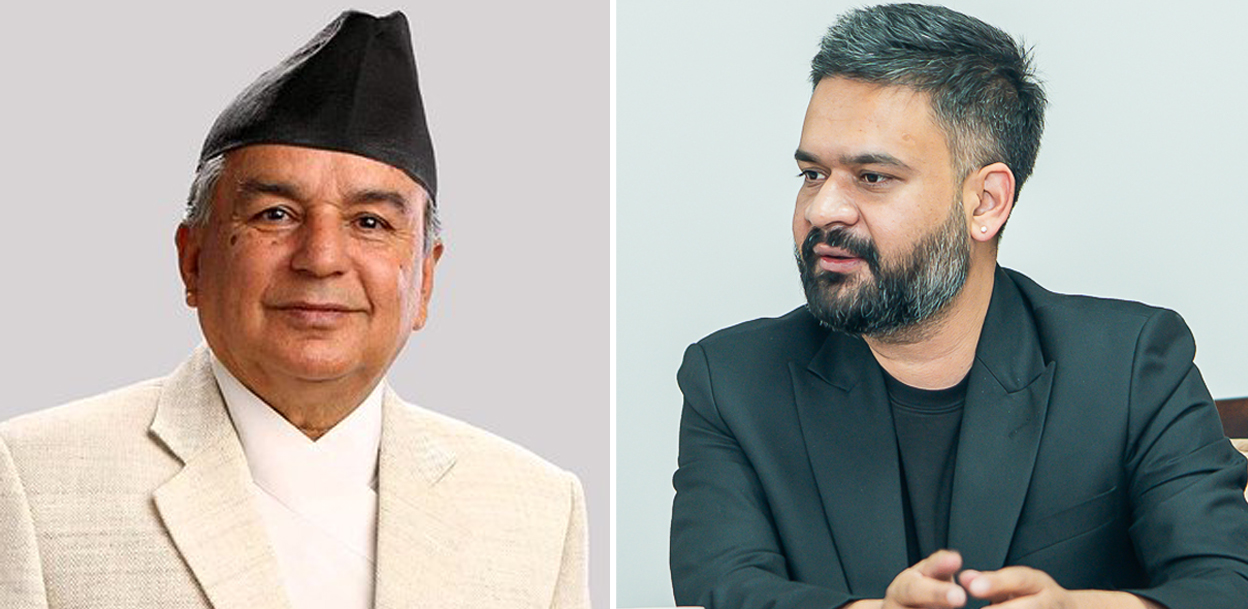
“The bill previously submitted for certification does not align with the spirit of Article 284 of the Constitution nor with global democratic practice, which requires unanimous recommendation and decision by the Constitutional Council; if there is no consensus, decisions should be based on majority,” the President remarked, referring to the bill returned to Parliament.
He mentioned that the government led by Sushila Karki had included a similar clause in the ordinance but did not promulgate the ordinance accordingly. Since a comparable ordinance has now reemerged, the President feels it neither represents the majority system nor democratic values.
While the President returned the ordinance to protect the Constitution’s essence and the majority system, unlike bills passed by the Federal Parliament, the Constitution does not explicitly provide for the reconsideration or return of an ordinance.
Legal experts differ on this matter.
Former Supreme Court Justice Pawan Kumar Ojha holds the view, based on his earlier decisions, that the President cannot return an ordinance.
He explained that although the President can return a bill passed by the Federal Parliament, no such constitutional provision exists for an ordinance.
“Since September 24 last year, the President has even ceased issuing any ordinances sent by the government, but this raises constitutional questions,” Ojha said.

Ojha, who is also a former Attorney General, stated that Sunday’s decision calls for further debate regarding the constitutional limits and role of the President. “The President must recognize his duties in upholding and safeguarding the Constitution,” he said.
Two days ago, senior advocate Dr. Chandrakant Gyawali stated that the President does not hold the veto power over ordinances.
“Stopping an ordinance proposed by the government is akin to transferring the country’s executive authority; if the President exercises such power, it would violate the Constitution,” Gyawali said.
Dr. Vijay Mishra, President of the Nepal Bar Association and legal scholar, has argued that although the Constitution does not explicitly clarify, the President may return an ordinance, based on past practice.
“The President appears challenged in approving the ordinance. The spirit and intent of the Constitution are not fully captured in the ordinance,” Mishra explained. “Every prime minister has attempted to modify the rules of the Constitutional Council at their discretion, which seems to be why the President has returned the ordinance.”
What does the Constitution say?
Article 113 of the Constitution contains provisions regarding bill certification. Under subsection 3, a bill passed by both houses can be returned by the President for reconsideration with a message within 15 days. However, this provision does not apply to ordinances.
Provisions related to bill certification under Article 113:
Article 113. Bill Certification: (1) A bill for certification under Article 111 must be submitted to the President with certification by the Speaker of the origin House. In the case of a finance bill, certification must be given by the Speaker that it is a finance bill.
(2) Upon receiving the bill for certification, the President must notify both Houses within 15 days.
(3) If the bill cannot be certified, the President may return it with a message within 15 days.
(4) If the returned bill is reconsidered and reintroduced by both Houses, the President must certify it within 15 days.
(5) After certification, the bill becomes an act.
While the Constitution provides for returning bills, there is no similar arrangement regarding ordinances.
Article 114 pertains solely to the issuance of ordinances, without any provision for returning them for reconsideration.
Provisions concerning ordinances under Article 114:
114. Ordinance: (1) When both Houses of the Federal Parliament are not in session, the President may issue ordinances on the recommendation of the Council of Ministers.
(2) Ordinances have the force of law but—
(a) If not approved by Parliament, they automatically become void,
(b) The President may revoke them at any time,
(c) If not revoked or rendered void, they become void after 60 days.
Clarification: “The day both Houses of the Federal Parliament sit” means the day both Houses begin or hold a session.
The President as Guardian of the Constitution
Article 61(4) states that the President has the primary duty to uphold and protect the Constitution.
This provision was used by President Ramchandra Paudel to manage the transitional period following the Jana Andolan (People’s Movement) and appoint former Chief Justice Sushila Karki as Prime Minister.
At that time, there was no constitutional provision for appointing a Chief Justice as Prime Minister. Acting as the guardian of the Constitution to govern the country, the President applied this article.
Although the current ordinance concerning the Constitutional Council does not reflect such a constitutional crisis, the President has emphasized the Constitution’s spirit when returning the bill.
The Constitution stipulates that the Constitutional Council should be impartial, composed of six members representing the executive, legislative, and judiciary branches.
In a democracy, decisions are generally based on majority rule, which requires at least four out of six members for a majority in the Council.
However, previous bills allowed decisions to be made by just three members.
During the Sushila Karki government, when a similar provision was included in the ordinance, the President neither stopped nor returned it but refrained from promulgating it.
This time, however, the ordinance has been returned for reconsideration, with past positions recalled. In this context, the President has reminded the government of the Supreme Court’s order that there are no legal obstacles to the Constitutional Council’s decision-making.
What happens next?
After returning the ordinance, the government may amend it according to the President’s message and resend it, or it may choose not to promulgate it. But what happens if the government ignores the message and recommends the current ordinance again?
Dr. Vijay Mishra, President of the Nepal Bar Association and legal educator, states, “If the government sends the ordinance again, the President cannot refuse it; he must promulgate it.”